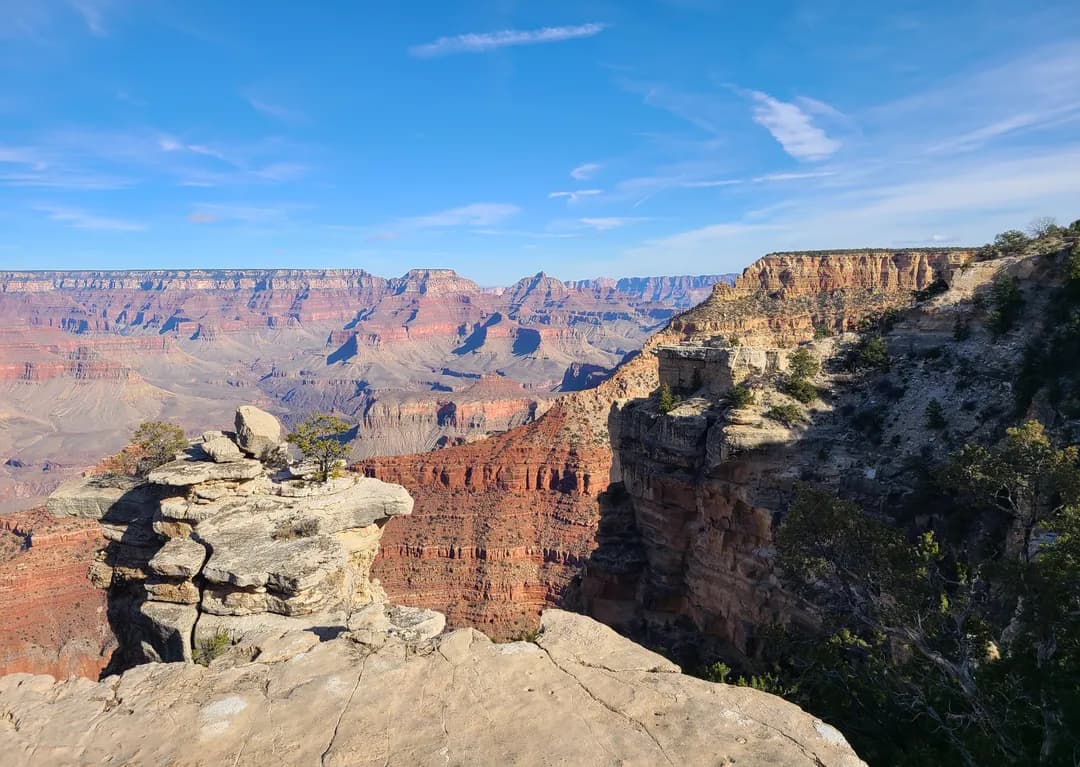

The South Rim Explained, Stop by Stop, in Six Hours
The South Rim hands over the view in about ten seconds and then leaves you to work out the rest. This is the version with someone in the van who stops at each overlook long enough to say what the layers are, who lived up here, and what is circling overhead.
A first look at the canyon lands fast. Then you stand there, and nothing in the rock tells you what it is.
This trip fills that gap with a person. The guide moves the van between viewpoints and, in the operator's own words, spends time at each one explaining hundreds of millions of years of geology, thousands of years of human history, and the ecosystems that sit on top of both. Binoculars and printed handouts come with the seat. The vehicle is air-conditioned, which matters in July.
One departure a day. The booking calendar carries a single 9:30 AM start and offers it on every day of the week.
Pickup runs between 9:30 and 10:00 AM, and the listing asks you to allow for the whole window because getting into the park can back up. Guiding is in English only. One booking takes up to nine travelers, and the listing caps a shared departure at nine seats.
 Grand Canyon Tour from TusayanSix hours by air-conditioned van, with pickup in Tusayan and at the South Rim lodges and a guide at every viewpoint stop. Park entrance fee, bottled water, snacks, binoculars and printed handouts are included.www.viator.com
What Gets Explained at Each Stop
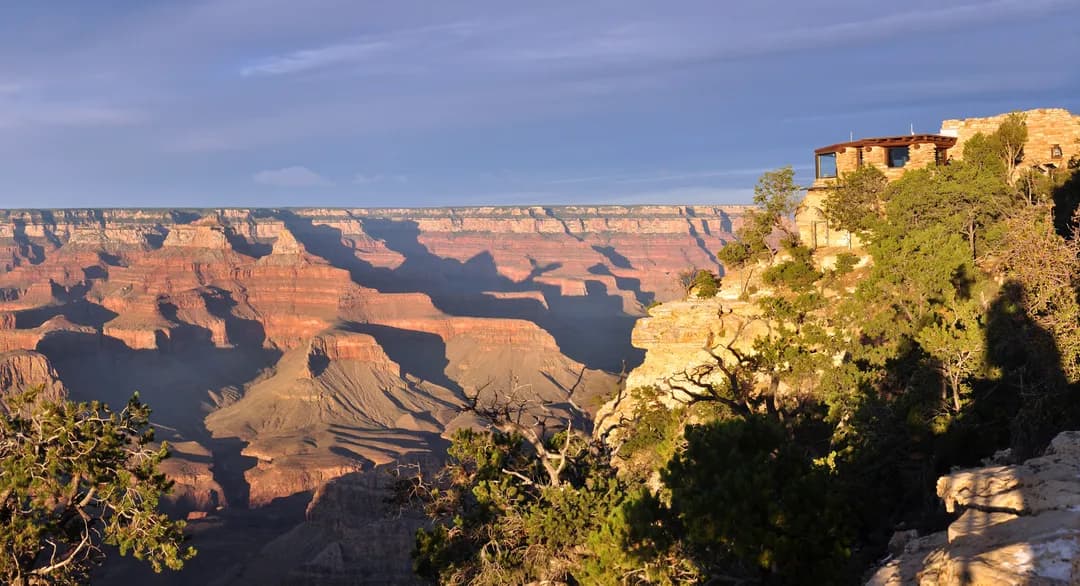
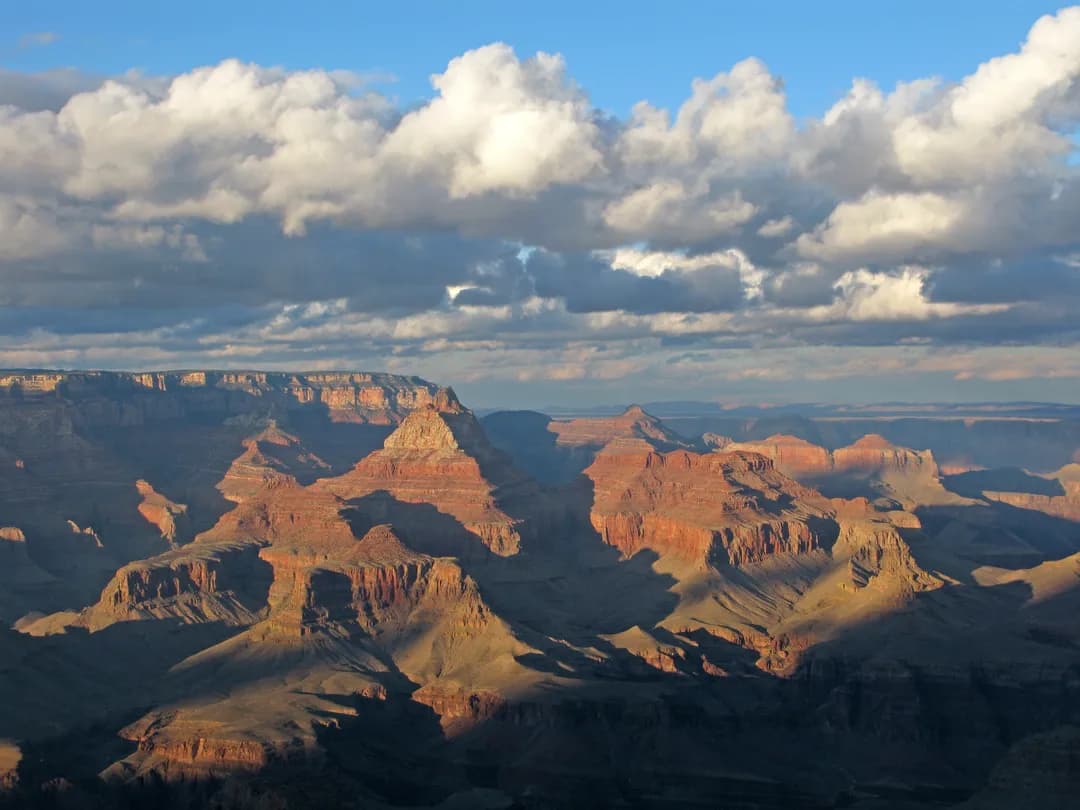
The subject list comes straight from the operator's itinerary: geology measured in hundreds of millions of years, human history measured in thousands, and the ecosystems layered between them. That is a lot of ground for six hours, and the stops are where it gets delivered.
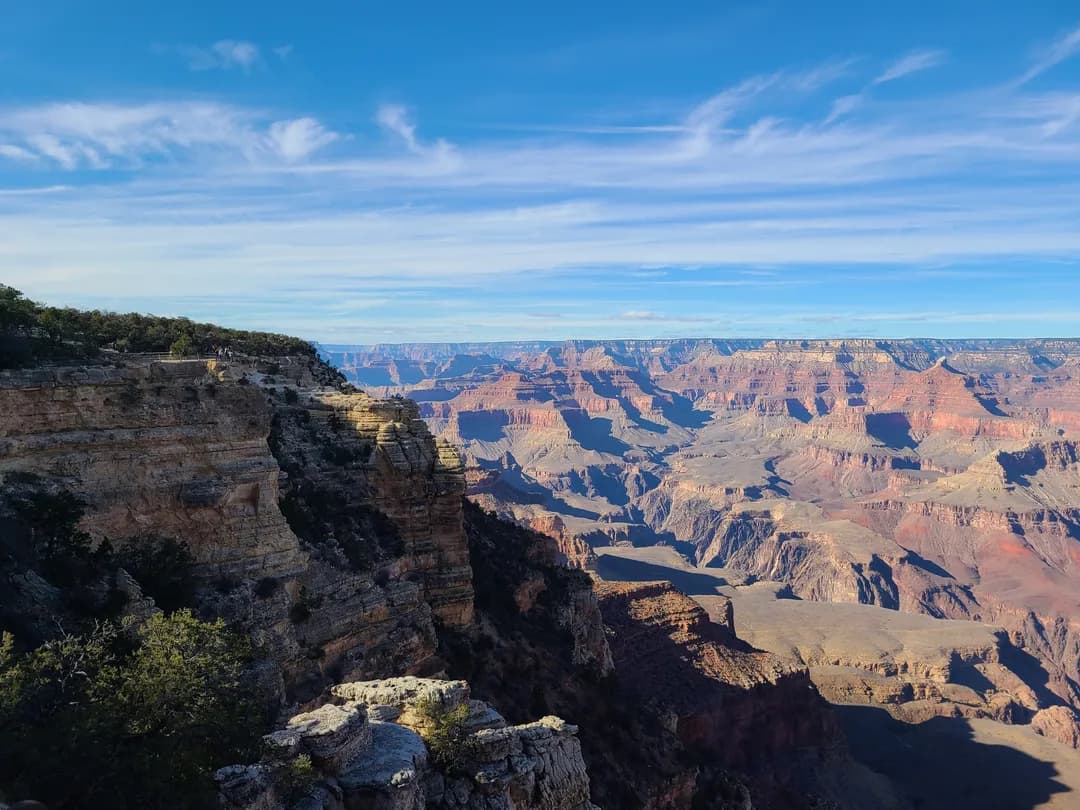
The operator names those stops on its own site. Yavapai Point, the Village area, a fossil-finding location and the East Rim viewpoints including Grandview and Lipan Points are the ones it says it always visits. Navajo Point and Desert View come often, Moran Point sometimes, depending on time and weather. It also says it asks whether your group has a favorite stop in mind.
There is a reason that list reads the way it does. The park licenses this kind of trip through a commercial use authorization, and the Park Service's public directory lists Canyon Dave Tours Inc among the companies running tours in vehicles of fifteen passengers or fewer, on a permit effective through December 2026. The conditions attached to that permit do not allow the van to drive into Yaki Point, the South Kaibab Trailhead or Hermit Road. Every viewpoint the operator names sits in the village core or east along the rim, and none of them out on the stretch the permit closes to commercial vans.
The listing tells you to search the skies for the California condor, the largest bird in the United States. Read that as something to look for, not something promised. One traveler describes the guide making a U-turn so the van could sit longer with a herd of mule deer. Binoculars are handed out for exactly this reason, and the printed handouts give you something to keep.
Rim Walks, Not a Descent
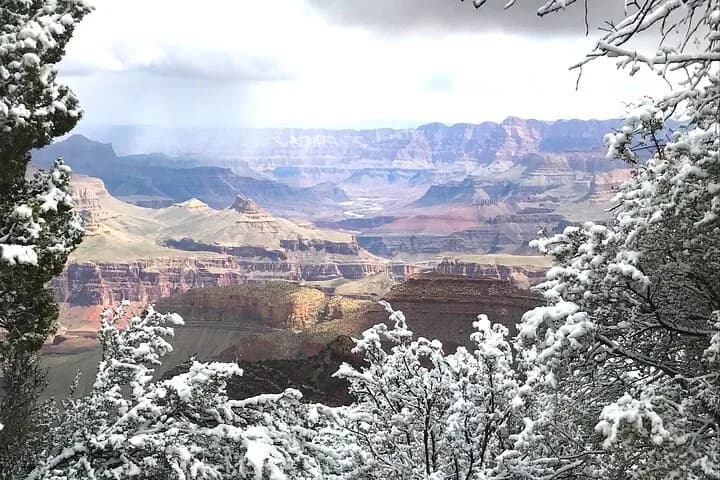
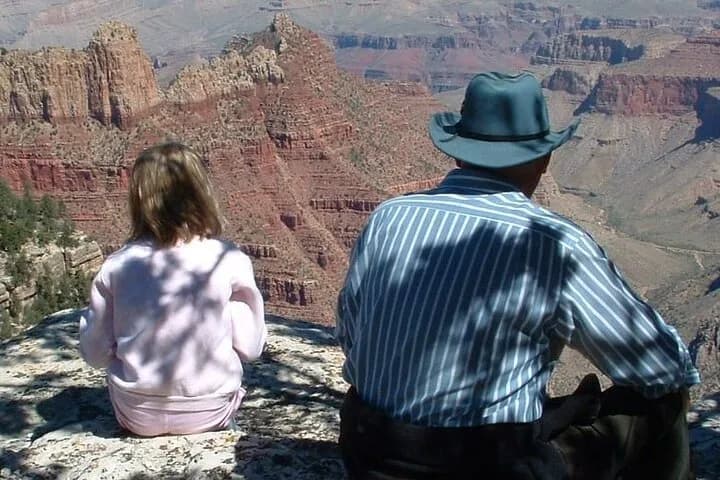
The operator rules out the thing most people assume: we do not hike into the Canyon. The same line adds, wear good walking shoes for walks along the rim. So the walking is short and it stays up top. The day is built around getting out of the van, standing somewhere good, and getting back in.
The other common assumption gets ruled out just as bluntly: we do NOT go on the train. This is a van tour to GC. The train is a different company and a different ticket.
Six hours is counted door to door. The operator says the figure includes pickup and the return to your hotel, and one traveler leaving from a park hotel put the morning start at 9:30 and the drop-off back at about 3:00.
The calendar runs nearly all year, and the rim weather swings with it. A winter departure can arrive to snow on the pines. A summer departure runs hot and bright. The operator says every date is available except Thanksgiving, Christmas and New Year's, and that your guide calls the evening before with weather notes and the final logistics.
Who the Booking Form Will Take
One booking takes up to nine travelers, and an adult has to be on it. Infants are not accepted at all.
The age bands on the booking form run 13 to 54 for adults and 60 to 99 for seniors, with nothing in between. If you are 55 to 59, no band matches you, so ask Viator to confirm the correct fare before paying. Children aged 3 to 12 have their own fare at USD 149, against USD 249 for an adult and USD 234 for a senior. The operator's own site puts that children's fare at ages 5 to 12 and points anyone younger to a private tour instead. The booking form will still sell a seat to a three-year-old, and the people who meet the van work to the higher floor, so treat five as the real cut-off and ask about the private option below it.
Service animals are allowed, and the listing asks you to call before booking if you are bringing one. It also ticks suitable for all physical fitness levels, and the walking that phrase covers is the rim walking above.
Mobility has a harder edge than that tick suggests. The listing is marked not wheelchair accessible, and the operator's own test is whether you can climb the two steps into and out of the van by yourself. Asked directly whether guests with limited mobility can join this tour, the operator says no, and points to a slower senior departure instead, same viewpoints and more sitting.
What the Ticket Covers, and What It Does Not
Included, per the listing: the narrated tour, the park entrance fee, bottled water, snacks, binoculars, printed handouts and the air-conditioned vehicle.
Food needs a word, because the listing argues with itself. Its description ends with lunch included. Its structured inclusions name bottled water and snacks and no meal. The operator settles it on its own site: lunch is not included, and the tour stops at a Grand Canyon lodge restaurant where you order on your own. Travelers describe that stop the same way, a sit-down meal at a lodge, a village tavern or a trading post, with hot food and time to eat it. So bring a card rather than a packed sandwich, and if you booked expecting a prepaid meal, raise it with Viator before you travel.
Then there is a fee that sits outside the ticket entirely. The National Park Service charges every non-US resident aged 16 and over a USD 100 nonresident fee at Grand Canyon, on top of the standard entrance fee, and says this includes people entering as part of a commercial tour group. For two non-US visitors aged 16 or older, that is USD 200 on top of the tour price. The America the Beautiful Non-Resident Annual Pass covers it. The pass costs USD 250 and covers the holder plus three more nonresidents aged 16 and over; the resident version is USD 80 and is sold only to US citizens and residents. Both park service pages were last updated in July 2026.
A full refund needs a cancellation at least 24 hours before the scheduled departure, and inside that window the ticket itself returns nothing. The operator's own site is softer than the ticket: it says a cancellation inside 24 hours earns a credit toward a future tour. If you have to drop out late, that is worth asking about rather than writing the seat off. The listing flags that bad weather can cancel a departure, and the ticket is mobile or paper, one per booking. The operator says it runs in most weather and only works with you to cancel or reschedule when conditions are genuinely unsafe.
Pack shoes for a long day on your feet and a layer for the rim. The operator puts the reason plainly: the South Rim sits at 7,000 feet, mornings run cool even in summer, and the rim wind is real. By the last viewpoint the wall across from you is no longer just a wall. You can point at a band and say what it is.