The South Rim by Hummer, and Every Seat Sees Out
A Hummer at the Grand Canyon sounds like an off-road promise. The operator is the first to say it isn't one. What you are booking is an open-sided vehicle with tiered seats, a driver who knows which overlooks hold the best light, and a guide who explains the rock you are looking at.
Buck Wild runs its Hummers out of a terminal in Tusayan, the small town just outside the park's south entrance. The vehicles were rebuilt for sightseeing. The sides open in warm weather, the roof is a canopy on a frame, and the seats step upward toward the back so the last row is not staring at headrests.
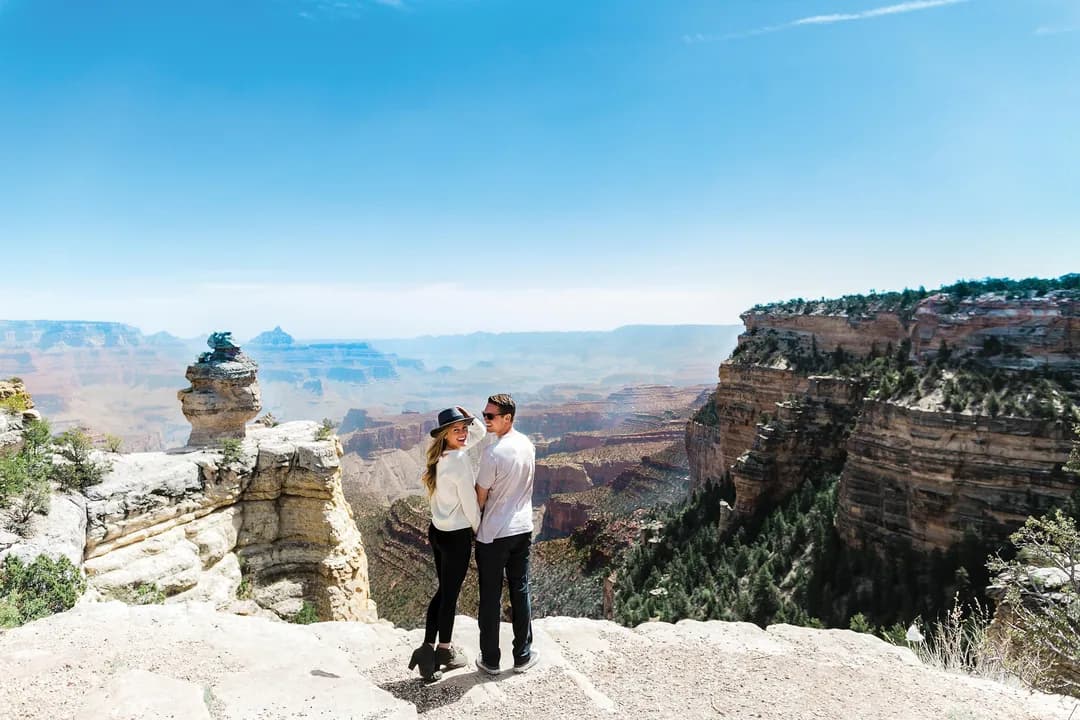
Where it goes is ordinary, and that is the point. The tour stays on paved public roads and never drops below the rim, because no road there does. You are paying for the seat, the height, the open sides, and a driver who has already decided which overlooks will be worth your time.

Two departures share the same terminal and the same short list of viewpoints. The Signature leaves at 9:30 am and 1:00 pm and takes about two and a half hours. The Sunset version starts somewhere between 3:30 and 5:30 pm depending on the date, and runs about three hours. Plan around the longer figure. The shorter one that appears in some booking text is the low end of a range.
Booking closes twelve hours before departure, and each booking is confirmed by hand, so leave a little room either side of a tight itinerary.
 Grand Canyon Signature Hummer Tour with Optional Sunset ViewsOpen-sided sightseeing Hummer with stadium seating, thirteen seats per vehicle, English-speaking driver-guide, and stops at three or four South Rim viewpoints. Signature about 2.5 hours, Sunset about 3.www.viator.com
Each Hummer Takes Thirteen, and the Rows Step Up
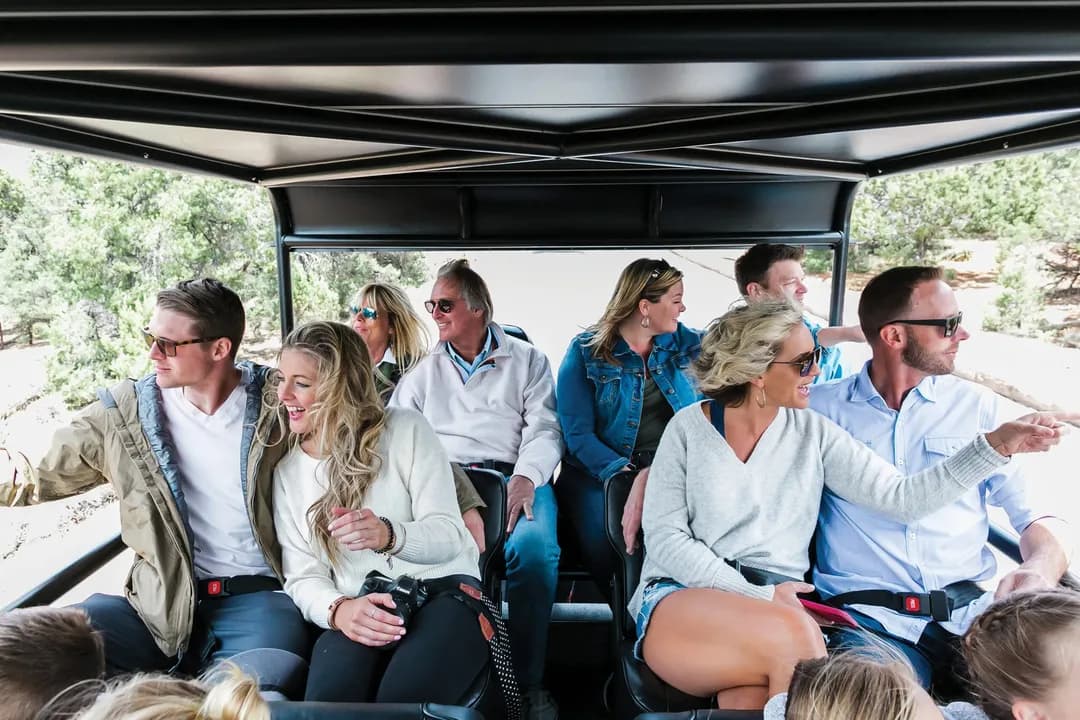
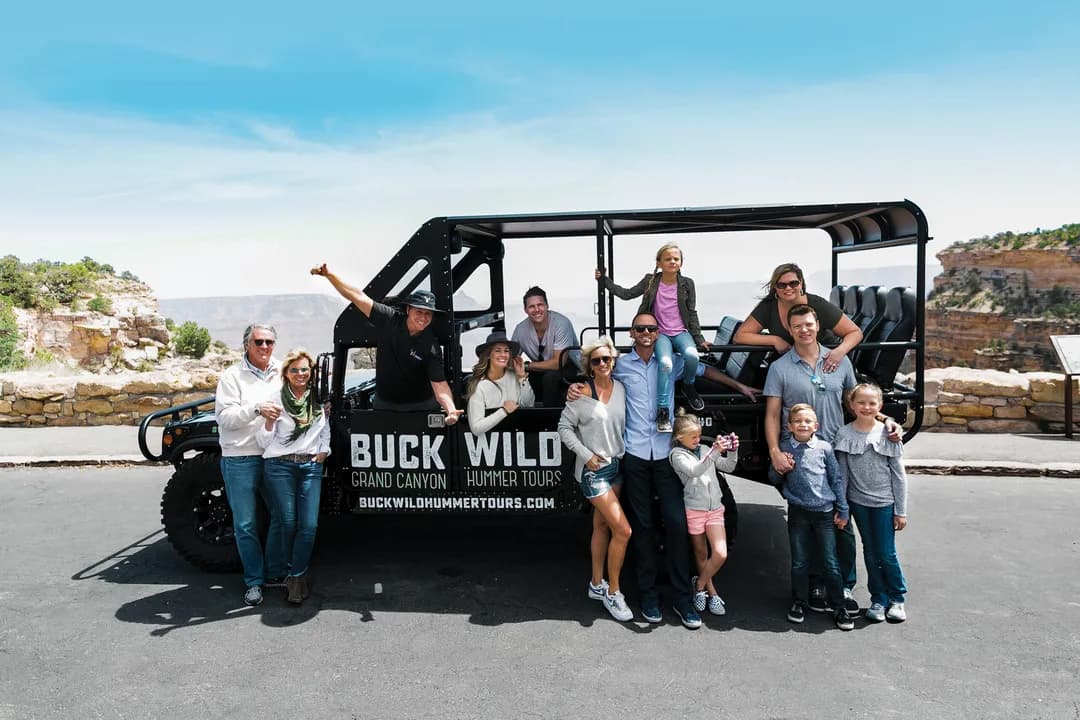
The rows rise toward the back, so every seat keeps a clear line over the one in front. Through spring, summer and early autumn the sides stay open. When it rains, snows or blows hard, the crew encloses the vehicle, turns on the heaters and hands out blankets and ponchos. Forgetting your layers stays a small problem here.
Tours run in rain and snow. The only weather that stops them is fog or low cloud thick enough to erase the view.
A driver-guide does the whole trip in English, covering how the canyon was cut, who lived here before the park existed, and where to look. Elk turn up along the road often enough that guides tell you to watch for them. Nobody promises them.
Three or Four Overlooks, Chosen on the Day


The guide works from a short list of South Rim viewpoints: Yavapai Point and its geology museum, Pipe Creek Vista, Duck on a Rock, Grandview Point, Mather Point, Moran Point and Grand Canyon Village. You stop at three or four. Which ones depends on the light, the crowds and the season, and that choice is most of what you are hiring.
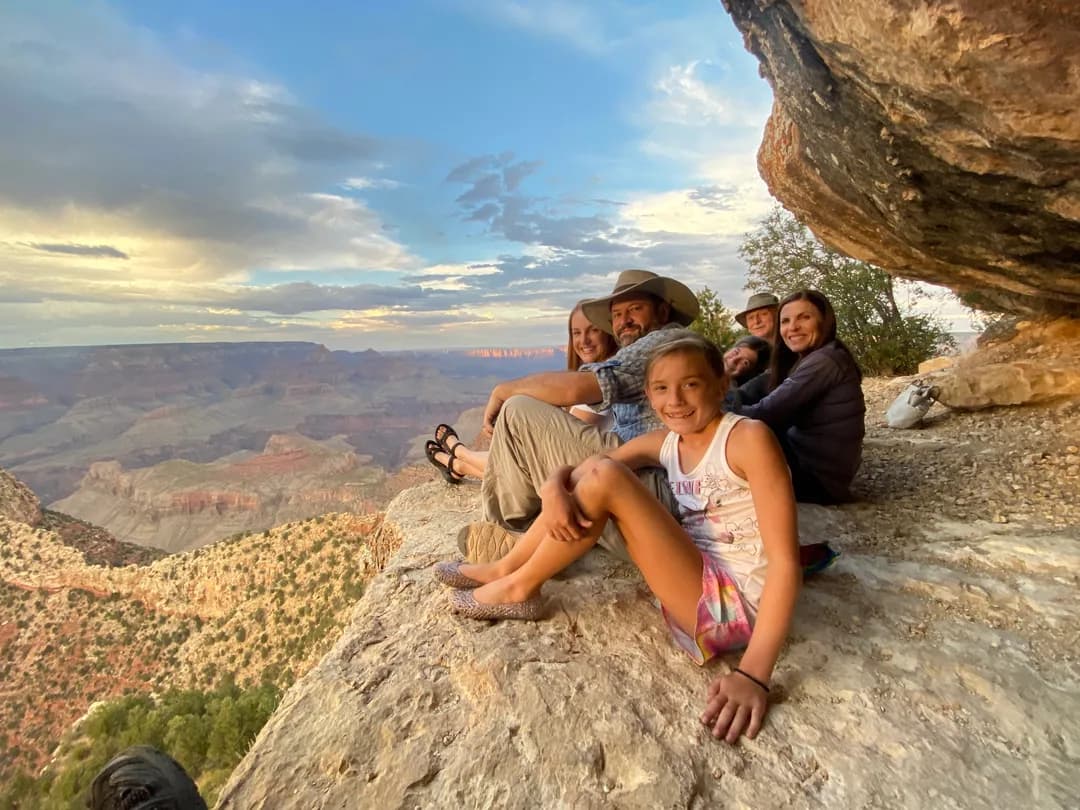
The Sunset departure covers the same ground and adds about an hour to it. It exists because the canyon changes more in the last hour of light than it does across the whole afternoon, and because the rim empties as the day trippers leave.
If your pickup is inside the park, your sunset tour runs shorter than three hours, because the drive out is already behind you.
Who Pays to Enter the Park, and How Much
This is the part worth reading twice, because the booking page files it under a single word: admission.
If you are a US resident with government-issued photo identification, park entry comes with the tour and there is nothing more to pay at the gate.
Since 1 January 2026, every non-US resident aged 16 and over owes a separate USD 100 park fee, and it applies to people arriving on a commercial tour. The park service and the operator use almost the same sentence for it. Two ways to cover it:
- Pay USD 100 per adult. That is the individual non-resident entry fee, good for seven days.
- Buy the non-resident America the Beautiful annual pass for USD 250. It covers the holder plus up to three more adults for a year, at every national park.
Buy it before the tour starts. You cannot stop and buy a pass at the entrance gate while you are riding through it. The operator will sell you the annual pass at check-in if you tell them ahead of time, and there are fee stations in Tusayan at the IMAX theatre and the Grand Hotel shuttle stop. Cards only at both; no cash. A pass bought on or before 31 December 2025 still counts.
Shoes, Car Seats and Who Needs a Companion
Layers from March to September, winter clothing from October to mid-March. Blankets live on board for anyone who guessed wrong.
Shoes matter more than people expect, because the ground at the viewpoints is rough and uneven. Sturdy closed-toe shoes or trainers. Sandals, flip-flops and heels are all discouraged. Bring government-issued photo identification, and bring the camera. Firearms, hazardous materials and oversized bags stay off the vehicle.
Children are welcome at any age, and Arizona law sets the terms: a child under eight, or shorter than 57 inches, rides in a car seat or booster. Buck Wild supplies car seats and boosters at no charge, but you have to select them when you book. A line on the booking page about prams and strollers does not replace that seat, so ask for one.
Folding wheelchairs and walkers travel in the Hummer. Anyone who needs help boarding has to bring a companion, and that companion stays for the tour.
📍 Check in at the Buck Wild terminal, 469 State Route 64, Suite A, Tusayan, thirty minutes before departure. It sits beside the Texaco station and across from the IMAX theatre, just outside the park's south entrance and not inside Grand Canyon Village. Pickup covers hotels and campgrounds in Tusayan and inside the South Rim, and nowhere beyond that; arriving from Williams, Flagstaff or further out means choosing the no-pickup option and coming to the terminal.
Cancel or move a booking free up to 24 hours ahead. Inside 24 hours it is non-refundable, and a no-show is charged in full.
The last stop tends to be the one people describe afterwards. The guide parks, everyone climbs down, and the canyon handles the rest while someone standing next to you explains what took two billion years to cut.