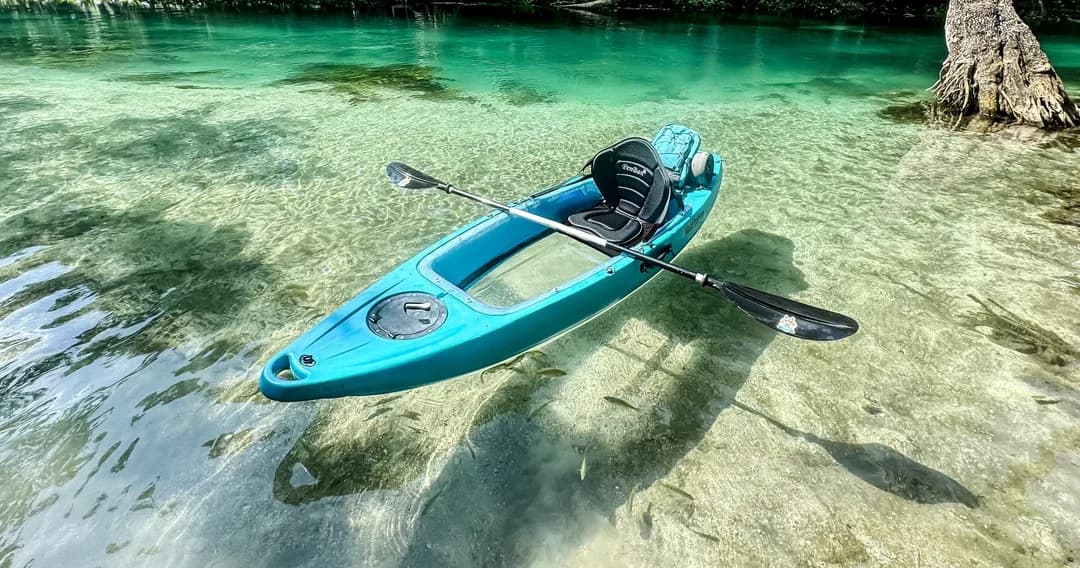

The Silver River Floor Scrolls Past Under Your Kayak's Glass
In the late 1870s a man on this river set a pane of glass into the bottom of a rowboat, and Silver Springs has been famous for looking down ever since. Wet Rabbit Kayaks hands you that window with a paddle attached and two uninterrupted hours to use it.
Florida's state park service tells the origin story plainly. In the late 1870s Phillip Morrell fixed a piece of glass into the bottom of a rowboat here, and the glass bottom boat tours that followed have been running for more than a century.
Wet Rabbit Kayaks shrank the idea to one hull. A clear panel sits in the floor of the cockpit, between your feet, and the spring run slides underneath while you paddle. Two hours of paddling with no stops, no landing, and no getting out of the boat. The park allows no land access from the water along the river except back at the launch ramp, and the outfitter says swimming anywhere inside the park boundary is off limits.
The view is the itinerary.


The route is the operator's own: out through the shallow water of what it calls the Jungle paddling trail, into the Silver River, and past what it describes as dozens of clear blue springs. The bottom sits closest in the shallows. That is where the panel earns its keep.
Trips run Tuesday through Sunday, two departures a day. Mondays are not bookable. The park keeps its own hours, 8 a.m. to sundown, 365 days a year. Wet Rabbit keeps shorter ones, and it is a private company that works inside the park without being part of it. It says it is not on site at all unless somebody has booked ahead.
 Silver Springs Glass Bottom Kayak TourGuided two-hour paddle on the Silver River with Wet Rabbit Kayaks. Single and tandem glass-bottom kayaks, guide, padded seat, floating paddle, PFD and dry bag included.www.viator.com
What Lives Below, and What Watches From the Bank

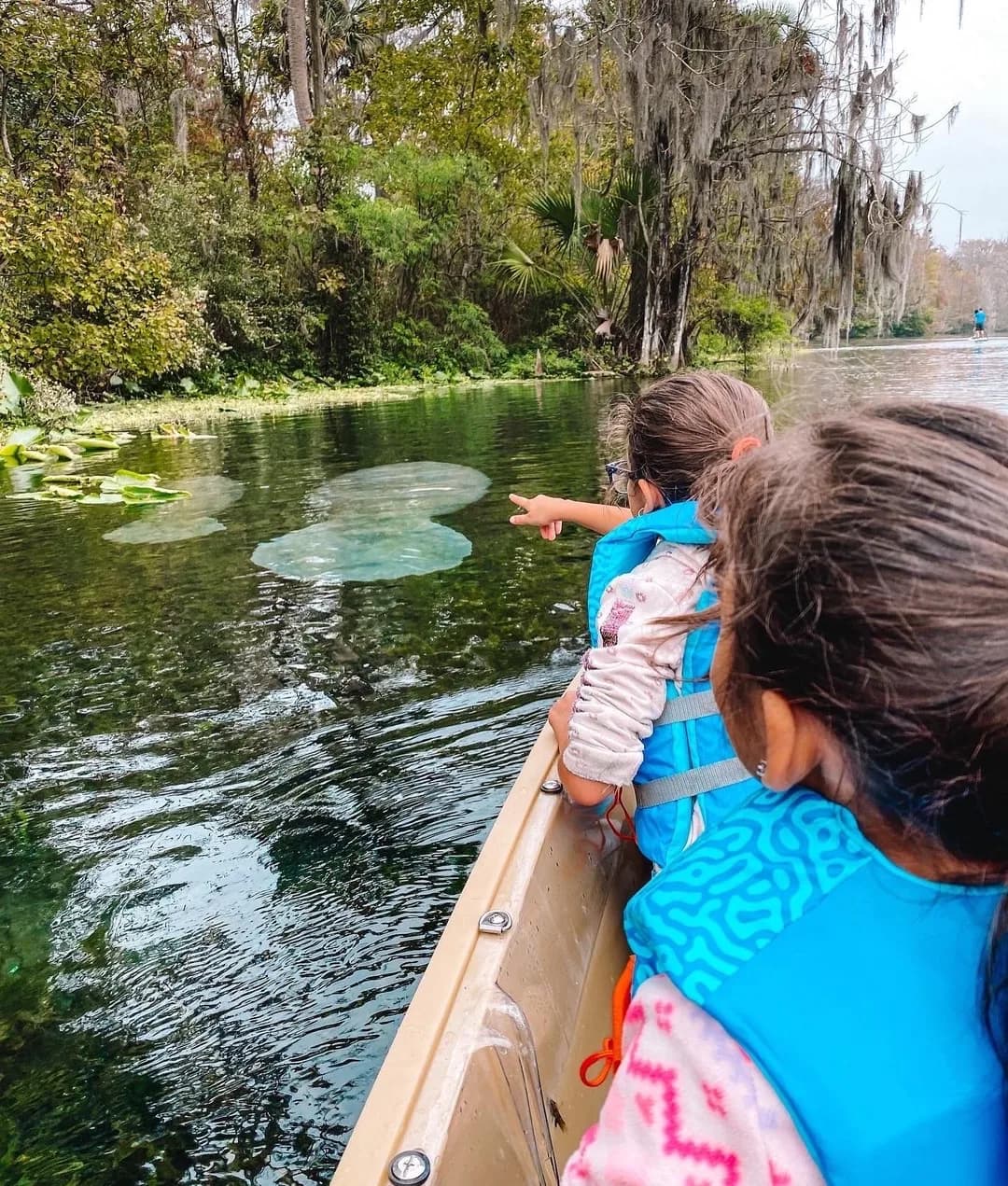
Wet Rabbit lists turtles, birds, fish, alligators, manatees and monkeys, and the monkeys are not a figure of speech. Silver Springs carries a free-ranging population of rhesus macaques that the outfitter puts in the hundreds, travelling up and down the river and settling wherever they like. The company's own advice is to watch them from the water, keep food out of sight, and stay back, because it says they can be aggressive and carry a deadly disease.
Alligators are the other permanent residents. The outfitter says they reach twelve feet here, that they are used to hundreds of people paddling past, and that approaching, feeding or harassing one is illegal.
Manatees run on a calendar. The operator puts its season at October through February and says that stretch can bring as many as twenty sightings in a day. Outside it the company counts six or seven year-round residents and describes the summer odds as roughly even. Nobody can promise you one.
Pick the Right Hull Before You Pay


This listing sells three boats, and choosing between them is a weight question. A single kayak is rated for one paddler at 200 pounds or less, and a tandem takes two people up to 300 pounds combined. The listing also carries a separate single-kayak option for paddlers over 200 pounds, which the operator's own pages do not describe. Booking over a stated limit is explicitly non-refundable, so this is the line to get right at checkout.
Age is drawn differently by the two sides. The booking form offers one age band, adult ten to ninety-nine, and the listing asks that every child be reserved a seat of their own. The operator's own rule runs along a different edge: under eighteen needs an adult along, and under ten cannot paddle alone.
Group size has three answers as well. The listing's description calls the groups six to eight. The operator's FAQ puts its own ceiling at twenty-two paddlers at a time across single and tandem boats, and says it would rather split a large party across several tours.
Money at the Gate, and the Half Hour Before
The booking price is not the whole bill. Six US dollars a person is collected at check-in as a park fee, on top of what you pay to book. The listing and the operator state it the same way, and the booking platform carries it as a declared extra charge.
The park posts its own admission on a different basis. Florida State Parks lists Silver Springs at USD 8 per vehicle for two to eight people, USD 5 for a single-occupant vehicle or motorcycle, and USD 2 for pedestrians, bicyclists and extra passengers, plus USD 4 per vessel to launch a boat you brought yourself. The outfitter's figure is per head.
Then the clock. The listing asks you to arrive thirty minutes before your start time and gives long lines as the reason. Late arrivals and no-shows are cancelled without a refund, and the operator adds that no-shows are charged the full price. Changes cannot be made on site. Cancelling at least twenty-four hours ahead returns the whole amount.
What Stays Out of the Boat
The glass is the reason for most of the rules. The operator bans shoes, hard-surfaced coolers, oil-based sunscreen and anything with a sharp edge, on the grounds that they scratch or block the cockpit panel. It asks for soft-soled shoes, water shoes, or bare feet. Dry storage comes with the kayak, and staff will tell you at check-in what is allowed to go in it.
Dogs are out, and the company gives two reasons for it: claws on glass, and alligators, which it says are drawn to dogs and especially likely to react in the warmer months. Alcohol and drones are out as well.
Weather gets managed. The operator says it does not close for rain. It also says it will not send you out if there is thunder and lightning within ten miles of your slot, and that it will keep in touch about where your reservation stands.
Check-in is at the canoe and kayak launch inside Silver Springs State Park, reached through the main entrance at 5656 East Silver Springs Boulevard. The outfitter sends parking and meet-up directions in the confirmation email and asks you to follow them closely, since it has no storefront and nobody is standing there without a booking on the sheet.
The kayak comes on wheels, so you pull it down to the water yourself. Then the banks close in, the paddle finds a rhythm, and for the next two hours the only thing you have to do is look down.