The Pines End and the Grand Canyon Opens Underneath You
The flight is forty-five minutes of two very different things, and the seat you get comes down to a scale at check-in.
The helicopters leave from Grand Canyon National Park Airport, in the town of Tusayan, from a terminal on Corsair Drive. The first minutes are green. You climb out over the Kaibab National Forest, which the listing puts at 1.6 million acres and the operator calls the world's largest stand of ponderosa pine, and for a while there is nothing underneath but trees.
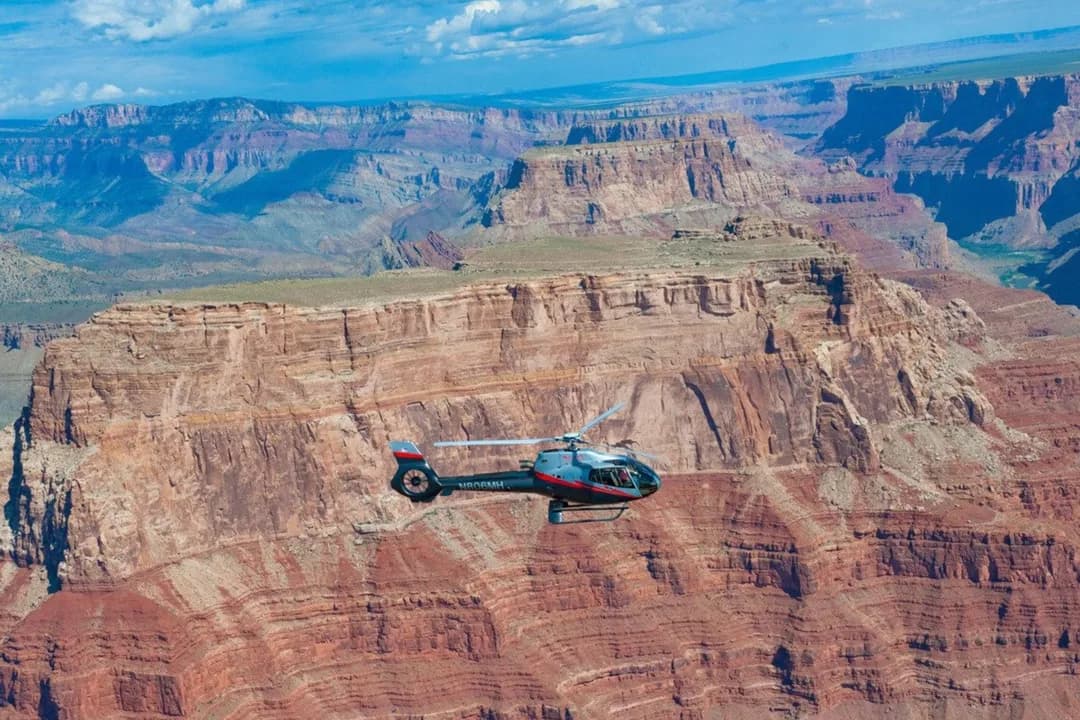
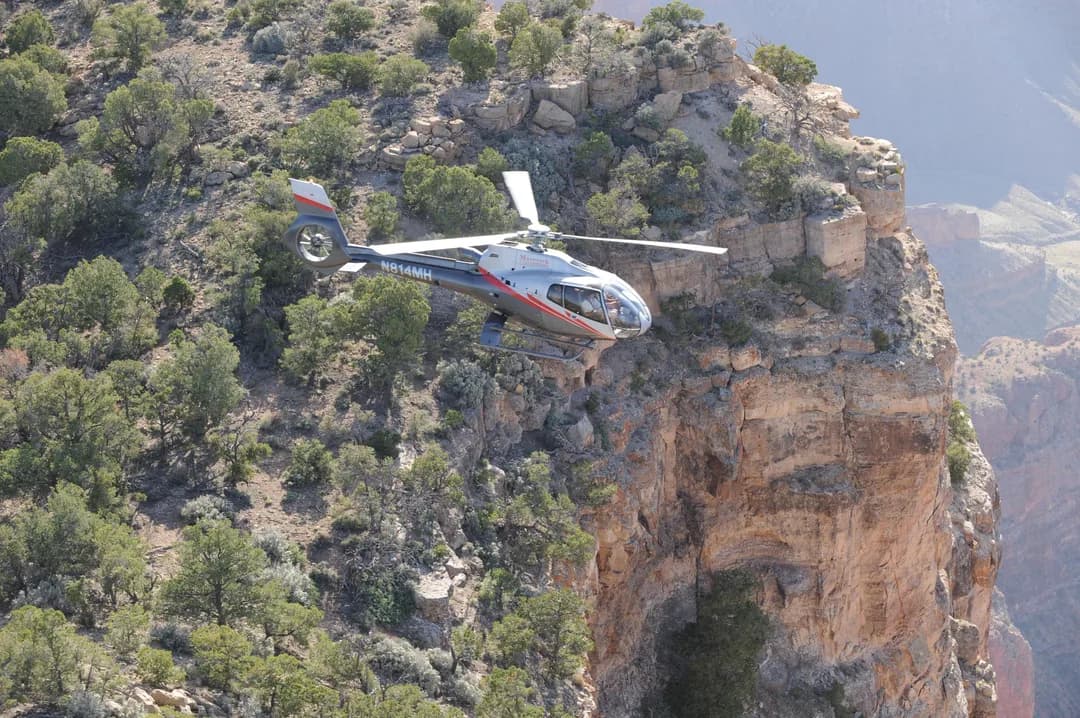
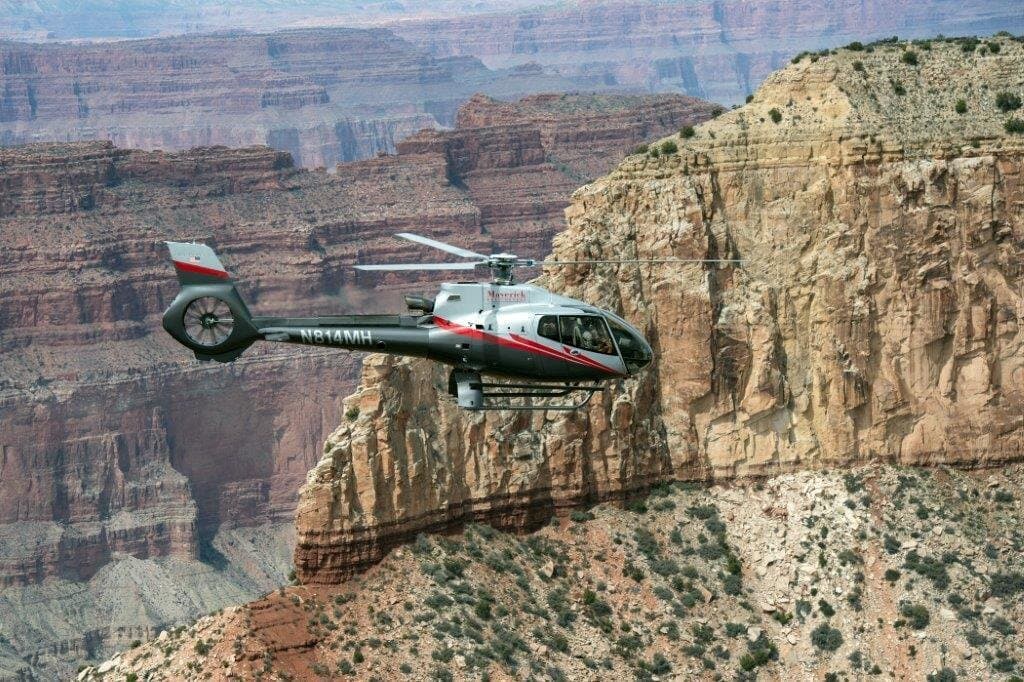
Then the rim ends. The ground falls away in one motion and stays away for most of what follows. The aircraft is an Airbus H130, seated theater-style behind wraparound glass so the rows step up behind each other. The helicopter does not land in the canyon, and there are no stops. You see all of it from a seat.
One booking takes up to seven travelers, and the fare covers the flight plus all taxes and fees. Gratuities are not included, and there is no hotel pickup, so getting yourself to the Tusayan terminal is part of the plan. The operator's own advice is to book at least two weeks out, because busy periods sell out.
 45-minute Helicopter Flight Over the Grand Canyon from Tusayan, ArizonaA 45-minute flight from Grand Canyon National Park Airport over the Kaibab forest, the Colorado River and the North Rim. All taxes and fees included, no hotel pickup.www.viator.com
What You Fly Over on the Way East

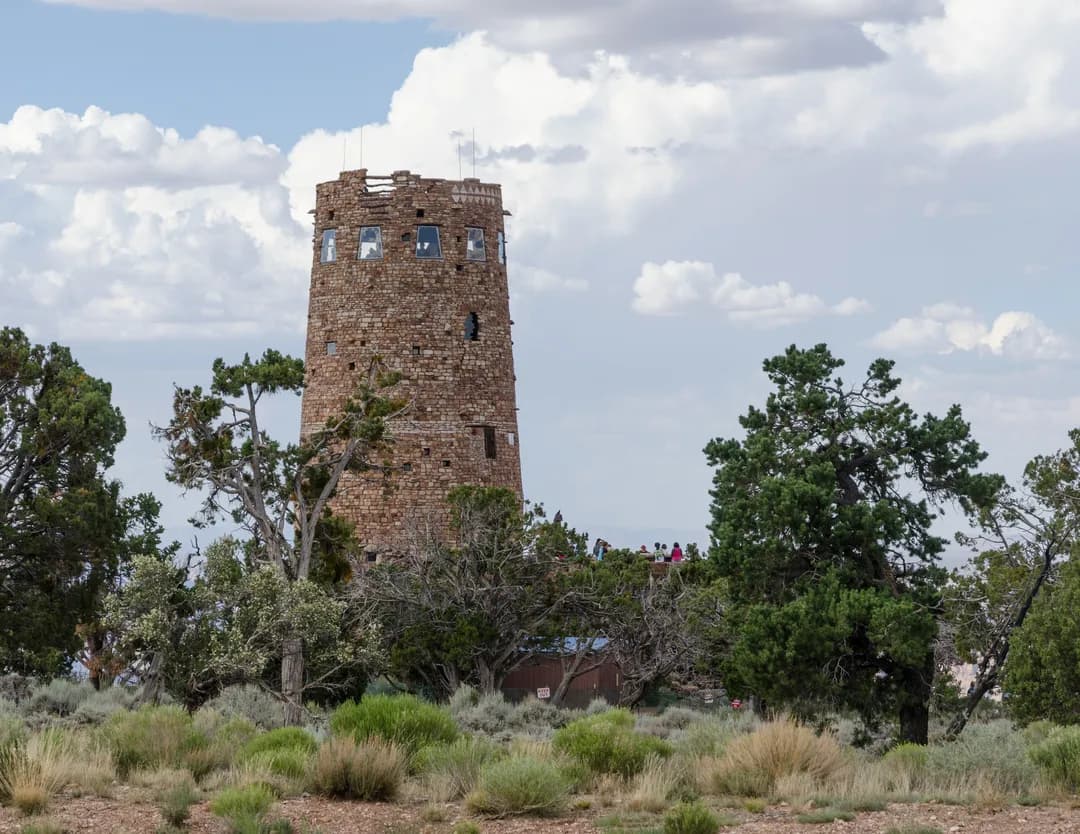
The route runs east once the canyon opens. You follow the Colorado River upstream, with the Painted Desert spread out beyond it and the Desert View Watchtower standing on the South Rim below.
The Watchtower is worth knowing about before you see it, because from the air it reads as a small stone cylinder and little else. The Park Service puts it at seventy feet, built in 1932, and lists it as a National Historic Landmark. Mary Colter designed it. By the Park Service's account she directed the placement of each individual rock so the building would "create no discordant note against the time eroded walls of this promontory."
The operator's own route description adds one thing the listing leaves out. It names the confluence, where the Little Colorado meets the Colorado and, in the operator's words, "crisp blue water swirls into dark green."
Above the North Rim, Then Home Through the Widest Part
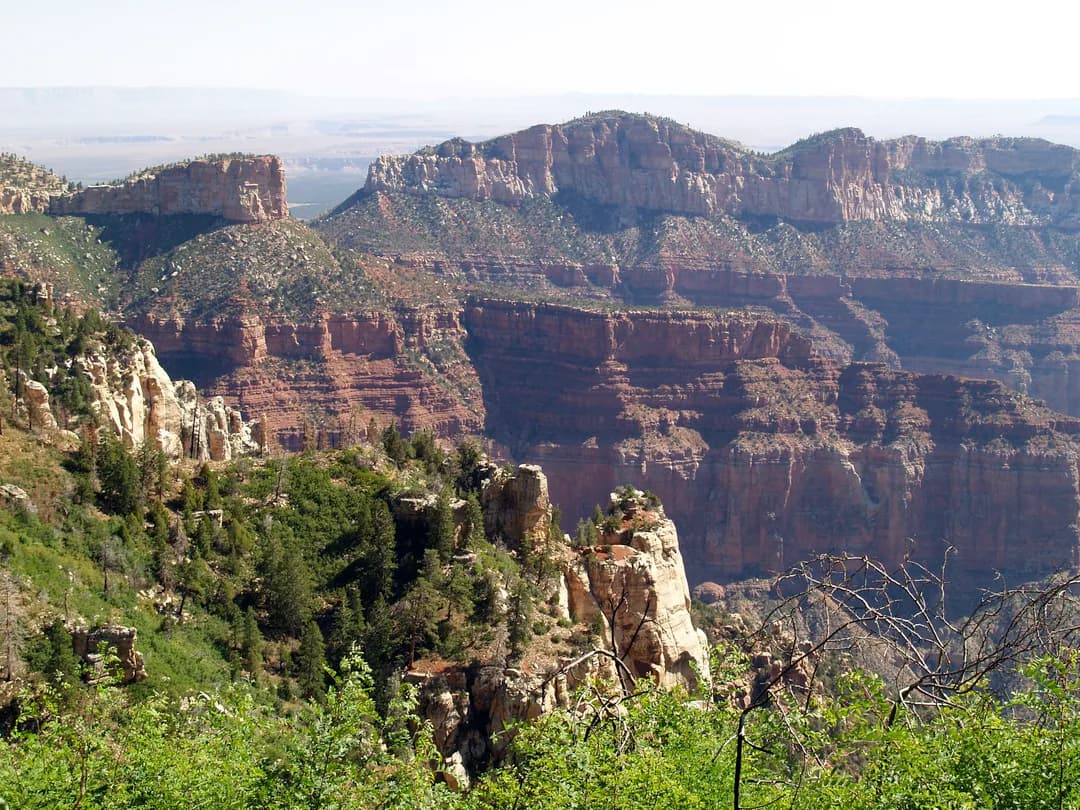

Past the Watchtower the flight turns toward Marble Canyon, the stretch of the Colorado that marks where the Grand Canyon begins. Then it climbs.
Point Imperial comes up on the North Rim. The Park Service calls it the highest point on the canyon's rim, at 8,803 feet. It also marks the park's northern boundary, which makes this the far end of the loop.
The way back is through the Dragon Corridor, which the listing and the operator both describe as the widest and deepest part of the canyon. After that you cross the Colorado one more time, pick up the South Rim and the Kaibab forest again, and land where you started. The green returns before the flight is over.
A Scale Decides Where You Sit
You do not pick your seat. The operator's FAQ says seating is computer generated from weight and balance limits and is not assigned until check-in is complete, and that it does not guarantee seating next to, or in the same row as, the rest of your party. Pilots can rearrange it again if they need to.
Anyone over the 275-pound limit has to buy a second seat, paid to the operator on the day. Individual weights, infants included, have to be given when you book, and the operator says guests whose stated weights turn out to be wrong can be canceled with no refund. You are weighed at check-in. That is part of what the thirty-minute window is for.
The cabin takes up to seven guests. A party of seven therefore books out the aircraft and flies private, and smaller groups share with strangers. Pilots are not permitted to help anyone board or get out; the listing gives insurance regulations as the reason. Anyone who needs a hand should bring someone who can give one.
What Comes On Board and What Stays Behind
Everyone eighteen and over needs an original government photo ID at check-in. Both the operator and the listing specify a REAL ID-compliant license or a valid passport, and neither a photocopy nor a phone screen counts. Turn up without one and you are denied check-in, and the listing is clear that no refund goes to anyone else on the reservation either.
Children under two fly on an adult's lap and need proof of age. From the second birthday a child needs a paid seat, at the adult fare. Anyone seventeen or under flies with a parent or guardian.
The rest is short:
- Phones off or in airplane mode before boarding. No calls, messages or data in the air.
- Cameras and action cameras are welcome. Flash photography is prohibited.
- Bottled water can come aboard. Nothing else to drink.
- No photography on the airport ramp. You can photograph the aircraft after landing.
- The pilot opens and closes every door, and passengers are asked not to touch them.
The cabin is climate controlled, with one honest note from the operator: on summer days when it is in the hundreds outside, the aircraft brings the cabin down to roughly eighty-five degrees.
📍 The terminal is at 107 Corsair Drive, at Grand Canyon National Park Airport in Tusayan. Check-in closes thirty minutes before your departure time, and the listing warns that missing it can cancel the flight with no money back.
Boarding is called fifteen minutes out. The operator uses that window for the pilot's safety briefing and for a staff photo of your group in front of the aircraft. Cancellation is free up to three days ahead and nothing is refunded inside that window. Minimum numbers apply, and if a departure does not fill, the operator offers an alternative or a full refund.
Then the doors close, the trees run out, and for most of the next forty-five minutes there is nothing below you but canyon.