Community / Event
The Map Says Manhattan. The Memory Says Queens.
A Friday-evening big band on West 44th Street, a mislabeled borough tag, and the question a listings database accidentally got right: where does New York actually keep its jazz?
 Sally Abrams
A Filing Error, Read Closely
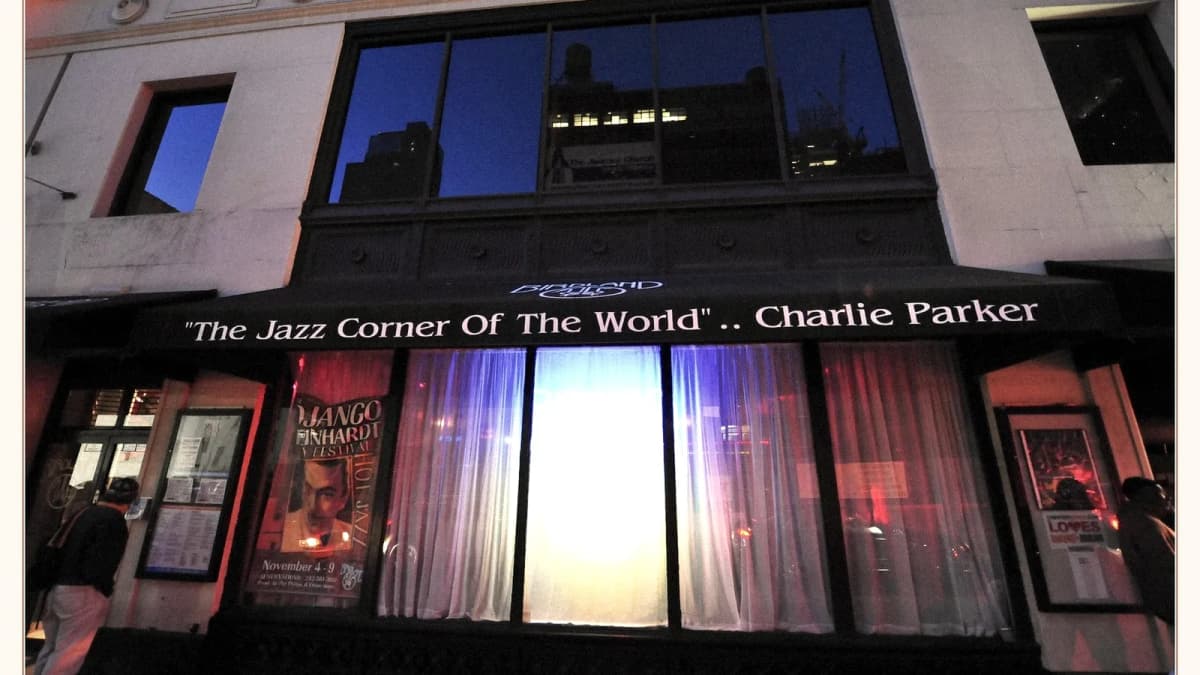
Let me start with the correction, because I refuse to bury it: Birdland Jazz Club is not in Queens. It sits at 315 West 44th Street in Midtown Manhattan, between Eighth and Ninth Avenues, a trumpet blast from Times Square. The event database that routed this Friday's Birdland Big Band set into a Queens listings folder made a mistake — the kind of quiet, bureaucratic mistake that usually gets deleted without a second thought.
I want to give it a second thought. (I have a soft spot for errors that know something their authors don't.)
Because here is what the filing error stumbled into: the history of New York jazz is a history of Manhattan marquees and outer-borough living rooms. The clubs were downtown; the community was very often in Queens. The names on the Birdland awning — Count Basie, Ella Fitzgerald, John Coltrane, Louis Armstrong — commuted to their own legends from Corona, St. Albans, and Addisleigh Park. So when a database accidentally tags a West 44th Street bandstand as "Queens," it is wrong about geography and half-right about memory.
Travel doesn't escape the world; it reads it closely.
This piece is a close reading. It is about one specific, bookable evening — the Birdland Big Band, Friday, July 24, 2026, 5:30 p.m. — and about the longer question underneath it: who keeps showing up for a standing gig, what a weekly ritual builds that a one-off concert cannot, and whether a reader in Jackson Heights or Flushing actually needs to cross the East River to find her way into this music at all. (Spoiler on that last one: this summer, no.)
The Friday Ritual on West 44th Street
The facts first, because rituals are made of facts repeated until they turn into culture.
The Birdland Big Band plays Birdland every Friday at 5:30 p.m., with doors opening at 4:30. This week's edition lands on July 24. Tickets currently run $35.46 to $45.76 depending on seating, the club admits ages 10 and up, and there is a $20 per-person food-and-drink minimum once you are at your table. The room seats you at close-set tables with dinner service — this is a listening room with silverware, not a stand-and-shout venue.
A 5:30 downbeat deserves its own paragraph. Most New York jazz happens at 8:30, 10:30, sometimes half past midnight — hours historically built around men who could drift home whenever. A world-class big band that finishes while the sky is still light is, functionally, one of the most accessible serious-music rituals in the city. You can attend alone, eat a real dinner, hear seventeen musicians at full cry, and be on a train home before dark. I mention this not as a "safety tip for women" — you have heard enough of those — but as a structural observation: early sets redistribute who gets to have a jazz life.
Time Out New York has called this ensemble "a completely unique experience," adding that "there isn't another band like this anywhere."
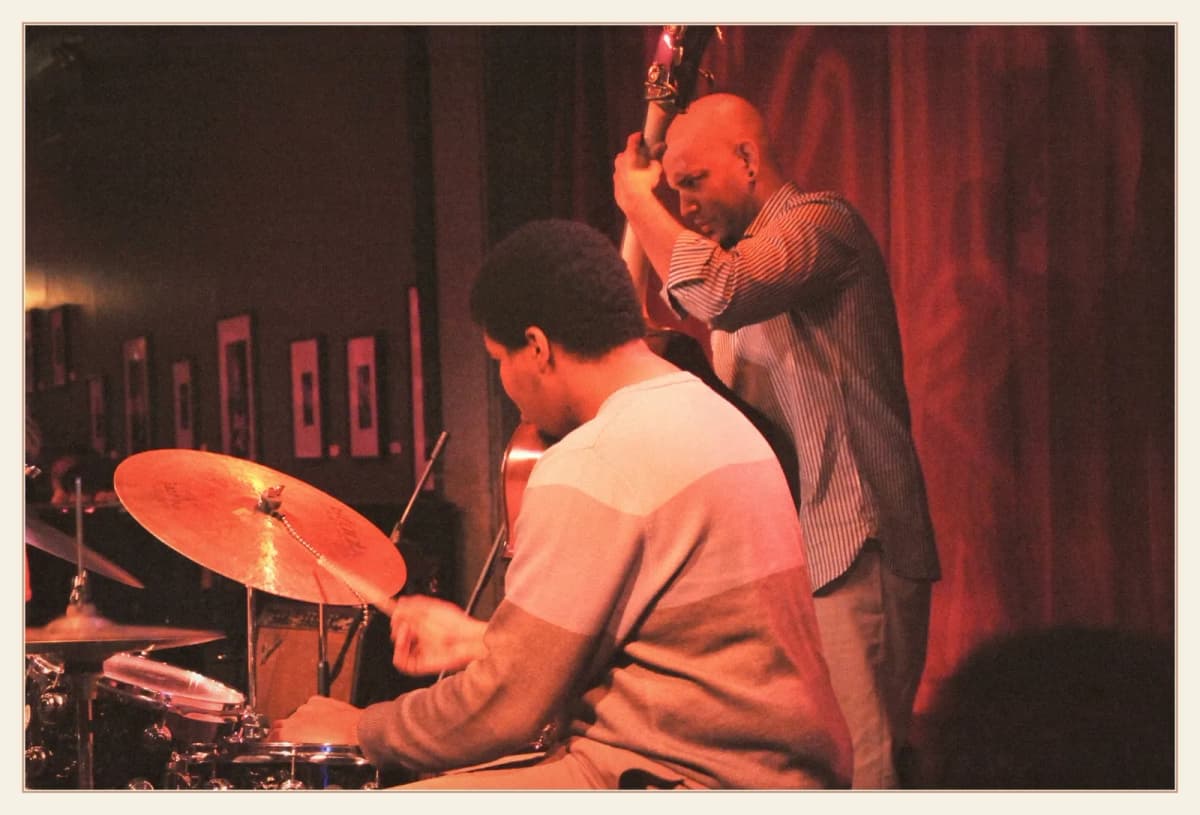
The band earns the line less through spectacle than through repertoire politics. Under the direction of saxophonist David DeJesus, the book leans jazz-forward: original arrangements, contemporary compositions, Brazilian and Afro-Latin grooves, funk charts, and rescued rarities alongside the swing canon. This is not a nostalgia orchestra in matching ties playing the hits of 1939. It is a working New York band arguing, weekly, that the big band is a living format.
Who Actually Keeps Showing Up
Here is the question I bring to any "community" event, because the word gets stapled onto everything: who, specifically, do you meet?
At a Friday Birdland set, three overlapping circles. First, the band itself — the chairs are held by New York's working elite, players who spend their weeks in Broadway pits, television bands, and touring horn sections, and their Fridays here. The residency functions as a clubhouse for the city's freelance musician class; guest artists from TV and touring bands sit in regularly. Second, the regulars: big-band devotees, off-duty musicians, and jazz students who treat the early set as a standing appointment. Third, travelers like us, who found the listing and booked a seat.
What a standing gig builds — and what a one-night concert cannot — is recognizability. Go twice and the room starts to know you. Go three times and the bartender does. For a woman traveling or living alone in this city, that slow accrual of being recognized somewhere is not a small thing. It is, frankly, the product being sold, and at thirty-odd dollars it is underpriced.
Three Names, One Chair
Institutional memory is my favorite kind of gossip, so indulge me.
The Friday big-band chair at Birdland has passed through exactly three sets of hands in living memory. There was Lew Anderson, the bandleader (and, in a very New York twist, the final Clarabell the Clown on the Howdy Doody show) whose Friday night big band held the room until his death in 2006. Drummer Tommy Igoe built a new band from that lineage in 2006, rebranded it with the club's own name, and drove it for over a decade — the residency grew into one of the most reliable weekly draws in Manhattan jazz. When Igoe stepped away, saxophonist David DeJesus took the book in late 2017 and has directed it since.
Twenty years, three directors, one time slot. In a city where entire venues are born and buried inside a lease cycle, that continuity is the story. A big band is the least economical format in music — roughly sixteen salaries to move one melody — and it survives here on ritual, not on margin. Every Friday that this band plays is a small act of civic stubbornness.
The Room That Named Itself Twice
The current Birdland is the third body of a club that refuses to die. The original opened in December 1949 on Broadway near 52nd Street, named for Charlie "Yardbird" Parker, who headlined the opening. Through the 1950s it billed itself as "The Jazz Corner of the World" — the phrase still printed on the awning today — and the bandstand hosted Basie, Coltrane, Dizzy Gillespie, Ella Fitzgerald, and nearly everyone else the century produced. Rock and roll, rising rents, and changing nights out closed it in 1965. The name was revived uptown in 1986, and in 1996 the club settled into its present home on West 44th Street.
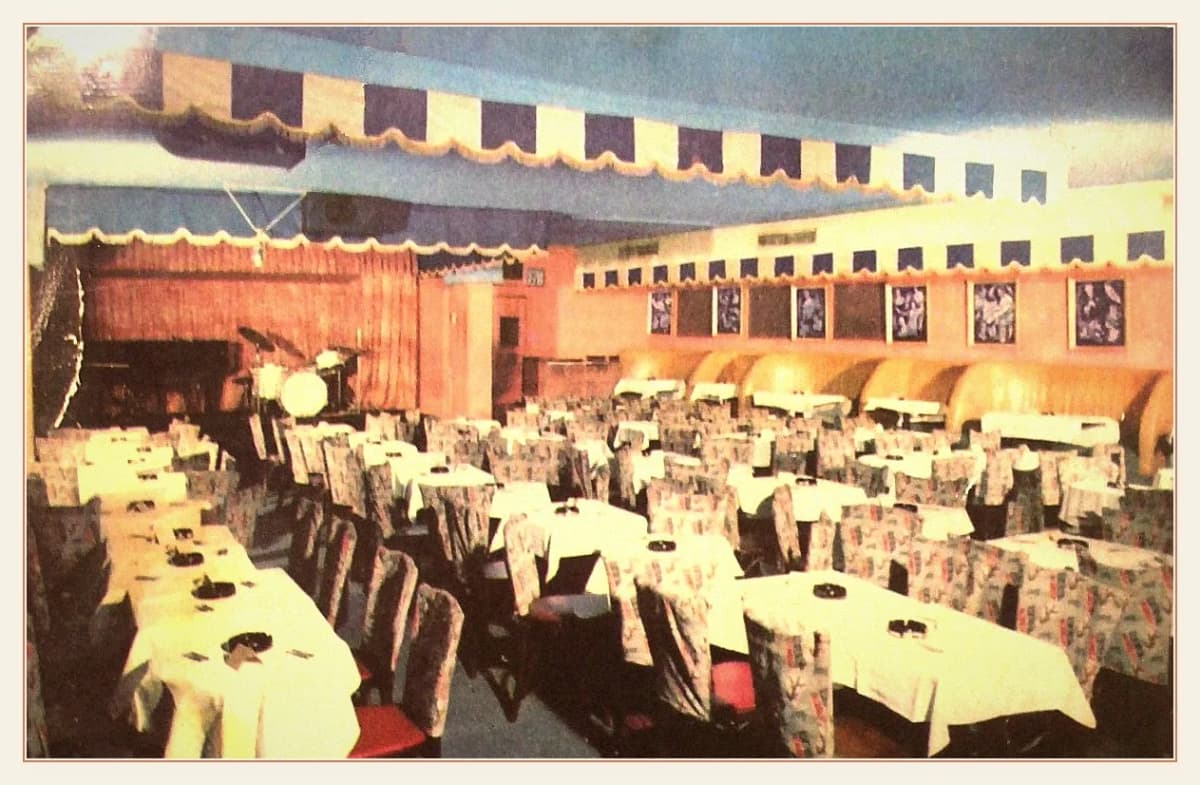
I linger on the history because of what it leaves out. The marquee was in Manhattan. The mortgages were not.
But the Musicians Went Home to Queens
Here is the part of the story the borough tag accidentally pointed at, and the reason I didn't just file a correction and move on.
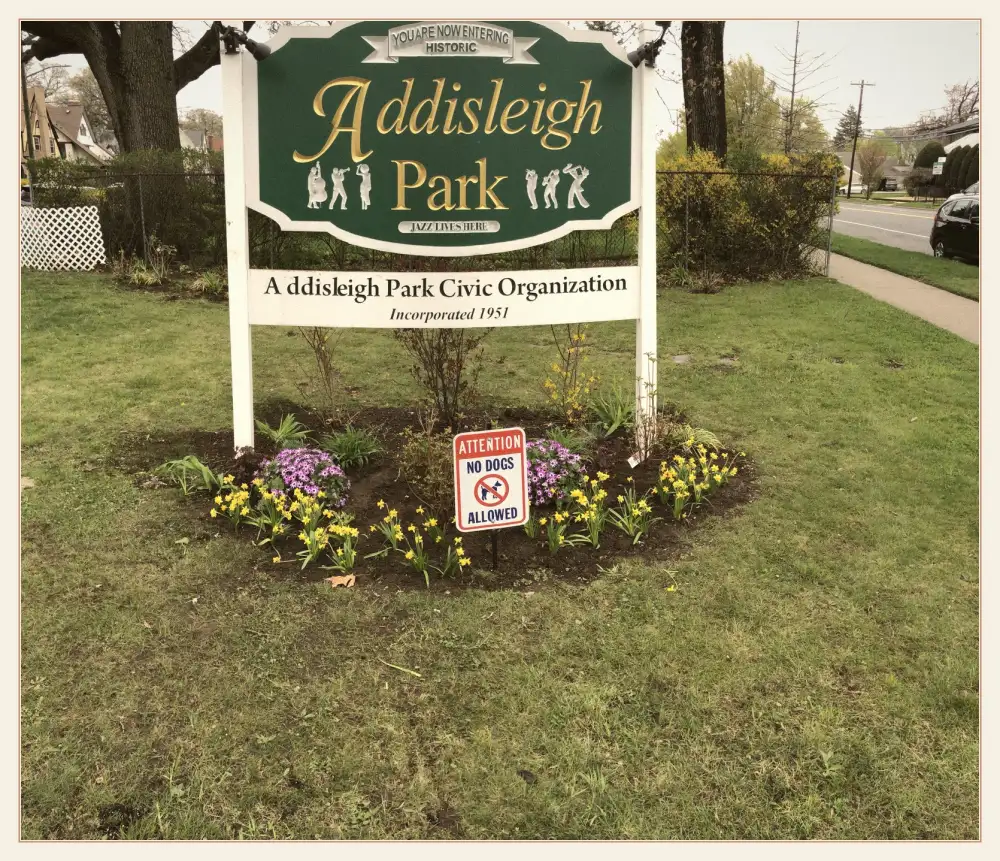
In the 1940s and '50s, the Black artists who made Birdland's reputation could headline on Broadway and still be refused an apartment three blocks from the stage door. Manhattan's white landlords and restrictive covenants saw to that. So jazz royalty bought houses in southeast Queens — specifically in Addisleigh Park, a leafy pocket of St. Albans whose Tudor homes had themselves been bound by whites-only deed covenants until Black buyers, lawsuits, and finally the Supreme Court's 1948 ruling against enforcing such covenants pried the neighborhood open.
The roll call reads like the Birdland marquee relocated to a garden suburb: Count Basie on Adelaide Road, Ella Fitzgerald on Murdock Avenue, Lena Horne on 178th Street, Mercer Ellington, Fats Waller, and for a time John Coltrane — with James Brown and Jackie Robinson rounding out what got nicknamed the African-American Gold Coast. In 2011 the city's Landmarks Preservation Commission designated the Addisleigh Park Historic District, formal recognition that these blocks are as much a jazz landmark as any Manhattan club.
And in Corona, Louis Armstrong — the most famous musician on the planet, a man who could have lived anywhere — moved with his wife Lucille into a modest brick house on 107th Street in 1943 and stayed until his death. The house is now the Louis Armstrong House Museum, preserved down to the turquoise kitchen, and in 2023 the Louis Armstrong Center opened across the street, holding a 60,000-piece archive and a 75-seat performance space.
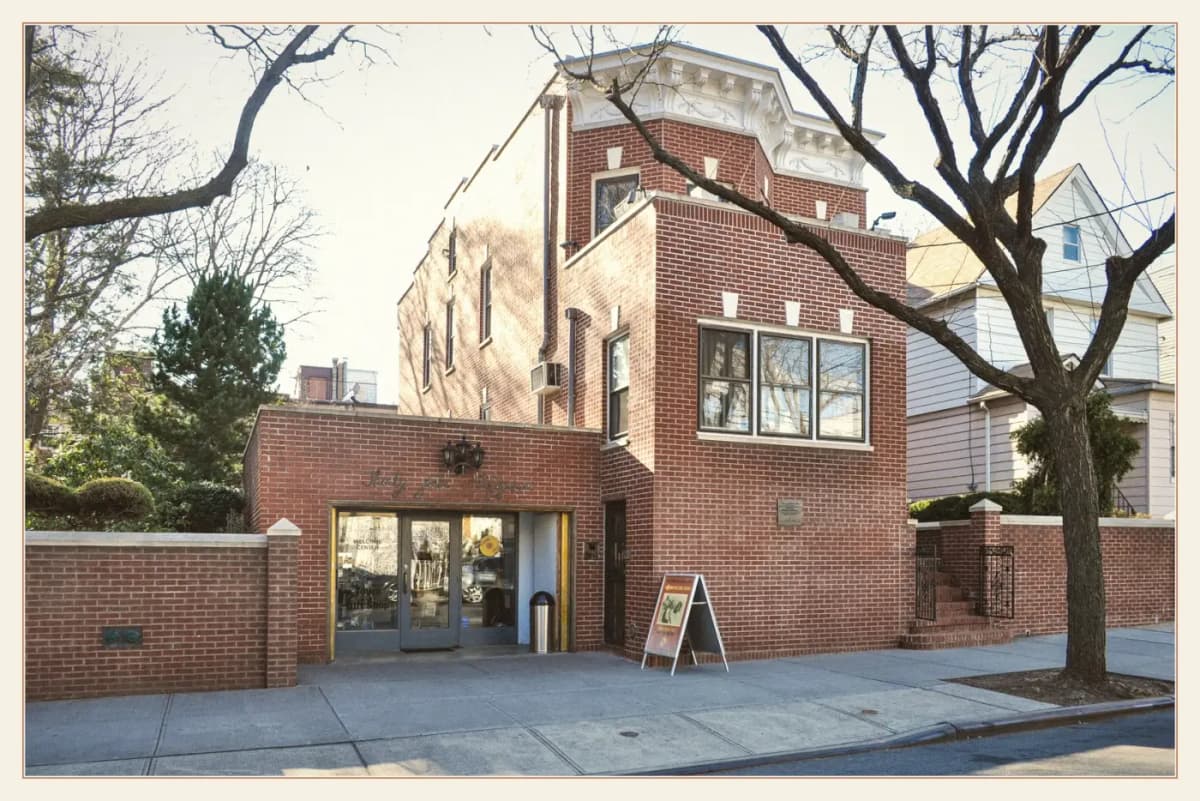
A border checks bodies before passports — and a 1940s Manhattan lease checked skin before talent. Queens is where the talent banked its genius.
So no, the database was not right. But it was wrong in the most instructive possible direction. If you go to Birdland on Friday — and I think you should — you are visiting the showroom. The factory floor of New York jazz memory is an E train away, in Queens, and it is still running.
If You're Reading This in Queens
Which brings me to the question my Queens readers are entitled to ask: do I need Manhattan for this at all? This summer, the honest answer is that Queens has its own doors, several of them cheaper and closer.
The Queens Jazz Trail Concert Series, Free, Through August 27
Kupferberg Center for the Arts, Flushing Town Hall, the Louis Armstrong House Museum, and NYC Parks are co-presenting the 2026 Queens Jazz Trail Concert Series: free outdoor concerts every Thursday at 7 p.m., July 9 through August 27, rain or shine, in parks across the borough. The night before the Birdland date, July 23, Arturo O'Farrill plays Forest Park Bandshell in Woodhaven. And on July 30, the John Yao Big Band plays Bowne Park in Flushing — a full big band, in Queens, for exactly zero dollars. If this Friday's set lights the fuse, that is your follow-up.
Flushing Town Hall's Monthly Jazz Jam
Flushing Town Hall, a landmarked 1862 building on Northern Boulevard, runs a monthly jazz jam with a house band led by baritone saxophonist Carol Sudhalter, who has anchored it since 2016. General admission is $15 ($5 for members), and musicians who come to play — any instrument, vocalists included — get in free. It is the lowest-stakes on-ramp into a jazz community I know of in this city: nobody there is a stranger twice.
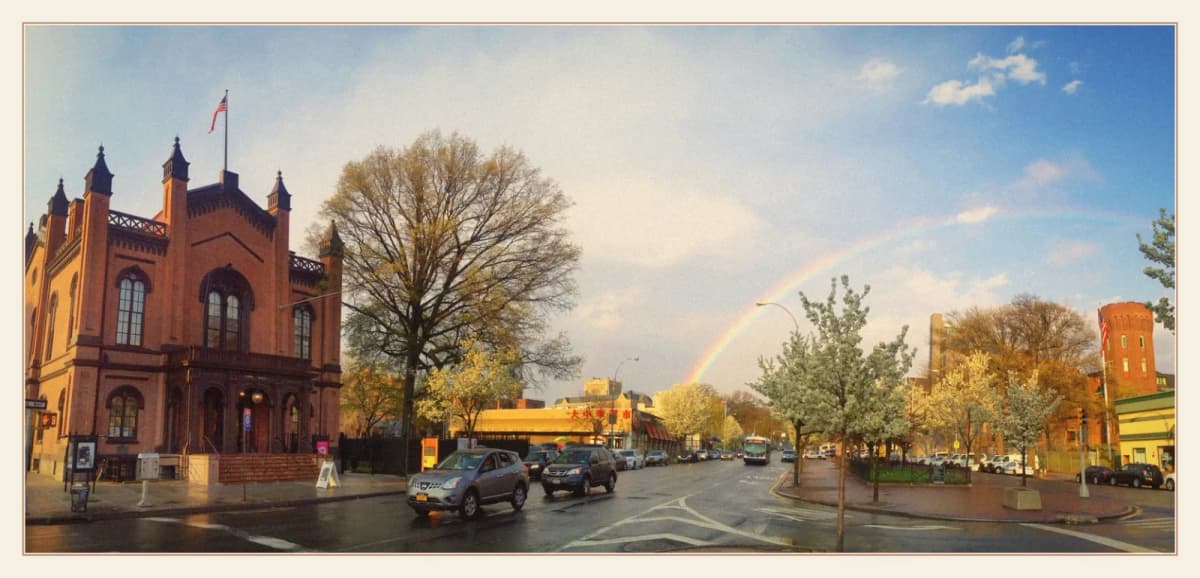
Terraza 7, Elmhurst
On Gleane Street in Elmhurst, Terraza 7 stages live music most nights of the week — Afro-Latin jazz, folk traditions, jam sessions, and its own resident Terraza Big Band — in a bilevel room where the bandstand hangs above the bar. It is the borough's standing rebuttal to the idea that serious improvised music requires a Midtown address or a Midtown check.
None of this is a reason to skip Birdland. It is a reason to stop treating Manhattan as the default and Queens as the annex. The community the borough tag imagined already exists; it just holds its meetings on both sides of the river.
Before You Go
• What: The Birdland Big Band, directed by David DeJesus
• When: Friday, July 24, 2026 — doors 4:30 p.m., music 5:30 p.m.
• Where: Birdland Jazz Club, 315 West 44th Street (between 8th and 9th Avenues), Manhattan — not Queens, whatever any listing tells you
• Tickets: $35.46–$45.76; book ahead, Fridays sell well
• At the table: $20 per-person food-and-drink minimum; full dinner menu
• Ages: 10+
• Getting there: A/C/E to 42nd Street–Port Authority, one block south, then two avenues of theater-district crowd; from Jackson Heights, the E runs direct in about 20 minutes
• Going solo: entirely normal here — solo listeners are seated without ceremony, and the early finish (around 7 p.m.) leaves the whole evening intact
One last piece of advice for my fellow travelers who read rooms for a living: take the early set, order the dinner, and stay through the closer. Then, before the week is out, ride the 7 to Corona and stand in front of a modest brick house on 107th Street. Hold both images at once — the neon awning and the quiet block. That pairing, not either half alone, is what New York jazz actually looks like. Take up space in both. The map was drawn without asking us; the memory wasn't.
4 places