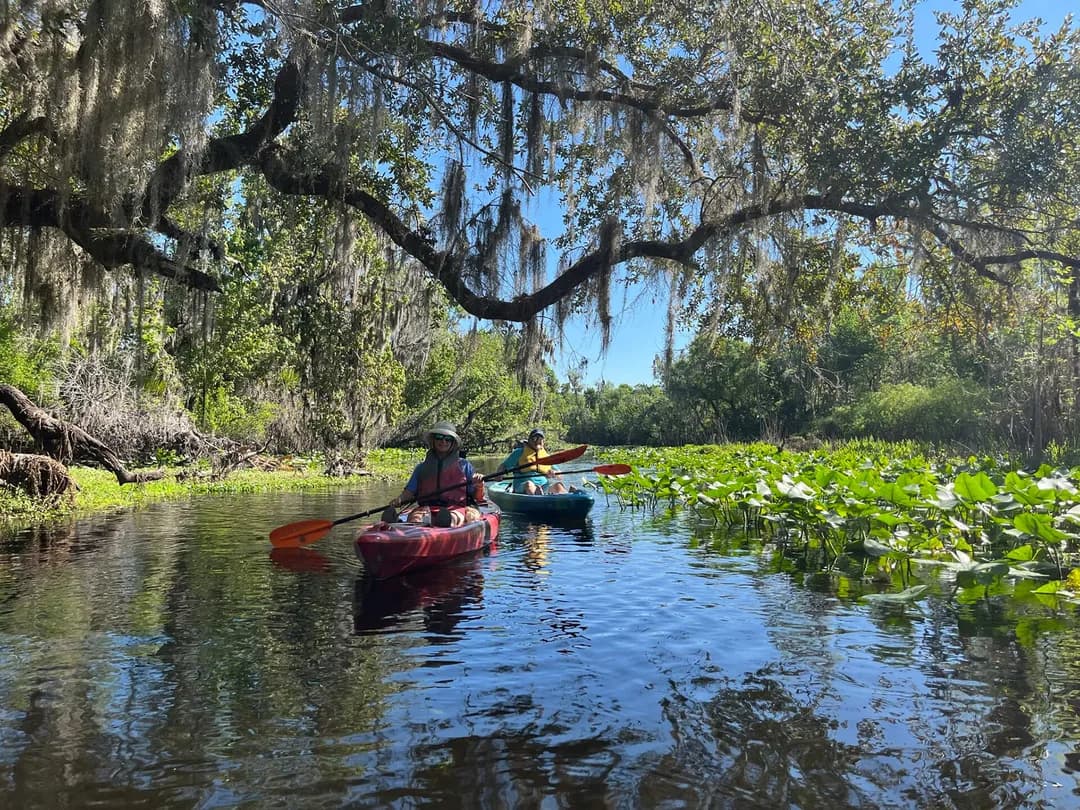

The Manatee Launch Is a Mile Past the Park Gate
A guided paddle out of French Landing, the dirt-road put-in past Blue Spring State Park. Two hours, beginner kayaks, and a river where manatees come and go with the season.
The address on your booking will send you down West French Avenue in Orange City, and the first thing you pass is the entrance to Blue Spring State Park. Keep driving. The operator's own instruction is to go about a mile past the park entrance, stay out of the park, and follow the dirt road to the end by the river. That last stretch is unpaved and it ends at a landing the operator calls French Landing.
This matters more than it sounds. The park is the famous address here, and it is not where your guide is standing.
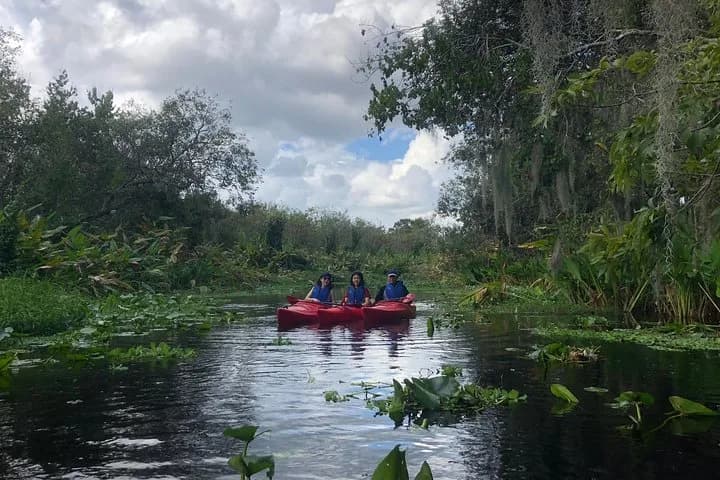
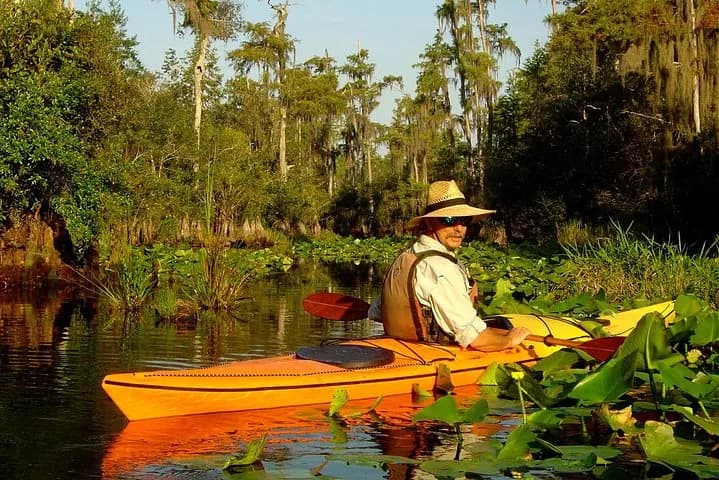
What you get is a two-hour paddle on the St. Johns River in a sit-on-top kayak, with a guide, a paddle, and a life vest handed to you at the landing. The operator calls this its beginner trip and says to show up early if you want a few minutes of personal instruction before launching.
Two departures run, one at 9am and one at noon, and the schedule carries them every day of the year. Check-in is fifteen minutes before the hour you booked. The operator is blunt about that line: it launches on time. The people who showed up when they said they would should not have to wait.
One booking covers up to ten paddlers. Bottled water, a sticker, and photographs of your group come with it.
 Orlando Manatee EncountersTwo-hour guided kayak tour on the St. Johns River with Adventures in Florida. Departs 9am and noon from French Landing, Orange City.www.viator.com
Cold Water Gathers Them, Warm Water Spreads Them Out
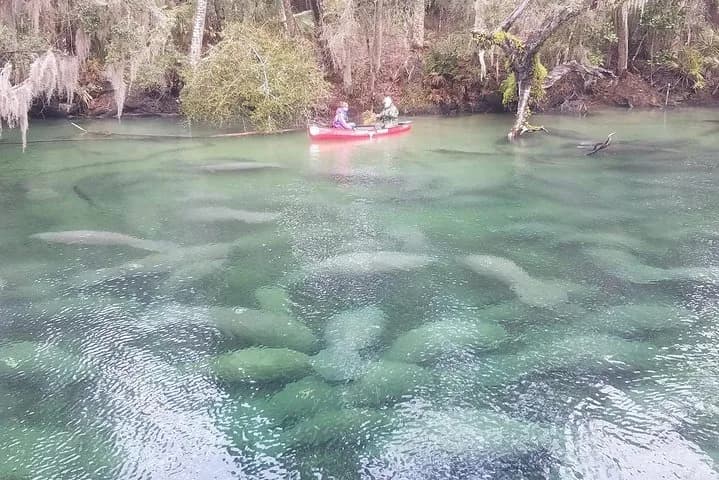
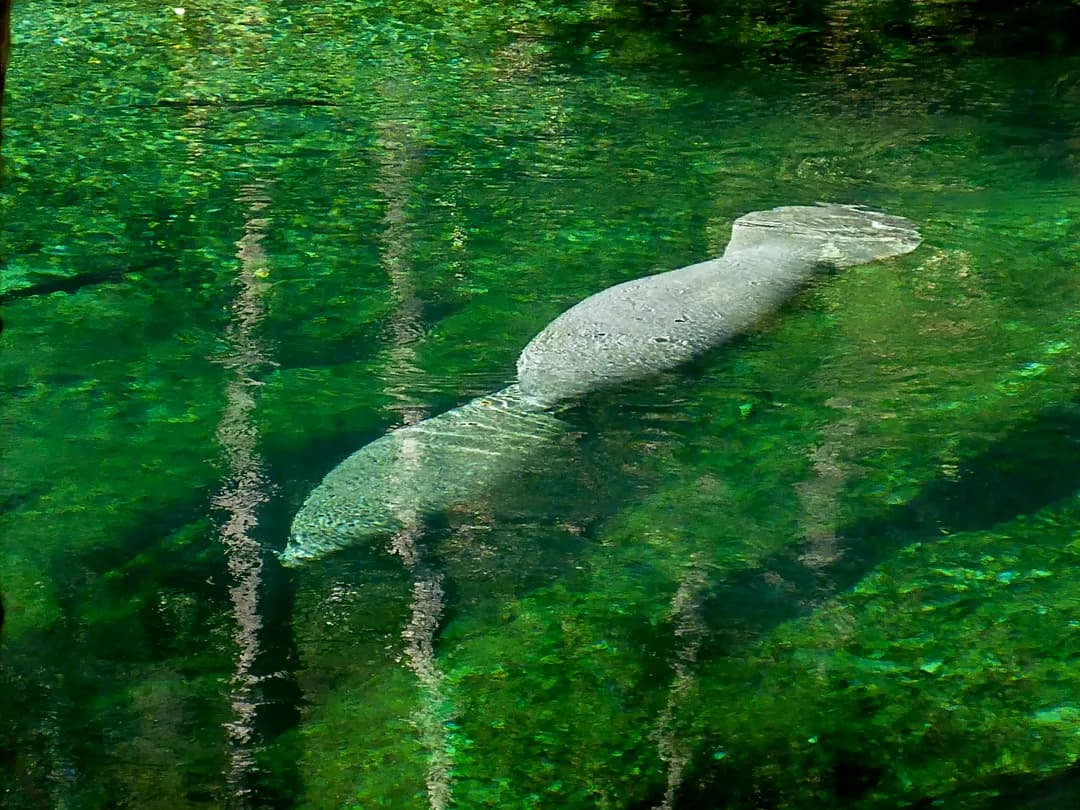
Here is the part worth reading before you book. The listing describes Blue Spring as a winter home for one of Florida's largest manatee populations and paints a picture of hundreds of them massed in the spring. That crowd is a cold-weather event. The same two departures run all twelve months, and the calendar changes how many animals are in reach of a kayak.
Manatees move into the spring when the river turns cold and spread back out into the St. Johns when it warms. Travelers writing in January and February describe animals surfacing alongside the kayaks. Travelers writing in July and August more often describe one or two. The accounts that report seeing none sit mostly in late March, when the water has warmed and the animals are moving out, with a few scattered through other months. Nobody on the water can promise you a count.
The second thing to hold onto is what this trip is. You put in on the river, outside the park gate, among animals that travel between the river and the spring. It is a paddle that manatees pass through, which is a different proposition from a viewing platform with a railing.
Everything Else in the Water
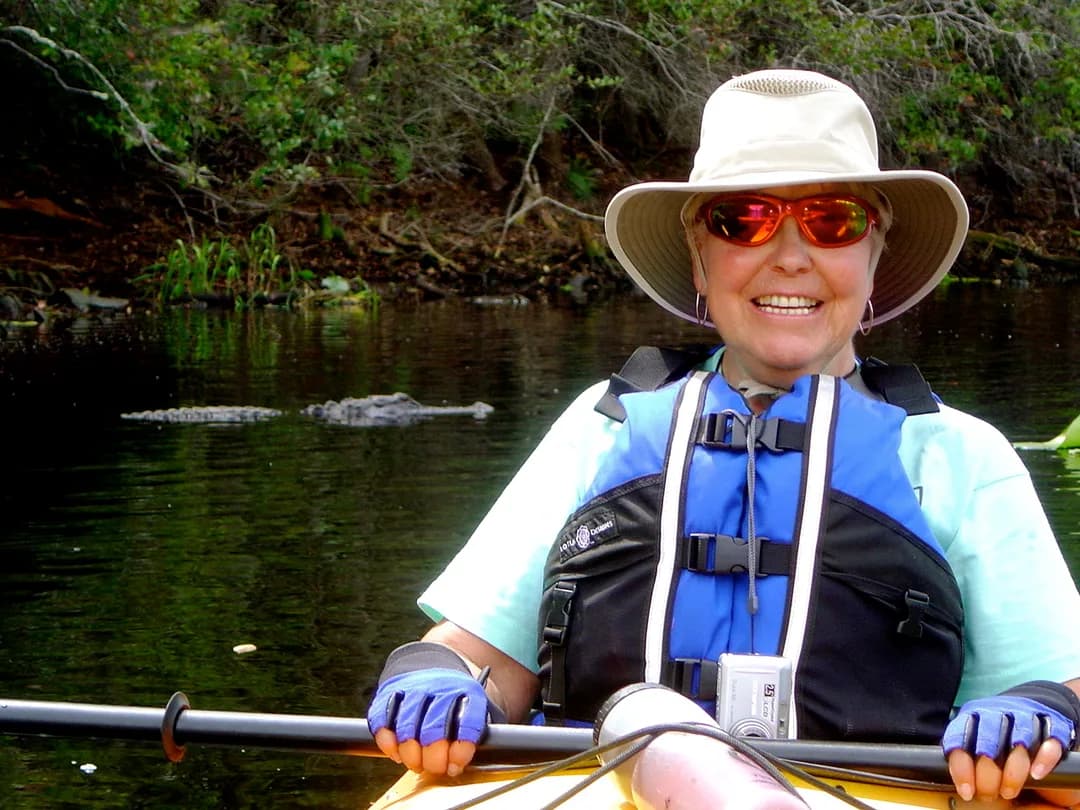
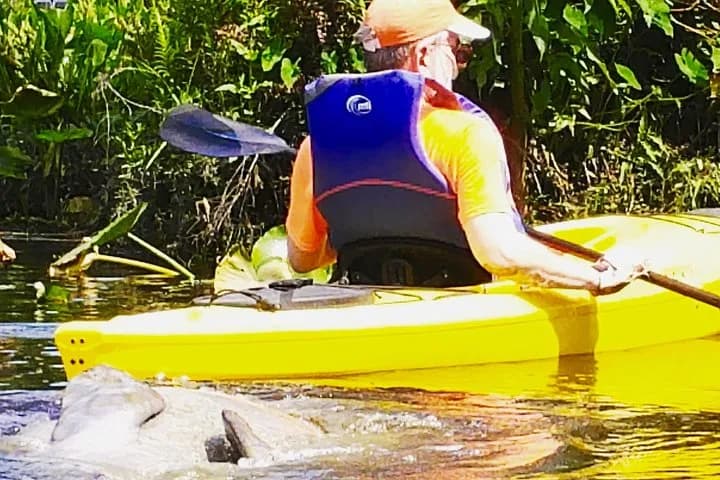
The operator's own description of this trip leads with the range: alligators sunning on the bank, turtles basking, otters, and the birds that work this stretch of river. It says black bear, wild boar, and white-tailed deer turn up on occasion, which is the honest way to put something that occasional.
A guide rides with the group and, by the listing's account, is a Florida Master Naturalist. The job on a trip like this is mostly to tell you what you are looking at when something surfaces.
Who the River Will Take
There is one hard gate and both the listing and the operator state it the same way: everyone on the water must know how to swim. That is not a formality on a river with current and no dock to climb back onto.
Plan the day as not wheelchair accessible and not stroller accessible, because that is how the operator describes its own launch. The listing reads the other way. It ticks wheelchair accessible and ticks it again for transport, while the operator's own tour page says in plain words that neither holds here. Go with the operator. The put-in is a dirt road ending at a riverbank.
The booking form asks for each person's height and weight so the right size kayak is on the trailer when you arrive. The booking notes set the limits at 250 pounds for a single kayak and 450 for a tandem, and they ask you to say which one you need when you book.
Before You Drive Out
There is no restroom at the landing. The operator points people to the public restroom at Valentine Park, 1511 West French Avenue, which you pass about a mile before the turn. Use it on the way in.
Bring a swimsuit or shorts that can get wet, sandals or water shoes, sun protection, a towel, and a dry change of clothes. A waterproof camera or phone case earns its place.
No bus goes to the landing. A rideshare can get you down the dirt road, and arranging the ride back out is on you. Drive if you can. Guides commonly text or call the day before to introduce themselves and go over the directions, and one traveler's account describes the launch point moving to another site on a day's notice, with the call going unanswered and the trip missed. Give the operator a number you will actually pick up.
Rain on its own is not a cancellation. The operator says it departs in rain for most activities, waits thirty minutes past any lightning strike within ten miles, and may push the launch past the hour you booked, so come ready to sit out a stormy morning. A guide calls the trip off only when conditions stay unsafe.
Booking closes twenty-four hours before departure, and that same twenty-four hours is the line for a full refund. Inside it, the fare is not refundable.
Pack the car the night before, make the Valentine Park stop, and let the dirt road do what it does to expectations. Two hours later you are back at the landing with wet shorts, a free sticker, and a camera roll somebody else shot for you while you paddled.