Shops / Venue
The List or the Wander: A Gift Hunter's Guide to Metropolitan Pavilion's Market Season
Chelsea's big loft venue turns into a different shop every few weeks — a vintage floor in October, a jewelry salon the week after, a craft fair by Thanksgiving. Whether you leave with the perfect gift or leave empty-handed comes down to one decision you make before you buy the ticket.
 Kiera Lane
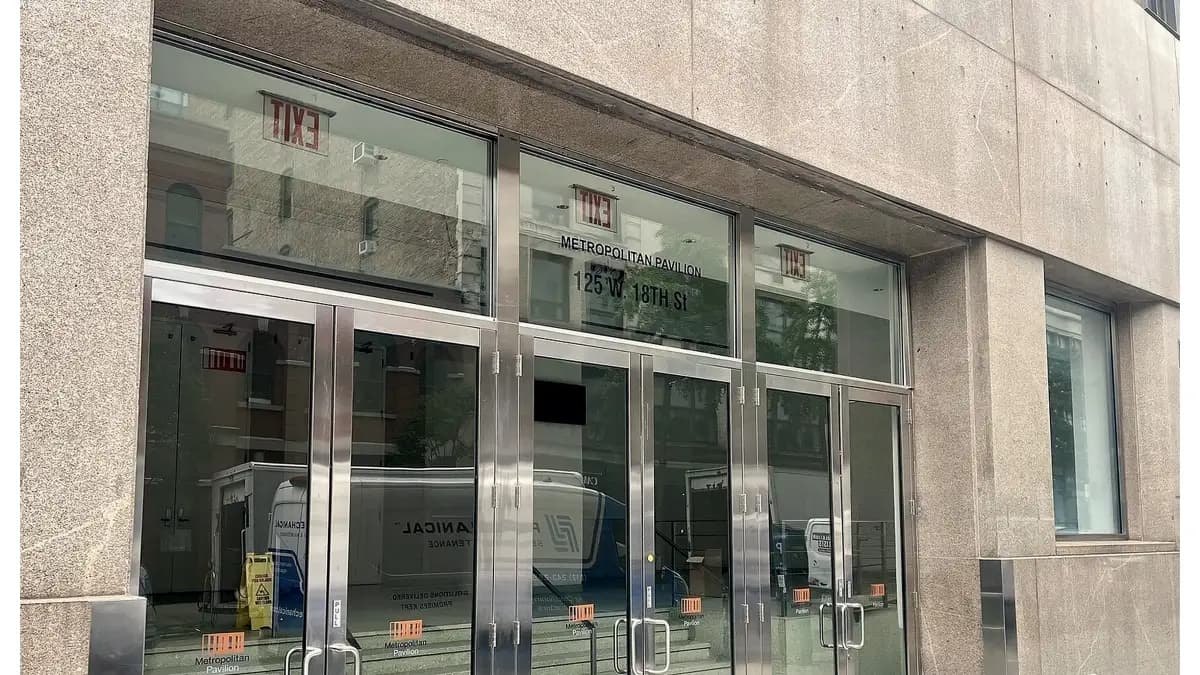
Start with the picture, because the picture is the trap. Late afternoon on West 18th Street, October light coming in low from Seventh Avenue, and a woman ahead of you on the sidewalk carrying a garment bag like it contains a state secret. She has clearly won. Behind her, the glass doors of Metropolitan Pavilion swing and swing, and through them you can see racks — hundreds of them — under warm track lighting and white Corinthian columns. Every instinct you have says: go in, drift, something wonderful will find you.
I want to be precise about this, because I have tested it with my own money: something wonderful will find you approximately never. I have walked out of that building carrying the exact 1970s cocktail ring my mother didn't know she wanted, and I have walked out of the same building two hours poorer in time with nothing but a coat check stub. The difference between those two afternoons was not luck. It was whether I arrived with a list.
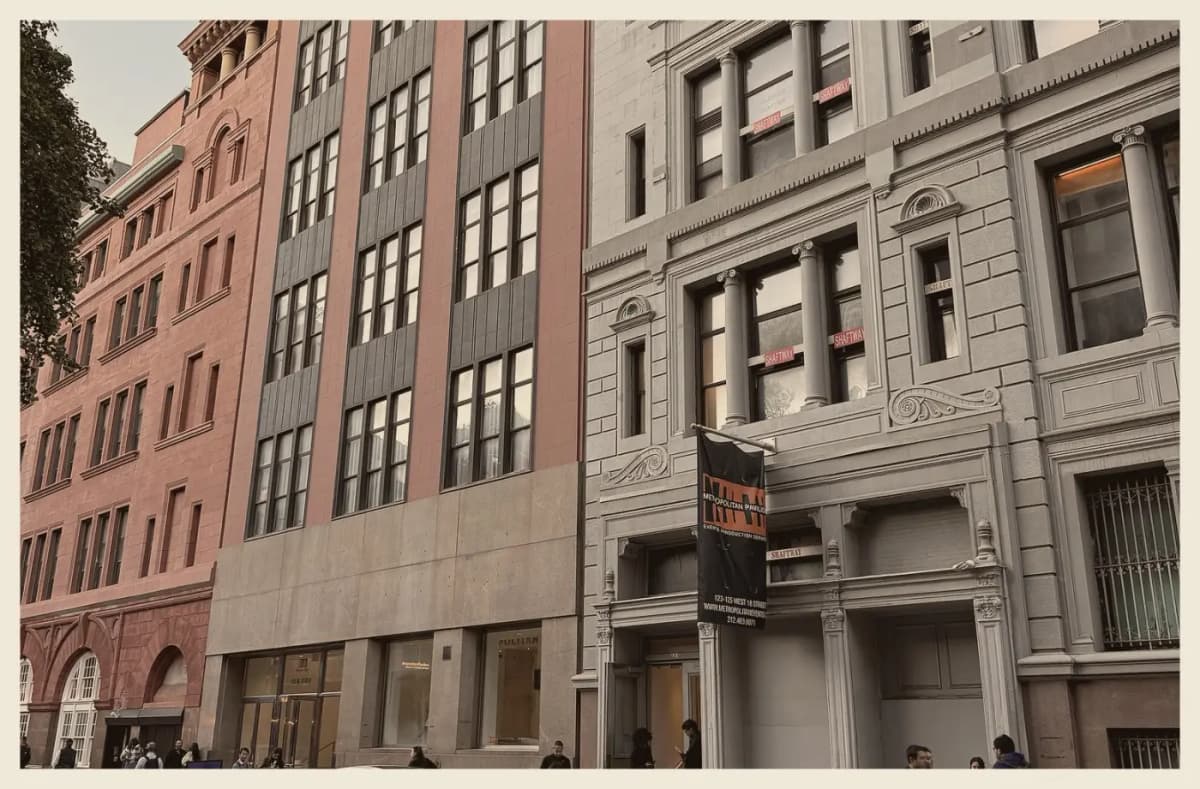
One housekeeping note before we plan anything, because the databases will try to confuse you. Metropolitan Pavilion sometimes shows up in event listings filed under the wrong borough entirely. The building is at 125 West 18th Street, between Sixth and Seventh Avenues in Chelsea, Manhattan — one block from the old Ladies' Mile shopping corridor, a short walk from the 1 train's 18th Street stop. If a listing puts it anywhere else, trust the street address, not the tag.
What This Building Actually Is
Metropolitan Pavilion is not a store. It is a 45,000-square-foot events venue that has been renting itself out since 1992, founded by Alan Boss — a man whose background, fittingly for our purposes, was flea markets and vintage clothing. The main floor alone runs 25,000 square feet, big enough for about 120 booths, and for the largest shows it can link up with the landmark Altman Building next door at 135 West 18th.
The practical consequence: there is no point asking whether Metropolitan Pavilion is "good for shopping." The building is a stage. What matters is which production is on. Some weekends it hosts trade shows you cannot enter without an industry badge; other weekends it holds three of the best gift-hunting floors in New York. Your job is to read the calendar the way you'd read a menu — and this fall, the menu is unusually good.
The Fall 2026 Gift Calendar, In One Place
Three market weekends are worth planning around between now and the holidays, and they suit three different kinds of gift.
Manhattan Vintage — October 16 to 18. The city's flagship vintage fashion show returns to the Pavilion with more than 100 dealers spanning every era and price point. This is where you hunt the one-of-one gift: the Edwardian locket, the 1980s designer blazer, the bag nobody else at the dinner will have. Recent editions have priced one-day general admission at $20, a full-weekend pass at $35, and a $45 early-access ticket that gets you in an hour ahead of the Friday crowd with re-entry all weekend; fall tickets typically go on sale closer to the date.
New York City Jewelry & Watch Show — October 22 to 25. Four days later, the same floor fills with more than 80 exhibitors of antique and estate jewelry and watches for the show's 11th edition. This is milestone-gift territory — engagements, big birthdays, the watch that becomes an heirloom — with a public exhibition alongside the trade days.
Renegade Craft — November 14 to 15, then December 5 to 6. The independent-maker fair lands twice at the Pavilion before the holidays, with entry free (a small donation is suggested at the door). Ceramics, prints, small-batch everything: this is your under-$50 gift floor, and the lowest-stakes way to meet the building for the first time.
Same doors, same columns, three completely different games. The vintage show rewards preparation, the jewelry show rewards research, and the craft fair forgives almost anything.
The Only Question That Matters: List or Wander?
Here is the honest sorting test, and I'd rather you take it now, in July, than in the ticket line in October.
You are a list shopper if you can name the person, the occasion, and a price ceiling before you walk in. The Pavilion's big shows are built for you. A hundred-plus dealers sounds romantic until you're standing in aisle three with sensory overload; a list converts that abundance from noise into a search grid.
You are a wanderer if you're going "to see what's there." I say this with love, because I have been her: at the vintage and jewelry shows, the wanderer is the person most likely to go home empty-handed — or worse, $400 deep in something she'll resell in a year. Wanderers should start with Renegade, where entry is free and the median mistake costs $28, and treat the ticketed shows as inspiration days with a strict spending lock.
Neither answer is wrong. But the shows punish people who pretend to be one while behaving like the other, and the punishment is specific: crowds eat your energy, prices eat your resolve, and at 4 p.m. you buy something mediocre just to have bought something.
1. Write the gift list before you buy the ticket
Not "something for Mom." Write: Mom, 60th birthday, wears gold not silver, size small hands, ceiling $250. Three lines like that, maximum. At a hundred booths, a vague list is the same as no list — you cannot pattern-match "something nice" against ten thousand objects, but you can absolutely scan a room for gold cocktail rings under $250.
2. Filter the booths from your couch
This is the step almost everyone skips, and it's the single highest-return hour of the whole project. Manhattan Vintage publishes its dealer lineup ahead of each show, with images and social handles for the exhibitors. Spend an evening with it. Shortlist eight to ten dealers whose racks match your list, follow them, and note what they've been posting. Walk in with a route, hit your shortlist first, and only then let yourself drift. The wander is so much sweeter when the errand is already done.
Helpful Tip: Screenshot your shortlist and your gift list into one photo album on your phone. Signal inside a packed show floor can be miserable, and a dealer's booth is not where you want to be re-deriving your budget from memory.
3. Time your entry around the crowd, not your convenience
Show floors have a crowd curve, and it is remarkably predictable: a hard surge at Saturday midday, a slow exhale after 3 p.m., and a strange, glorious calm in the first hour of any day. If your list contains anything rare — a specific size, a specific era, a specific stone — the $45 early-access hour at the vintage show is a genuine splurge-but-worth-it: you are paying roughly the cost of two Chelsea cocktails to shop the best racks in New York while they are still full and the aisles still legible. If your list is flexible, do the opposite: go late on the final day, when dealers would often rather negotiate than repack.
4. Budget like an analyst, not like a romantic
The Pavilion's shows sit at very different price altitudes, and knowing the altitude in advance is what keeps you from the two classic failures — overpaying at the vintage show, or under-arming yourself at the jewelry show. My planning table for this fall:
On vintage pricing, be clear-eyed: the charming mid-tier pieces tend to land in the $300–$500 band, and designer names climb well past that. Some of those prices are fair for what the garment is; some are Manhattan-event markup. Your ceiling number, written down in advance, is the only referee you'll have in the room.
5. Manage the empty-handed risk like a grown-up
Three rules cover ninety percent of it.
First: if it's on your list, in your budget, and you love it — buy it then. Vintage floors have no restock; the jacket you "think about over lunch" belongs to someone else by dessert. Second: check fit honestly. Much of what's on the racks predates stretch fabric, and sizing ran differently across eras; ask the dealer straight out whether a piece can be tailored, and price that into your ceiling. Third — and this is the one nobody tells you — pre-decide your fallback. If the vintage show doesn't surrender the gift, Renegade lands three weeks later with a floor full of $40 answers. A gift hunt with a scheduled second chance is a plan; a gift hunt without one is a gamble that ends at a gift card.
Empty-handed isn't a personality flaw. It's a forecasting error — and forecasting errors are fixable.
Helpful Tip: Bring a tote and wear things that come off easily over your clothes if you plan to try anything on. Dressing rooms at market shows are improvised at best, and the layered-slip-dress-over-leggings trick will save you twenty minutes of queueing.
The Neighborhood Was Built for Exactly This
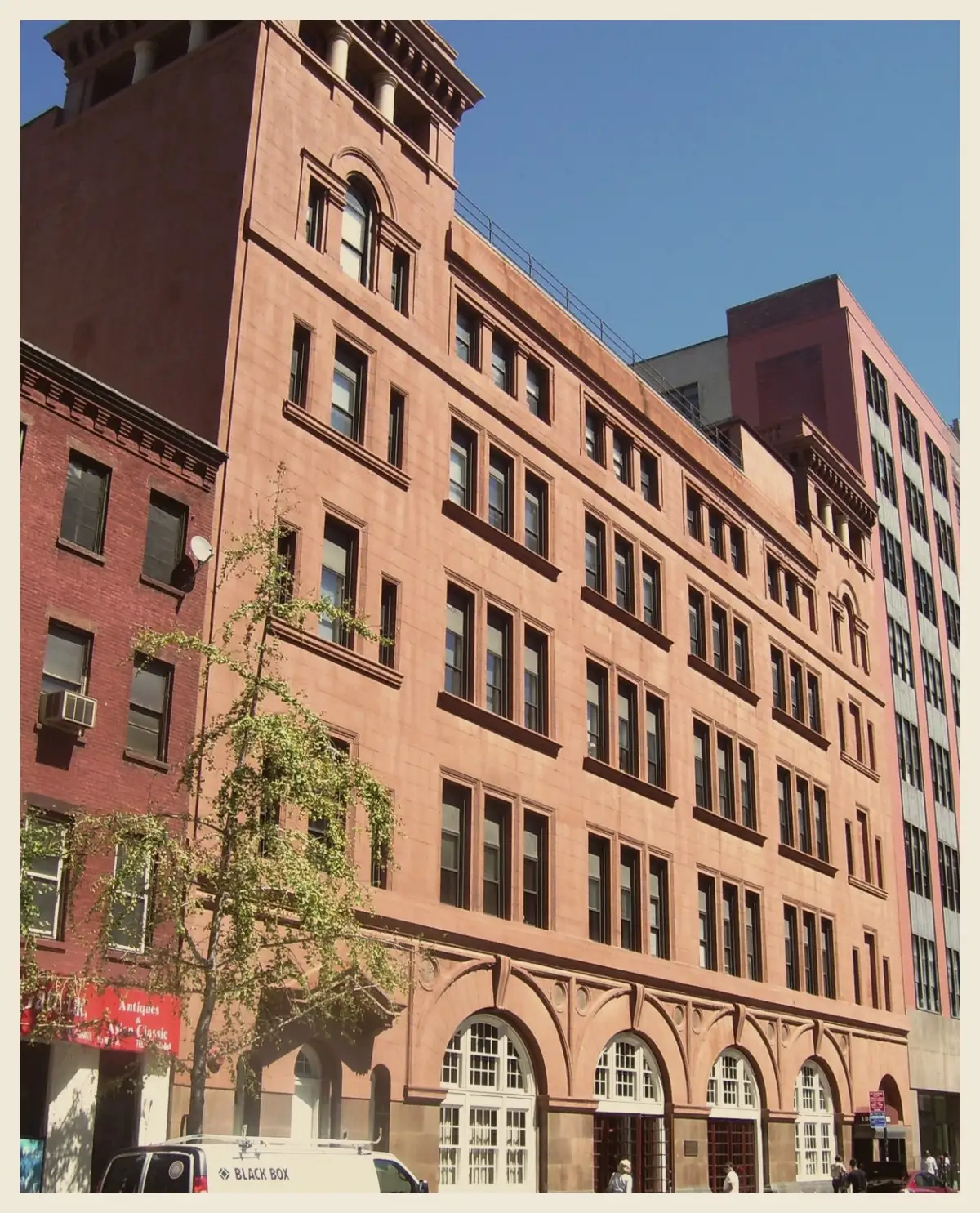
If you want a reason to feel less silly about crossing the city — or the harbor — for a shopping event, look at the block itself. The red-brick Altman Building a few doors down was built in 1896 as the carriage house for B. Altman's department store empire, back when deliveries left this street by horse.
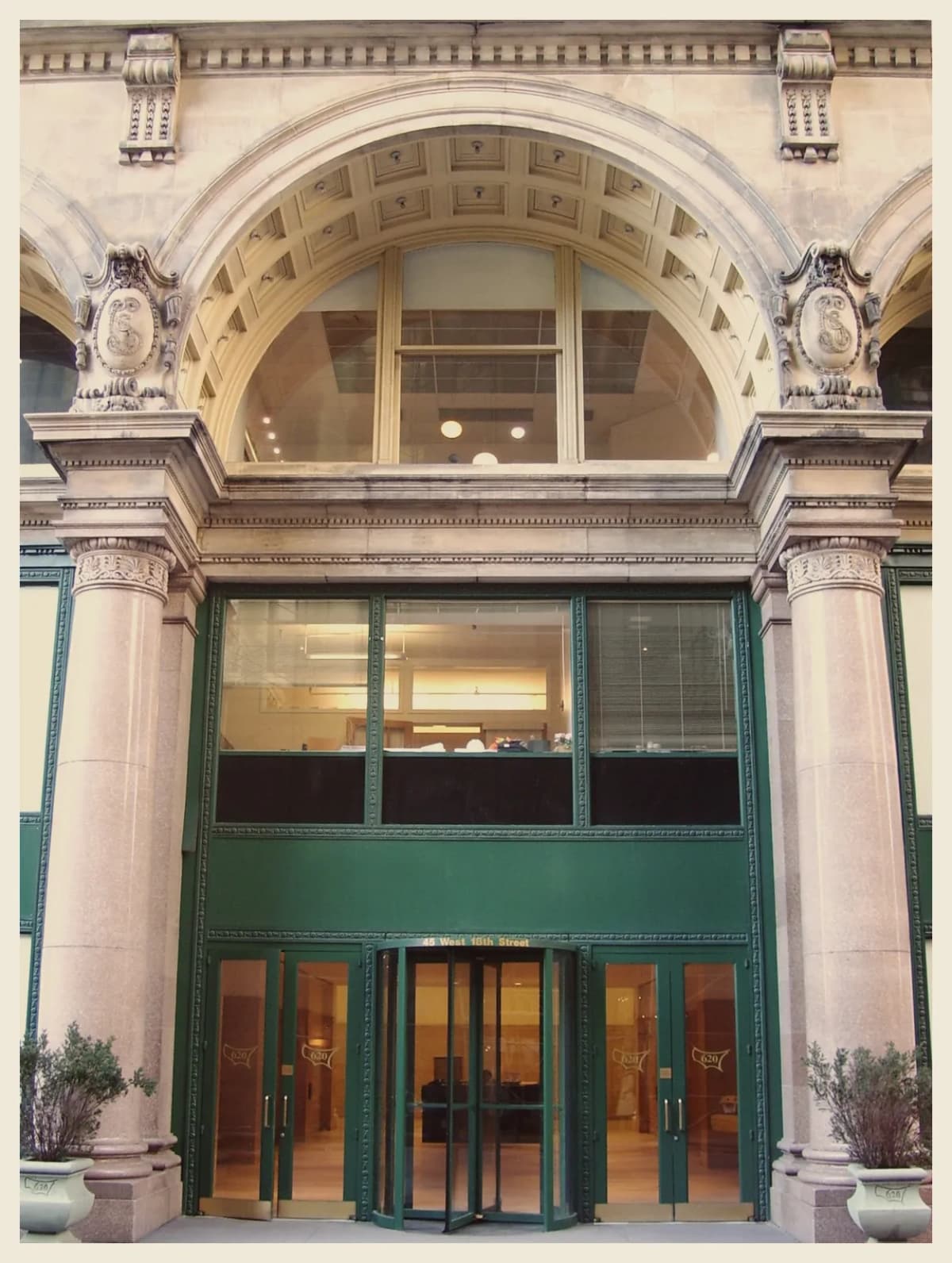
One block east, the colossal arched entrance at 620 Sixth Avenue belonged to Siegel-Cooper, the 1890s "Big Store" whose opening day reportedly drew crowds in the six figures. This stretch of Chelsea was the Ladies' Mile — the district where New York invented the shopping trip as an event, a full day out with a plan and a budget and, yes, a list.
A hundred and thirty years later, the same blocks are still running the same play, just in seasonal bursts instead of daily hours. Walking that lineage with a gift list in your pocket is, I'd argue, the most historically accurate way to shop in New York.
The Verdict
Go — but go on purpose. Metropolitan Pavilion's market season is one of the best gift-hunting circuits in the city precisely because it isn't a mall: the inventory is finite, the dealers are specialists, and the calendar gives you three distinct chances between October and December to solve your entire holiday list at three different price points. List shoppers should target Manhattan Vintage's opening hours and the jewelry show's public days. Wanderers should start at Renegade in November, keep the stakes low, and graduate to a ticketed floor once they've felt the crowd rhythm.
And if October 18 finds you back on West 18th Street at golden hour, empty-handed anyway? The fallback fair is already on your calendar. That's not a consolation prize; that's what a plan looks like.
So — whose name is at the top of your list, and which of the three weekends are you giving it to?
Metropolitan Pavilion, 125 West 18th Street, New York, NY 10011