

The Gloucester Boat Goes Wherever the Humpbacks Are Feeding
The sanctuary starts three miles off Cape Ann, but the boat works wherever the whales have moved. Four hours covers the search, not just the sighting.
Captain Fred Douglass founded Cape Ann Whale Watch in Gloucester in 1979, and his son Jim runs it now with a partner. The destination is Stellwagen Bank, an 842-square-mile national marine sanctuary that sits entirely in federal water, its boundary running from three miles southeast of Cape Ann down to three miles north of Cape Cod. Humpbacks, finbacks and minkes arrive each year to feed. The boat is not bound to the bank. The listing is explicit that the vessel will work the North Shore, the South Shore, or the water off Boston, wherever the whales have moved to. Four hours covers the search as much as the sighting.

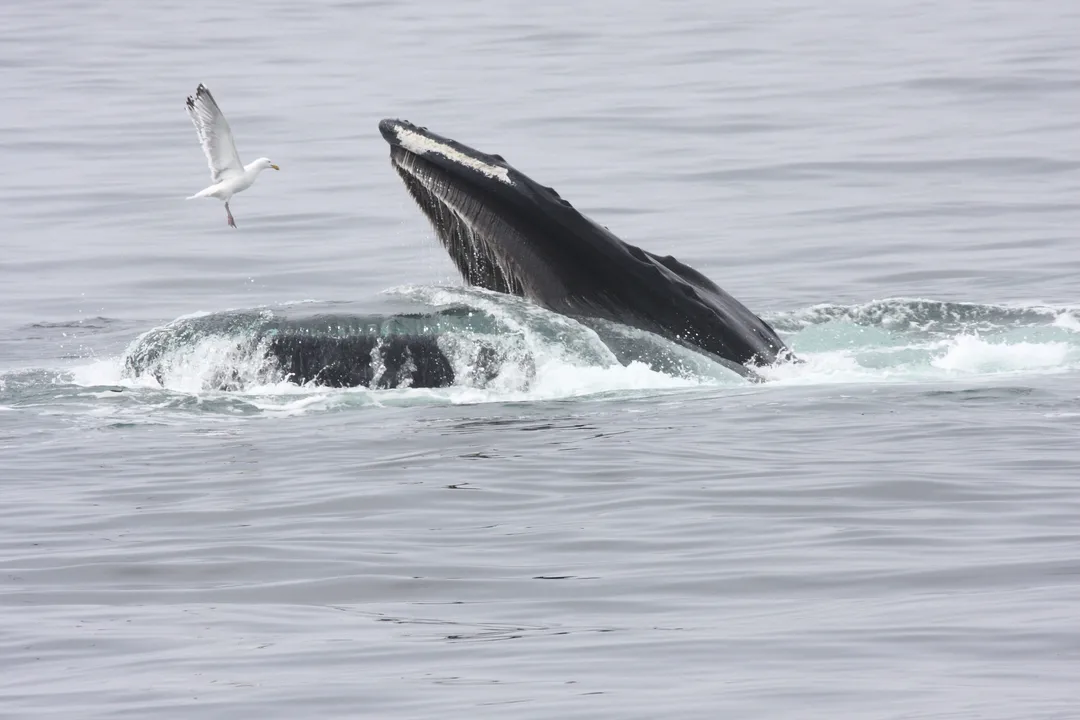
Departures leave from 415 Main Street in Gloucester, up the coast from Boston, and the ticket office asks you to check in 45 minutes ahead. That window covers parking, check-in and boarding. Parking at the dock is free and unmetered, a few steps from the gangway. The vessel is the Hurricane II, 115 feet, with upper and lower observation decks and a heated cabin below.
 Whale Watching Tour in GloucesterFour hours round trip from 415 Main Street · Naturalist on board · Heated cabin and full galleywww.viator.com
The Boat, and What Is On It


Both observation decks stay open for the whole trip, and the operator puts the boat's total viewing space at 400 feet. Below deck there is a heated, furnished cabin with a full galley serving hot meals, snacks and cold drinks, plus a bar. The galley and the bar run on your own money; the fare covers the passage, the guide and the naturalist, and nothing you eat. The listing caps a shared sailing at 240 travelers, which is a ceiling on bodies rather than a count of seats: the operator's own figures are a sundeck for 117 and cushioned seating for 85 in the heated cabin. The operator's schedule page is the useful tell on crowds: it puts the morning trips down as the least busy, and weekdays as quieter than weekends.
How the Fleet Finds Them
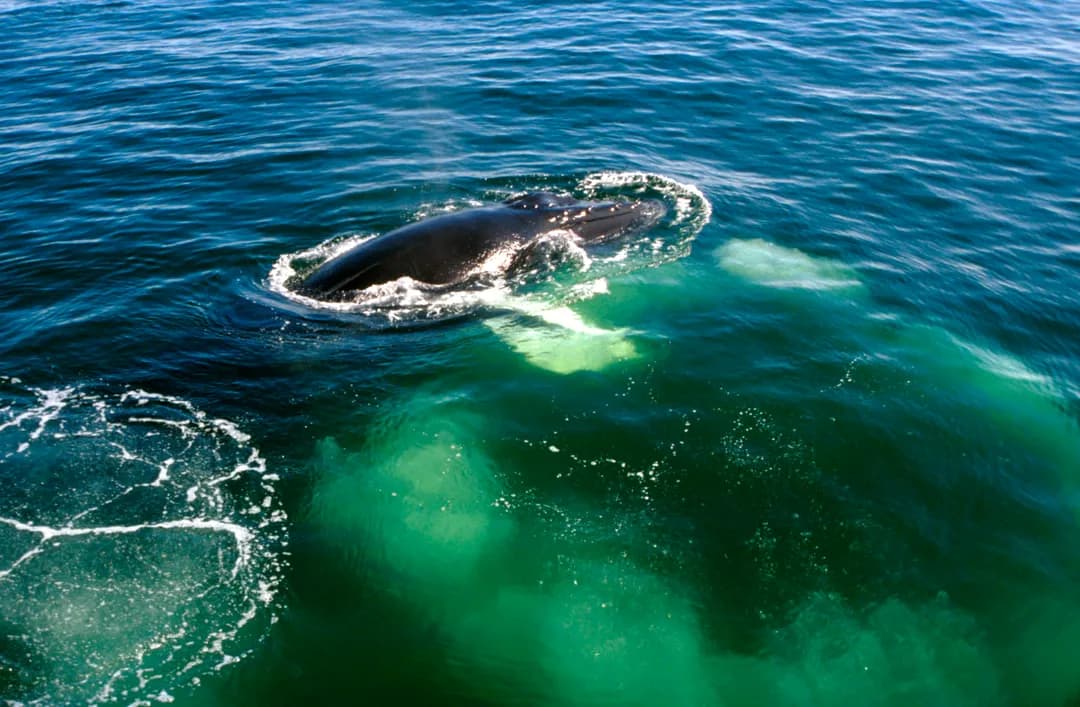
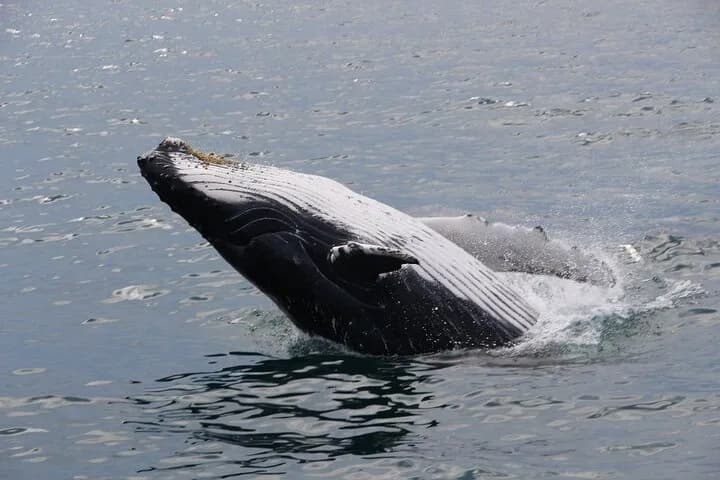
A naturalist sails on every departure and narrates what comes up alongside, and the vessels talk to each other by radio about where whales are working, which is how a four-hour window gets spent on water that is already producing. Humpbacks are the animal most trips are built around, and they feed at the surface in ways that read clearly from a rail: lunging up through bait with the mouth open, or ringing a school with a net of bubbles and rising through the middle of it. Minkes and finbacks are the other two the sanctuary names as regular sightings, along with dolphins and porpoises; the listing adds pilot whales to the roster. The listing opens by telling you that sightings are guaranteed, and the operator's own guarantee page sets out what that is worth: see nothing on your sailing and you may come again free for life until you do, which the same page states plainly is not a money-back guarantee — a remedy written for people who can drive back.
Four Hours at Sea, and Who Should Weigh It
The listing rates the activity as suitable for all fitness levels, and nothing about it asks more than moving around a deck. The same listing separately advises against the trip for travelers with poor cardiovascular health, and the two notes are worth reading separately rather than as one verdict. Once the boat leaves the dock the commitment is the whole trip, with no way to step off early: the listing fixes that at four hours, while the operator's schedule page puts its trips at three to four. Dress for the water rather than the forecast — the operator's own figure is ten to twenty degrees cooler out there than ashore, on any day. Children are welcome with an adult.
What a Seat Costs
The listing prices four tiers: 48 dollars for adults aged seventeen to fifty-nine, 45 for seniors sixty and over, 40 for ages four to sixteen, and 10 for under-fours, who have to be counted on the reservation either way under Coast Guard rules. A single booking tops out at ten travelers. Fares are the operator's to reset between seasons, so read the figure on the card at checkout as the live one rather than any number you met on the way in. The fare covers the guide and the onboard naturalist. It leaves out food and drink, gratuities, and hotel pickup, which the operator does not run at all. Everyone meets the boat at the dock.
The operator runs May to October, and inside that window the published timetable turns on the day of the week as much as the month. Weekends run two departures, 8:30 AM and 1:30 PM, right across the season; weekdays drop to one — late morning in spring and in October, early afternoon in September — except through high summer, when every day gets both. The calendar then empties out until spring. Cancellation is free up to 24 hours before departure, and the operator will move you to another date or refund you in full if it calls the trip off for weather; the listing also files the trip as needing a minimum number of travelers to run, which is the other way a departure comes off the board. Tickets scan from a phone or on paper. Check in at 415 Main Street three quarters of an hour early, and spend the wait on the upper deck rather than in the cabin, where the first thing worth watching is the harbor dropping away astern.