

The Gilded Age City Hiding Around the Flatiron Building
A guided walk around Madison Square that reads hotels, department stores and old shop fronts for what is left of New York's Gilded Age center.
Between the 1860s and the 1920s, the blocks around Madison Square were the fashionable center of New York, with grand hotels, theaters and carriage-trade shops. Loft buildings and offices later ran over most of it. Pieces survived in the street walls.
This walk is about reading those pieces: what went up when, for whom, and what replaced it. The guide carries historic photos and maps, so you can hold the old view up against the street you are standing on.


Booking covers a professional guide and nothing more, and tips are extra. Departures leave at 10:00 AM and 2:00 PM. Travelers must be 12 or older, with an adult on every booking. A full refund needs at least 24 hours' notice before the start time.
 Explore the Ruins of a Forgotten City in the Middle of Manhattan2 to 3 hours · guided walk from the Flatiron Building · ages 12 and upwww.viator.com
Fifth Avenue and the Ladies' Mile
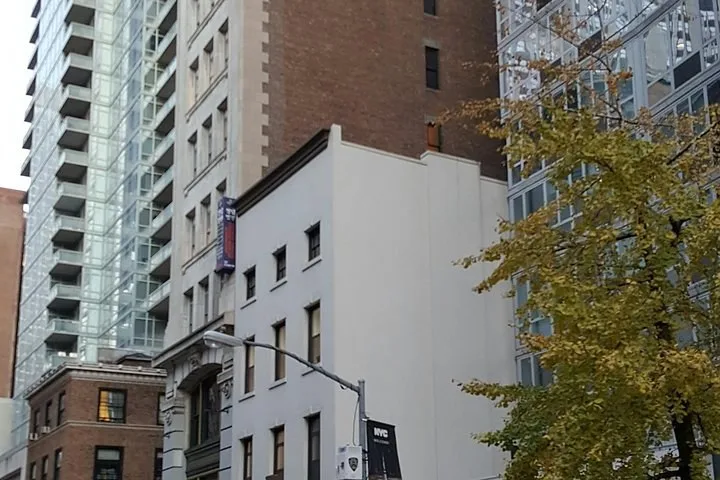
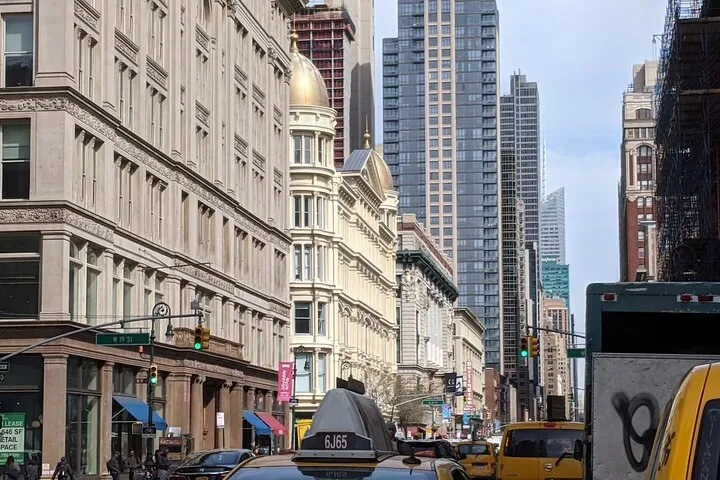
The walk opens with context at the corner where Fifth Avenue, Broadway and 23rd Street meet. That junction was becoming the social and cultural hub just as new industrial money, the Vanderbilts among it, began to outspend old landed families like the Astors.
From there it works down Fifth Avenue from 23rd to 18th Street block by block, putting the buildings in order and spending time on the steel-frame manufacturing loft that turns up all over Manhattan. Broadway between Madison Square and Union Square runs only six blocks, and it was the carriage-trade stretch of the Ladies' Mile, with no elevated train and no horsecar rails. The Theodore Roosevelt Birthplace on East 20th Street comes up on the way, seen from outside.
Department Stores, Then the Tenderloin
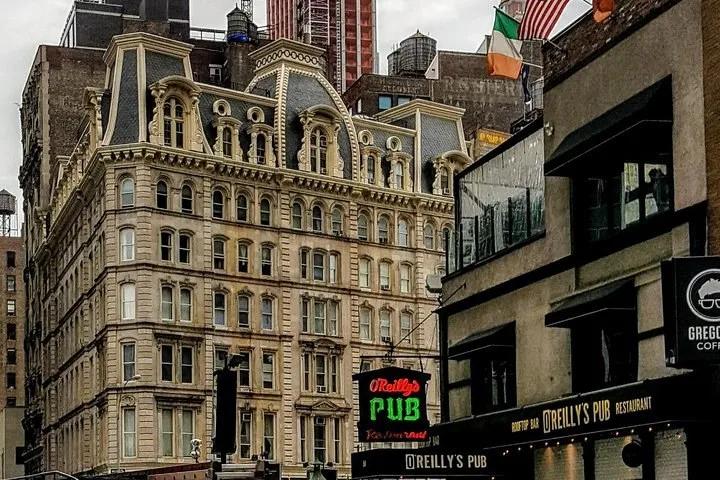

Sixth Avenue from 18th to 23rd Street keeps a long run of old department stores and shopping emporia, the middle-class side of the shopping district.
North of 23rd Street sat the Tenderloin, a district of saloons, brothels and gambling halls a short walk from the city's most respectable venues. Fewer buildings survive there, and the ones that do once housed middle-class neighborhoods and large African American and Jewish communities. Tin Pan Alley, on 28th Street between Fifth and Sixth Avenues, is where the sheet-music business crowded into a few buildings. Cross Broadway back toward Fifth Avenue and the street wall changes class within a few feet. The Wolcott Hotel is one of more than a dozen Gilded Age hotels nearby, many later turned into single-room housing.
Two to Three Hours, Mostly on Your Feet
Plan on two to three hours of walking and standing outdoors, at a moderate level of fitness, in comfortable shoes. Service animals are welcome.
A single traveler can book. A departure can still be called off for bad weather or too few travelers, so watch for messages from the guide before you set out. The walk finishes at a point in Madison Square that suits the group, not necessarily back on the Broadway corner.
The Guide Behind the Old Photographs
Reviews from 2017 through 2026 almost all name the same guide, Rob, and describe a walk built on research: old photographs and maps held up against today's facades, and the order in which the city moved uptown. One traveler wrote that he "can adjust the tour based on what you are looking to learn."
No booking names who leads a given departure, so treat the guide's name as a pattern, not a promise. The walk suits people who already know the famous sights and want the layers underneath.
📍 Meet on the Broadway side of the Flatiron Building, the triangular tower where Fifth Avenue, Broadway and 23rd Street meet. The map pin marks the building.
One booking takes up to five travelers. The booking calendar carries dates through December and then nothing until October, so plan the walk for November or December, or wait for next autumn. Look up at the Flatiron before the group sets off; the whole walk is about the city that stood here before it.