Sport / Venue
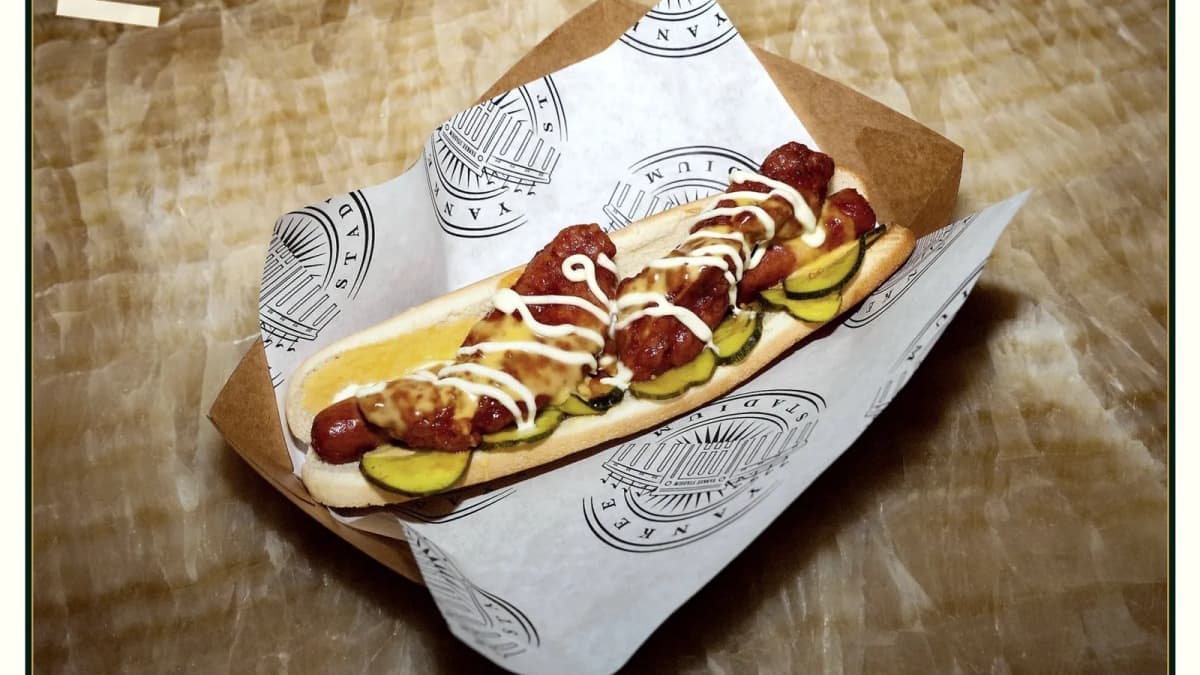
Start With the Hot Dog at Yankee Stadium
 Nora Quinn
The first mistake at a baseball game is pretending the game is the only thing you are doing.
For a first-timer, Yankee Stadium is also a walking plan, a bag plan, a food-line plan, a bathroom plan, a sun plan, and an exit plan. The hot dog matters because it gives the afternoon a center. Not because it is the best thing in the building. Because it is the smallest possible version of the day: get in, find the counter, carry something awkward, locate napkins, sit down, breathe.
Maybe you came for the Yankees. Maybe someone else bought the tickets. Either way, your body learns the stadium before your brain does. Concrete, stairs, metal detectors, concourses, seat rows, standing up for people, sitting back down, deciding whether you need food now or can wait one more inning.
So do not start with baseball expertise. Start with the loop.
The Loop, Not The Checklist
Yankee Stadium has two kinds of pressure. One is history: the frieze, Monument Park, the banners, the old-house memory that hangs over the new building. The other is logistics: where you enter, how far your seat is, what your bag does at security, how hungry you are when you see the first line.
For a new person, logistics usually wins first.
The useful loop is simple: arrive lighter than your anxiety wants, enter through the right side of the building, eat before you are desperate, find your seat while you still have patience, move once before the lines get ugly, and leave with enough body left for the train.
That is not a glamorous plan. It is a kind one.
Before You Leave The Apartment
Wear shoes you can stand in, not shoes you can technically walk in. There is a difference. A stadium day is not a workout, but it borrows the worst parts of one: stairs, heat, waiting, noise, and stop-start walking on hard surfaces.
Pack less than you think. Yankee Stadium allows bags up to 16 inches by 16 inches by 8 inches, but large purses, suitcases, hard-sided containers, and bags over the limit can stop your day at the gate. The bag does not have to be clear. It does have to be small enough that you are not babysitting it under your knees for nine innings.
Food is possible if you plan it cleanly. Individually portioned outside food in a soft-sided container is allowed. A factory-sealed plastic water bottle of 1 liter or smaller is allowed, and an empty plastic sports bottle works too. That does not mean you should bring a picnic that needs management. Bring what makes the day easier, not what turns your seat into a storage unit.
First-timer pack:
• Phone with ticket ready before you reach the gate.
• ID and one payment card.
• Small bag, or no bag if you can manage it.
• Sealed water or empty sports bottle.
• Hat or sunglasses for a day game.
• A layer for night games, especially if you run cold after sitting.
• Patience for one line you did not choose.
Barrier to entry is the real review. If the bag, the ticket, and the water are settled before you leave, the stadium has fewer ways to surprise you.
Getting There Without Arriving Tired
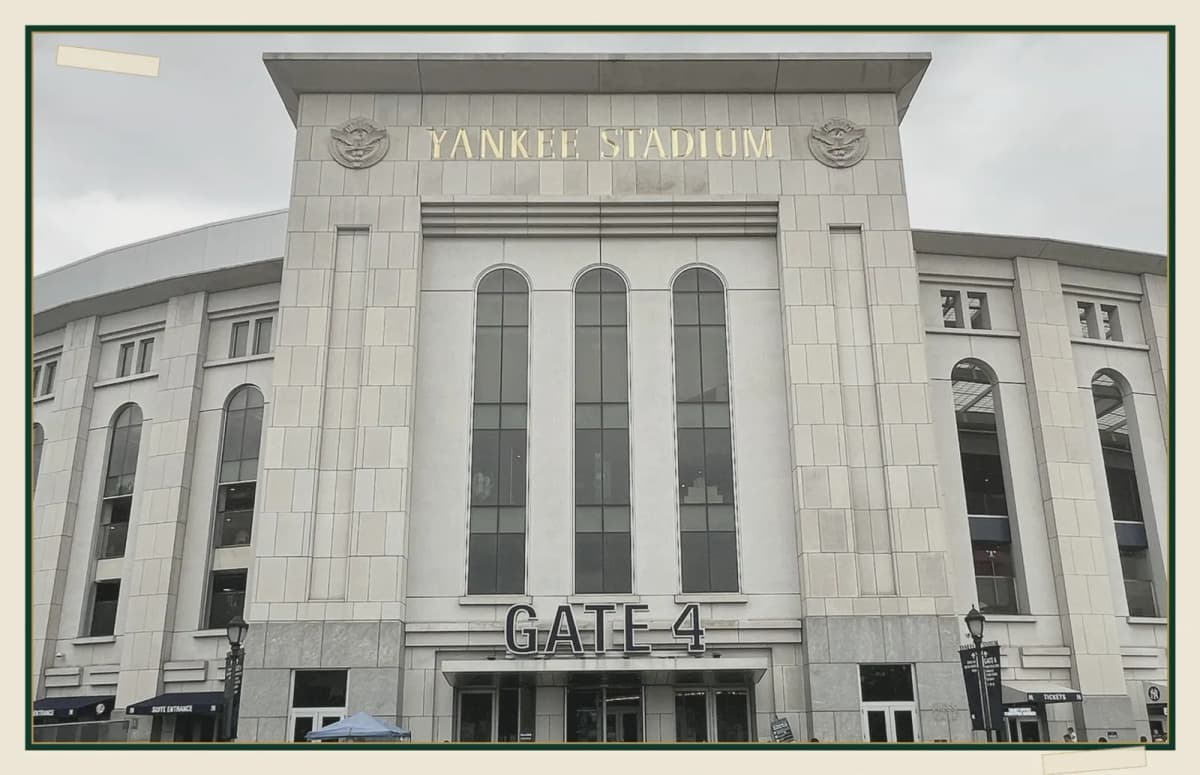
If you are new to the building, take the subway unless you have a strong reason not to. The 4 and D trains stop at 161 St-Yankee Stadium, and the B serves the station on weekdays. Gate 6 sits close to the subway side of the ballpark, which makes it the cleanest mental map for many first visits: train, stairs, street, stadium.
Driving asks for a second plan. Parking near the stadium is its own cost, its own timing problem, and its own emotional sport. If someone in your group needs the car, fine. If not, save that energy for the building.
Aim to be outside the stadium about an hour before first pitch. Earlier if you care about Monument Park, which closes 45 minutes before the start of Yankees games. Later if you already know your seat, your gate, your bag, and your hunger level. Most first-timers do not.
The Hot Dog Is A Map
Do not wait until you are starving to make your first food decision.
Yankee Stadium has more than the old peanuts-and-Cracker-Jack idea of ballpark eating. Nathan's Famous is in several sections and throughout the stadium; Sabrett's is also around the building. There are kosher hot dogs, sausages, burgers, barbecue, dumplings, sushi, chicken buckets, ice cream, and newer concession names that make the place feel more like a mall with innings.
Still, for a first-timer, the regular hot dog does a useful job. It is easy to understand. It is easy to carry. It does not require you to read a menu while people behind you are deciding faster. If you want the project version, Streetbird at Section 112 has a Bird Dog with beef dog, chicken, peppers, onions, and mustard aioli. That is a second-visit move unless it happens to be on your path.
The first hot dog teaches you the stadium's practical grammar:
• Where the nearest concession line actually begins.
• Whether the concourse around your section is narrow or forgiving.
• How far your seat is from napkins, water, and trash.
• Whether you should eat standing before sitting down.
• How much patience your group has left.
This is why I like eating early. Not first thing, necessarily. Early. Before the third-inning hunger becomes a negotiation with a line.
Every workout ends at a meal. Every stadium day starts making sense after one too.
Where The Stadium Treats A New Body Well
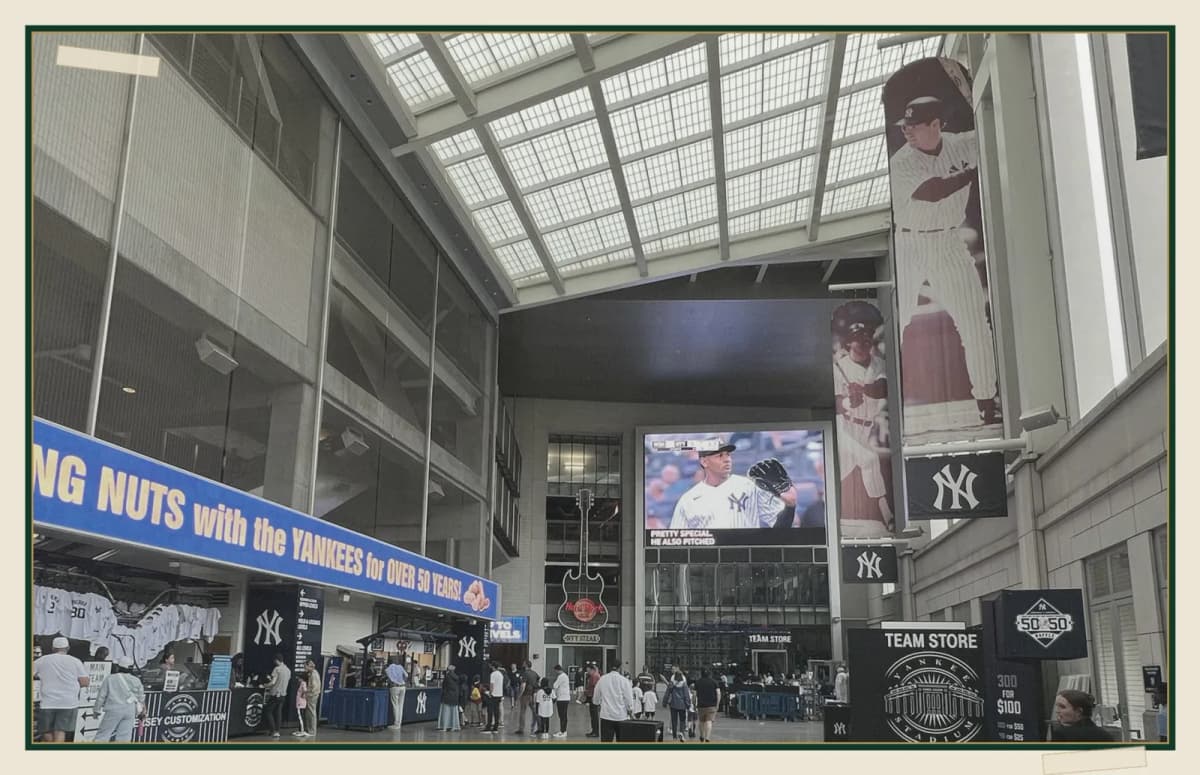
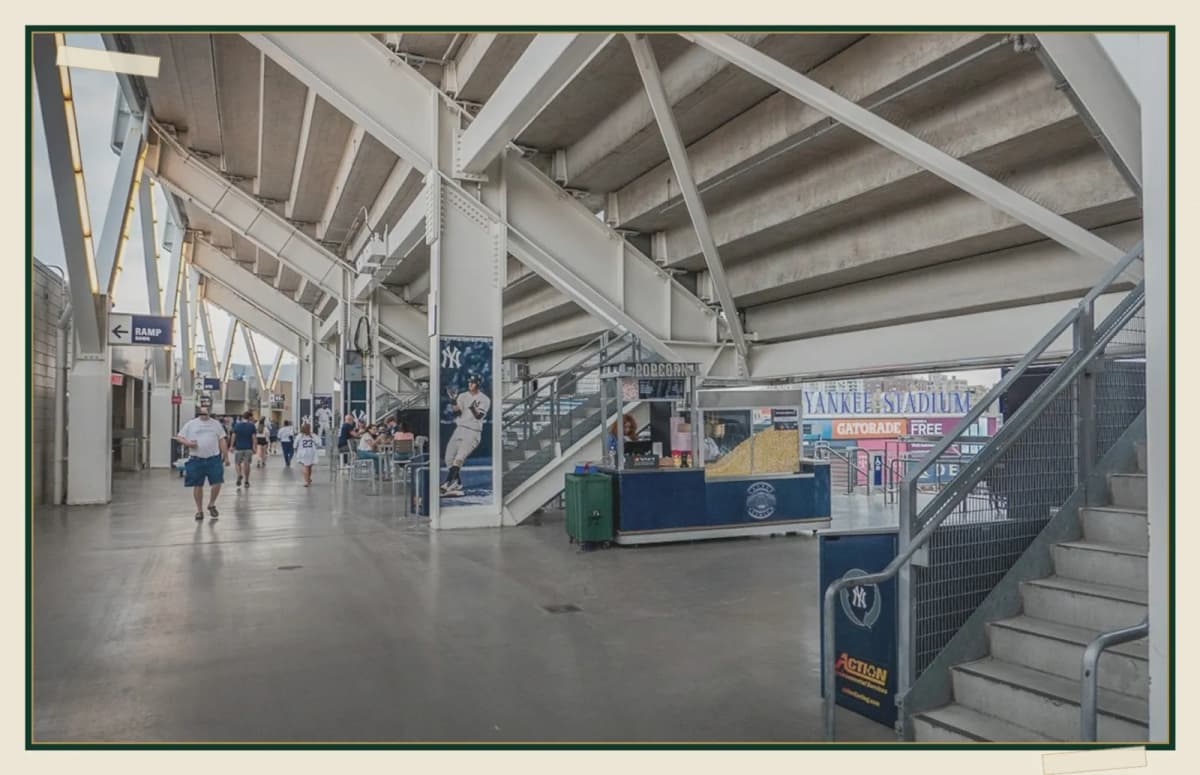
The Great Hall is the friendliest first breath in the building: tall ceiling, big banners, enough width to pause without feeling like you are blocking a whole city. The tighter moments come later, usually at stairwells, concession turns, bathroom lines, and seat rows.
If you are bringing a child, an older parent, someone with an injury, or someone who gets overstimulated in crowds, plan the pause before the body asks for it. That can mean entering earlier, eating before peak line time, choosing one mid-game walk, or agreeing that nobody has to prove endurance to a baseball stadium.
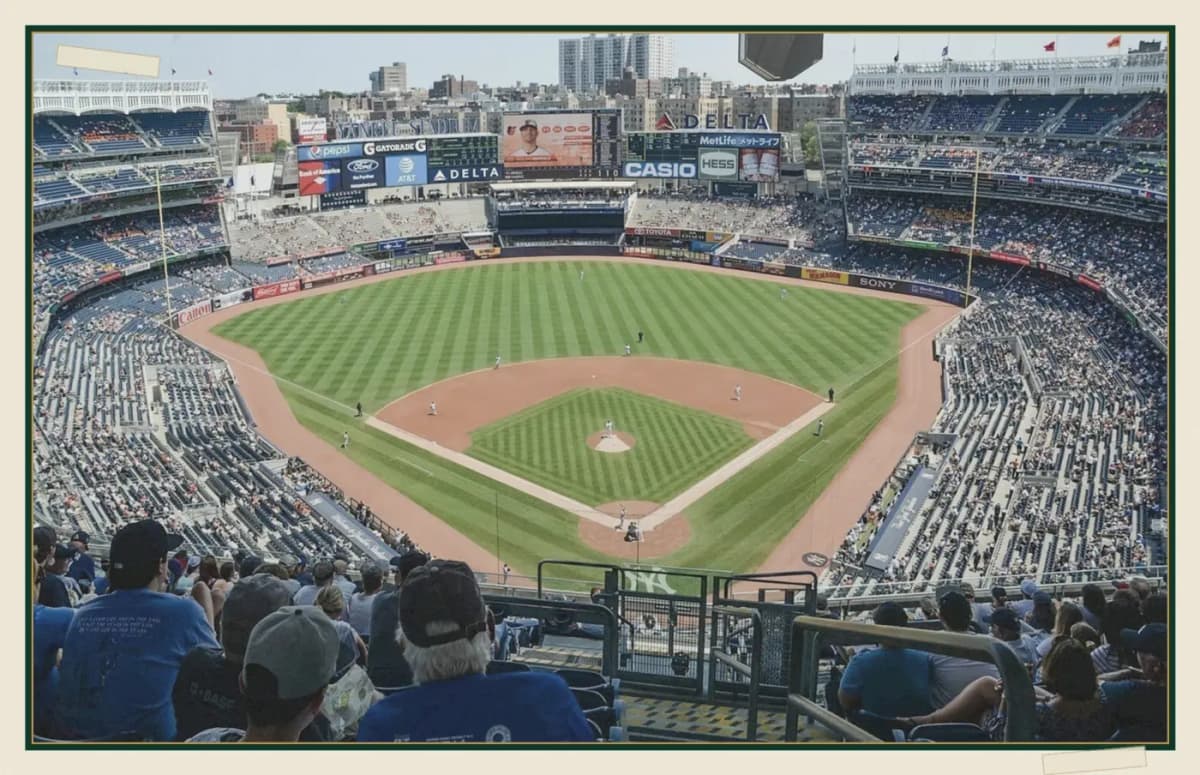
The best first-timer seat is not automatically the closest one. It is the one your group can reach, leave, and return to without turning every bathroom break into a committee decision. The worst seat is the one that looks good on a seating map but makes food, water, shade, or the exit feel far away once you are actually there.
Soreness is data, not a badge.
What To Skip The First Time
Skip the idea that you have to see everything.
Monument Park matters if Yankees history is the reason you came, but it needs an early arrival and a little attention. The team store is fun until everyone is leaving at the same time. The outer concourses and social decks are useful if you need a standing break, but not if your group is already hungry and losing track of each other.
Also skip the heroic early exit, unless you have a real reason. Leaving before the last out does not automatically create an easier subway ride. Sometimes the train rhythm makes more sense when you move with the crowd instead of trying to outsmart it alone.
Your first visit does not need to be complete. It needs to be repeatable.
Intensity Truth
This is not fitness. It is stadium endurance.
Think: two subway staircases, one airport-security mood, a mall walk, a long sit, several short stands, a food carry, and three hours of noise. For a night game, add the come-down: the temperature shift, the crowd leaving, the train platform, the moment when the hot dog has revealed itself to be more ritual than dinner.
If you are sensitive to heat, do not be casual about day games. If you are sensitive to noise, build in one concourse walk away from your seat. If your knees dislike stairs, check your section before you commit to "we will figure it out."
Show up bad at it. That is the point. The first time is for learning the building, not mastering it.
Recovery
Recovery is boring on purpose.
Drink water before the train. Do not sprint to the platform unless you are trying to convert a baseball game into a bad workout. If the hot dog was the only real food, plan an actual meal later. A stadium snack can be emotionally satisfying and nutritionally unserious at the same time.
For the train home, keep your group small and obvious. Pick a meeting point before anyone goes to the bathroom or store. If someone in your group is done, believe them. The game can be beautiful and the body can still be finished.
Who This Works For
This loop works if you are going to Yankee Stadium for the first time, bringing someone who does not care about baseball yet, planning a casual date, taking a visitor, or trying to make a big venue feel less like a test.
Adjust the plan if you are going with a die-hard fan who needs Monument Park, a child who needs snacks before they admit it, someone who cannot stand long, or a group that treats "where should we eat?" as a full civic debate.
The hot dog is not the whole point. It is the handle. Hold that, and the stadium gets easier to carry.
5 places