Community / Venue
The First Question at Flushing Library
 Sally Abrams
There is a private question people carry into public buildings.
Not the one on the form.
Not the one asked at the desk.
The smaller, heavier one: Can I ask for help here without becoming a problem?
Flushing Library is one of the rare civic buildings that seems designed around that question. It sits at 41-17 Main Street, close to the subway, the railroad, the market, the buses, and the everyday pressure of a neighborhood where arrival is not a metaphor. In the wider Flushing and Whitestone area, 56.0% of residents are foreign-born and 55.2% are Asian. A library here cannot afford to be only a book room. It has to be a threshold, a classroom, a waiting place, a translation device, a job-search table, a teen room, a citizenship doorway, a printer, a bathroom, a Wi-Fi signal, a quiet hour, and sometimes the first room where a person can ask in imperfect English and still be understood.
That is the part worth paying attention to.
Library As Threshold
The architecture makes a promise before anyone speaks.
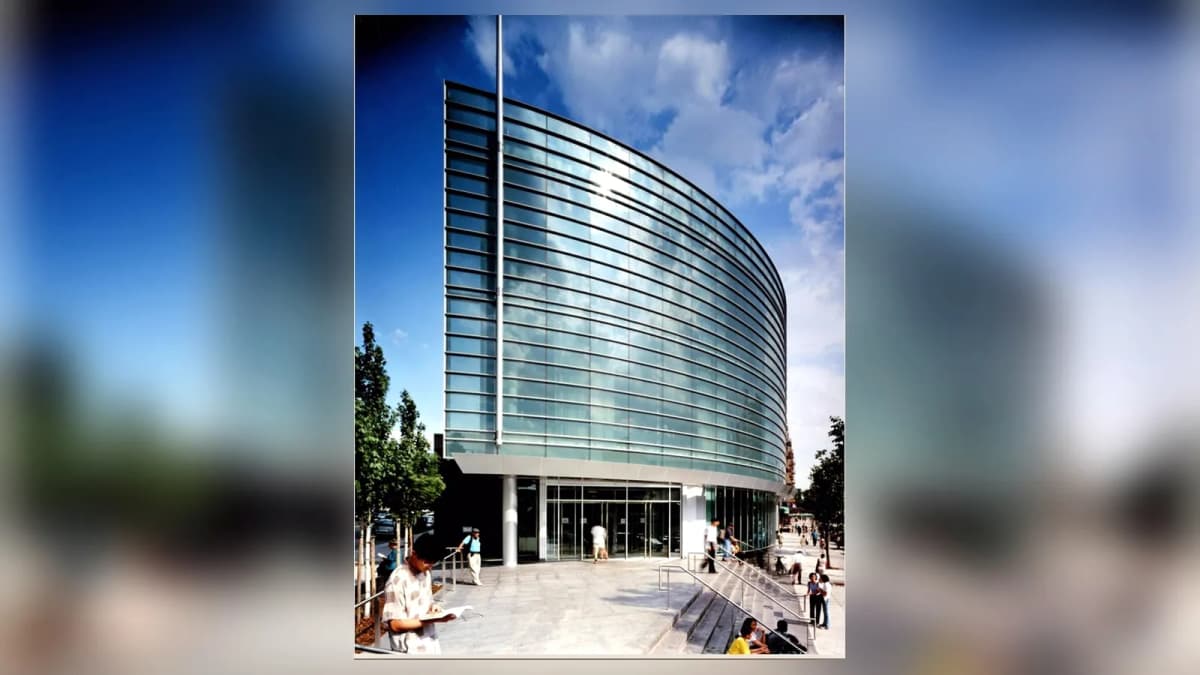
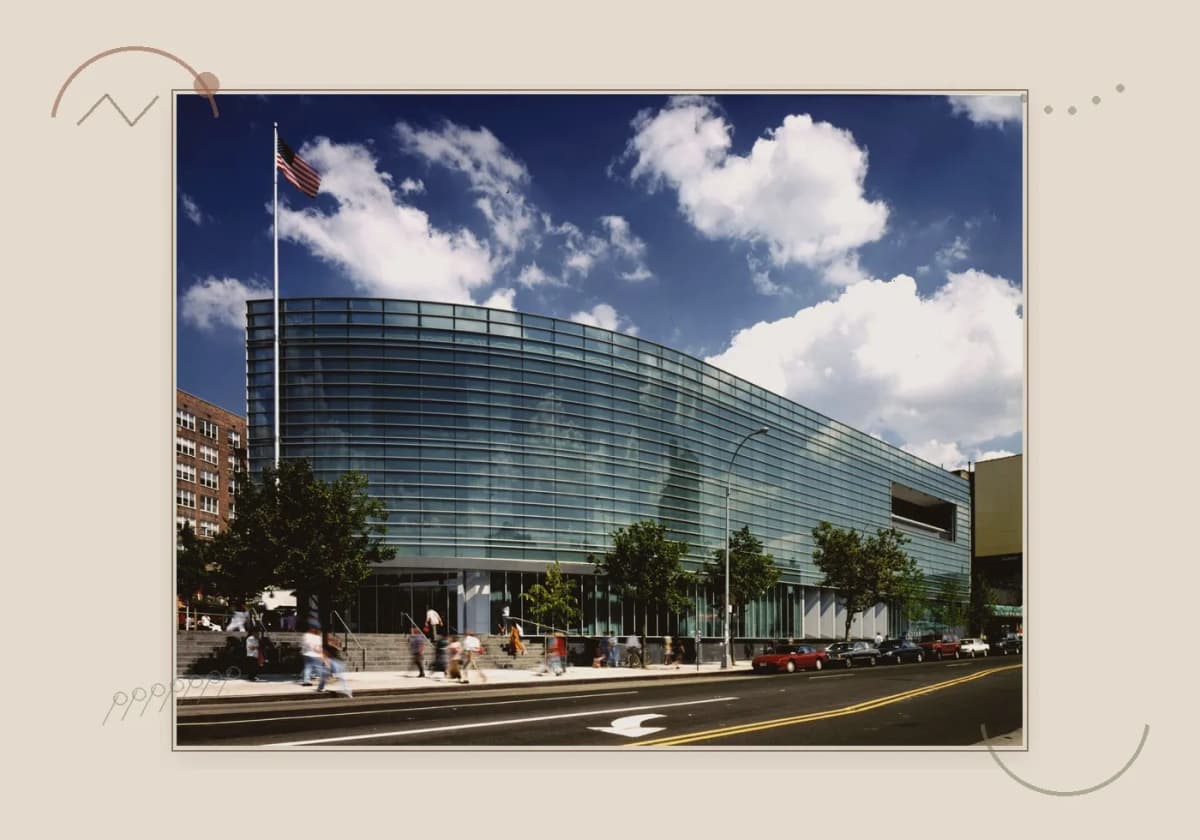
The 1998 Flushing Regional Branch was built as a 76,000-square-foot civic building with a 227-seat auditorium, a multi-purpose room, conference rooms, exhibition areas, an Adult Learning Center, and an International Resource Center. Its Main Street face is glass, not as decoration but as an argument: the building does not hide its circulation, its shelves, or its users behind a sealed wall.
This matters in an immigrant neighborhood.
A public institution that looks too guarded can make need feel like trespassing. A public institution that shows its stairs, desk, rooms, and movement gives a newcomer one more clue before the conversation begins. You can see where people enter. You can see that other people are already inside. You can see the building working.
That visibility is not the whole politics of access. Glass does not solve language, class, paperwork, fear, disability, or time. But it does remove one small piece of mystery. In a city where many systems ask people to prove they belong before they receive help, a legible room is not nothing.
The Library Does Not Float Above The Street
The wrong way to write about Flushing is to turn it into color and noise.
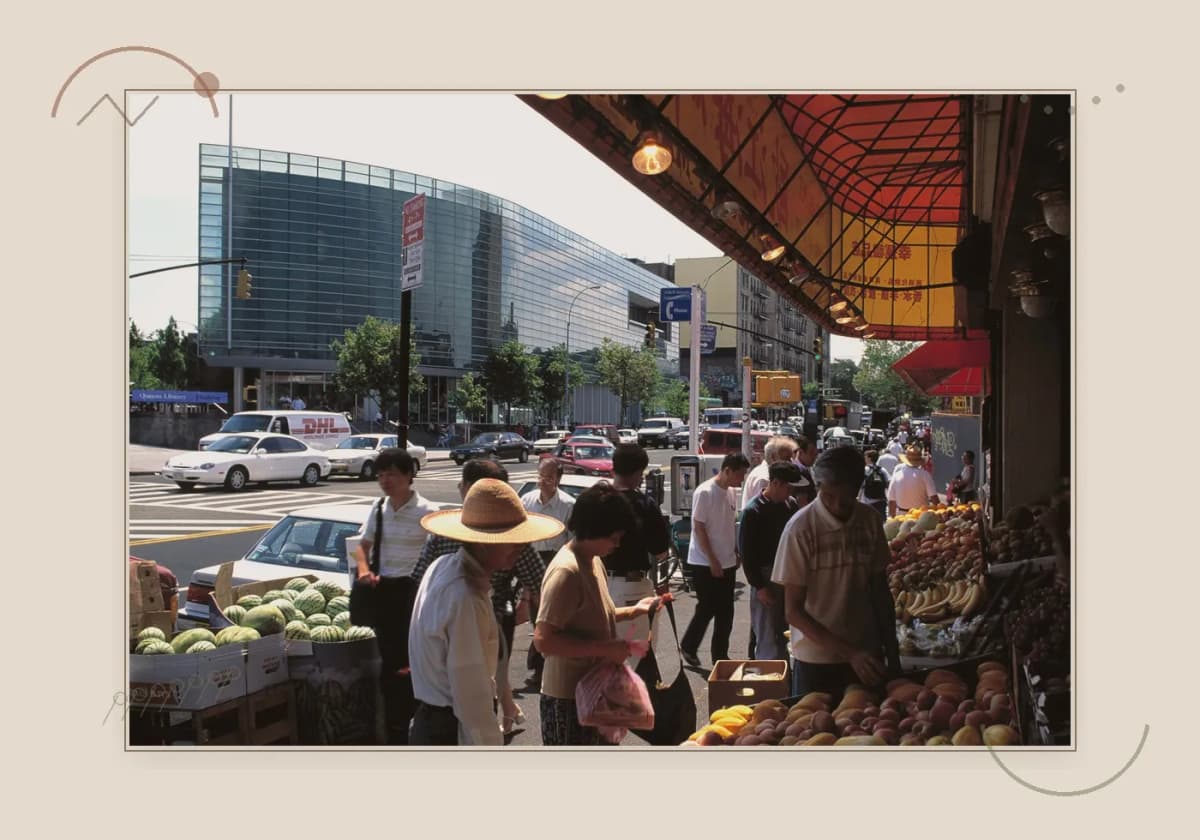
Fruit stalls, buses, dumpling counters, pharmacy bags, elders with carts, teenagers with headphones, people crossing against the light because the transfer does not care about your mood. All of that is real. None of it is scenery.
The library is part of that same operating system. It is not a retreat from the neighborhood so much as a public room inside it. The market moves through money. The station moves through time. The library moves through permission.
Permission to sit without buying.
Permission to ask slowly.
Permission to print a form because the agency still wants paper.
Permission to bring a child, an older parent, a resume, a question about citizenship class, a question about English class, a question you do not yet know how to phrase.
The branch is open long hours for a reason: Monday through Thursday from 10am to 8pm, Friday from 10am to 6pm, Saturday from 10am to 5pm, and Sunday from 12pm to 5pm. There is a 24/7 materials drop-off and wheelchair access. These are not glamorous details. They are the difference between a service that exists on paper and a service someone can reach after work, after school, after caregiving, or between errands.
Language Is Infrastructure
English class is often described as self-improvement. That framing is too small.
At a neighborhood library, language is infrastructure. It is how a person reads a medication label, fills out a school form, asks for directions, understands a job posting, speaks to a landlord, and stops nodding politely when the stakes are too high to pretend.
Queens Public Library's New Americans Program is built for that reality. The program sits within Adult Learning and is meant to help newcomers understand life in the United States while keeping Queens residents' cultures in the frame. The Learn English offerings include beginner, intermediate, and advanced ESOL paths, with everyday-life and work-focused options. The Flushing Adult Learning Center includes ABE classes, Pre-HSE classes, ESOL classes, and Citizenship Preparation.
That list sounds administrative until you put bodies back into it.
A beginner English class can be a map-reading class. A citizenship class can be a future argument with fear. A resume workshop can be the first time someone names the work they already know how to do. A technology class can be the difference between being stuck outside a portal and getting through the door.
Here is the rule I trust: dignity is not tone. It has to be built into hours, language access, service design, room layout, staff patience, and the ability to return next week without performing gratitude.
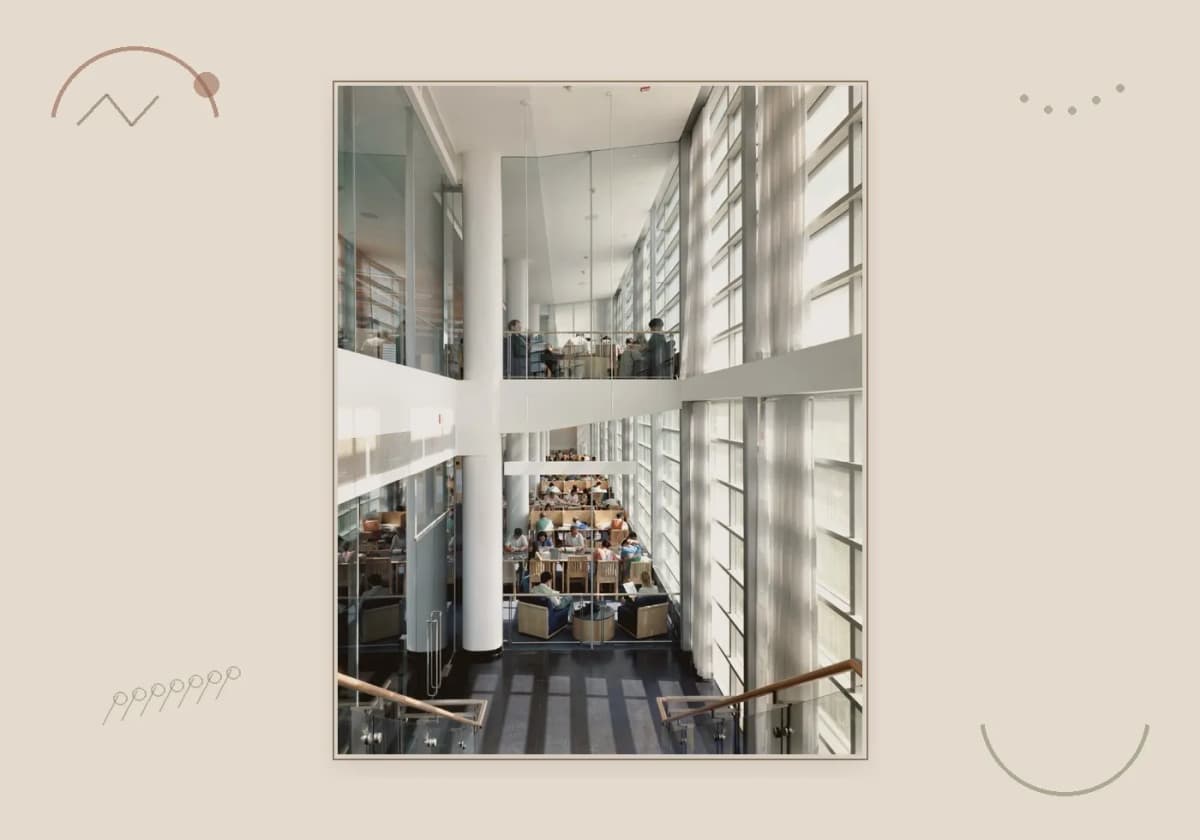
The Building Has More Than One Kind Of Quiet
Not everyone enters a library for silence.
Some people enter for a class. Some for the computer. Some for a teenager's after-school hour. Some for a public program. Some for air-conditioning and a chair that does not ask for a purchase. Some for the kind of quiet that still lets you hear other people living.
That distinction matters.
The fantasy of the library as a hushed temple can become another form of exclusion. It rewards people who already know the rules. Flushing Library has to hold messier needs: children learning volume, adults learning grammar, elders moving slowly, job seekers printing, staff answering the question behind the question.
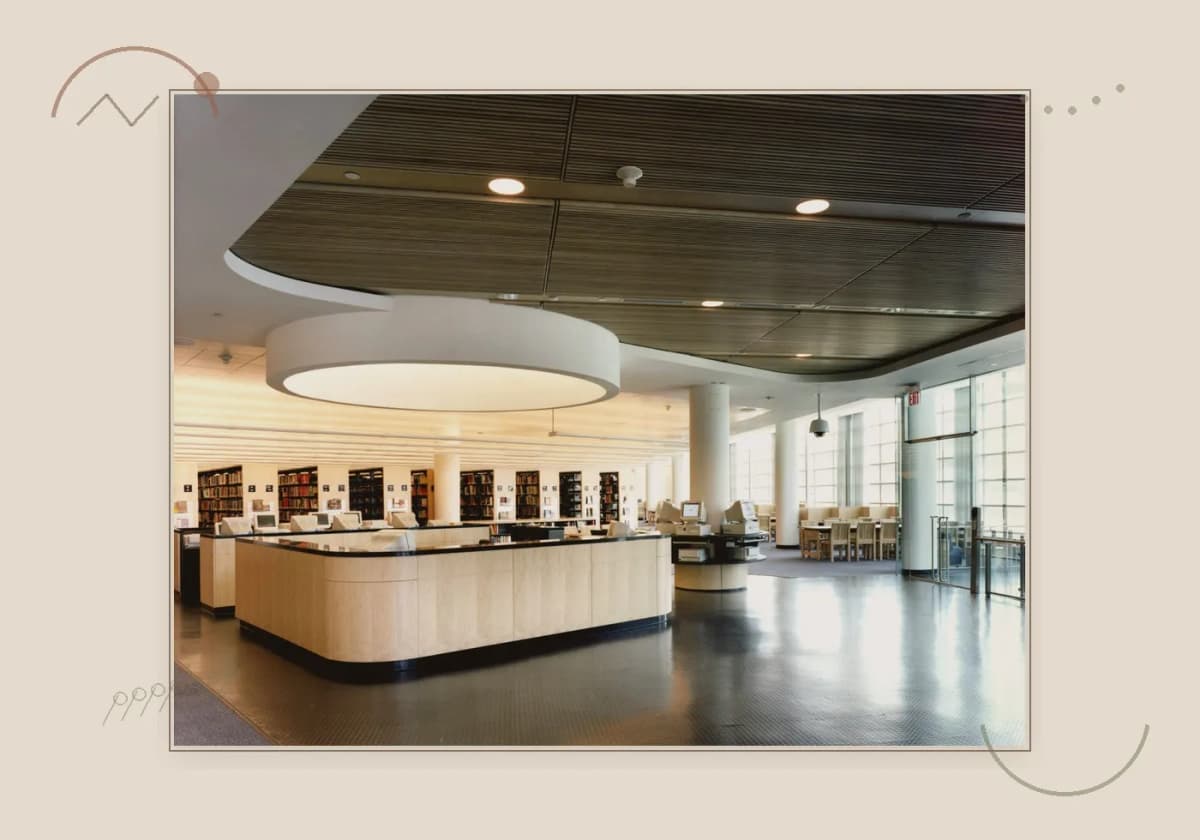
The building's program helps explain why it can do that. The auditorium, conference rooms, exhibition spaces, Adult Learning Center, and International Resource Center create different zones of public life. The useful library is not one quiet. It is a choreography of quiets: the table quiet, the classroom quiet, the waiting quiet, the civic-meeting quiet, the "I need five minutes before I call this number" quiet.
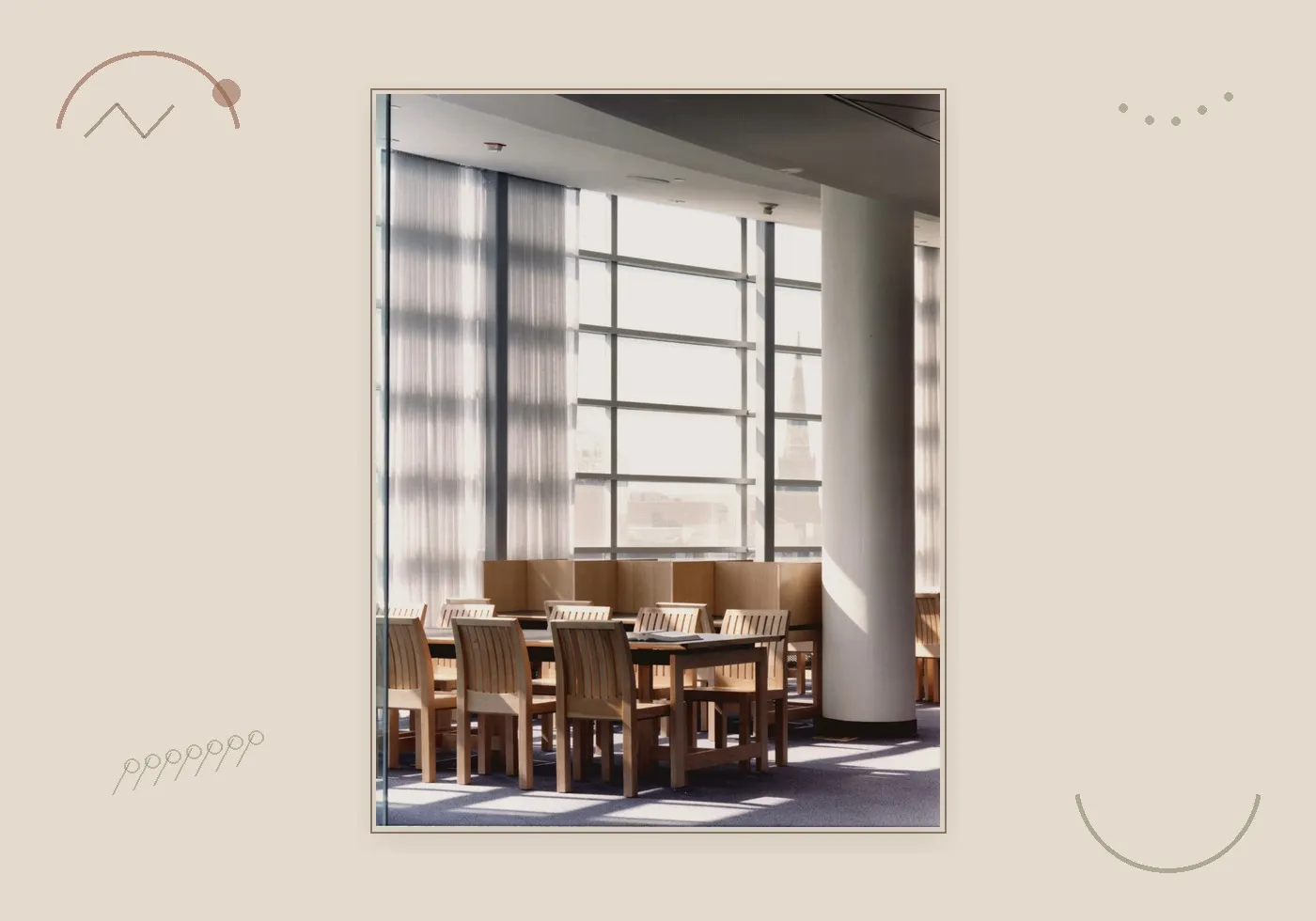
A Table Is Sometimes The Whole Offer
There is a reason I keep coming back to the table.
New York trains us to measure access by spectacular proof: skyline view, reservation, opening, exhibit, line. But a library table is one of the city's most democratic pieces of furniture. You do not have to be interesting at a table. You do not have to be a customer. You do not have to be a good story.
You can be a person with a notebook and a deadline.
You can be a person reading the same sentence six times.
You can be a person with a document spread open and a phone beside it, waiting for someone to call back.
That is why Flushing Library should not be treated as a soft community amenity. It is hard infrastructure for people whose lives are already doing too much coordination. It is where learning, bureaucracy, care, and rest overlap without needing a ticketed category.
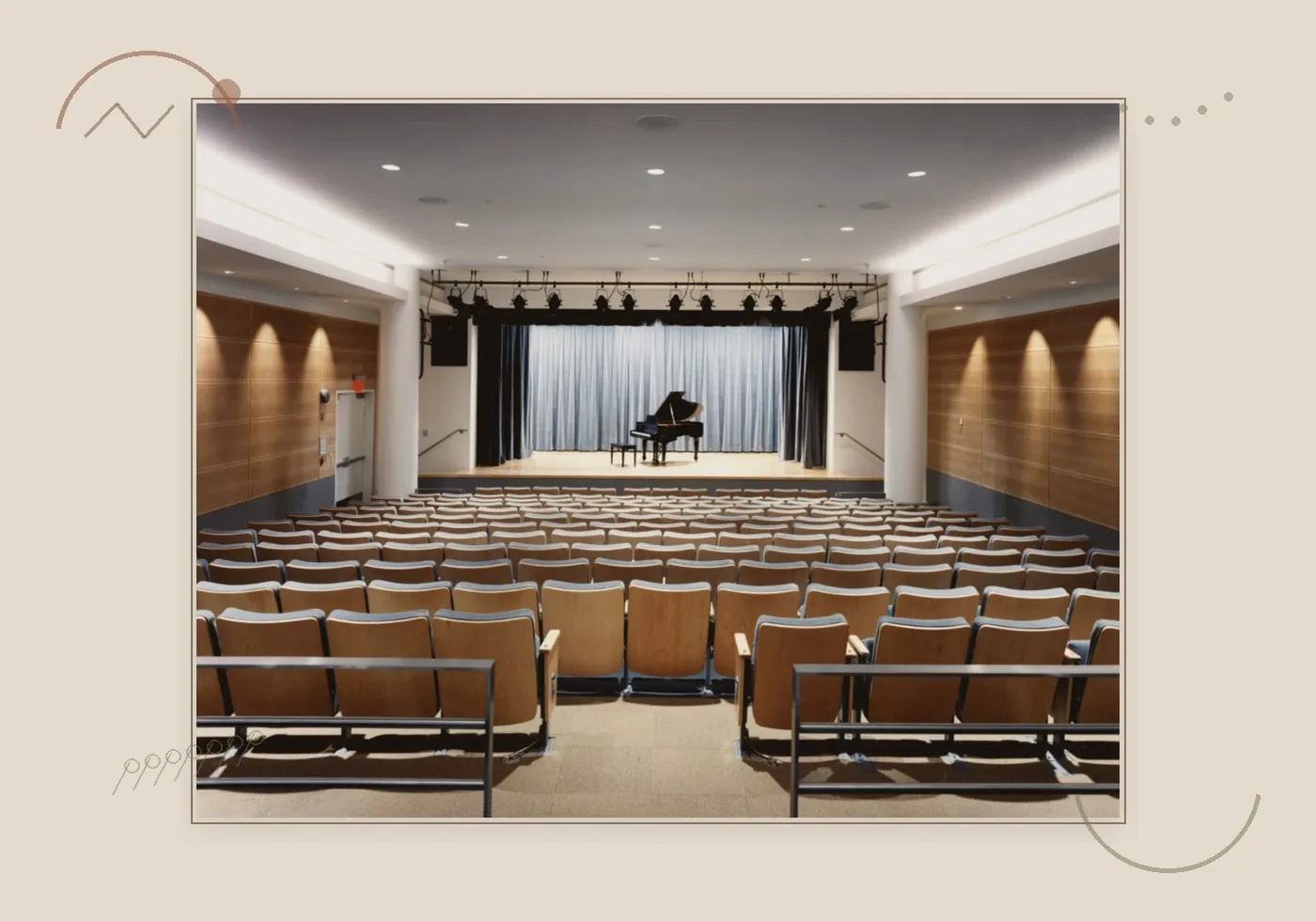
The Public Room Is Not Neutral
Public does not mean neutral. Public means contested, shared, imperfect, and necessary.
A library in Flushing has to serve people who do not all want the same thing from the same room. Students need quiet. Kids need permission to be kids. Newcomers need time. Job seekers need tools. Older adults need navigable space. Staff need the authority to maintain order without turning help into surveillance.
That complexity is the point.
If a place only works for people who already understand how to use it, it is not public enough. If a place collapses under every need, it is not supported enough. The branch sits in the tension between those two truths. Its value is not that everyone feels instantly comfortable. Its value is that different forms of need are allowed to appear in the same civic frame.
For visitors, that means your curiosity has rules.
Do not photograph people receiving help. Do not treat language learners, elders, or immigrant families as texture. Do not hover near service desks because the room feels interesting. Check program pages before assuming a class is drop-in. Ask staff where to begin. Let the building be useful before you ask it to be beautiful.
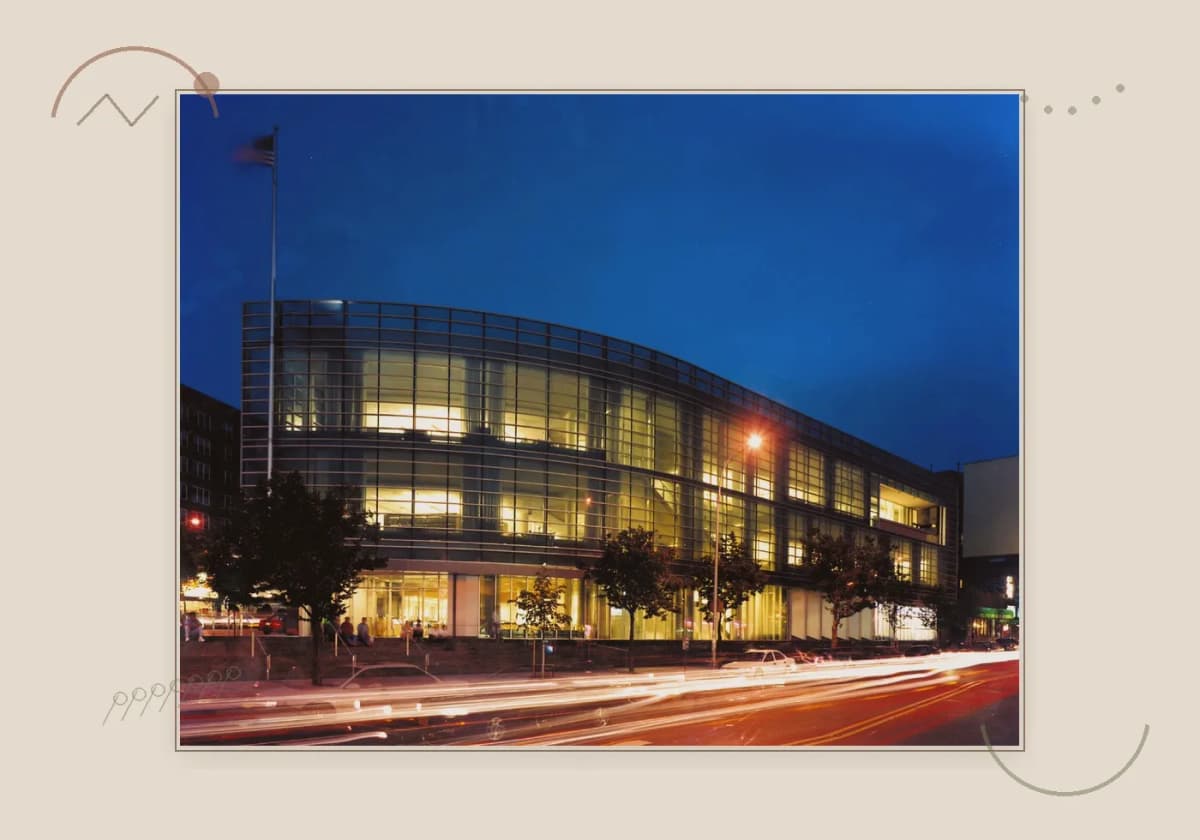
The Useful Facts
Flushing Library is at 41-17 Main Street, Flushing, NY 11355. Current branch hours are Monday through Thursday, 10am-8pm; Friday, 10am-6pm; Saturday, 10am-5pm; and Sunday, 12pm-5pm. The branch is wheelchair accessible and has a 24/7 drop-off for materials.
The Flushing Adult Learning Center is attached to the same address. Its services include ABE, Pre-HSE, ESOL, and Citizenship Preparation. Classes can fill, so treat the inquiry forms and program pages as the first step, not the footnote.
If you are coming as a reader, come for the room.
If you are coming as a neighbor, come for the services.
If you are coming as an observer, come with restraint.
The first question at Flushing Library is not whether the building is impressive. It is whether a public institution can make asking for help feel less like exposure.
On Main Street, the answer is not perfect. But it is built into glass, hours, desks, classrooms, tables, and the quiet permission to begin again.
Flushing Library (Queens Public Library Flushing Branch), 41-17 Main St, Flushing, NY 11355