Sport / Collection
The Citi Field Loop: A Queens Walking Route for Game Days, Off Days, and Rain Days
A flat, three-mile loop from the 7 train through Flushing Meadows to downtown Flushing — with honest notes on when the ballpark is your destination and when it's just the landmark you walk past.
 Kristina Vale
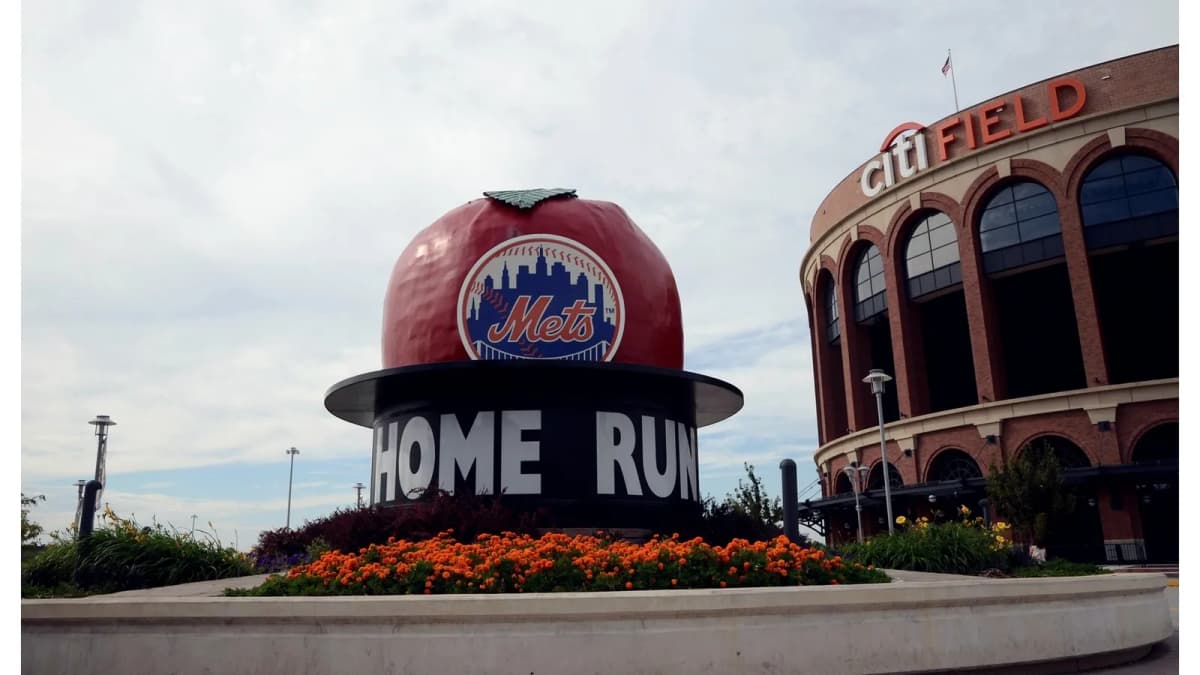
The first time I planned a day around Citi Field, I got it backwards. I built the whole outing around the stadium, showed up on a quiet Tuesday, and stood in an empty plaza wondering where everyone was. The gates were closed. The apple was still there — the huge, slightly battered Home Run Apple that used to live at Shea Stadium — and a couple of kids were circling it on scooters while their dad took photos. That was the whole scene. It took me another two visits to understand what Queens locals already know: Citi Field is not always the destination. Sometimes it's the trailhead.
So this is a route, not a stadium review. It's flat the whole way, it has exit points roughly every twenty minutes, and it works three different ways depending on the calendar: as a quiet weekday loop where the ballpark is scenery, as a game-day approach with a before and an after, and as a rain-day plan that trades open sky for food halls and a museum. I've written it for the way most people actually come here — with a friend, with kids, with a group chat that can't agree on anything — because this corner of Queens is one of the few places in the city where a ballpark, an 897-acre park, and one of the best food neighborhoods in America sit within a mile of each other.
The route doesn't care whether the Mets are home. It just changes shape around them.
The Route at a Glance
Here's the honest spec sheet before you commit.
• Start / end: Mets–Willets Point station (7 train) → Citi Field plaza → Flushing Meadows Corona Park (Unisphere) → Roosevelt Avenue bridge → Flushing Main Street.
• Distance: roughly 3 miles if you do the full loop; each leg is walkable in 15–25 minutes.
• Time: 2.5 to 4 hours with stops. With small kids or a long lunch, call it a half day.
• Terrain: paved and flat end to end. Strollers and wheels are fine; the park paths are wide.
• Exposure: this is the part people underestimate. The old World's Fair grounds are open lawn and pavement with long stretches of no shade. In July, carry water and do the park leg before noon or after 4 p.m.
• Exit points: the 7 train at Mets–Willets Point at the start, the same station mid-loop, and Flushing–Main Street at the far end. You are never more than a 20-minute walk from a train.
That last line matters more than it sounds. A route with exits is a route you'll actually finish with a seven-year-old, or with a friend whose enthusiasm dies at mile two. Plan the bailouts first; the rest is easy.
Getting There: Take the 7, Even If You Have a Car
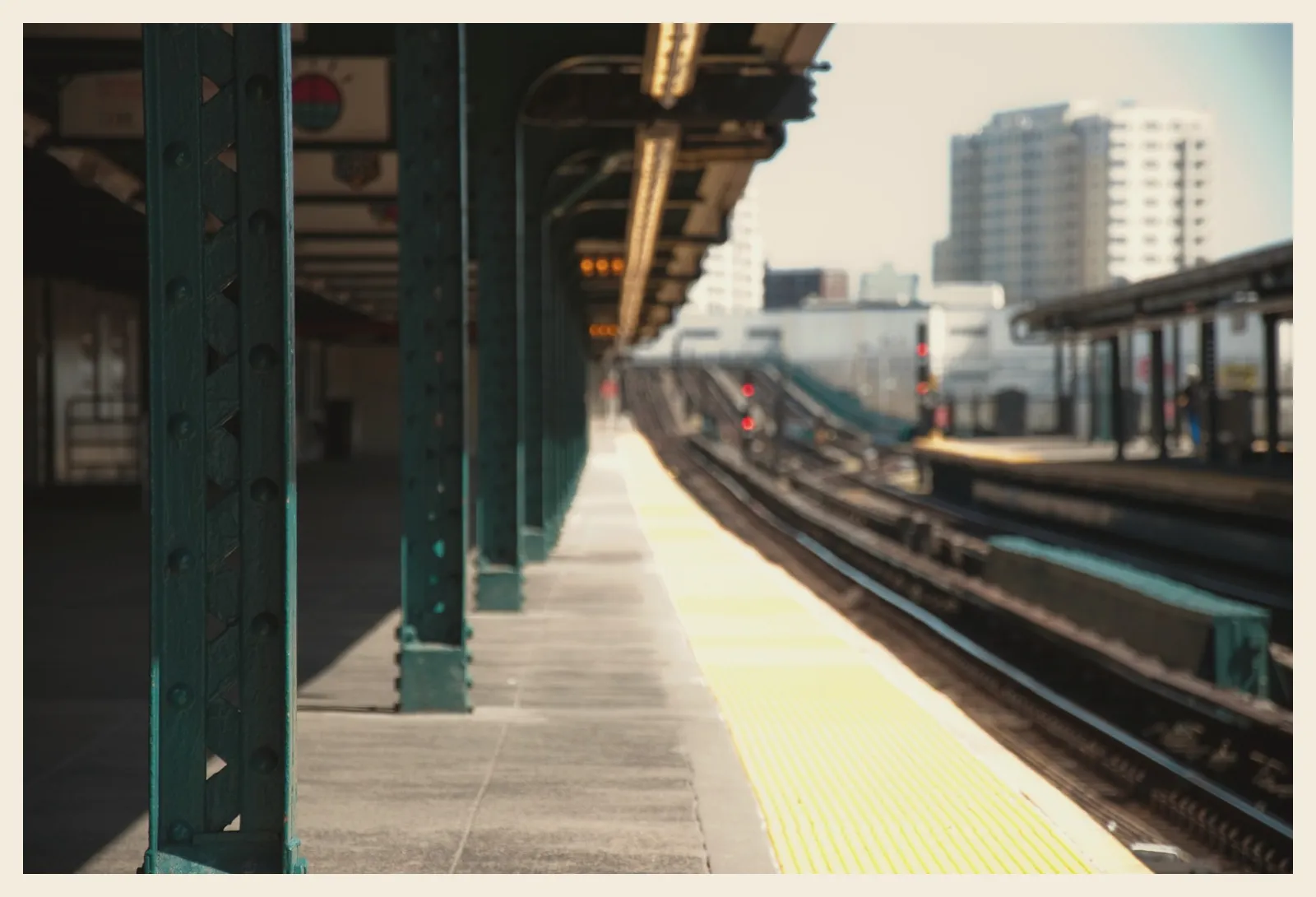
The 7 train from Manhattan drops you at Mets–Willets Point in about 45 minutes from Grand Central or Times Square, and the elevated platform is the best free viewpoint on this whole route — ballpark on one side, the steel skeleton of the old fairgrounds on the other. If you're coming from Penn Station or Long Island, the Long Island Rail Road's Port Washington Branch stops at its own Mets–Willets Point station and is meaningfully faster on game days.
Could you drive? Sure. But parking logic is game-day logic, and this route is built to work on the days when nothing is scheduled at all. The train also solves the problem that ruins most group outings here: on big nights, 40,000 people leave one building at the same time. The 7 swallows that crowd better than any parking lot exit ever will.
Leg 1 — The Plaza Loop: Apple, Seaver, Rotunda (30–45 minutes)
Walk down from the platform and you're on the stadium's doorstep. Even with the gates locked, this leg earns its spot.
Start at the Home Run Apple — the original one from Shea Stadium, parked outside the main entrance like a retired racehorse that still gets visitors. It's the standard family photo stop, and the raised flowerbeds around it give small kids something to orbit while you get your bearings. A few steps away stands the Tom Seaver statue, the bronze of the franchise's greatest pitcher mid-delivery, unveiled in 2022. The stadium's address — 41 Seaver Way — was renamed for him in 2019, which tells you roughly how Queens feels about the man.
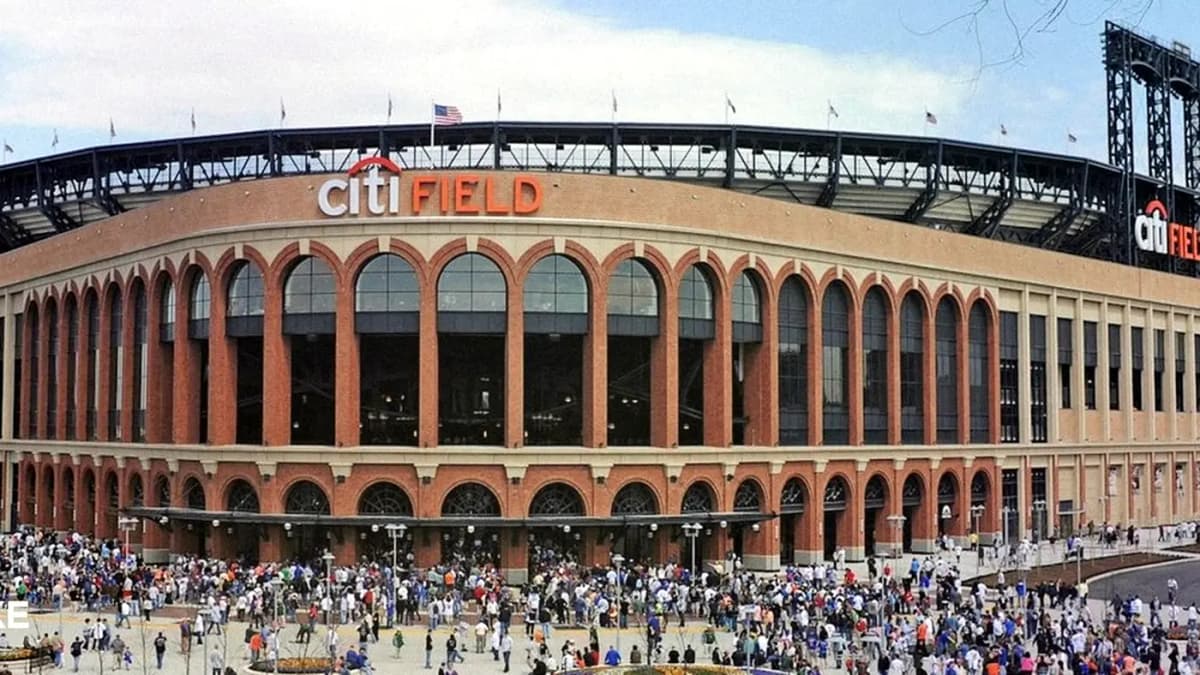
The building itself is worth a slow lap. The brick arches of the Jackie Robinson Rotunda entrance were designed to echo Ebbets Field, and on non-game days you can circle the whole exterior in half an hour without anyone hurrying you. Across Seaver Way, you'll see cranes and steel: that's Etihad Park, the 25,000-seat soccer stadium being built at Willets Point for New York City FC, currently slated to open in 2027. In a few years this corner will be a two-stadium sports district; right now it's a construction site with a skyline, and honestly, kids who like big machines rate it higher than the baseball.
If you want inside access without a ticket: the Mets run 60-minute guided stadium tours on select dates — rotunda, museum, dugout, field level — departing from the Shea Gate, with free parking in Lot G on non-game days. Dates vary through the season, so check the Mets' tours page and book ahead rather than showing up hopeful. I've watched people do the hopeful version. It ends in the plaza, with the apple, again.
On a no-game weekday, give Citi Field 45 minutes and not one minute more. It's a monument that morning, not a destination — the park next door is the destination.
Leg 2 — Into Flushing Meadows: 15 Minutes to the Unisphere (60–90 minutes)
From the stadium plaza, follow the walkway south past the Billie Jean King National Tennis Center — home of the US Open — and into Flushing Meadows Corona Park. The walk from the station side to the Unisphere runs about 15–20 minutes on wide, paved paths, and the whole way is a compressed tour of New York's ambition: two World's Fairs happened on this ground, and the leftovers are scattered around like props from a film that wrapped sixty years ago.
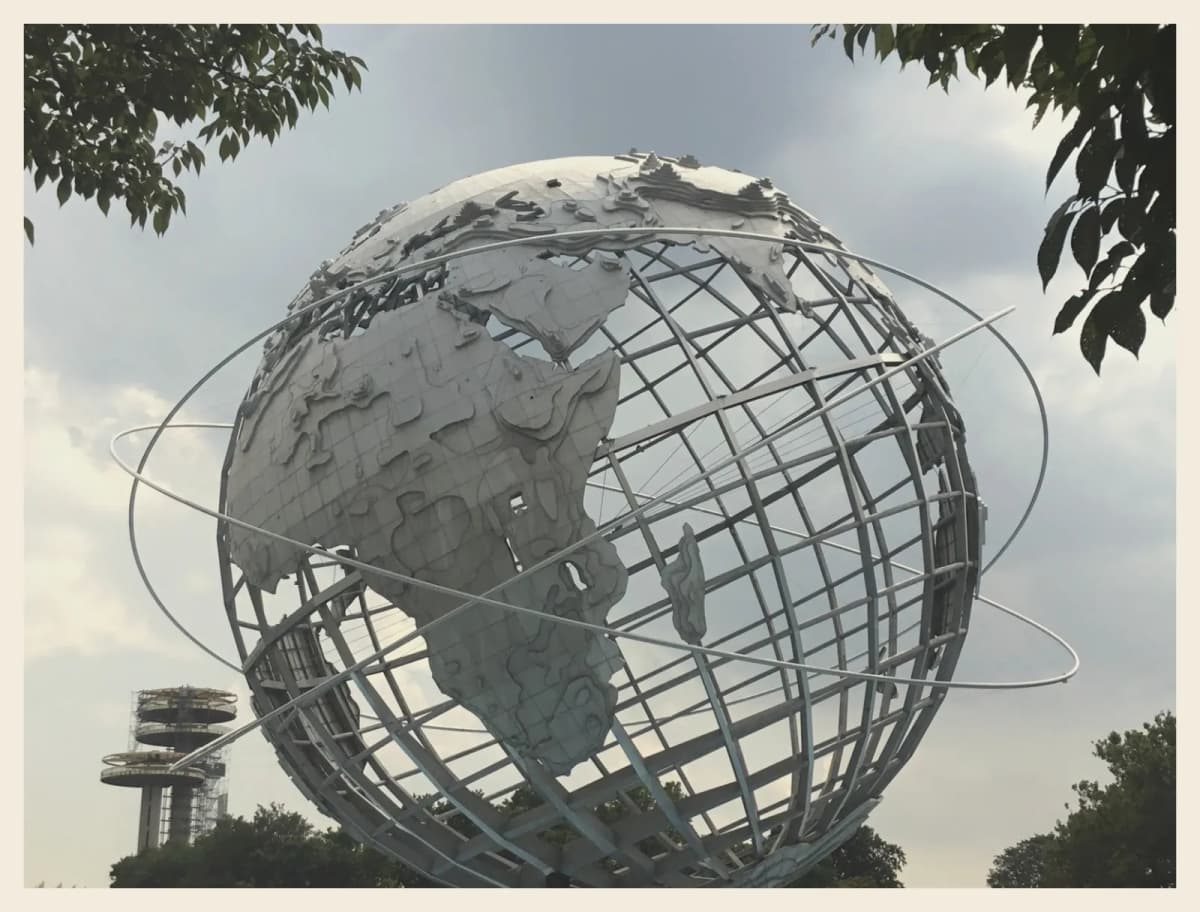
The Unisphere is the anchor: 140 feet tall, 120 feet across, a stainless-steel Earth built for the 1964 World's Fair and somehow still the most optimistic object in the city. In summer the fountains around it run, and on hot afternoons the plaza fills with families treating the spray as public infrastructure — which, in Queens, it functionally is. Behind it loom the rusted observation towers of the New York State Pavilion, which you cannot climb but will absolutely photograph.
This is the leg to slow down on. The park is huge — 897 acres, bigger than Central Park — but the northern section between the tennis center and the Unisphere is compact enough for an unhurried hour. Lawns for sitting, playgrounds within a short detour, and enough open space that a group can splinter and reassemble without anyone getting lost.
Backup node: the Queens Museum sits right beside the Unisphere, open Wednesday through Friday from noon to 5 p.m. and weekends from 11 a.m., with pay-what-you-wish admission. Inside is the Panorama of the City of New York — a 9,335-square-foot scale model of all five boroughs with roughly 895,000 tiny buildings, built for the '64 Fair. Every New Yorker I've ever brought here has done the same thing: ignored the art for ten minutes while hunting for their own apartment. Budget 45 minutes; with kids, it's the best value stop on this entire route.
A word on honest risk assessment, because I'd rather you hear it from me than learn it at 2 p.m. in July: this park has real sun exposure. The fairground plazas are pavement and open lawn. There are water fountains and restrooms near the Unisphere and the museum, but shade is a rumor for long stretches. Hats, water, sunscreen — treat it like a trail, because it behaves like one.
Leg 3 — Over the Creek to Flushing (20 minutes, then as long as you want)
Here's the move most first-timers miss entirely: downtown Flushing is a one-mile walk from Citi Field. Head back toward the stadium and follow Roosevelt Avenue east across the bridge over Flushing Creek — the elevated 7 rattling above you, the Van Wyck below — and in about twenty minutes you're standing at Main Street in one of the largest and best Chinatowns in the country.
This is where the route stops being about walking and starts being about eating. Main Street and the blocks around it are dense with dumpling counters, hand-pulled noodle shops, bubble tea windows, bakeries, and multi-story food courts where six people can eat six different cuisines at one table for the price of two stadium hot dogs each. For a family or a group with mixed appetites and mixed budgets, it is the single most forgiving food destination in New York. Come hungry, order badly, order again — the stakes are wonderfully low.
If the legs are done, you don't have to walk back: the Flushing–Main Street 7 station is right there. That's the designed exit. The loop ends where the food is, on purpose.
The Game-Day Version: Before and After First Pitch
Everything above describes the quiet days. On maybe 81 days a year, the route inverts, and the ballpark stops being scenery and becomes the point.
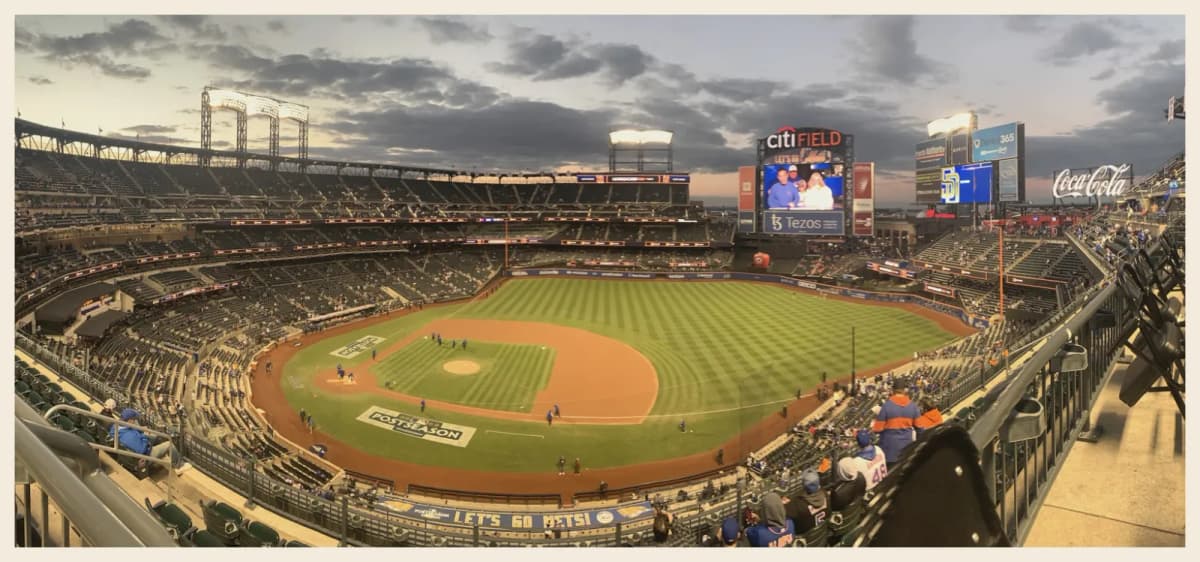
It happens that this page publishes on one of those days: the Mets open a home series against the Dodgers tonight, Friday, July 24, with a 7:10 p.m. first pitch, and the series runs through Sunday. If you're going, here's how the route flexes.
Before: flip the loop. Do Flushing first. Take the 7 to Flushing–Main Street around 4 p.m., eat a real meal — early, unhurried, a fraction of concession prices — and then do the one-mile walk west along Roosevelt Avenue to the stadium as the crowd thickens around you. Walking toward a night game with the sky going gold over the creek is genuinely one of the better free experiences in Queens. You arrive fed, having parked nothing.
The bag rules that decide your day: Citi Field doesn't allow backpacks. Purses, totes, messenger-style bags, and non-backpack diaper bags are fine up to 16" x 16" x 8", and small soft coolers within the same limit are allowed too. Exceptions for medical and nursing needs go through the security supervisor at your gate. For a family, this is the difference between a smooth entry and a fifteen-minute problem at the worst possible moment — decide who carries what before you leave the house. There are four public gates; the Jackie Robinson Rotunda behind home plate is the grand entrance and also the busiest, so groups running late do better at the Left Field or Right Field gates.
After: a night game ends past 10 p.m. with tens of thousands of people moving at once. With kids, skip the first crush — let the plaza empty for fifteen minutes by the apple, which is lit and much calmer at night — then ride the 7 home. The platform queue looks alarming but moves fast; the LIRR side is often the quicker escape toward Long Island.
Game days are the only days this route has a schedule. Respect the 7:10, and build everything else backwards from it.
The Rain Plan
Kill the park leg. Keep everything else.
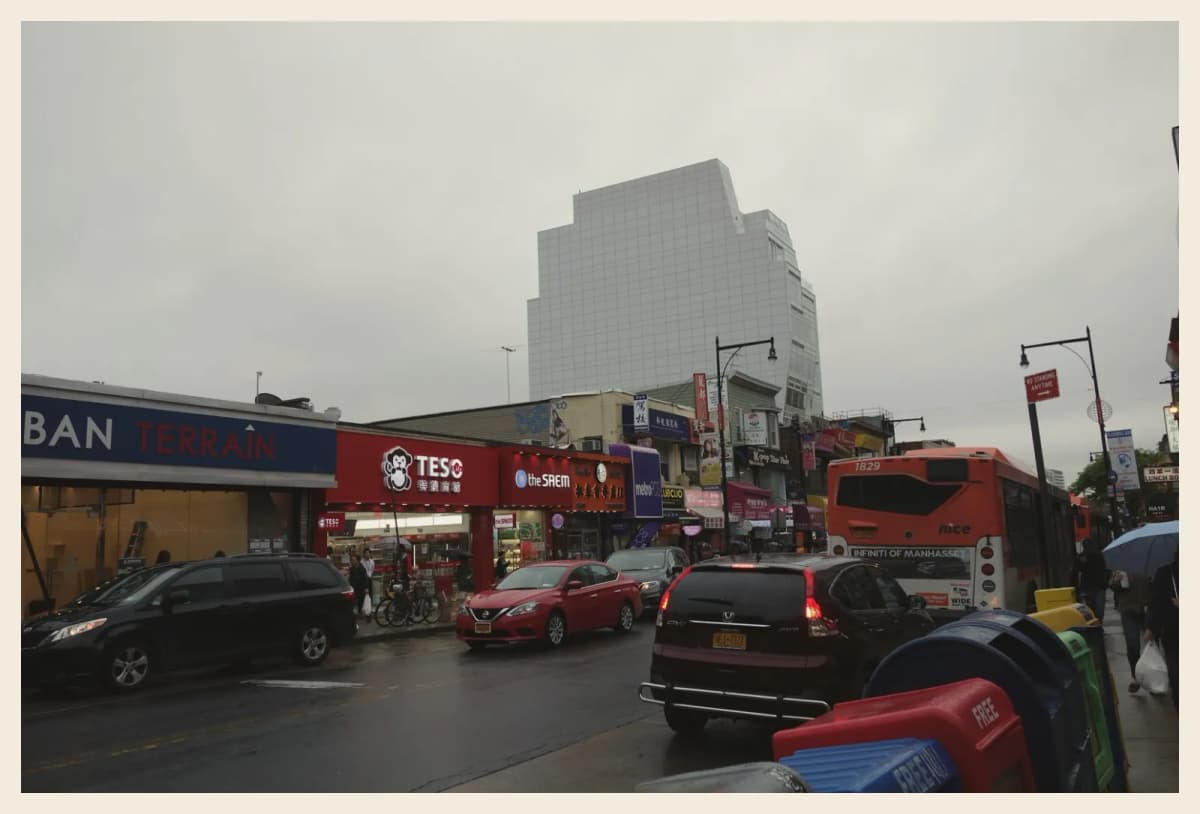
Rain turns the fairground plazas into a wide, gray slog, and there's no prize for pushing through it. Instead:
• Queens Museum becomes the main event instead of the backup — the Panorama alone justifies the trip, it's indoors, and admission is pay-what-you-wish (closed Mondays and Tuesdays, so check before you commit).
• The New York Hall of Science, on the Corona side of the park at 47-01 111th Street, is the kid-heavy alternative — a hands-on science museum where admission runs $19 for adults and $16 for children. Confirm the day's hours before building around it.
• Flushing's food courts are the weatherproof finale. The multi-level malls around Main Street keep the entire eating portion of this route bone-dry; you can spend two hours grazing without opening an umbrella more than twice.
• A stadium tour, if your date lines up with one, is the only way Citi Field itself earns a spot on a wet day. Otherwise the ballpark contributes nothing to a rainstorm except a windbreak.
The honest rain-day summary: Citi Field drops out of its own route. Queens locals already treat it that way — the stadium is a fair-weather friend, and the neighborhood around it is the one that shows up every day.
If You've Never Done This
If you've never planned a day in this corner of Queens, here is the starter version, stripped of options:
1. Pick a Saturday with no home game (check the Mets schedule) or accept game-day crowds knowingly.
2. Take the 7 to Mets–Willets Point by 10 a.m., before the heat.
3. Photos at the apple, lap of the stadium: 45 minutes.
4. Walk into the park to the Unisphere: 20 minutes. Fountains, lawn, museum if it's open: an hour.
5. Walk back past the stadium and over the bridge to Flushing Main Street: 25 minutes. Lunch: as long as it takes.
6. Go home from Flushing–Main Street station. Done — under four hours, one subway line, zero transfers.
You don't need gear, fitness, or a plan more complicated than that list. The whole route is a beginner route; that's what makes it good. The only real mistakes available are showing up at a closed stadium expecting a show, walking the park at 1 p.m. in July, and letting a group vote on restaurants while standing hungry on Main Street. Now all three are yours to avoid.
The thing I keep coming back to: this loop taught me to stop treating landmarks as destinations and start treating them as terrain. Citi Field is at its best when it's one node on a line that also holds a steel planet, a miniature city, and a plate of dumplings — and knowing when it's the headline versus when it's the backdrop is the most local knowledge in Queens.
Places in this guide


3 places