
Six Cables Above a Pine Forest, and the Climb Between
A zipline course inside a Jefferson County open space park, where the uphill walk between the first cable and the second sorts people out faster than the cables do.
Conifer sits about thirty minutes southwest of downtown Denver, high enough that the drive alone changes what your lungs are working with. Denver Adventures checks you in at its office on Conifer Road, weighs you, fits your harness, and shuttles you five minutes further into Beaver Ranch Park.
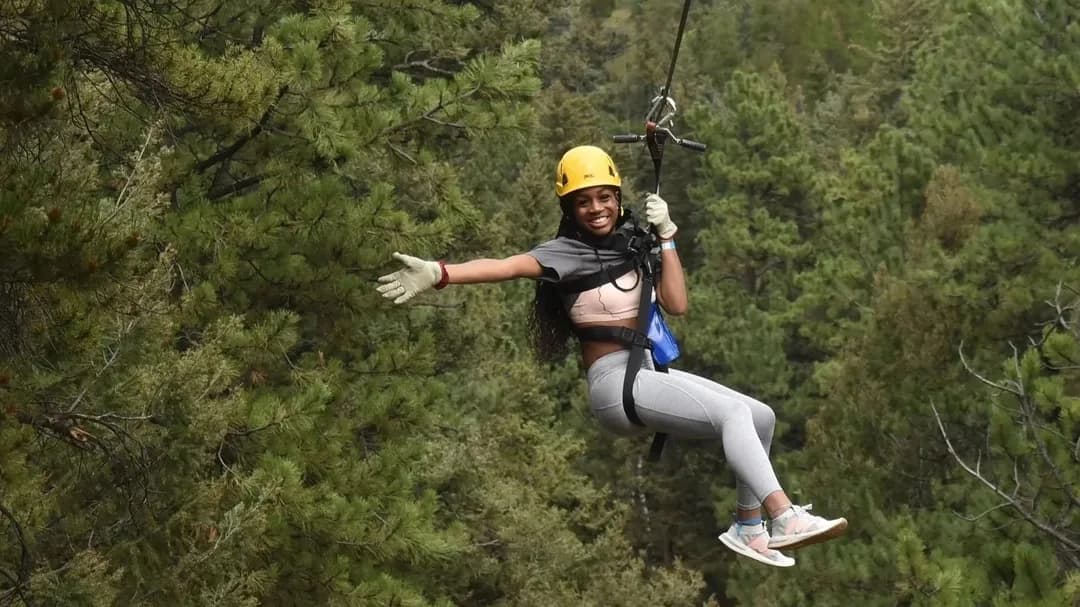
Six cables are strung up there. The company puts them at roughly 850 feet at the short end and over 1,900 feet at the long end, hung as high as 250 feet off the ground, with speeds that reach up to 60 mph depending on conditions. The course sits at about 9,000 feet.
Between the first cable and the second, the whole group walks uphill through pine forest to the top of the property. The four-line version of this tour skips that walk. The six-line version does not.
It is a short climb. At 9,000 feet, short is not the same as easy.
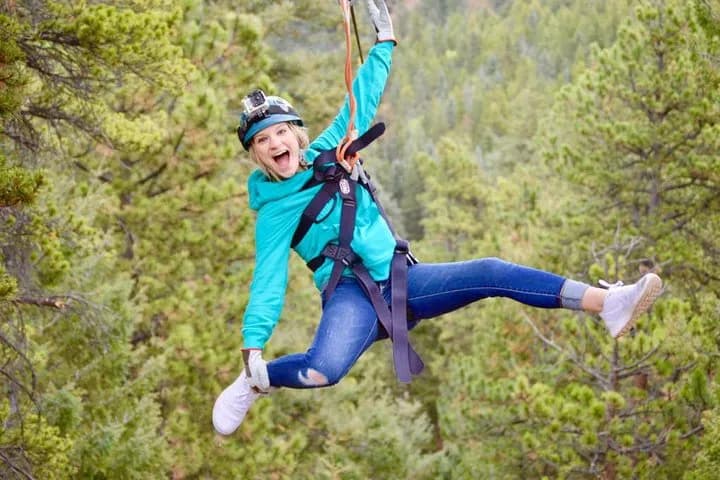
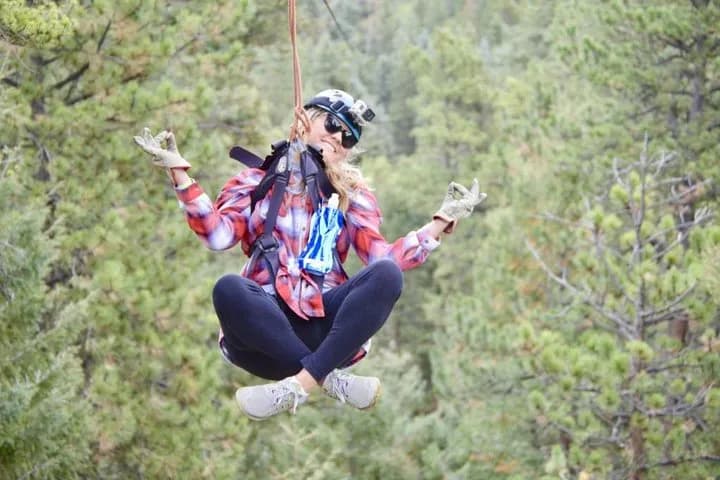
The six-line tour goes out every day of the week. From mid-March into early November the course posts start times between nine in the morning and five in the afternoon. Through the winter it drops to two departures a day, at ten and one-thirty, with a short break in the middle of November when nothing runs at all.
Denver Adventures counts the whole visit at two and a half to three hours. That covers check-in, the safety video, gear fitting, both shuttle rides, and the ziplining itself. Guides carry water to refill bottles out on the course, and snacks are included.
Booking closes two hours before departure.
 Rocky Mountain 6-Zipline AdventureDenver Adventures · six ziplines · 2.5 to 3 hours · rated 4.95 from 797 reviewswww.viator.com
The Walk Between Line One and Line Two
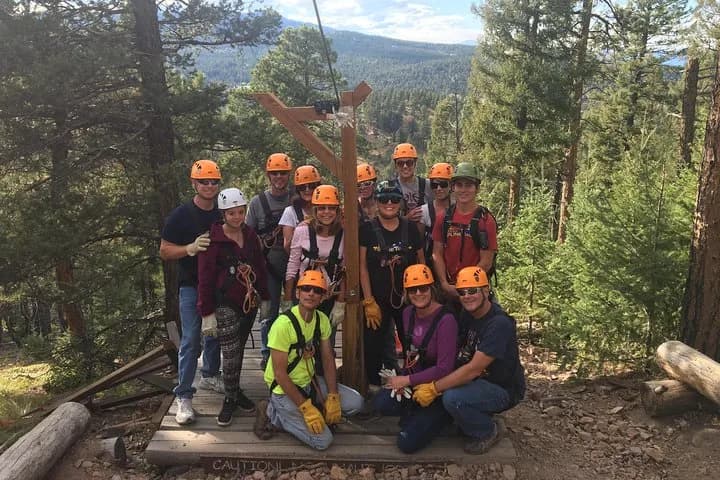
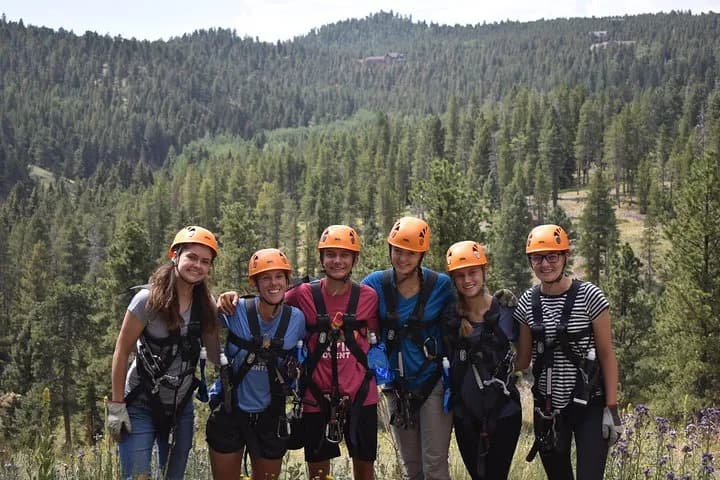
Denver Adventures describes the climb as a 10 to 15 minute uphill hike through pine forest, and puts the total walking distance at about the length of two football fields. Another line on the same page calls it 15 to 20 minutes. The distance is short either way. The grade is not.
Altitude is what makes it hard. Guests who live near sea level describe arriving fine and then running out of breath a few steps into the climb, carrying harness, helmet, and trolley the whole way up. There are steps cut into the worst of it.
One guest who brought friends in from St. Louis wrote in August 2026 that the 15 minute hike from the first to second line was challenging for folks not acclimated to the high altitude, but we were able to take our time and never felt rushed.
If you flew into Denver in the last day or two, put this later in the trip. Bring an inhaler if you use one.
You Get Weighed Before You Get Clipped In
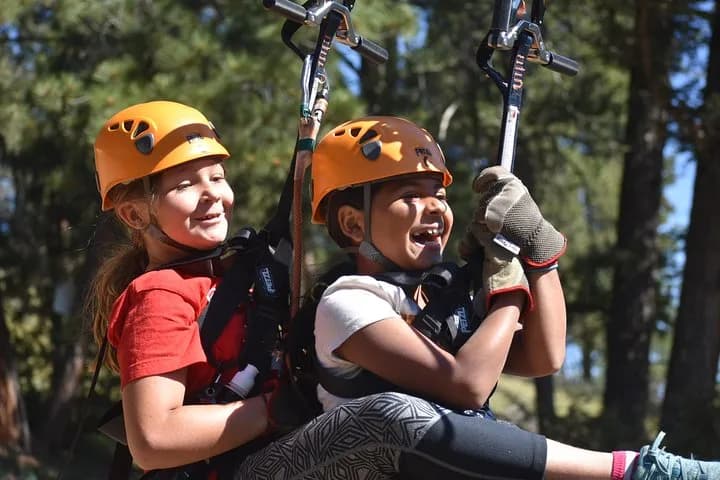
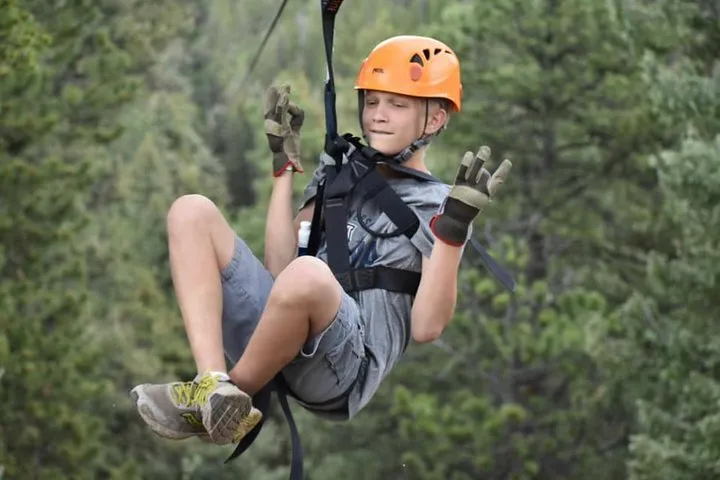
Everyone is weighed at check-in, privately, on a calibrated scale. The limits are 40 pounds at the bottom and 245 pounds at the top. The operator counts clothing and shoes inside that number and leaves the zipline gear out of it, and says it can sometimes allow a pound or two over.
The Viator listing is explicit about the consequence: anyone outside those limits will not be refunded.
The scale also decides what you ride. Guests describe children booked onto the four-line tour and then moved up to six once they cleared the weigh-in, and guides deciding on the day whether a light rider rides tandem with a guide.
Closed-toe shoes are required, so tennis shoes or hiking boots. No sandals, no heels, no wedges. Water is not optional either: bring a bottle with a carabiner, or buy one at the desk for USD 4.
The course runs rain or shine, and through the winter it runs in snow.
Who Rides, and Who Has to Ride With Them
Children 17 and under need a parent or guardian along. For ages 5 to 13 that adult has to be ziplining too, and paying for it. For 14 to 17 the adult can stay off the cable but has to be on the course watching. No unattended minors are allowed up there at all.
The group you ride with is not always the group you booked with. Parties get merged to fill a tour, and guests describe ending up in a line of fourteen, or waiting at platforms once two groups joined. One booking covers up to nine people.
The operator asks for reasonable physical condition, and the listing flags that the tour is not recommended for travelers who are pregnant, who have spinal injuries, or who have poor cardiovascular health. Minimum numbers apply, so a departure can still be cancelled after it is confirmed, with a refund or another slot offered.
The Park Runs on This Zipline
The course is not on company land. Jefferson County Open Space bought the Beaver Ranch property in May 2001 and set up an agreement with Beaver Ranch Community, Inc., a nonprofit, to run the park jointly. The county's own park page lists the zipline concession under Denver Adventures.
The nonprofit is direct about what keeps the place open. In its own words, it relies on grants, donations, events, and property income from Denver Zip Lines and Beaver Ranch Disc Golf Course to operate the park.
Denver Adventures started in 2005 and runs hiking, climbing, rafting, snowshoeing, and mountain biking out of the same Conifer office. In 2025 the state labor department named it one of seven Workplace Safety Month honorees across recreation and tourism.
Meet at 26267 Conifer Road, about half an hour southwest of downtown Denver. Nothing picks you up from the city; if you need a ride from downtown, Denver Adventures sells it separately and wants it booked 48 hours ahead. Cancel at least 24 hours out for a full refund.
Then it is a five-minute van ride, a practice cable strung low between two trees, and the walk uphill through the pines. After that the ground drops away for the better part of a mile and a half of cable, and the climb you just did is the last thing on your mind.