Music / Event
Save the Midnight Set for Last: A Phish-Day Plan for Steely Dead at Hill Country Live
A Denver quartet plays the Grateful Dead and Steely Dan in the same breath, twice in one day, a short walk from Madison Square Garden. Here is what a first-timer should expect to hear — and how to pace the whole day.
 Marcus Hale
Here is the show in one sentence: four musicians from Denver play Grateful Dead songs with Steely Dan's discipline and Steely Dan songs with the Dead's patience, and on Friday, July 24, they do it twice at Hill Country Live — a 4:00 p.m. pre-party before Phish takes the stage at Madison Square Garden, and an 11:59 p.m. after-party for whoever still has legs.
The band is called Steely Dead, the room is a basement under a Texas barbecue restaurant on West 26th Street, and the day only works if you plan it like a museum visit: know what you are looking at, know the order, and save the best room for last.
I spend most of my time writing about exhibitions, and I am telling you this is the same job. A mashup band is a curatorial argument. Someone is claiming that two collections belong on the same wall, and your ticket is a bet that the argument holds. This one holds better than most, and below is the whole case — where the band comes from, why these two catalogs share a room more comfortably than the internet thinks, what to listen for if you have never heard a note of either band, and exactly how the timing works against a Phish show at the Garden.
The Premise, in One Sentence
Steely Dead started in Colorado as a what-if between guitarist Dave Abear and keyboardist Dylan Teifer: what happens if you run the Grateful Dead's songbook and Steely Dan's songbook through the same rhythm section at the same time. The band has been working that question since 2019, long enough that the answer is now muscle memory. The current four-piece is Abear on guitar — he also plays with Melvin Seals and JGB, which is about as close to the Garcia lineage as a working guitarist gets — his brother Matt Abear on bass, Chris Sheldon of DeadPhish Orchestra on drums, and Teifer on keys.
They are not a costume act. Nobody is wearing a wig. The pitch is structural, and the band states it plainly:
"We Dead down the Dan and Dan up the Dead," is how Dave Abear puts it — stretch the Steely Dan material out, tighten the Grateful Dead material up.
That single sentence is the whole aesthetic, and it is worth keeping in your pocket during the show, because once you hear it you cannot unhear it. The Dan tunes get room to breathe that Donald Fagen and Walter Becker never allowed on tape. The Dead tunes get a rhythmic spine that Deadheads will admit, three songs in, they did not know was missing.
Why These Two Catalogs Belong in the Same Room
On paper this pairing reads like a prank. The Grateful Dead built their reputation on risk: long improvisations, songs that dissolved into other songs, a different setlist every night for thirty years. Steely Dan built theirs on control: session players hired and fired by the take, chord changes borrowed from jazz, albums polished until the fingerprints came off. One band treated the stage as a laboratory; the other treated the studio as one and toured reluctantly.
But walk the two collections slowly and the shared vocabulary shows up fast. Both bands came up in the same era and drank from the same well — blues, jazz, American songbook harmony. Both wrote for musicians as much as for audiences. And both built fanbases that listen the same way: obsessively, comparatively, with strong opinions about which year was the best year. The joke that Deadheads and Dan fans cannot share a room falls apart the moment you realize how many people own both catalogs and simply never mention it at parties.
The Dead half, for the uninitiated
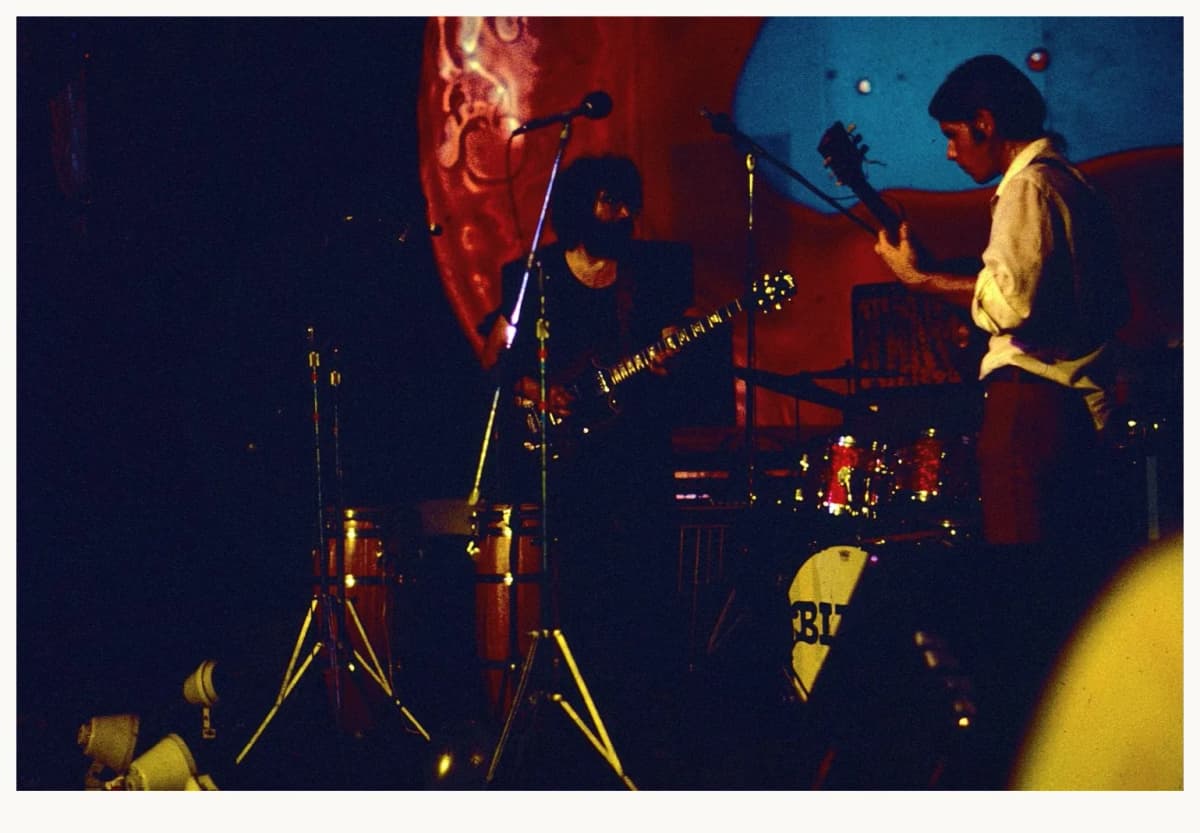
If you are coming to this show from the Steely Dan side, here is your one-paragraph orientation. The Grateful Dead's songs are sturdier than their reputation suggests — "Deal," "Shakedown Street," "Eyes of the World" — real melodies with real changes. What made the band singular was the space between the songs: the willingness to let eight bars become eighty, to follow a phrase until it turned into a different tune entirely. That is the instinct Steely Dead borrows for the Dan material. Expect a familiar chorus, then expect the floor to open under it.
The Dan half, for the tie-dyed
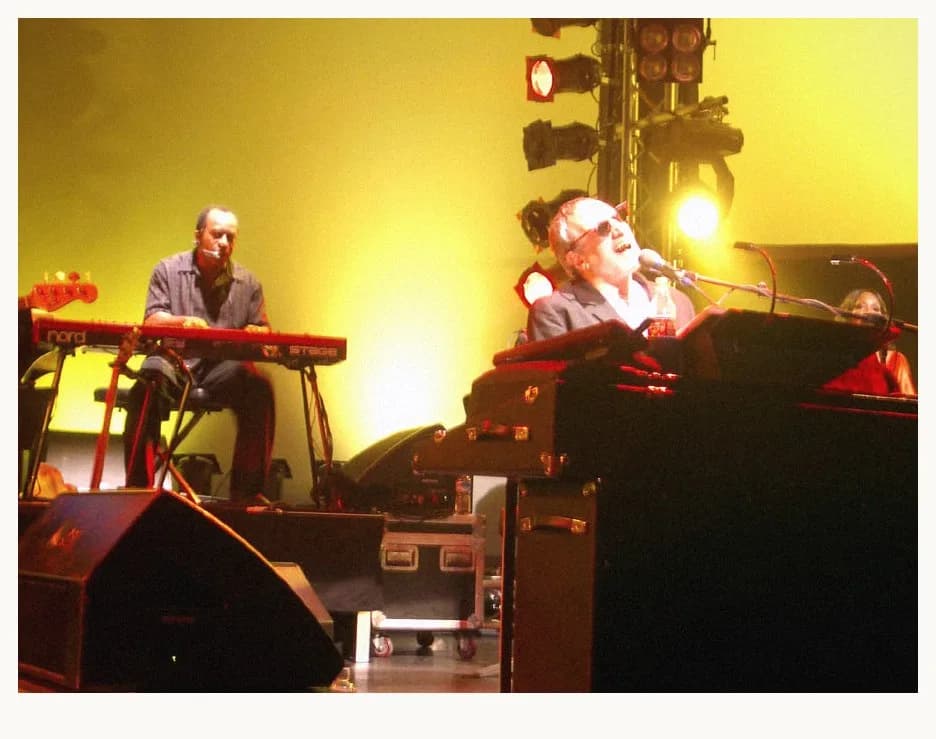
Coming from the Dead side instead? Steely Dan is what happens when two songwriters with jazz ears and zero sentimentality decide pop music should be harder to play. "Reelin' in the Years," "Do It Again," "Kid Charlemagne" — the hooks are enormous, but underneath them the harmony keeps moving, and the grooves are precise in a way that rewards a band that has actually done its homework. That precision is what Steely Dead imports into the Dead material. The jams still wander; the pocket does not.
How the Mashup Actually Works
The band's signature move is the true splice — two songs from opposite shelves played as one. The founding example happened by accident in Colorado: the band was inside the Dead's "Deal," a song the Dead first played in 1971, when the groove tipped over into "Reelin' in the Years." The two songs turned out to share a skeleton. The hybrid now lives in the repertoire under the name "Dealin' in the Years," and hearing it land for the first time is the closest a rock show gets to a museum reveal — the moment the wall text tells you the two paintings you were comparing were made the same year.
Two practical listening notes for a first-timer:
Watch the hands. Steely Dead calls its sets on the fly, steering with hand signals rather than a fixed list. That means the segues — the connective tissue between a Dan tune and a Dead tune — are decided in real time. When the keyboardist and the guitarist start trading looks, something is about to turn.
Do not wait for the punchline. The mashups are not gags, and the band does not play them for laughs. The best stretches of a Steely Dead set are the ones where you genuinely lose track of whose song you are inside. If you catch yourself asking "wait, which band is this," that is not confusion. That is the product working.
A mashup act lives or dies on respect for both source collections. This one has sold out Phil Lesh's own Terrapin Crossroads, which is roughly the Dead-world equivalent of hanging your remix in the artist's living room.
How July 24 Actually Runs
Now the logistics, because this is a three-venue day if you let it be, and the timing is tighter than it looks.
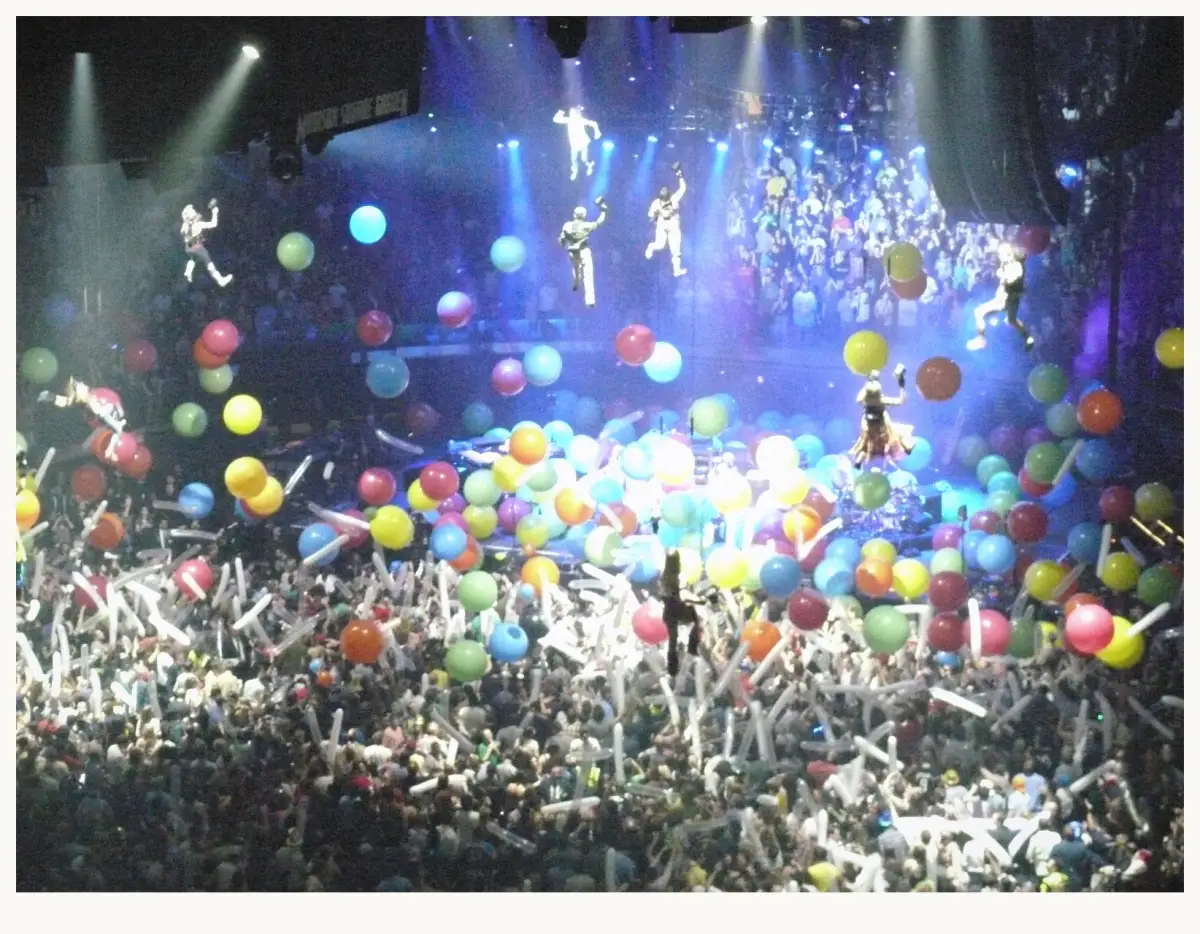
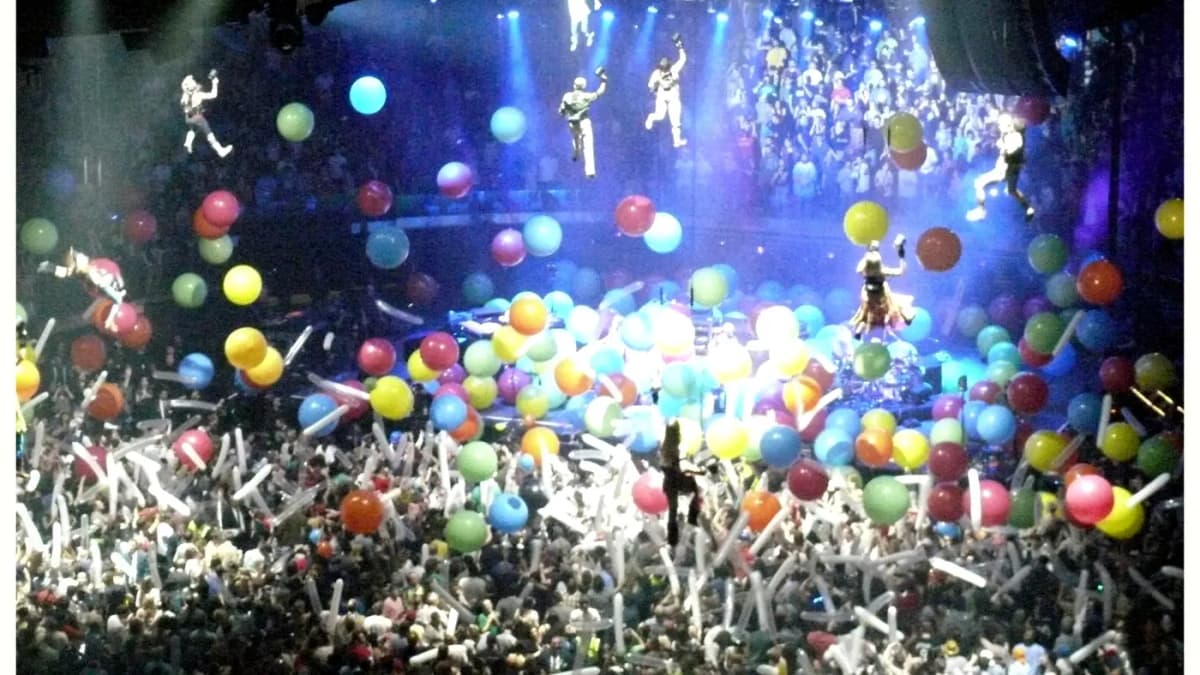
Phish plays Madison Square Garden five nights this July — the 22nd, 24th, 25th, 27th and 29th — and the city's club promoters have built a full satellite program around the run. CEG Presents has Spafford at The Cutting Room on the 24th and 25th, bluegrass quartet Magoo at Hill Country Live on the 25th, and Steely Dead holding down the 24th with the only true doubleheader of the series: an afternoon show and a midnight show in the same room, with the Garden in between.
Here is the clean version of the day:
3:00 p.m. — doors at Hill Country Live. The room is the downstairs level of Hill Country Barbecue Market at 30 West 26th Street, between Broadway and Sixth in the Flatiron district. It is a low-ceilinged basement that fits a couple hundred people, which means the afternoon show will feel full even when it is not. Arrive near doors if you care about the front third of the room; arrive at 4:00 sharp if you care more about brisket, which is sold upstairs and is a legitimate reason to be early.
4:00 p.m. — the pre-party. Ninety minutes to two hours of daylight-hours Steely Dead. Afternoon sets by jam-adjacent bands are consistently looser and chattier than their evening versions, and a 4:00 p.m. start means you will hear the full argument — Dan tunes, Dead tunes, at least one splice — with time to spare.
Evening — the walk to the Garden. MSG sits at 31st through 33rd and Seventh, about a fifteen-minute walk north from the venue. No subway required, no crosstown transfer, no parking decisions. Of all the Phish satellite shows this week, this is the one where the geography does you a favor.
11:30 p.m. — doors again. The after-party opens its doors as the Garden empties, and the room fills with people still humming whatever Phish encored with.
11:59 p.m. — the midnight set. This is the one to protect your energy for. After-party crowds are self-selecting: everyone in the basement at midnight chose to be there over their hotel bed, and the band knows it. If the afternoon show is the wall text, the midnight show is the room you save for last.
Tickets, Times and the Fine Print
The honest ticket talk, which is the section I would want someone to write for me:
• Each show is ticketed separately through TicketWeb, and there is a two-show ticket covering both the pre-party and the after-party. Announced pricing started at $22 early bird and $25 advance per show; current single-show listings run around $33 with fees, and the two-show bundle sits near $60 with fees — meaning the bundle is essentially fee math, not a discount. Buy it for convenience and commitment, not savings.
• Both shows are all ages. A 4:00 p.m. basement show you can bring a teenager to is rarer than it should be.
• One dollar from every ticket goes to the WaterWheel Foundation, the charity Phish has run since 1997. A small thing, done quietly, and worth knowing.
• Sell-out risk is real but asymmetric. The room is small. Midnight shows near the Garden on a Phish night have a way of filling late, and the afternoon show is the easier ticket of the two. If you are only buying one, and you are new to all of this, take the pre-party: full attention, full setlist, and a bedtime.
• No Phish ticket required. Nothing about either show checks whether you were at the Garden. If you struck out on MSG tickets, the doubleheader is a complete evening on its own — arguably a better-value one.
Who This Day Is For
The two-show ticket is for the completists — the people who want the afternoon version and the midnight version of the same band, the way some of us insist on seeing an exhibition at opening and again in the last week. The pre-party alone is for the curious and the jet-lagged. The after-party alone is for anyone walking out of the Garden not ready to be done, which on a Phish night is a large constituency.
And if you are the person this piece was really written for — the one who knows "Reelin' in the Years" from the radio and the Grateful Dead mostly from the stickers — go anyway, and go early. Mashup bands are the friendliest possible door into both catalogs, because they hand you the comparison the critics spent fifty years writing essays about, live, in about twelve minutes, in a basement that smells like barbecue.
Save the date, buy before the week-of price bump, and save the midnight set for last.
Hill Country Live (Hill Country Barbecue Market), 30 W 26th St, New York, NY 10010