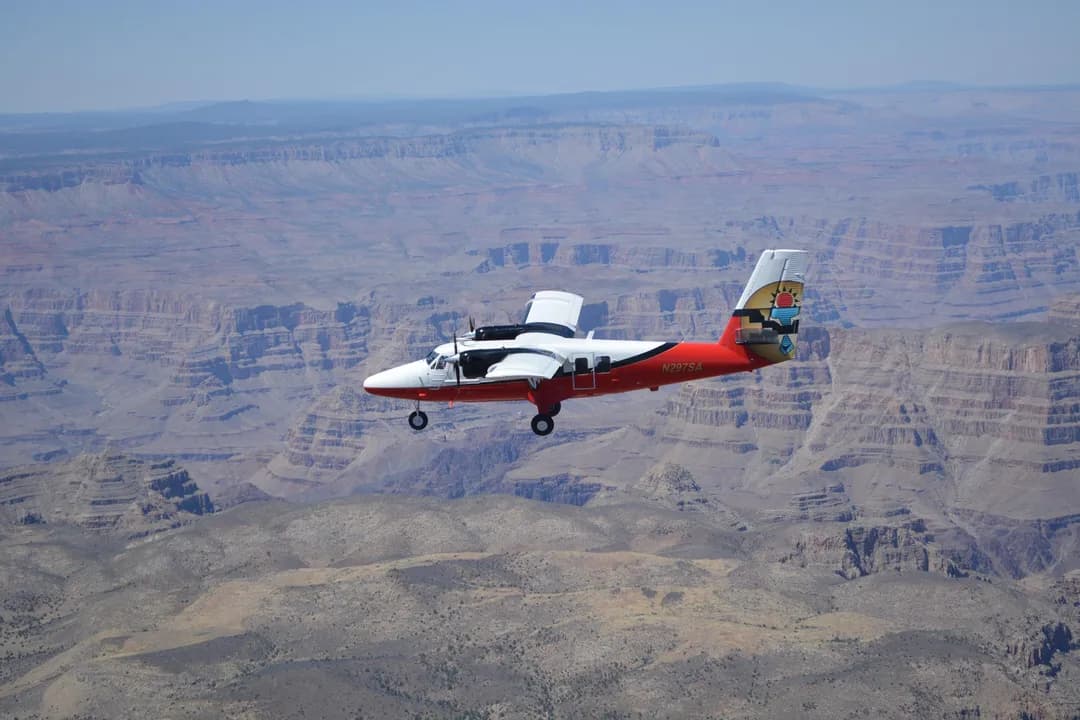

Rim to Rim by Air, Crossing Over at Zuni Point
A 40-to-45-minute airplane loop from the South Rim airport, across the canyon at Zuni Point and over the North Rim's forest.
This airplane loop starts and ends at Grand Canyon National Park Airport (GCN), the operator's South Rim base near the park entrance. The listing includes no transport there, and the operator's Las Vegas flights are separate tours. Grand Canyon Airlines flies east first and crosses the gorge at Zuni Point, with the Painted Desert and the Navajo reservation spread out east of the Colorado River. Then the airplane turns over the rugged North Rim and the forest of the Kaibab Plateau before heading back.
Plan on about 40 to 45 minutes in the air, plus a 30-minute check-in before it. Headsets carry narration and music, and the operator lists more than a dozen narration languages.

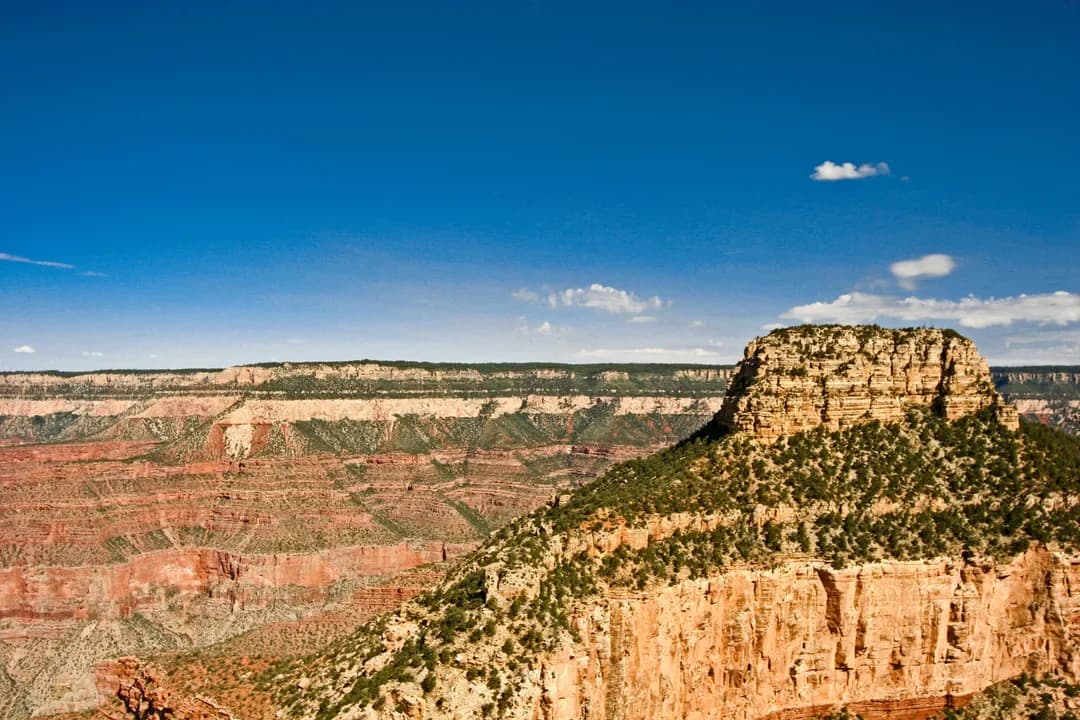
The listing below sells the flight on its own or with one of two Hummer upgrades on the South Rim, one of them timed for sunset. Every traveler from age two up books a full seat.
 Grand Canyon Landmarks Tour by Airplane with Optional Hummer Tour40-to-45-minute air tour over the eastern Grand Canyon and North Rim from Grand Canyon National Park Airport, with optional Hummer ground tour.www.viator.com
East First, Across the Gorge at Zuni Point
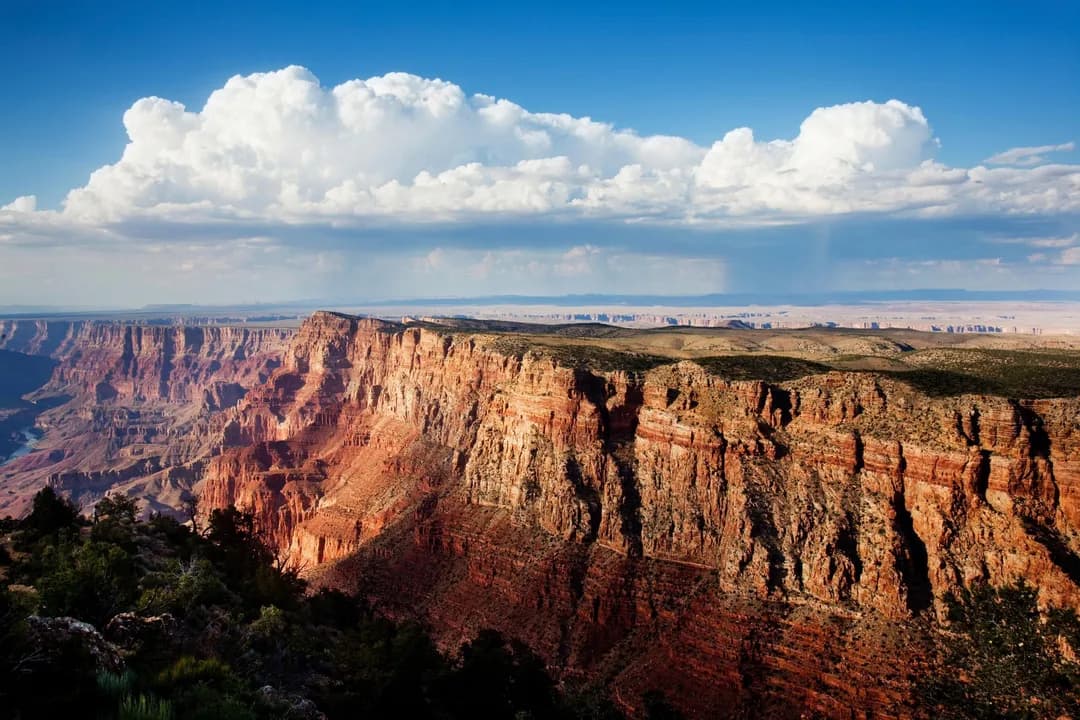
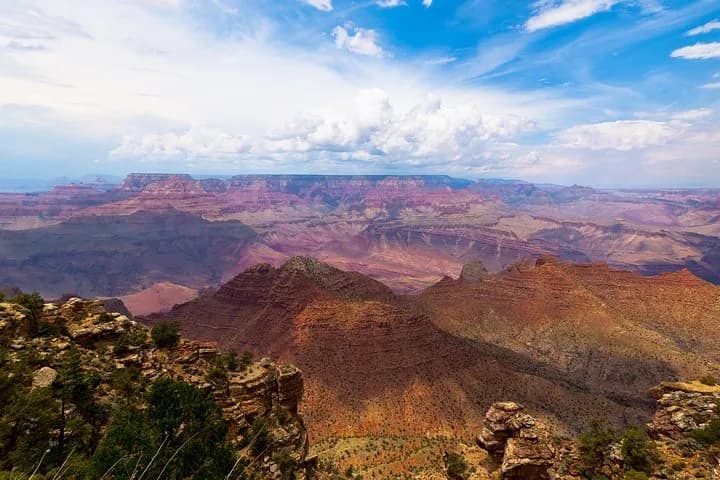
The operator describes the route plainly. The airplane heads straight for the eastern part of the canyon and crosses at Zuni Point Pass, with the Painted Desert on display to the east of the river. The listing places Desert View Watchtower on the same stretch, and the operator adds the confluence of the Little Colorado River and the Colorado River nearly a mile below the rim.
Every landmark on the list is a fly-over, and the airplane lands only back at the South Rim airport.
Then North, Over Imperial Point and the Kaibab Forest
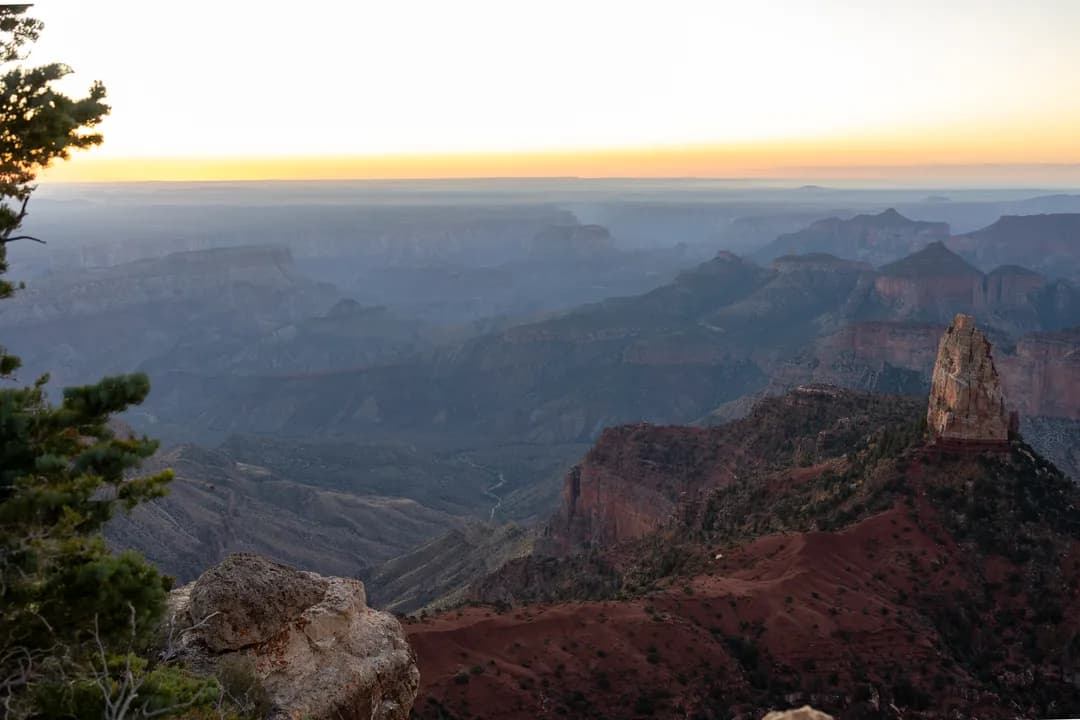
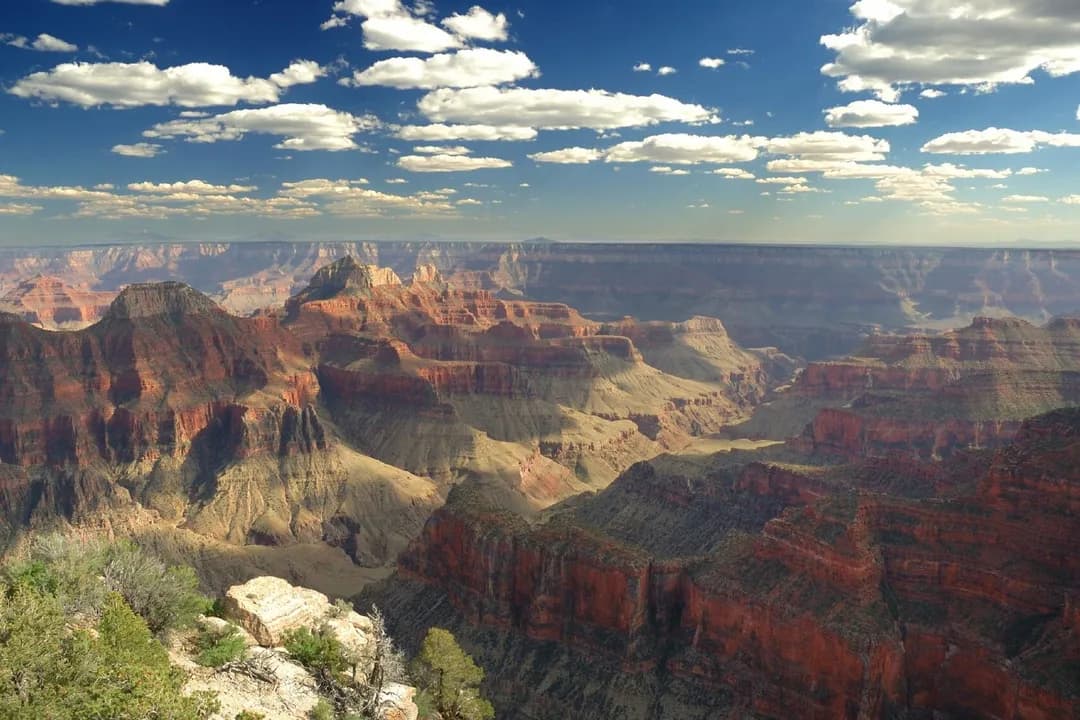
After the crossing the airplane changes course over the North Rim wilderness. The operator names Imperial Point among the views, and the listing calls it the highest overlook in the park from the ground. Past it lies the Kaibab Plateau and the pine forest of Kaibab National Forest. The operator suggests watching for California condors, elk and even bears; treat any sighting as luck.
Traveler accounts of the ride split between bumps, sometimes with airsickness, and smooth flights; a 2023 traveler credited a calm morning. Travelers also describe the crew assigning seats after the weigh-in. The listing describes oversized windows built for photography, and the operator says every seat has a view. The operator's tour page offers a window seat request at USD 15 per seat, charged only if the aircraft can honor it after check-in.
The Hummer Upgrades Add the South Rim at Ground Level
Both upgrades begin after you land. The operator's sunset page says passengers drive the short distance to the Buck Wild Hummer Tours terminal (469 State Route 64, Tusayan), and the listing asks for check-in there 30 minutes before the Hummer departure. The open-air drive stays on paved park roads, never below the rim, and stops at three or four South Rim viewpoints, which the listing says may include Pipe Creek Vista, Duck on a Rock, Grandview, Moran, Yavapai Point and Mather Point. The operator warns that some can drop off for park closures or heavy traffic, and it puts the whole outing at about three and a half hours with the standard Hummer and about four with the sunset one. On Christmas Day the operator limits its offerings to airplane and bus tours.
On the Hummer options, non-U.S. residents aged 16 and older pay the National Park Service a USD 100 nonresident fee each, or one USD 250 Non-Resident America the Beautiful pass covers the holder and three more. Buck Wild says the pass cannot be bought at the park gate during the Hummer tour; buy it online or at a Tusayan fee station beforehand, or tell Buck Wild in advance to buy the USD 250 pass at its check-in. The listing says the air-only flight is not subject to that fee. Sturdy, closed-toe shoes help on the rocky ground at the viewpoints.
Bring Original ID and Leave the Bag Behind
Grand Canyon Airlines asks for every passenger's weight at booking, infants included, and weighs everyone again at check-in. Anyone at 300 pounds or more buys an additional seat, paid to the operator on the day; its FAQ puts that charge between USD 50 and USD 250 depending on the tour. Purses, backpacks and other bags do not go on the aircraft. A water bottle can come aboard but stays closed in flight, and selfie sticks or extending poles are banned in and around the airplane.
Adults 18 and older need an original passport or REAL ID-compliant license, and the operator's booking policy denies check-in without one and refunds no one in that reservation. Children under two ride on an adult's lap with proof of age, such as a passport or a copy of a birth certificate.
The listing ticks wheelchair accessible. The operator's contract of carriage is narrower: it carries only manual wheelchairs, stowed as baggage when space allows, provides no in-flight assistance, and may require an attendant for a passenger unable to help in their own evacuation.
📍 Check in at the Grand Canyon Scenic Airlines terminal at Grand Canyon National Park Airport (the operator lists 3555 Airport Road) 30 minutes before departure. The airport has several buildings, and a 2026 traveler ended up at the wrong one at first. The operator cancels no-shows who have not checked in by then.
The listing asks you to reconfirm by phone at least 24 hours ahead at 702-835-8484, and the operator's own policy says 48 hours; a call two days out covers both. Cancel at least 24 hours before departure for a full refund on this listing. Bookings made directly with the operator follow its stricter 72-hour rule. Flight times can shift with weather and weight limits, and gratuities are not included.
Wear layers from March to September and winter clothing from October to mid-March. Then the airplane heads straight east for Zuni Point.