
Rappel Beside Desert Waterfalls in a Canyon Outside Tucson
A private guide rigs every anchor while you hike, scramble and drop down the water features of a Sonoran Desert canyon. No rope experience needed.
Tucson reads, from the road, like a desert that holds no water at all. The Santa Catalina Mountains along the city's northern edge tell a different story. Snowmelt and summer storms have cut narrow corridors down through the rock, and those corridors keep pools, chutes and short waterfalls long after the flats have dried out.
Canyoneering is how you travel through one of them. You hike in, scramble over boulders, and where the canyon floor drops away you go down it on a rope instead of walking around. The half-day trip is built for people who have never done any of this. The guide rigs every anchor, runs the rope system, and walks you through each drop before you commit to it.
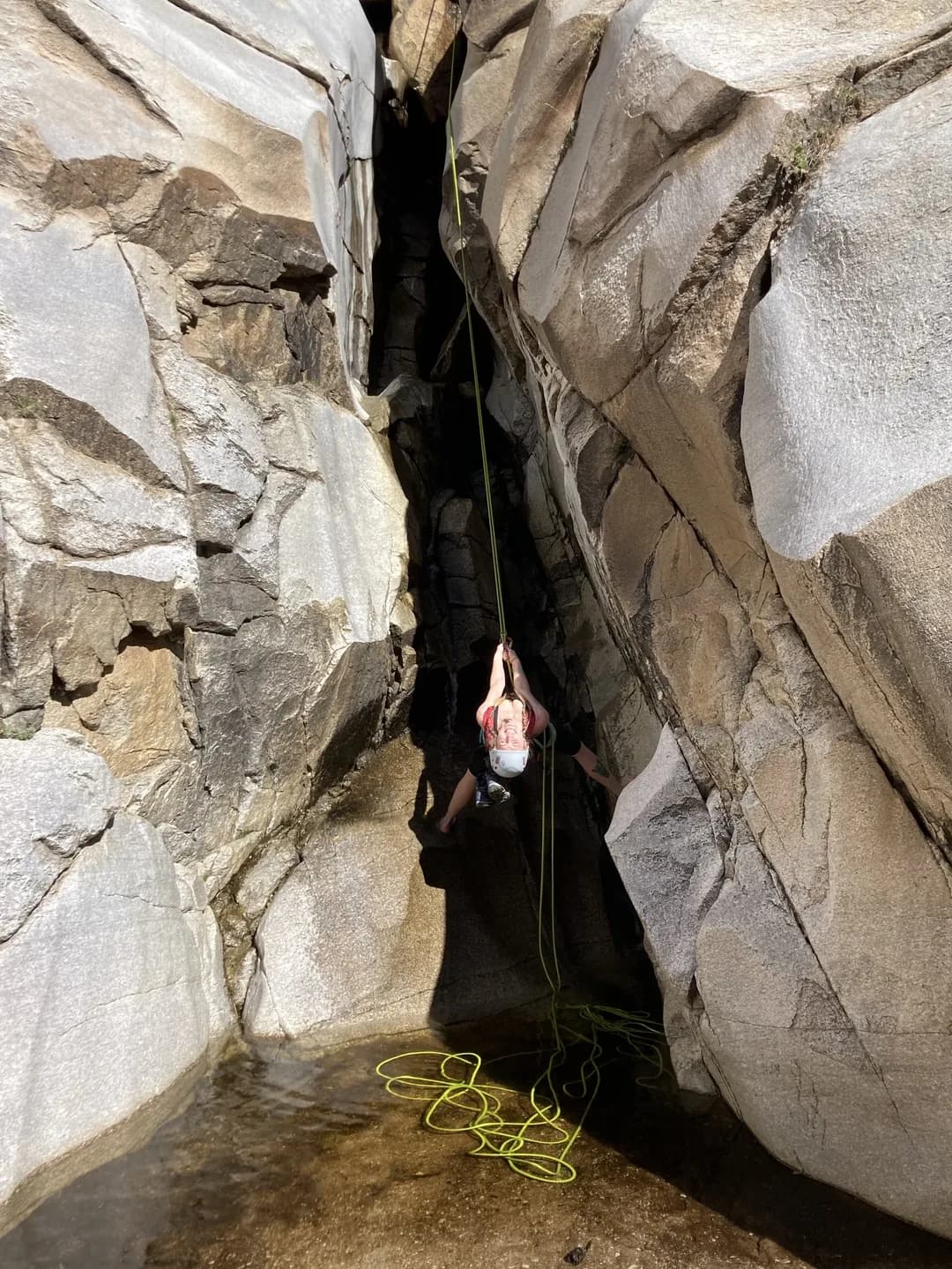
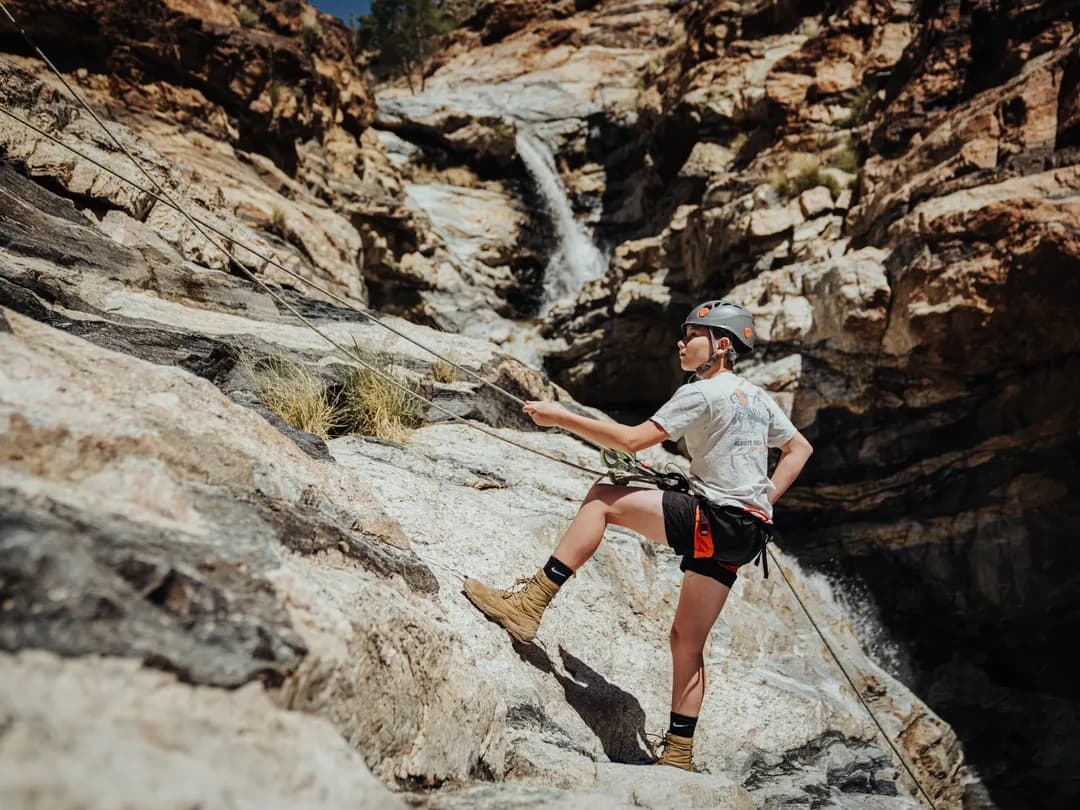
The trip is private, so the only people on the rope are the ones you booked with. A single booking covers one to ten travellers, every booking needs an adult on it, and the minimum age is eight. The slot runs five hours end to end, and the start time is agreed with you rather than fixed to a timetable.
 Canyoneering Half-Day Private ExperienceFive hours in a Sonoran Desert canyon outside Tucson with a guide who is yours for the day. Harnesses, helmets and rappel devices are included.www.viator.com
What a Half Day in the Canyon Looks Like
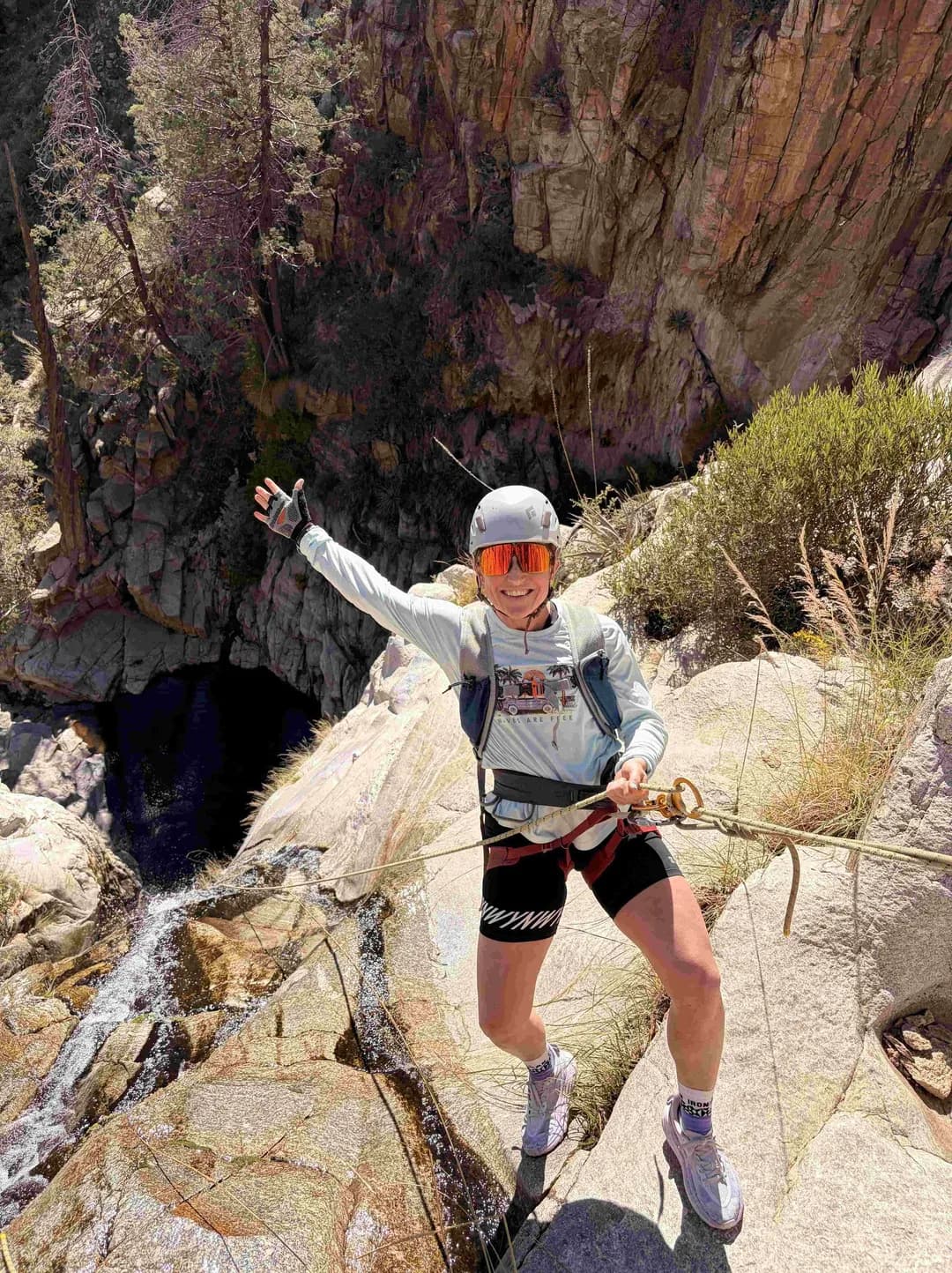
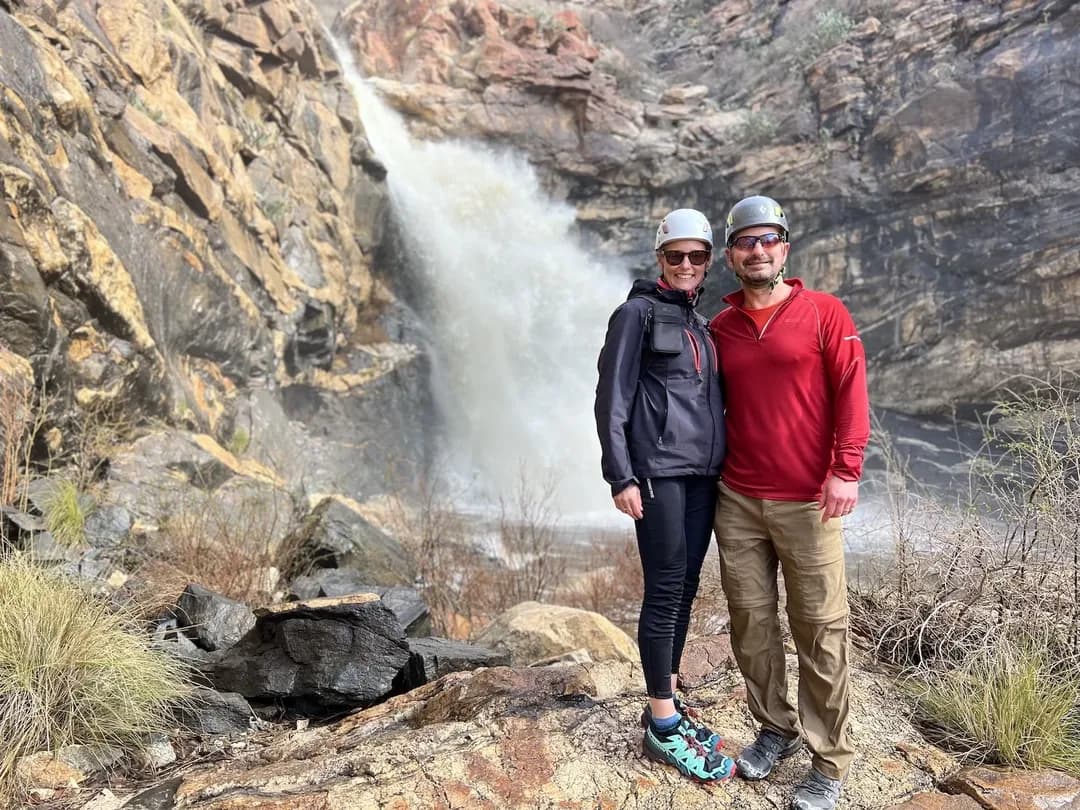
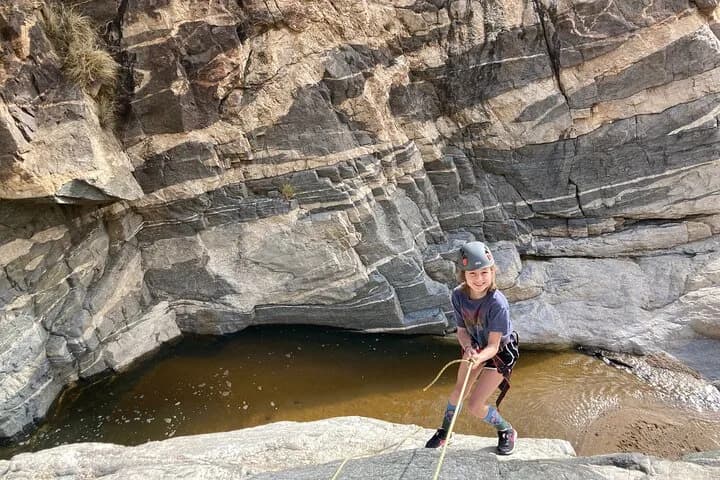
The day is a loop of walking and rope work rather than one long descent. You cover around three miles on foot, with multiple rappels and a Tyrolean traverse folded into the hike. A Tyrolean traverse is a rope strung between two anchors across a gap; you clip onto it and haul yourself across with the canyon floor some distance below.
The operator describes the appeal as scenic canyon hiking intermingled with exciting rappels down water features, and that is an honest summary of the rhythm: walk, scramble, rig, descend, repeat. The descents land beside and through running water rather than on dry rock, which is the part most people come for.
The objective is chosen on the day. Season, recent weather and how much water is moving all change what is passable, so the guide picks the line after seeing conditions. It also means the same booking reads differently in March than it does in October.
Who Is Holding the Other End of the Rope

Altitude Mountain Guides works out of Tucson and runs climbing, rappelling and canyon trips in the ranges immediately outside the city. Every guide holds either an AMGA Single Pitch Instructor or a PCGI Single Pitch Guide certification and is a Wilderness First Responder.
Benjamin Elliot owns the company. He learned to climb while at college in the Pacific Northwest, moved to Tucson in 2009, and now serves as Vice President of the Climbing Association of Southern Arizona. The roster around him includes Aaron Mike, a Diné athlete with two decades of climbing in the Tucson area and training from the American Mountain Guides Association and the Wilderness Medical Institute, and Kamille Barfield, a registered nurse with a wilderness medicine background who covers field medicine.
Because the booking is private, that attention is not split across a mixed group of strangers.
How Hard It Actually Is
Two descriptions of the effort sit side by side on the booking page, and they do not quite agree. One line says the trip suits all physical fitness levels. The product description is more specific: it asks for some physicality and a solid base fitness level.
Plan around the second one. Three miles of desert hiking with scrambling over boulders is a real day out, and the rope sections ask you to stay composed while hanging in a harness. The operator's own framing is the useful middle: you do not need to be an athlete, but every trip involves genuine physical activity, and the canyon trips are the most active thing they run.
Skill is a separate question from fitness, and on skill the answer is genuinely open. No previous rappelling or canyoneering experience is required for the half-day route, and the operator describes it as suitable for many adventurous kids and teens alongside first-time adults.
One caution from the listing is worth carrying over plainly: it is not recommended for travellers with poor cardiovascular health.
What to Bring, and When to Start
The technical kit is covered. Harnesses, helmets and rappel devices come with the trip, so what you pack looks like a day hike: plenty of water, food sized to the length of the trip, sun protection, athletic clothing you can move freely in, and closed-toe shoes with real grip.
Add a layer anyway. Conditions shift with elevation on the way up toward Mount Lemmon, and a canyon in shade runs colder than the parking lot led you to expect. Expect to get wet, because the descents go beside and through the water rather than around it.
The start time is yours to choose, and the operator has a view worth taking. In the colder months a 10 a.m. or later start keeps you out of the sharpest part of the morning; in warm weather an earlier start is more comfortable. They may suggest shifting your slot once they have seen the forecast.
Cancellation is standard: cancel at least 24 hours before the scheduled start time for a full refund. Tickets are mobile, one per booking, and the trip is guided in English.
📍 You meet your guide outside Le Buzz Cafe on East Tanque Verde Road, near the base of Mount Lemmon, at 9121 East Tanque Verde Road. There are two Le Buzz locations in Tucson, so go by the address on your booking rather than the first one your map app offers. Your guide calls or texts on arrival.
Allow about fifteen minutes at the cafe for fitting harnesses and helmets, then a short drive up the mountain to the canyon. Coffee before you start is a reasonable idea, and it is the reason the meeting point is where it is.