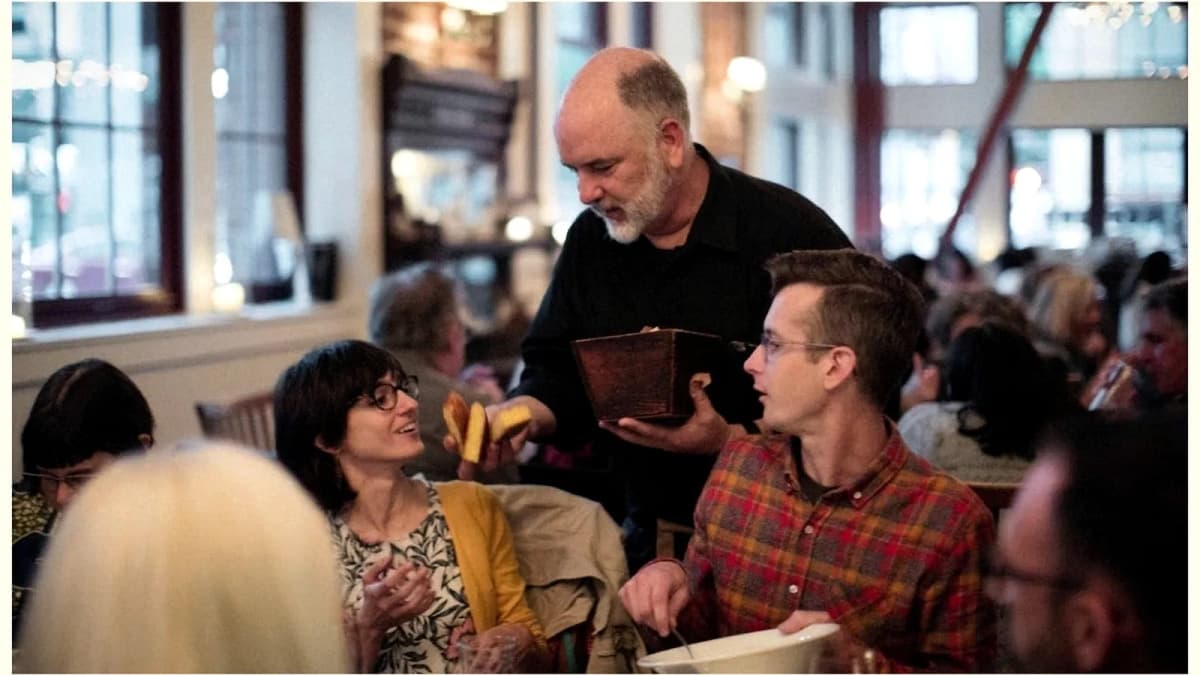
Community / Event
Queens Remembers Better At A Table
 Sally Abrams
A table becomes an archive before anyone uses the word history.
The table is the archive
A good memory night should not feel like a civic assignment. It should feel like supper with a job.
That matters. The minute you make the evening too formal, people start performing importance. They bring the polished story. They skip the embarrassing one. They say "I do not remember much," when what they mean is that nobody has ever asked them about the bus route, the rent, the first kitchen, the store that gave credit, the auntie who knew which landlord fixed leaks, or the phone number everyone called before WhatsApp made the family portable.
So keep it plain. One table. One shared dish or two pizzas. One phone on airplane mode, then back on for recording. A scanner app if someone brings photographs. Paper towels, not linen. The less the night tries to look like history, the more history it usually produces.
The goal is not to prove that the old block was better. That is nostalgia, and nostalgia is lazy politics. It turns a neighborhood into a rerun and makes every newcomer look like an interruption. Queens deserves a harder, kinder question:
What should someone know before this disappears from the map?
Ask that about the bodega with the handwritten sign. Ask it about the mosque that began in a storefront. Ask it about the hair salon where three languages lived under one dryer hood. Ask it about the aunt who crossed two boroughs every Saturday because one butcher cut the meat right.
Then write down the answer. Better, record the person saying it.
Queens already built the memory machine
The beautiful part is that this does not have to stay in somebody's Notes app. Queens Memory already exists for exactly this kind of work.
Built through Queens Public Library and Queens College, the project collects personal histories, photographs, home recordings, neighborhood ephemera, and everyday records of contemporary life in Queens. That wording matters. It does not treat ordinary residents as decoration around "real" history. It treats them as sources.
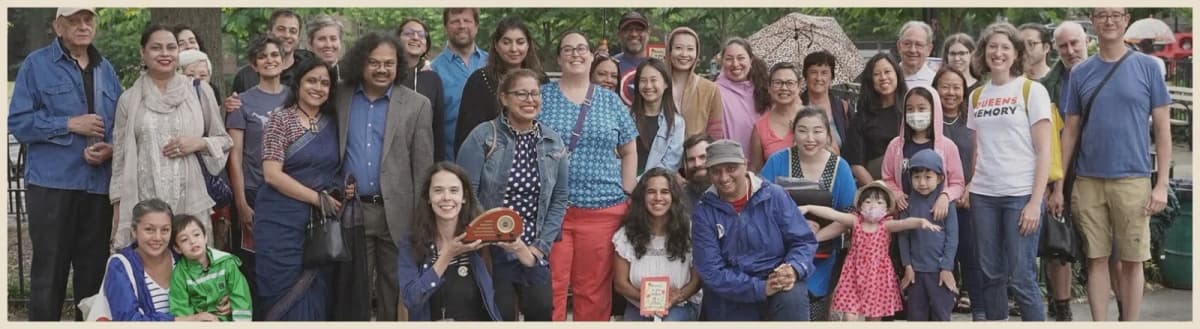
Queens Memory treats neighbors as the archive, not just the audience.
This is the right scale for a borough that changes faster than plaque-making. A takeout menu can be evidence. So can a block-party flyer, a church bulletin, a school photograph, a voicemail, a family recipe card, or the ambient sound of a train that made a whole childhood legible. The project has oral histories, podcast seasons on migration and COVID life in Queens, and public ways to contribute. It understands something many archives learn too late: by the time a place looks obviously historic, the small proof has often been thrown away.
For a reader, the practical move is simple. Do not begin with "we should preserve family history," because that sentence makes everyone tired. Begin with an object.
"Who is in this photo?"
"Where was this taken?"
"What was on this corner before the pharmacy?"
"Who did people call when they needed help?"
"What did this place sound like at night?"
StoryCorps has spent decades proving that the best interview questions are not clever. They are generous and direct. In Queens, the local version should be even more specific. Do not ask, "What was immigration like?" Ask, "What was the first errand you learned to do alone here?" Do not ask, "How did the neighborhood change?" Ask, "Which store closing made people stop running into each other?"
That is where the story usually opens.
Use the map, then leave the map
Queens Name Explorer is the other half of the assignment. It maps more than 1,300 named places across the borough, with more than 1,000 entries live, from streets and schools to parks, monuments, and buildings. It is useful because it gives memory a handle. A name on a corner becomes searchable, arguable, expandable.
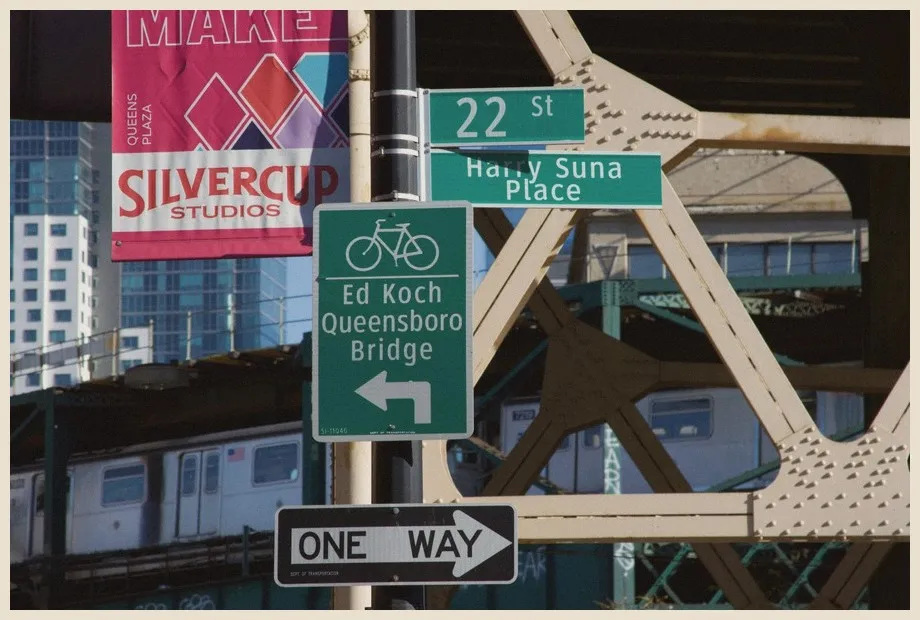
A street sign is not the whole story. It is the first handle.
But the map is a door, not the room.
Official naming systems tend to favor the people whose achievements already fit a public grammar: elected officials, soldiers, philanthropists, athletes, founders, the respectable dead. That does not make the map useless. It makes it incomplete. The interesting work begins when a resident can add the thing the sign cannot hold: who used the corner, who argued for the co-naming, who still mispronounces it, who avoids that block because of an old fight, who remembers the storefront before the honorific name arrived.
This is where Queens is hard to write and worth writing. A named street can honor Pelé, Ms. Colombia, Ed Sedarbaum, Howard Cruse, Saul Weprin, Nancy Cataldi, or a local firefighter. But the lived meaning of that name depends on people still able to explain why it matters on that block, not just in a biography field.
So use Name Explorer at the table. Type in the nearest street co-name. Read enough to understand the public record. Then put the laptop aside and ask the room: what did the map miss?
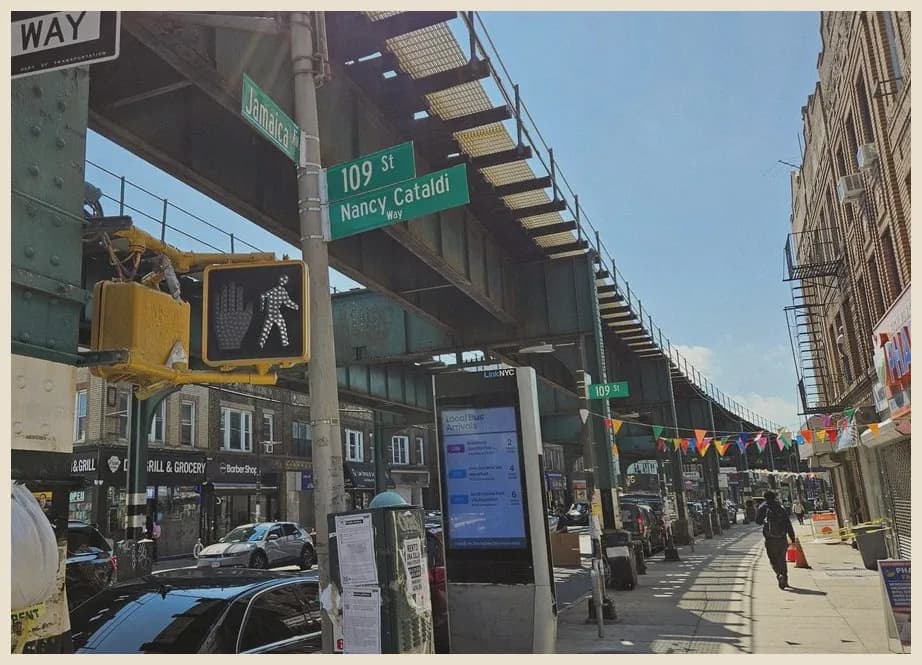
Under the train, the official map and the lived map keep interrupting each other.
Make the night small enough to finish
Here is the version I would actually run.
Pick one Queens table. Apartment, back room, community center, library room, church basement, restaurant after the rush. Eight people is enough. Twelve is the upper limit before the night becomes a panel.
Ask every person to bring one thing:
• A photograph.
• A menu, flyer, receipt, prayer card, ticket stub, recipe, school notice, or business card.
• A place name from Queens.
• A sound they remember.
• A person they wish someone had recorded.
Set a timer for 20 minutes per object. The timer is not rude. It protects the quiet people.
For each object, capture four facts before the story gets too loose: who, where, when, and what changed. Then let the story wander. The wandering is the point. Memory rarely arrives in chronological order. It comes through a side door, usually while someone is correcting a detail.
If the room stalls, use these questions:
• What did this place teach you to do?
• What did people misunderstand about it from outside the neighborhood?
• Who made this place easier to enter?
• What was the rule everyone knew but nobody wrote down?
• What should a newcomer know before they judge it?
• What is the smallest detail you still see clearly?
• Who else should be asked before this story is told in public?
That last question matters. The table is not a content mine. It is a trust exercise. Some stories should be archived. Some should stay with the people who earned them. A good editor knows the difference. So should a good neighbor.
Kingsland is the warning object
If you need a physical reminder that Queens memory does not survive by accident, go to Kingsland Homestead in Weeping Beech Park.
The house was built between 1774 and 1785, making it one of the borough's earliest surviving examples of a Long Island half-house. It later became the headquarters of the Queens Historical Society. But the reason it belongs in this article is not just age. It is movement.
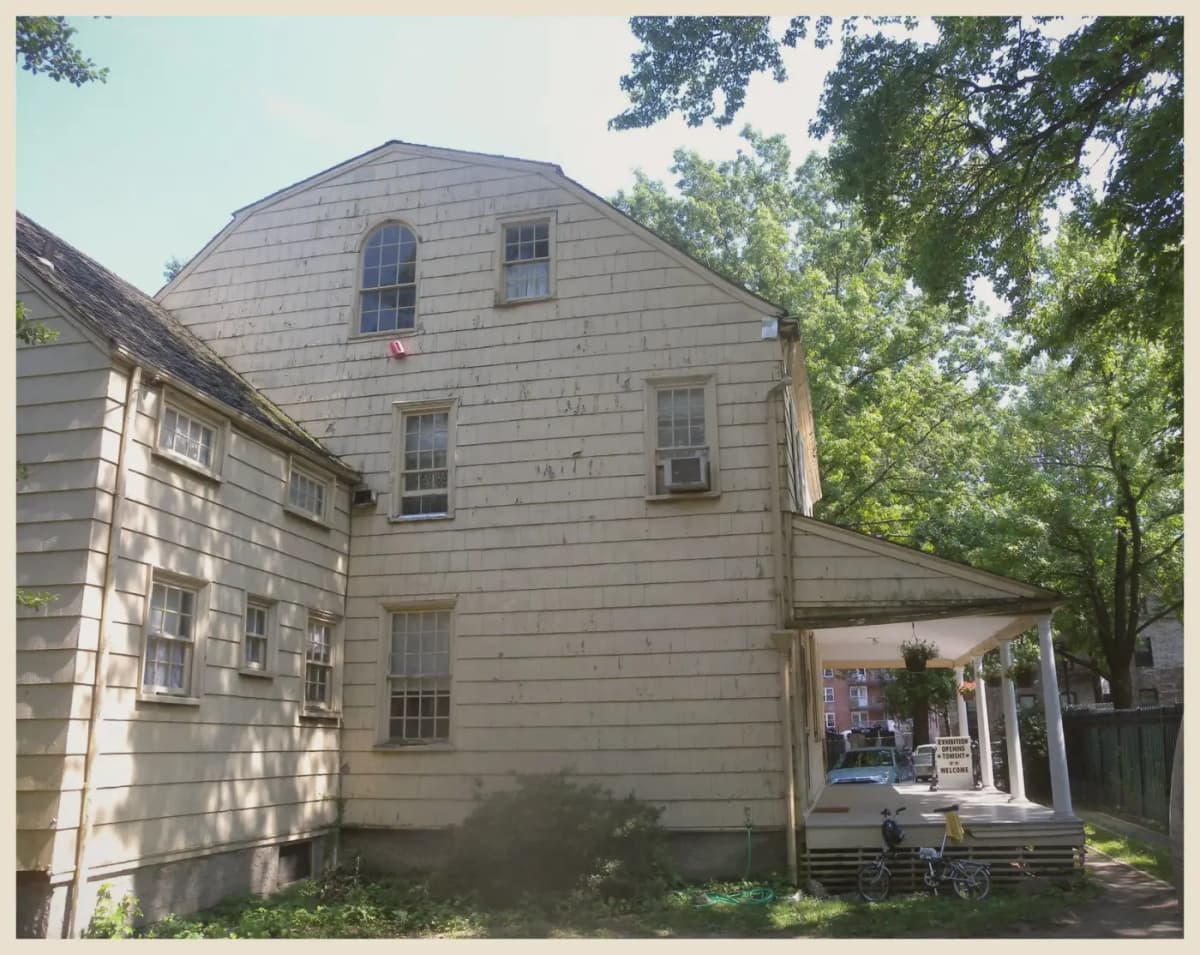
Kingsland Homestead is a preservation story about motion, not stillness.
Threatened by development, Kingsland was moved in 1968 onto a modern foundation in Weeping Beech Park. The site itself had been part of Parsons Nursery and was connected to America's first weeping beech tree. By 1973, after restoration, the house opened to the public as a museum.
That is the whole lesson in wood and shingles. Preservation here was not passive reverence. It was logistics, committee work, neighbors, money, a new foundation, and the refusal to let a shopping center decide what the borough was allowed to remember.
Most Queens memory will not get that level of rescue. A corner store will not be loaded onto a truck. A grandmother's route from Elmhurst to Corona will not become a historic house. A block's unwritten truce between old residents and new businesses will not be protected by landmark status.
That is why the table matters. It is cheaper than a museum and faster than a designation. It can start tonight.
What to keep, and what to leave alone
There are rules. Not bureaucratic rules. Human ones.
Ask before recording. Say where the recording might go. Let people say no without making them explain. Do not take original photos home unless you are the person who brought them. Scan, label, return. Put dates and places in filenames before everyone forgets. Do not flatten a whole community into one elder's story. Do not make pain the only proof that a neighborhood mattered.
And be careful with the word "lost." Some places disappear because rents rise. Some because owners retire. Some because the next generation wants a different life. Some because the neighborhood got safer, or more expensive, or less forgiving, or all three at once. Change is not automatically betrayal. But unrecorded change is a kind of erasure.
A useful rule: bring receipts, then bring your story. In this case, the receipt might be literal. A menu. A lease notice. A newspaper clipping. A subway transfer. A photograph with the wrong year written on the back. The point is not to make memory cold. The point is to give it enough evidence to survive someone else's doubt.
The better Queens story
New Orleans has its cemeteries. Queens has the table after dinner, the map tab still open, someone arguing about whether the old bakery was on 37th or 38th, and one person finally saying the thing nobody thought to record.
That is not less historic because it is still breathing.
The useful question is not "was it better before?" It is "what should someone know before this disappears from the map?"
Ask it once. Then ask who else should be at the table next time.
3 places