
Over the Flat Bridge to Big Hickory, Looking for Manatees
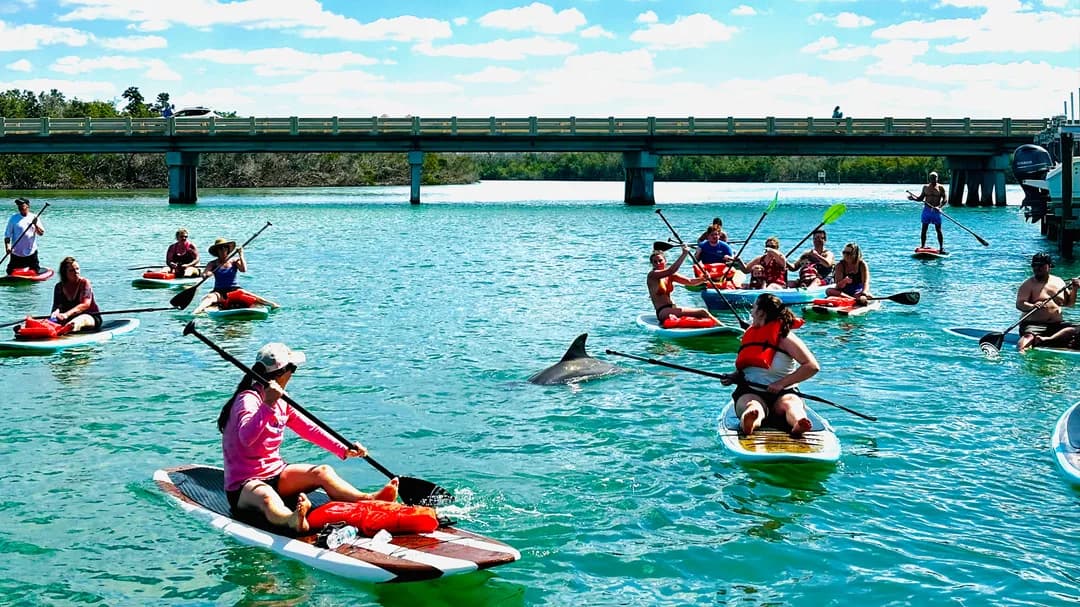
The ticket says Fort Myers. The launch is further south, on a sliver of island you reach by crossing a low flat bridge over Big Hickory Pass. From there it is two hours of shallow water, on a board or in a kayak, with a guide who reads this stretch every day.
Three Brothers runs this stretch of water on a fixed routine. You meet on Big Hickory Island, sign a release, and get an on-ground demonstration and lesson before anyone pushes off. Two hours later you come back to the same spot.
The ticket covers boards, paddles and life vests. The booking page sells two versions of the same outing, a stand-up paddleboard or a sit-on-top kayak, and calls both good for beginners. The operator's own site adds that it keeps a limited number of kayaks for guests who would rather sit than stand.
Nobody promises you an animal. The company says it takes guests to where it sees the most dolphins and manatees in the area, then says plainly that this is wildlife and sightings cannot be guaranteed. What you are booking is two hours in the right water with someone who paddles it daily.
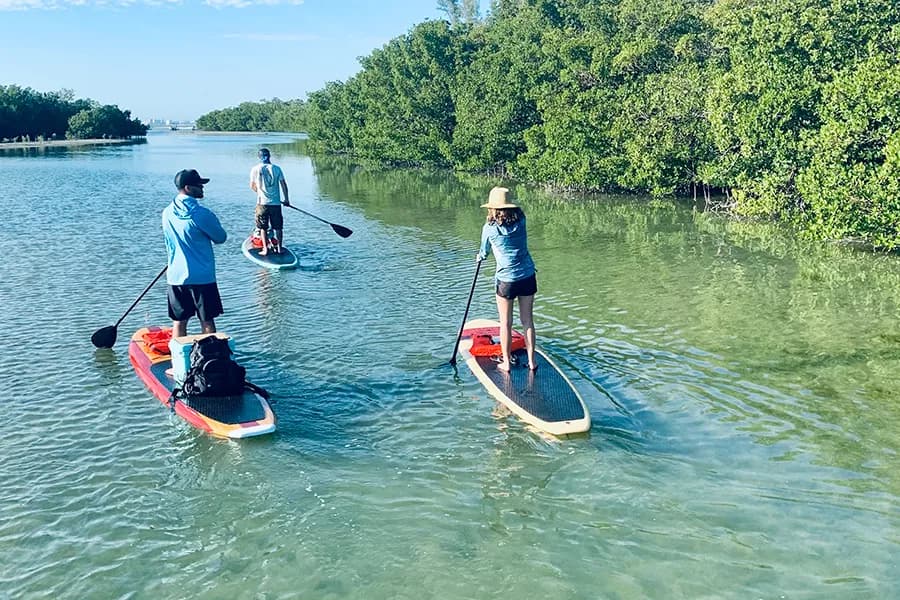
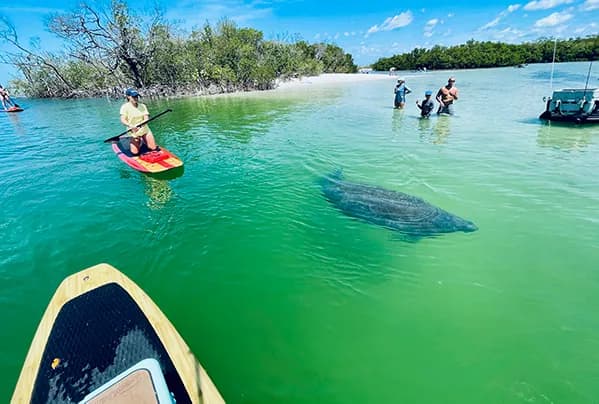
The water here is the kind you can see the bottom of. Mangrove roots line one side and a white sand spit sits at the turnaround. The whole route stays inside the bay.
This listing holds 4.9 across more than 2,900 reviews. Adults and children are priced separately, with the child rate lower. Booking closes two hours before departure, so this is not a plan you can make from the parking lot.
 Dolphin and Manatee Adventure Tour of Fort MyersTwo hours from Big Hickory Island by paddleboard or kayak. Boards, paddles and life vests included. Ages 4 and up, instant confirmation.www.viator.com
The Shallows Are the Whole Point
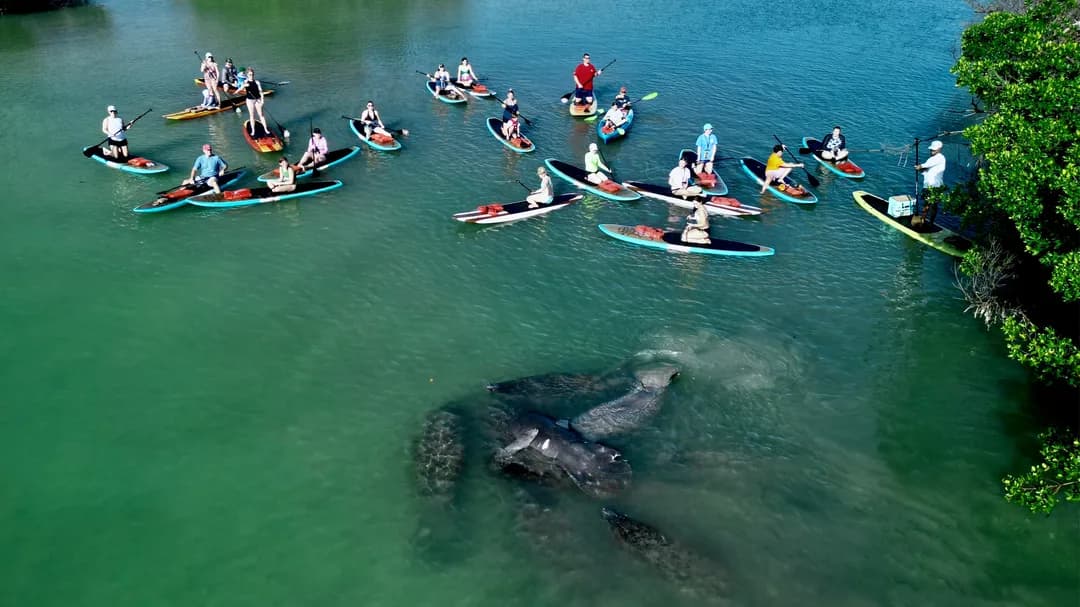
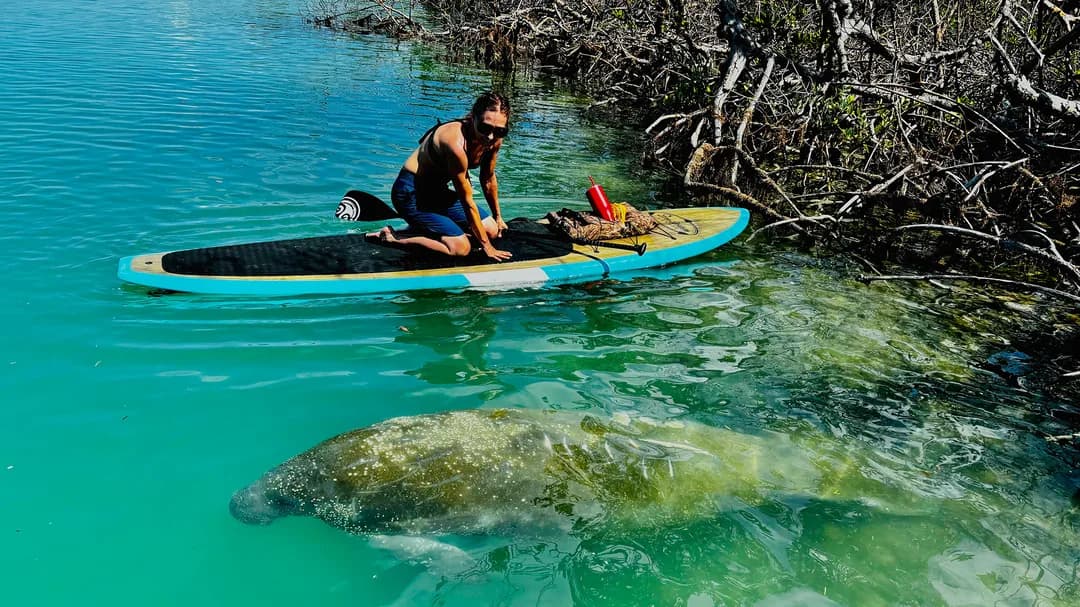
The listing calls this one of only a few places on earth to see West Indian manatees. In water this clear you tend to see one before anybody says anything.
The guides also point out dolphins, sea turtles, live conch, starfish, pelicans and the mangroves themselves. Morning tours are best for seeing dolphins and manatees, according to the operator's own FAQ. Their own blog splits the day finer than that: mornings for dolphins and birds, and in the cooler months a midday or early afternoon slot for manatees, which follow the warmest water they can find.
One rule outranks all of it. Florida's wildlife commission tells paddlers to look but not touch, and never to pursue or chase a manatee that surfaces near the board. That is not etiquette. Touching or harassing one is against state and federal law.
A stand-up board sits you higher than a kayak, which the booking page says gives the best view into the water. A kayak keeps you lower and steadier. Standing is optional on the board too. The operator's own tour notes say you can stand, sit or kneel, so dropping to your knees when the water picks up costs you nothing. Neither craft changes what shows up.
Which Slot You Book Decides a Lot
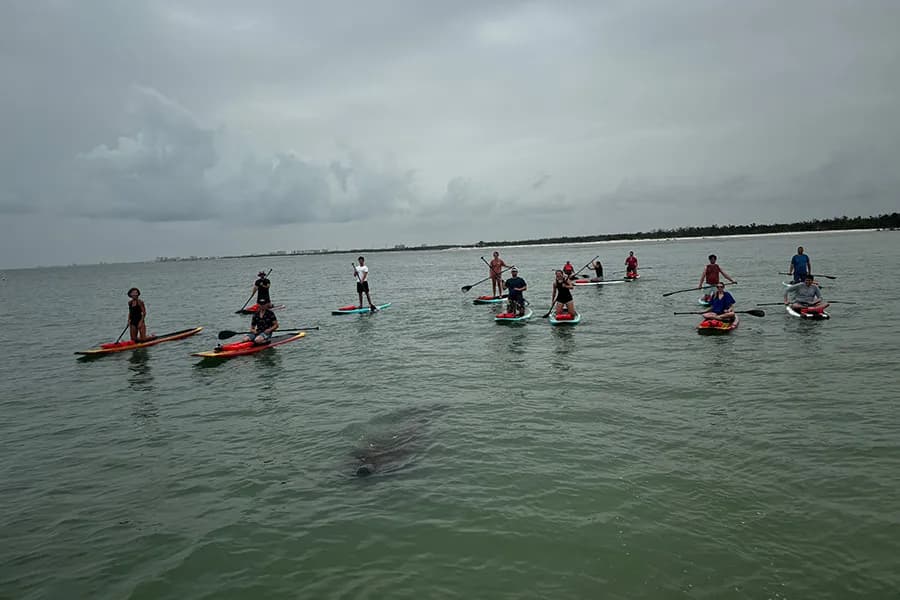
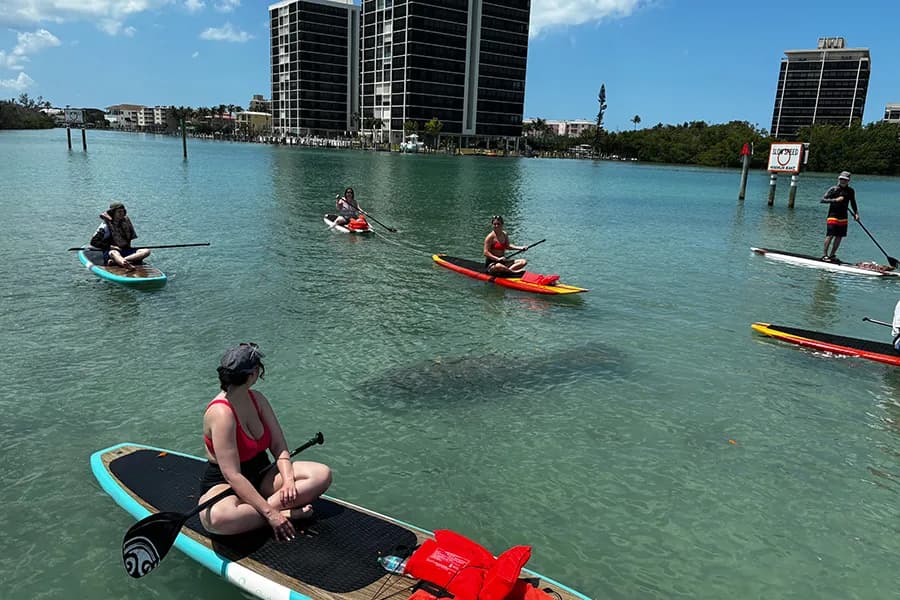
Departures run through the day, from early morning to mid-afternoon, seven days a week. Which one you want depends on what you came for, and on the month.
Lee County keeps its own record of where the animals are. From April through November its parks department puts manatees in coastal habitats near the gulf, by Lovers Key, and the county describes this launch as sitting directly south of that park. From late December through March, when the gulf falls below 68 degrees, they leave the coast for warmer water inland. The operator's midday advice is about the warmest hour of a cool day. The county's record is about whether the animals are in this bay at all. The tour runs either way; the manatee half of the name is the part that moves.
Guests give a second reason to go early. The listing says everyone from six year olds to couples in their eighties has finished these tours with ease, and rates the trip suitable for all physical fitness levels. People who wrote about the paddle back put it differently. One who tried both morning slots recommended the 8:00 am over the 10:30, especially on a Saturday, because the run out toward the gulf means working against the current and across boat traffic. Another called it a decent amount of work and a moderate level activity.
Weather is the other variable. The company cancels for bad weather and refunds in full when it does, and it also reserves the right to cancel if too few people book. A full refund on your side requires cancelling at least 24 hours before departure.
Estero Bay is a working waterway. Boats pass and condominium towers stand along parts of the shoreline. The slow speed signs are not advisory either: state and federal rules put the whole bay under a year round slow speed zone for the manatees, with a higher limit only in the marked channels. This is not wilderness, and the photographs on this page do not pretend otherwise.
Set Your Map to Big Hickory Island
This is the part worth reading twice. The tour is sold as a Fort Myers trip, and the operator's own booking system files it under Fort Myers Beach. The meeting instructions send you somewhere more specific than either.
The listing says it plainly. As soon as you go over the flat bridge that crosses Big Hickory Pass onto Big Hickory Island, you will see the setup on the left hand side. Arrive 30 minutes early.
The island is not private ground. Lee County runs it as Big Hickory Island Preserve, roughly 186 acres of beach, mangrove swamp and oyster bed that the county lists as open dawn to dusk and marks as a paddlecraft landing and launch on the Estero Bay stretch of the Great Calusa Blueway. The county's name for it is the one a map pin actually lands on.
Parking is the thing the booking page leaves out, and the county answers it instead. The preserve's own county page names no lot among its amenities. Down the island on Hickory Blvd, Lee County lists its beach accesses two through nine as free to park, while the two full beach parks that bookend them, access one and access ten, charge $2 an hour. Worth settling before you are circling with 30 minutes to burn.
The operator adds that the exact tour location is shared with you when you book. Treat the confirmation as the real address, and give yourself margin, because the launch is not in the city of Fort Myers.
Four and Up, Dogs Welcome
Two ages matter here and the operator's own tour notes keep them apart. A child can come at four with an adult along. From six, a child can paddle a board alone. The child rate covers ages four to six, and from seven up you pay the adult rate.
Dogs are welcome and the FAQ is enthusiastic about it. You bring your own pet life vest, because the company does not carry them.
Water is not on the list of what the ticket covers. Bring your own, and more of it than you think for two hours on open water in Florida sun. One guest put it plainly: make sure you bring water, you will need it. Snacks and a camera are fine as well, and most boards and kayaks have a tie-down area. The company asks that whatever you bring leaves with you, and says anything you carry is at your own risk.
Two hours is enough to get out, spend real time drifting over whatever the guide finds, and come back to the same patch of sand you left from. Take the first slot of the day, in the months when that is the one you want, and you are off the water with the morning still ahead of you, salt drying on your arms and the whole afternoon still unspent.