
Off Oceanside, Whales Rotate by Season; Dolphins Do Not
Gray whales pass Oceanside from late November into April and blue whales take over in summer. The four resident dolphin species do not migrate, which is what keeps a two hour boat worth boarding in the weeks between.
Oceanside Harbor sits a few minutes from open water, so the catamaran clears the jetty early and spends most of the two hours where the animals actually are. Gray whales hug this coast. The operator says it usually works about a mile offshore to find them, and the boat can range out to seven miles when it needs to.
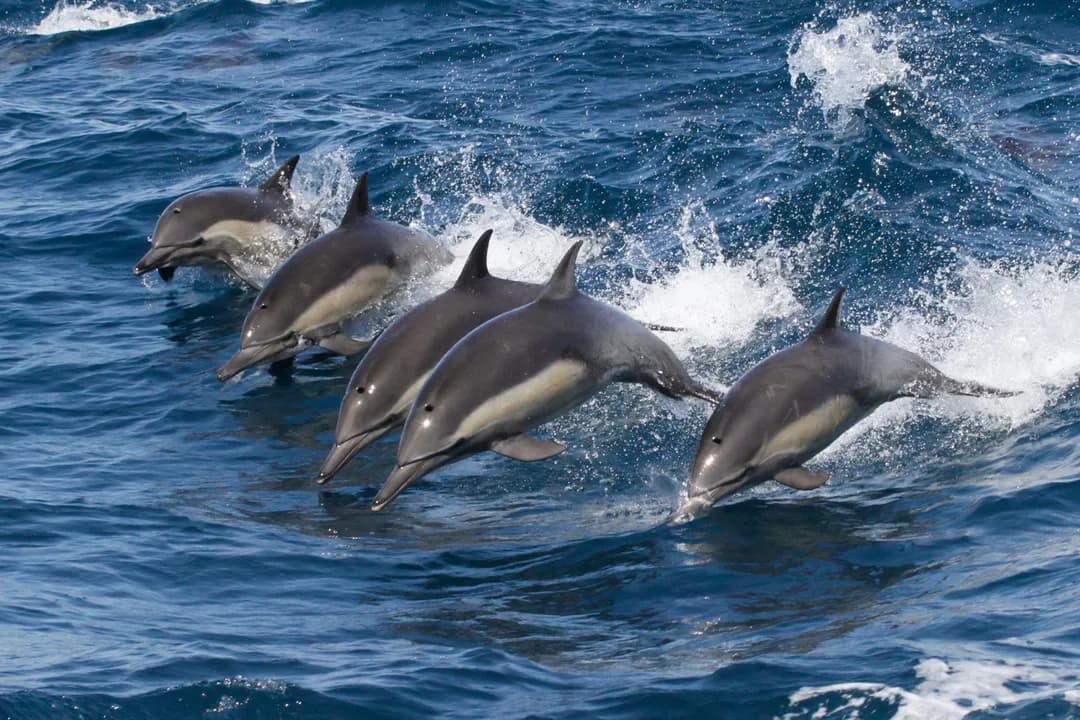
The whale species here change with the calendar, and the dolphins do not. Oceanside Adventures puts gray whale season from November 28 to the end of April, and blue whale season from May through November. Common, bottlenose, Risso's and Pacific white-sided dolphins are all resident, so they turn up in any month.
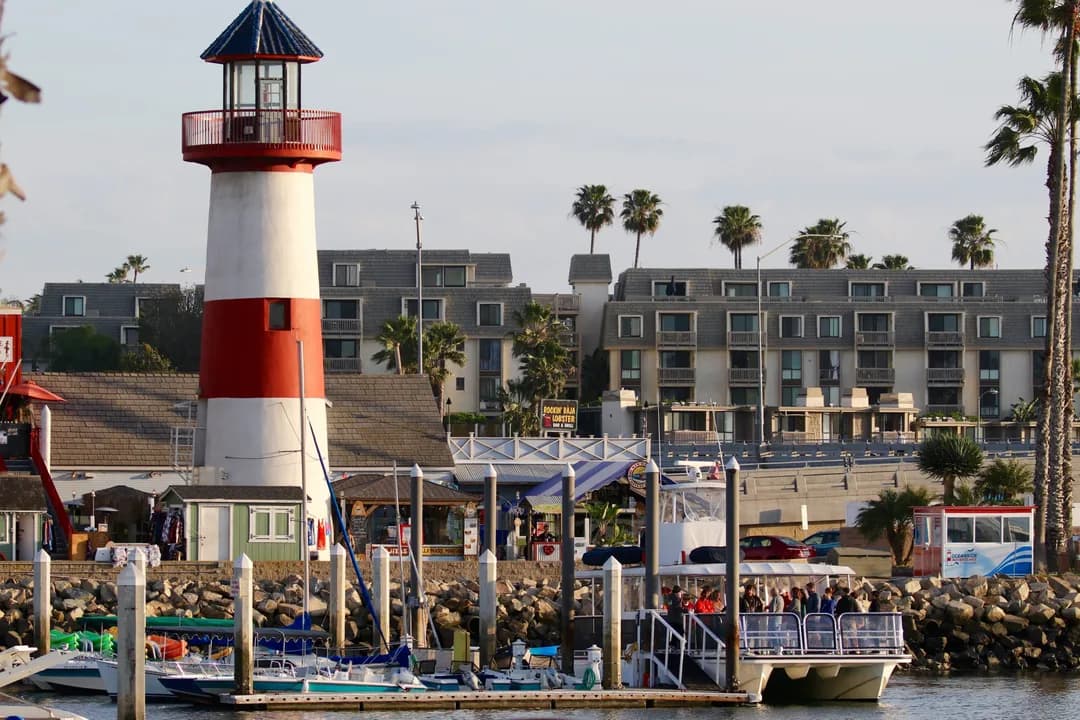
Trips run two hours and board at a kiosk by the Oceanside Harbor lighthouse. A certified naturalist narrates. One booking covers up to ten travelers, and the operator does not sell private groups through this listing.
 Two-Hour Luxury Whale Watching Tour from OceansideTwo hours out of Oceanside Harbor with a certified naturalist narrating, a marine head on board and a cash galley. Up to ten travelers per booking.www.viator.com
Two Catamarans, and You Do Not Pick
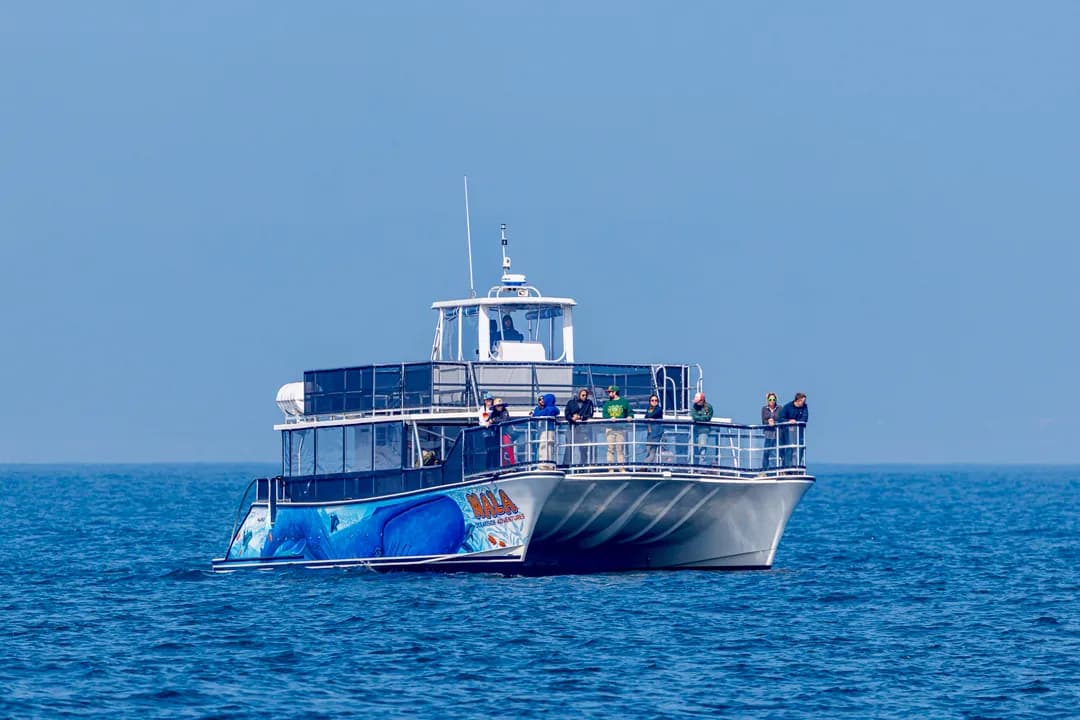
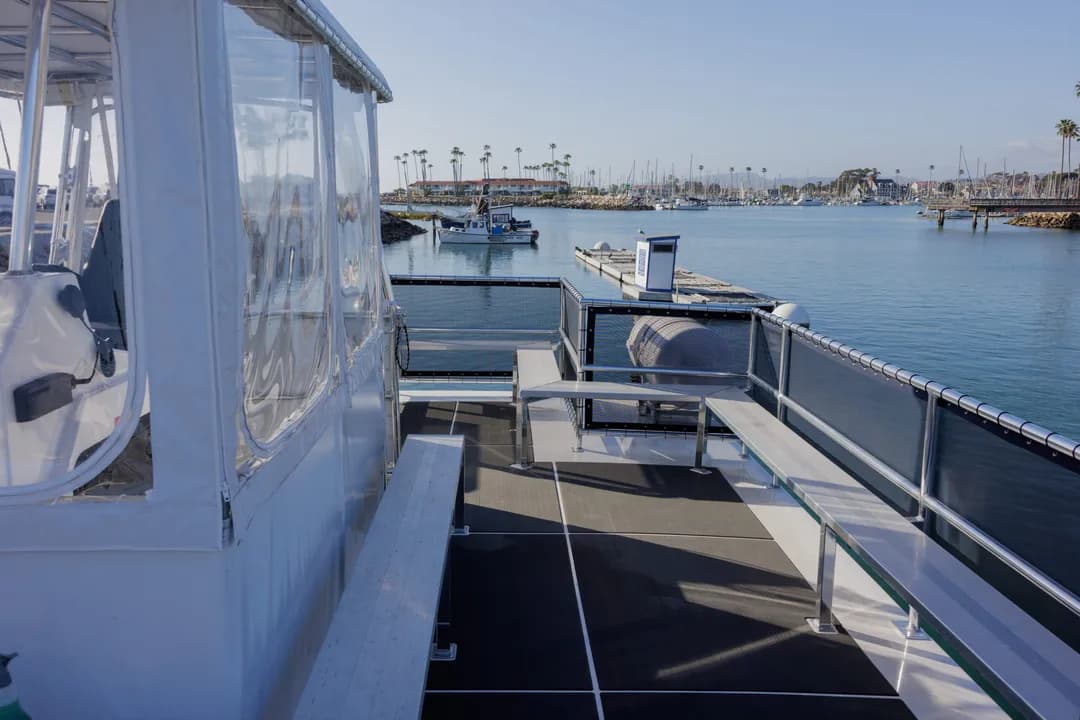
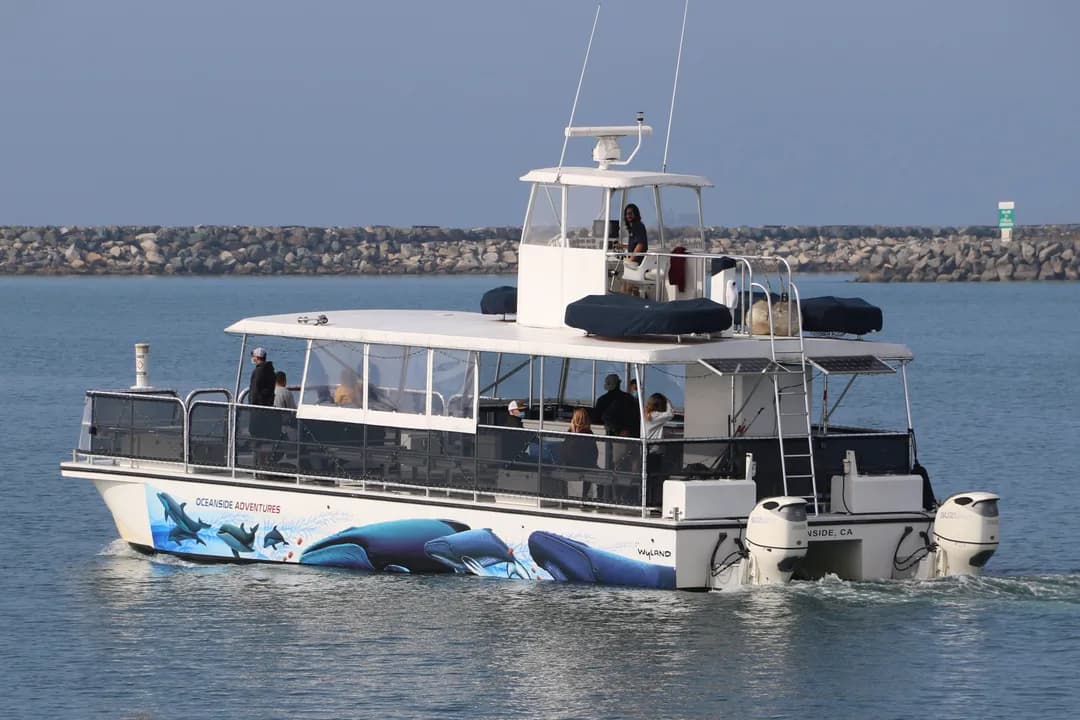
Oceanside Adventures runs two catamarans. The signature boat is a 47-foot single-level catamaran with covered and open seating and a marine head on board, though the operator's own cruise pages round it to 50 feet. The second is Nala, a 63-foot double-decker launched in March 2024 that the operator says holds up to 118 passengers. Both hulls carry art by the marine painter Wyland. The older boat wears a mother humpback and calf with a bottlenose dolphin in a kelp forest, scattered with garibaldi, the official state marine fish of California, and Nala wears a blue whale and calf. Which boat turns up is not something this listing lets you choose, and travelers describe sailing on both.
The operator's current FAQ puts its ramp at standard push wheelchairs with a wheelbase of 25 inches or less, and says it cannot take electric wheelchairs or scooters. The gate clears 27 inches. That ramp is on only one of the two boats, and the operator's booking system says Nala has stairs, so it asks you to call and find out which vessel is running your trip. The written limits sit awkwardly next to the booking page, which ticks every accessibility box, and next to several travelers who describe boarding in power chairs and scooters anyway. The written limits are what the crew will apply at the gate. The operator asks for that call after booking, on 760-277-3737, so it can have the ramp ready. Neither channel promises which boat runs a given trip, and the ticket is final once paid, so anyone who needs a straight answer about boarding is better off calling before paying.
A Mile Out, and a Hundred Yards Off
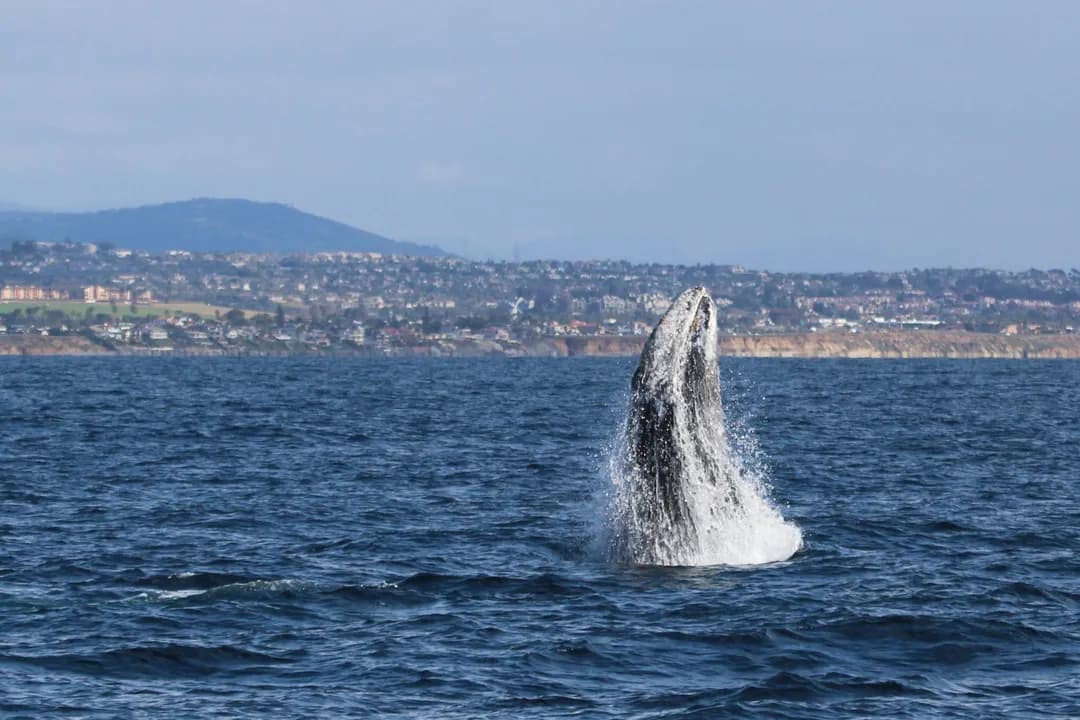
Gray whales are coastal navigators, so the boat does not have to go far. About a mile offshore is the usual working distance, close enough that the coastline stays in the frame behind a breaching whale.
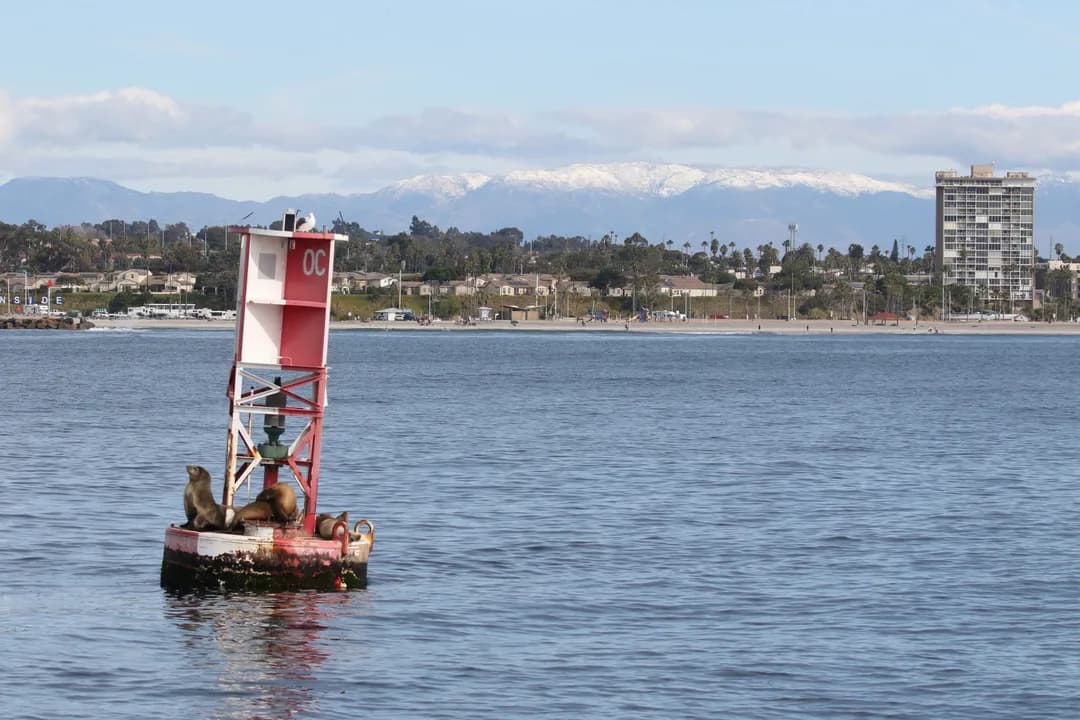
Federal law keeps the boat 100 yards off a whale. The dolphins are under no such instruction and often ride the bow. Nobody on board touches, swims with or feeds anything. Sea lions use the channel buoy near the harbor mouth, and they are frequently the first animals you pass on the way out.
What Happens When Nothing Surfaces
The operator says plainly that it cannot guarantee a sighting on every trip, and some reviews on this listing describe trips where nobody saw a whale or a dolphin. That is what a two hour window on open water can look like.
Travelers who come back empty describe being handed re-ride tickets, and the operator's public replies say those tickets never expire. The check itself is paper, so keep it. The operator's replies point reviewers back at those tickets sixteen times across this listing's review pool, the earliest in 2016 and the most recent in March 2026. That is a standing practice. The operator's published terms promise a check only for a trip cut short by weather, so treat the no sighting version as goodwill. Neither the operator's own pages nor this booking's terms say whether a ticket bought here qualifies, how long one lasts, or whether anyone else can use it, so confirm the current arrangement before you count on one. Redeeming one takes two steps: the operator's contact page says full payment is due when you rebook, and the money returns to your card once you hand the check over at the kiosk. This booking stays final either way, with no refunds and no reschedules, including for a no show.
Weather runs on its own track. The operator sails in light rain and says it may cancel for severe or unsafe conditions, and the listing itself flags that bad weather can call off a departure. If a trip has already left the dock when conditions turn, the operator says it issues the same kind of check; if it cancels a sailing outright, its own policy page offers a reschedule, a credit or a full refund.
Checking In, and What Else the Day Costs
Plan on reaching the kiosk 45 minutes before departure, an hour on weekends and holidays, and do not walk straight to the boat. The meeting instructions on this booking ask for 30 minutes, 45 on weekends and holidays, and the operator's website says the same. The activity notes on that same booking ask for 45 and 60, and so does the operator's own reservation system. Boarding passes are issued at the kiosk and the whole party signs the manifest. Travelers who arrived late describe being left behind with nothing refunded, and the operator's replies attribute it to a sold out boat.
Parking is why the longer figure is the safer one, and the free bays nearest the kiosk will not hold you long enough. The city posts a two hour limit between 8am and 6pm on the harbor-side lots either side of the boarding point, and a two hour limit does not cover the cruise plus the check in before it. The large free lot at 401 Riverside Drive runs to 72 hours, and it is the one reached on foot through the tunnel or by car down Carmelo Drive. Slip renter and permit bays are ticketed.
The galley sells dry snacks and drinks, alcoholic and otherwise, for cash only, and the operator suggests bringing around USD 20. Tips are not required, with USD 2 to USD 5 per person suggested. Your own snacks and water are fine. Alcohol, hot food and coolers stay ashore, though the operator says it makes exceptions to the cooler rule for special diets.
It runs 10 to 15 degrees cooler on the water than in the harbor, so carry one layer more than you think.
The boat ties up at the same kiosk two hours after it left, which leaves the rest of the afternoon open. The harbor village sits right there at the foot of the lighthouse, a short walk from wherever you parked.