
Nobody Joins Your Waikiki Surf Lesson Unless You Brought Them
Stoke Drift does not sell seats in other people's lessons. Book this one and the only people in the water with your instructor are the ones you arrived with, which is also why the operator wants a word before a child under thirteen goes out on it.
Stoke Drift runs no open group lessons. There is no seat to buy in somebody else's ninety minutes, which means the lesson you book is the one your own party gets, and for the hour in the water the instructor is working your people and nobody else's.
That design comes with a rule about children, and the rule is softer than the booking form makes it look. The operator's standing position is that under-thirteens belong on the one-on-one lesson, which is a separate booking. It also publishes a way around that on two of its own pages: read its reasoning, then contact it and say you still want the child in the group. What you should not do is book a younger child without asking first, because then the rule lands as money. More on that below.
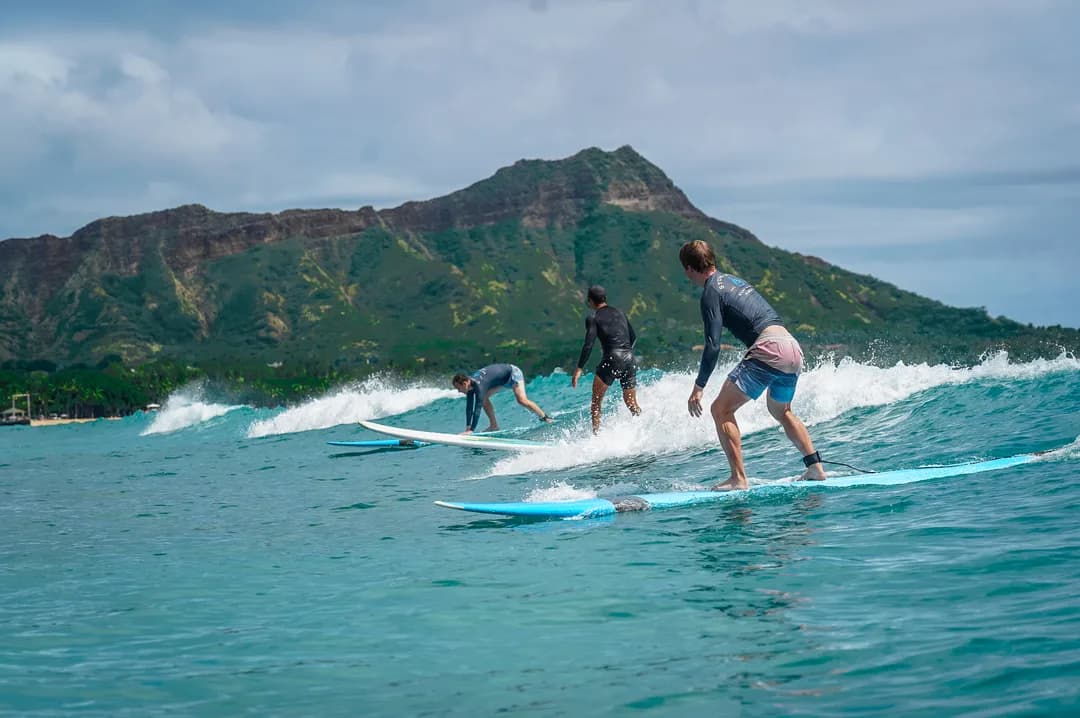
Get that sorted and the rest is simple. Ninety minutes, the first fifteen to thirty of them standing on the sand learning how to fall, then roughly an hour in the water off Kālia Road with Diamond Head sitting behind you the whole time.
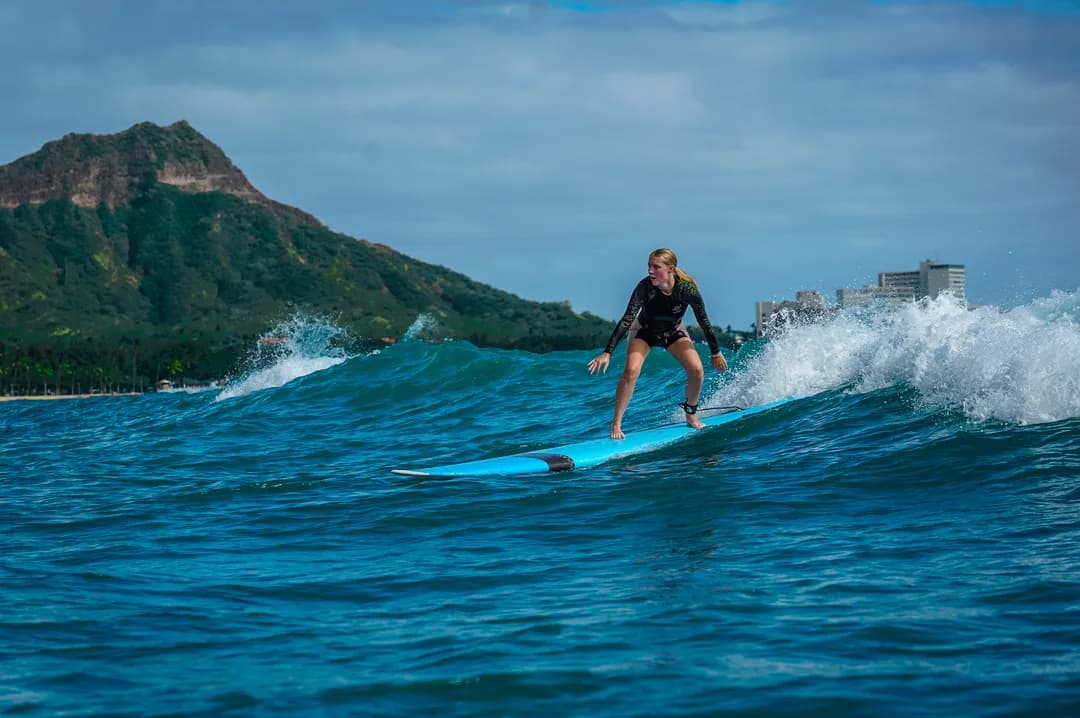
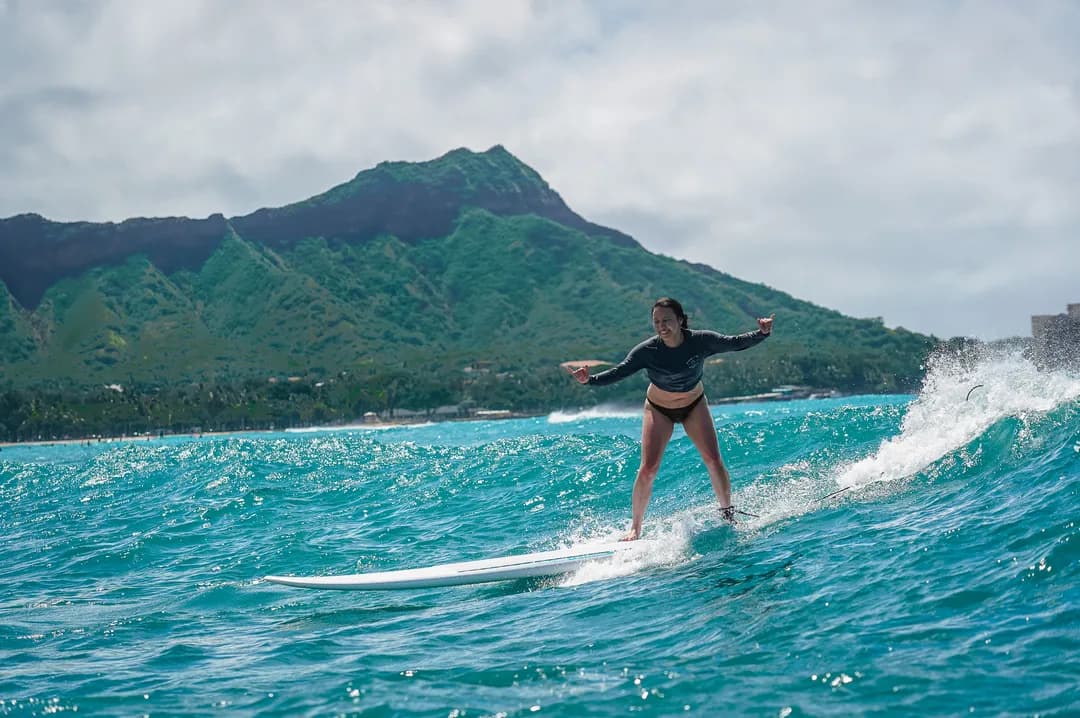
Four start times run every day of the week, at eight, ten, one and three. The operator is unusually straight about which one to pick: the two morning slots have the better odds, the difference is usually minor, and it does not run lessons at all unless the waves are worth it. The per-surfer rate on the booking page assumes two or more of you and steps up for a single traveller, which follows from the same rule that shapes everything else here. There is no open group for one person to join.
 Waikiki Private Group Surf LessonStoke Drift · 90 minutes · Private to your own party · Board, leash and rashguard includedwww.viator.com
The Age Rule, and the Swim One That Has No Exception
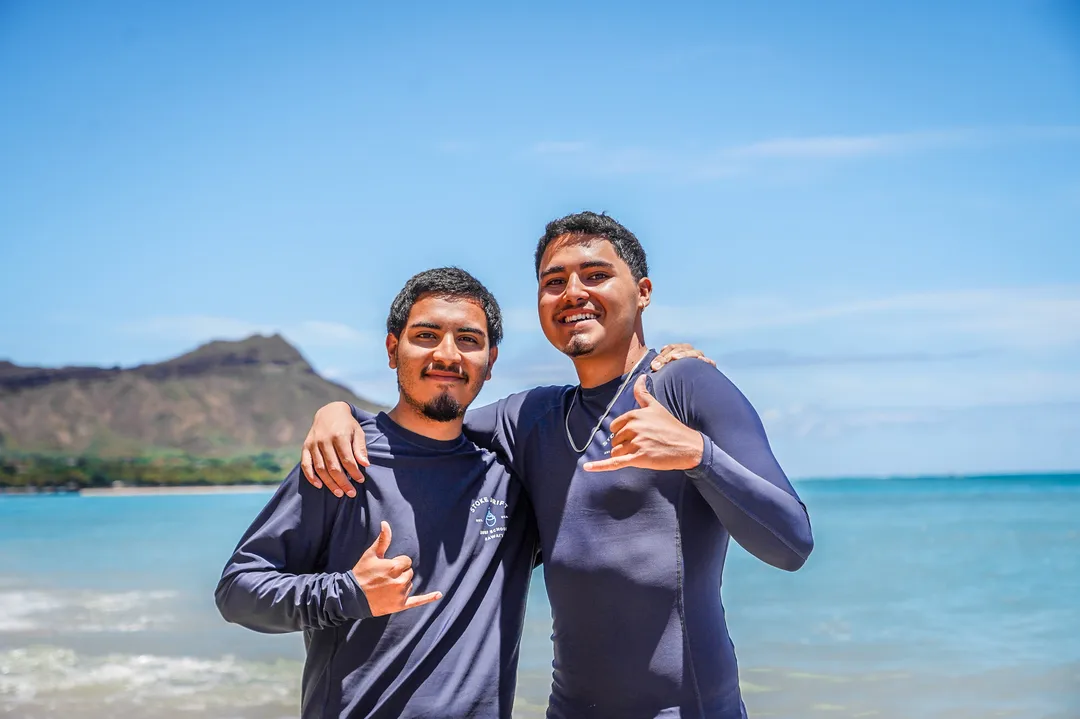
Two things decide whether you can get on the board here, and only one of them is negotiable.
The age rule is the negotiable one. The operator's blanket position is thirteen and up for a group lesson, and it gives a concrete reason for it. The lesson runs as a loop in which the instructor sets up the next surfer while you paddle back out, most small children cannot make that paddle through breaking surf, and the instructor ends up ferrying them, at which point everyone else gets about thirty percent of the waves they would otherwise have had. It would rather sell you the one-on-one, where that is the whole point. But it says plainly that you can write and ask, and it describes what it does when small children are on a lesson anyway, which is to keep them next to their own family the entire time. Travellers who have booked this exact lesson describe the same thing from the other side: a nine-year-old looked after, an eleven-year-old up on waves, a family with a six and an eight-year-old, one party where an instructor stayed with the youngest the whole session so the adults could get on with theirs.
Where it turns into money is if you skip the asking. The operator's policy for an under-thirteen booked onto a group lesson without arrangement is that the family pays the difference for a one-on-one on arrival, if there is capacity, and that nothing is refunded. The booking form will not stop you: its child band opens at age five.
The swim rule has no exception at all. The operator defines it twice and the two tests are not identical. On one page it is treading water for a full minute with no help. On another it is jumping into the deep end of a pool, coming back up, and swimming to the edge. Clear both and you are fine. Clear neither and its policy is explicit that no refund is given to a customer who cannot surf because they cannot swim. Nobody tests this at the desk. You are the one who knows.
What the Hour in the Water Actually Looks Like
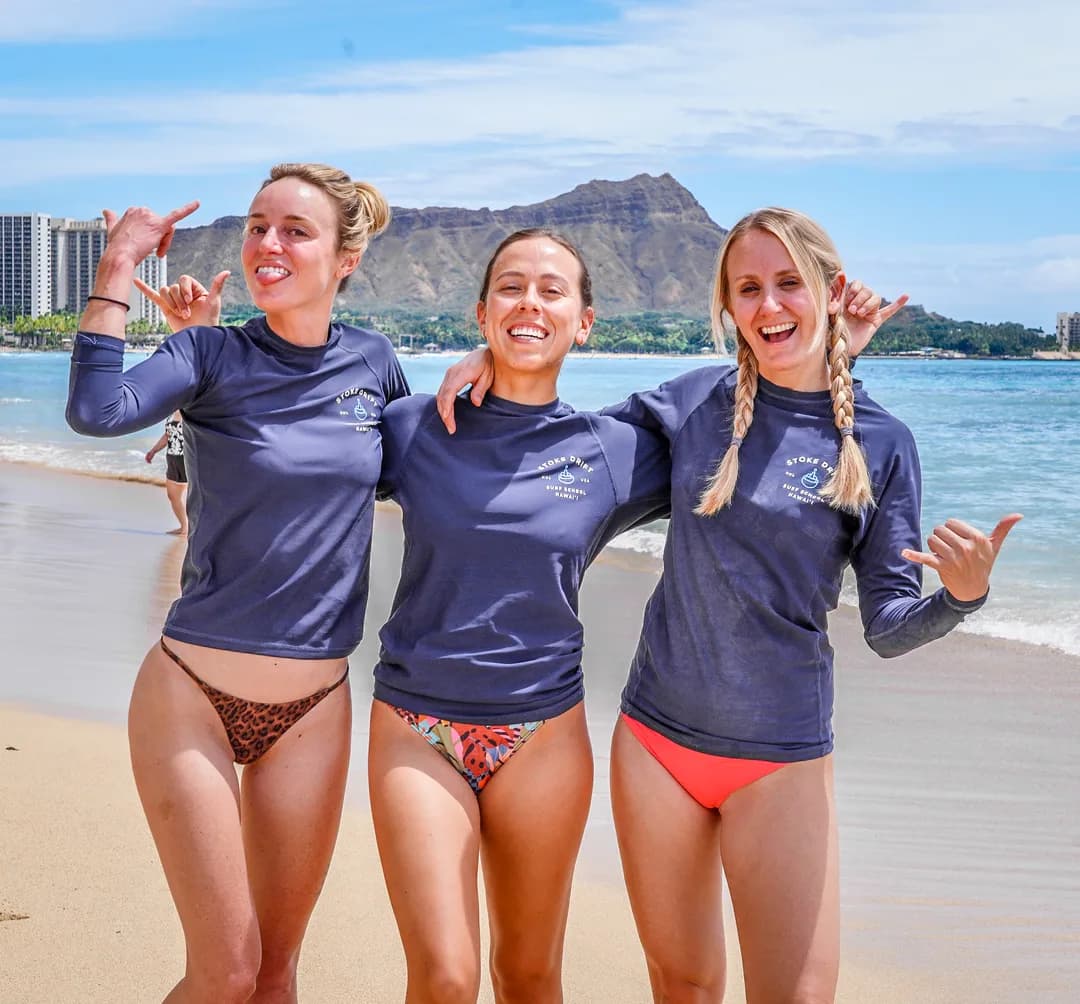
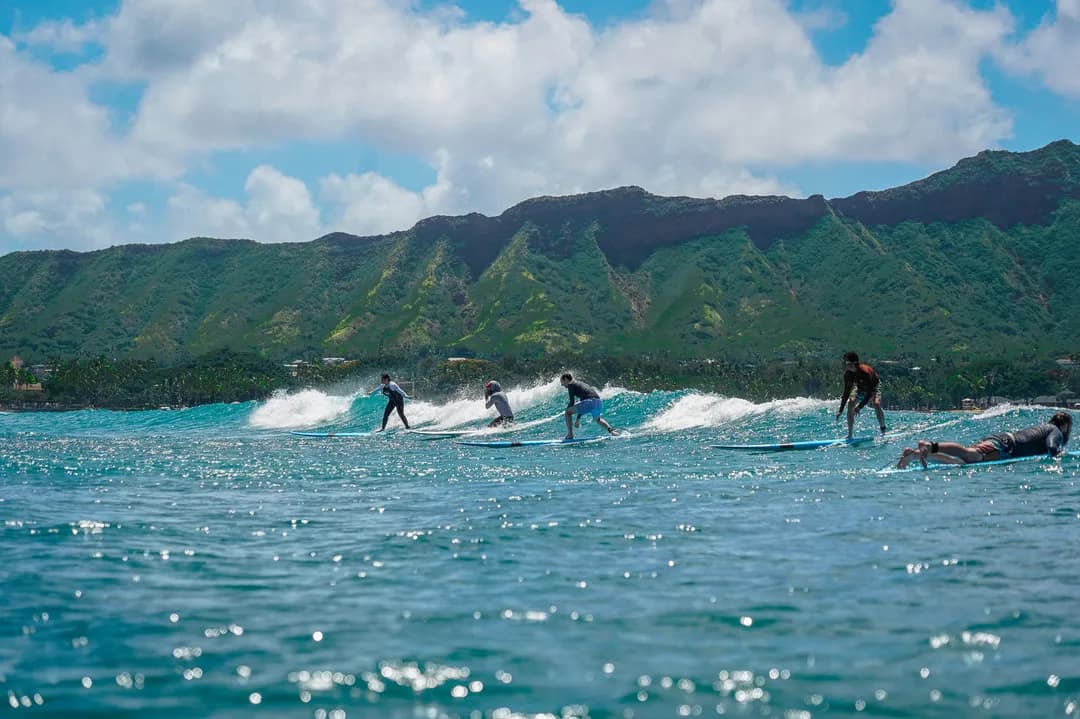
The rhythm is a loop. The instructor puts you on a wave, you ride it in a straight line for something like a hundred yards, then you turn around and paddle back out while the instructor sets up whoever is next. Repeat until the ninety minutes are gone.
Which means group size is the whole game, and the numbers here are small. One instructor takes up to four students. Bring a fifth and a second instructor comes out with you. A single booking tops out at eight surfers.
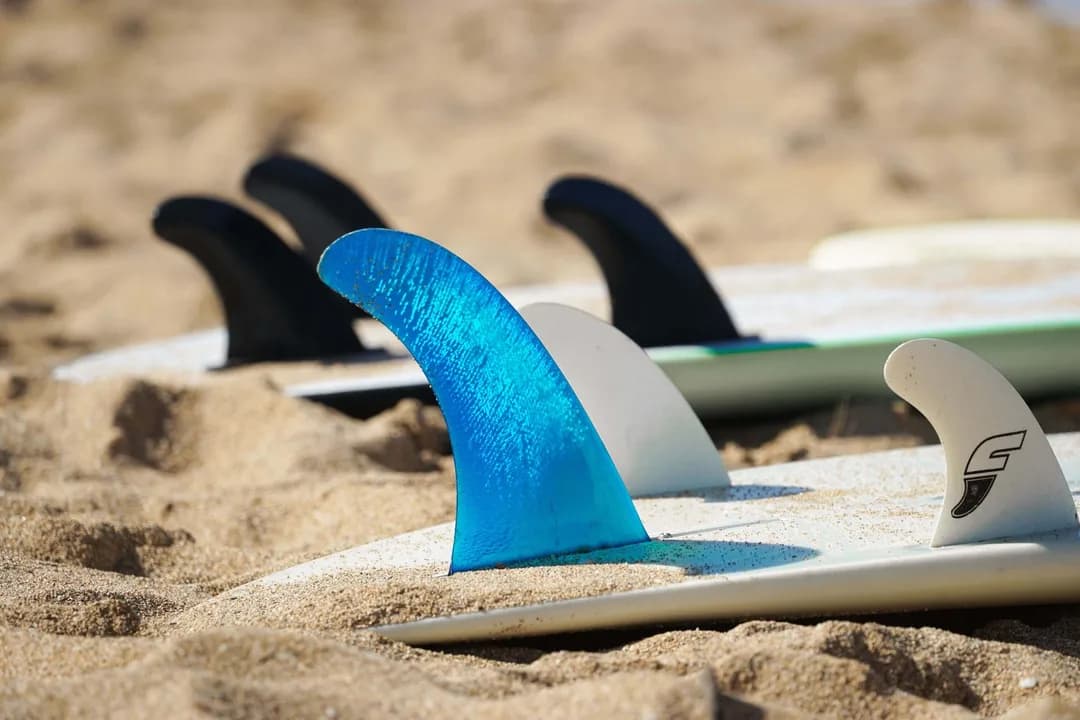
Everything you stand on is included: a soft-top foam board, a leash, and a long-sleeve rashguard. The boards run soft rubber fins, which is the part people do not expect and the part that makes falling off survivable. The rashguard is not a uniform either. Foam decks give you a friction burn across the ribs after an hour of paddling, and the one they hand you is rated 50 SPF, so it doubles as the sunscreen you would otherwise have to reapply.
The Patch of Ocean You Are Buying
This is not open coast. The lesson break sits inside an outer reef, which does the work of flattening whatever the island is getting that day. The operator's own description is that even a twelve-foot swell arrives at the beginner area as three or four feet, and that faces never exceed four feet there, on the rare day they get that far.
Depth where you will be is four to seven feet. Water temperature runs between 75 and 82 degrees Fahrenheit all year, which is why nobody hands you a wetsuit.
One forecast habit worth unlearning before you go: rain is not the thing that cancels a surf lesson. Wind is. The operator says it does not cancel for rain unless bad wind comes with it, that some of its best days are lightly rainy ones because rain kills the wind, and that strong onshore or sideshore wind is the real reason a lesson gets called off. If conditions do go, it says it contacts customers to reschedule or refund and aims to do it at least an hour out, and that the call is its alone to make.
Pack for It the Night Before
A swimsuit and a towel is the entire list. Everything else is either provided or better left in a locker, and there are free lockers plus a secure retail space to put your things in.
There is nowhere to change, so arrive with the swimsuit already on under your clothes.
A few specifics that are easy to get wrong:
- Wear sunscreen, but keep it off the front of your legs. You spend most of the lesson lying on your stomach, and sunscreen transfers to the deck and turns a board you need grip on into one you do not have grip on. Zinc is the recommendation, partly because it is the least likely to run into your eyes and partly because it is the reef-friendly option.
- Leave the water shoes. The operator will allow them if you insist, and would rather not, both because standing on living coral damages it and because rubber soles tear up the foam decks.
- Goggles only if you genuinely cannot see without them. The salt is not what stings. Sunscreen running off your forehead is.
- A photographer goes out on every lesson and you can look at the shots afterwards and decide. The set costs extra, and the operator does publish the figure: its checkout prices photos at USD 50 a person, and it will not send a set unless the number bought matches the number of people in the party, so a party of four buys four. Individual lesson albums are also posted with their own price, which does not always come out at fifty a head, so read the number on your own album before you pay.
Two timing rules carry real money. Arrive ten to nineteen minutes late and the lesson is shortened by exactly the time you lost; arrive twenty minutes late and the operator reserves the right to cancel it with nothing refunded. It runs lessons back to back all day, so there is no slack to give you. And on this booking, a full refund needs the cancellation in at least 24 hours ahead of the start time. Inside that window nothing comes back.
Finding them is easier than the address makes it sound. The beach desk sits on the ocean side of the Waikiki Shore condominiums on Kālia Road, which is to say you walk down to the sand and it is there, a short walk from most of Waikiki. If you are driving, the Fort DeRussy lot is directly across the street and charges by the hour, and the Duke Kahanamoku Lagoon lot is free and about ten minutes up the beach.
Then it is sand, then it is water, and somewhere in the next hour the board stops being a thing you are lying on and starts being a thing you are standing on, with Diamond Head holding still off your shoulder and the only people watching being the ones you brought.