Networking / Venue
Let the Rules Do the Networking
 Maya Sullivan
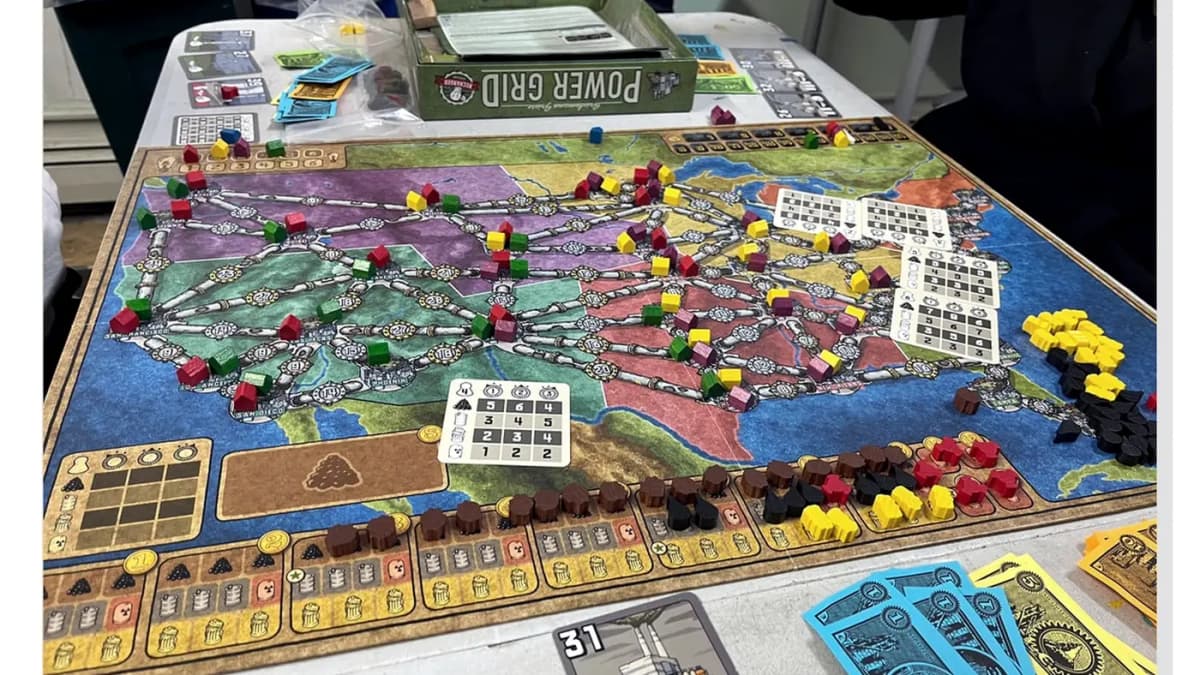
Caption: A good board-game night gives the room a task before it asks anyone to be charming.
The smartest social plan is not always the one with the most people. Sometimes it is the one with the clearest rules.
That is why board-game nights work better than a lot of mixers. They do not ask you to arrive already interesting. They give your hands something to do, your eyes somewhere to land, and your first sentence a reason to exist.
"What does this card do?" is a much kinder opening line than "So, what do you do?"
Astoria has a clean little circuit for this. Q.E.D. gives you the hosted-social version. Gamestoria gives you the game-first version. Astoria Food Pantry gives you the community-table version, with a Thursday night rhythm that feels less like entertainment and more like repeat contact.
This is not a guide to becoming a board-game person. Honestly, you do not have to become anything. This is a guide to using the board as a social machine: low cost, low performance, and useful if you are new to Queens, tired of loud bars, or done pretending that networking events are normal human environments.
Low effort, high reward, but only if you choose the right room.
The Room Has To Do More Than Be Open
People keep asking for third places: rooms that are not home and not work, where you can linger without turning every hour into a transaction. The phrase gets stretched until it means everything from a coffee shop to a private club, which is exactly where it starts to fall apart.
A real third place is not just a room with chairs. It needs a reason for strangers to come back, a rhythm that does not collapse if you arrive alone, and a social script gentle enough that new people can find the door without being personally rescued by an extrovert.
Board games can do that because the activity carries some of the awkwardness for you.
You are not standing in a room inventing yourself from scratch. You are learning turn order. You are passing tokens. You are asking whether that card resolves now or at the end of the round. The rules do not make the room magically warm, but they create a shared object. That is already more structure than most adult friendship attempts get.
The trap is thinking any table with a box on it will work. It will not.
For a solo arrival, the room matters more than the game. A heavy strategy table can make five strangers silent for ninety minutes. A party game can turn into a performance test if the group is too loud. A co-op game can be excellent if one person is teaching kindly and terrible if one person is quietly managing everyone else's mistakes.
Pick the social contract first. Then pick the game.

Three Astoria Rooms, Three Social Contracts
Caption: Game-first rooms work when the table, the library, and the staff can carry the evening.
Q.E.D. is the hosted-social room.
This is the one to consider when you want the event frame to do some of the work. The Astoria Board Game Club Meetup is built around games on hand, people bringing their own, and a clear entry exchange: weekday meetups ask for an RSVP because space is limited, and admission is free with a 5-dollar-plus purchase from Q.E.D.
That small purchase rule is not a downside. It makes the room legible. You are not wandering into a bar hoping strangers become generous. You are entering a named event where the reason to be there has already been settled.
Go here if you are alone and want the softest first move. Check the current listing before you leave. If RSVP is required and the room is full, charm will not create a chair.
Gamestoria is the game-first room.
Gamestoria is a tabletop store on Broadway, with Open Play built around either bringing your own game or using the board-game library. Open Play is listed as ten dollars per person, or any 20-dollar-plus purchase per person. The useful detail is that there is no time limit when space is available, but scheduled events can take seating priority. Call ahead if your night depends on getting a table.
This is the cleaner play when the game itself needs to carry the evening. The store has the hobby infrastructure: tables, boxes, regulars, a calendar, and staff who understand why someone might be looking for a seat rather than a scene.
It is less automatic socially. You may need to ask, directly and without apology, whether there is a table where a new person can jump in. If that sentence makes you sweat, rehearse it once on the train. It is still easier than pretending to enjoy a cocktail hour.
Astoria Food Pantry is the repeat-contact room.
Thursday game night at Astoria Food Pantry has the clearest community signal: doors at 6:30pm, games from 7:00 to 10:00pm, Dungeons & Dragons, board games, and an invitation for absolute beginners as well as old timers. There is a ten-dollar suggested donation, no one is turned away, and snacks and drinks are pay-what-you-can. After you attend, volunteers can point you toward the Discord.
That last part matters. One good night is nice. A second step is better.
This is the room to choose if you are not trying to "network" at all. You are trying to become familiar in a place. The pantry context changes the temperature of the evening. It is not just selling entertainment. It is using games as one more way for people in the neighborhood to keep showing up.
The First 15 Minutes Are The Whole Review
Arrive early enough to be placed, not late enough to hover.
This is the practical truth no one puts on flyers. The first fifteen minutes decide whether the room gives you a path or turns you into a satellite.
If there is a host, ask one clean question:
"Is there a table where a new person can jump in?"
Do not over-explain. Do not apologize for being new. A well-run game night should have an answer ready. It might be "yes, start here." It might be "watch this round, then join the next one." It might be "tonight is full, try next week." Any of those is better than orbiting the room with a drink you did not want.
If there is no obvious host, look for three signals before you sit:
• An open chair that is not being guarded by bags.
• A box still being explained, not a game already in turn nine.
• Players talking out loud about rules, not silently optimizing.
The table that is still learning is usually kinder than the table that is already winning.
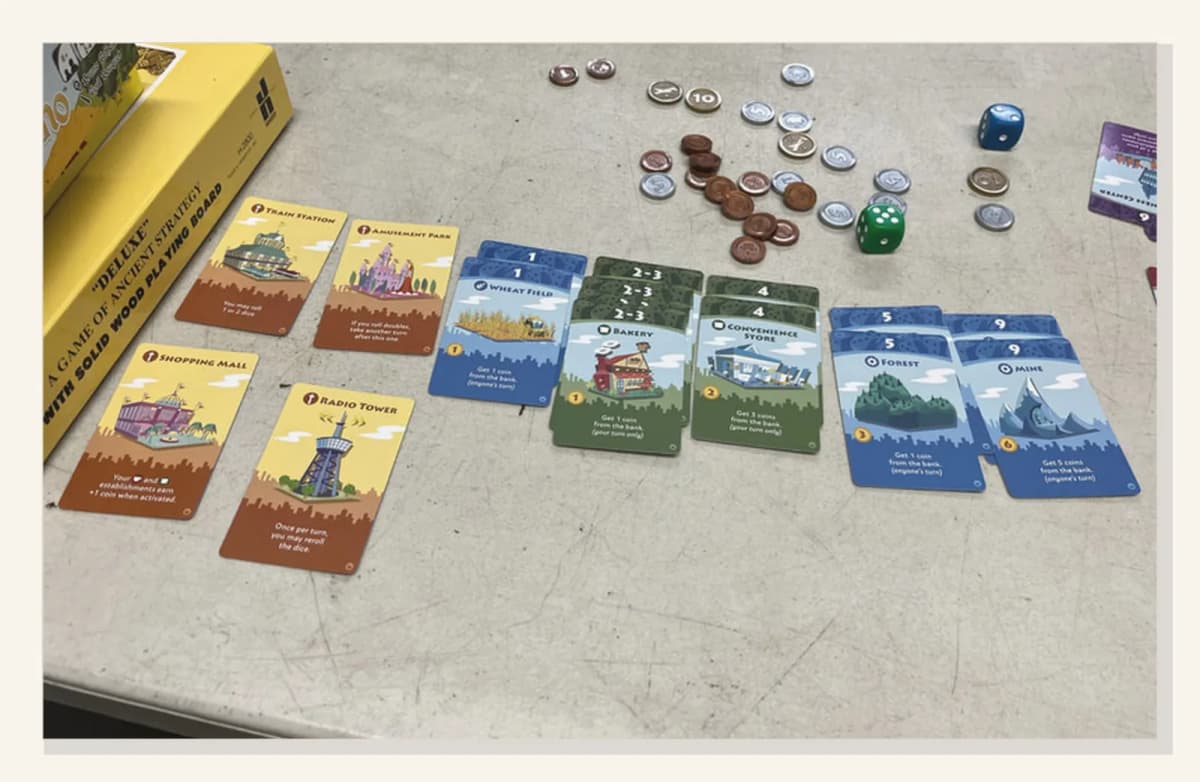
Caption: A table still sorting cards is easier to enter than a game already deep in strategy.
One more thing: ask before photographing the room. Game pieces are fine. People's faces are not automatically public decor because the night feels friendly.
This is still New York. Respect is part of the cover charge.
Pick The Table, Not The Title
For a solo arrival, a famous heavy game is often worse than a simple teaching game.
You are not trying to prove taste. You are trying to get through the first hour without the room turning into a private club around you.
Co-op games are easiest when you want conversation without performance. Everyone can look at the same problem, make small suggestions, and blame the board when things go badly. Teaching games are useful because explanation creates talk without requiring biography. Party games can work if the table is already loose and generous. Anything that rewards silent calculation may make strangers polite and invisible.
The right table gives you a sentence before it gives you a personality test.
Useful first lines:
• "Can I watch one round before I jump in?"
• "Is this beginner-friendly, or should I find a lighter table?"
• "Are you explaining rules now?"
• "Is this cooperative, or are you about to ruin my evening?"
That last one only works if the table is already laughing. Use judgment.
The wrong table is not a moral failure. It is just the wrong table. Move once, kindly. Do not spend two hours proving you are easygoing to people who forgot to make space.
Three Smart Uses For This Circuit
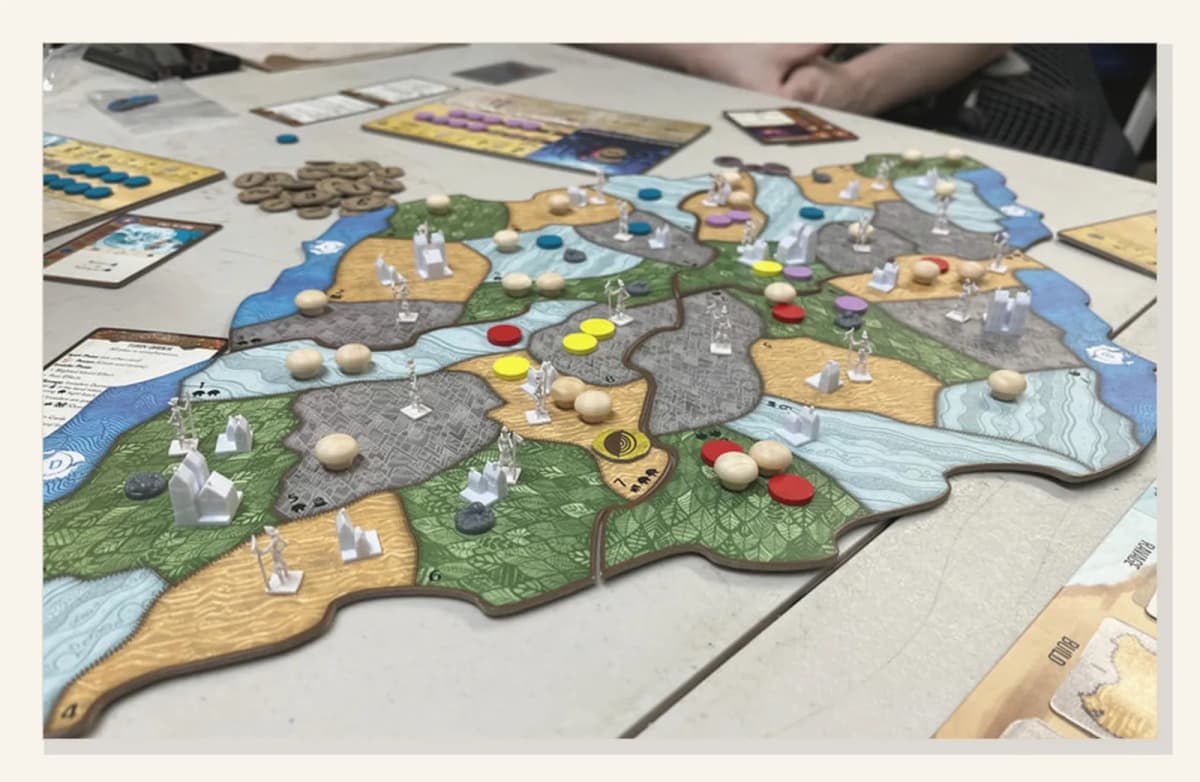
Caption: The game matters, but the table's tempo matters more.
Use it when you are new to Queens.
Astoria is full of rooms that look casual from the sidewalk but are socially dense once you enter. Board-game nights give you a reason to cross the threshold without pretending you already belong. You can become a repeat face before you become a friend. That order is underrated.
Use it when the group chat has failed.
If your friends keep saying "we should do something" and then outsourcing the decision to the void, pick the room with the clearest exchange. Q.E.D. if you want a hosted frame. Gamestoria if the group will actually play. Astoria Food Pantry if the point is a lighter Thursday with a neighborhood pulse.
Use it when you want a low-cost date that is not another drink.
Board games are not automatically romantic. That is the advantage. They give two people something to read together besides each other. Keep it light. Do not choose a punishing four-hour game with someone whose patience you have not tested. That is not a date. That is an unpaid compatibility audit.
Reality Check
This is not instant friendship.
Board games lower the barrier. They do not remove it. You still have to ask where to sit. You still may land at a table that is too advanced, too inside-jokey, or too quiet. You still might leave after one game and think, fine, that was only fine.
That is okay.
The value of a night like this is not that it guarantees a cinematic new friend group. The value is that it gives you a repeatable social motion: arrive, ask, sit, learn, play one game, leave cleanly, maybe come back.
Bring patience. Bring a water bottle. Bring enough money for the listed entry exchange or donation. Bring one sentence about your experience level. "I know light games, but I am new to this one" is enough.
Do not bring the pressure to turn the first night into belonging.
Belonging usually has a boring middle. It looks like showing up again.
The Clean Exit
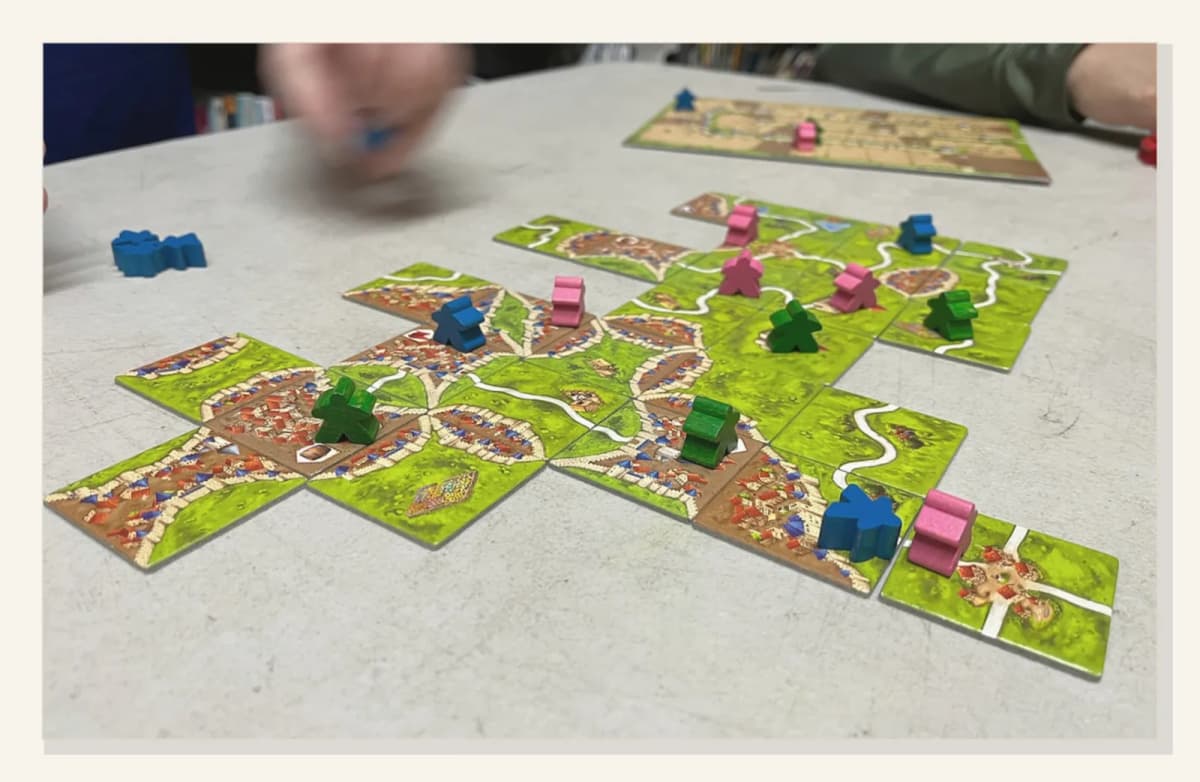
Caption: The clean exit is after one complete game, before the night needs to explain itself.
Finish one game. Thank the table. If the room still feels warm, ask when people usually come back. If it does not, leave without turning the night into a referendum on your personality.
This is the move:
"Thanks for teaching. I am going to call it after this one, but is this usually the same night each week?"
That sentence does three things. It respects the table. It gives you an exit. It leaves a door open without asking anyone to carry you through it.
Low-pressure rooms are not passive. They still need small acts of courage. The difference is that the courage is sized correctly. One question. One chair. One round. One return.
If you hate networking, let the rules do the first half.
The small talk can wait its turn.
QED Astoria, 27-16 23rd Ave, Astoria, NY 11105