Culture / Venue
The Walk Is Not the Warning at Knockdown Center
How to read the Maspeth venue before you go alone after dark.
 Kate Mercer
The walk to Knockdown Center can make a sensible person rehearse her exit plan before she has even seen the door.
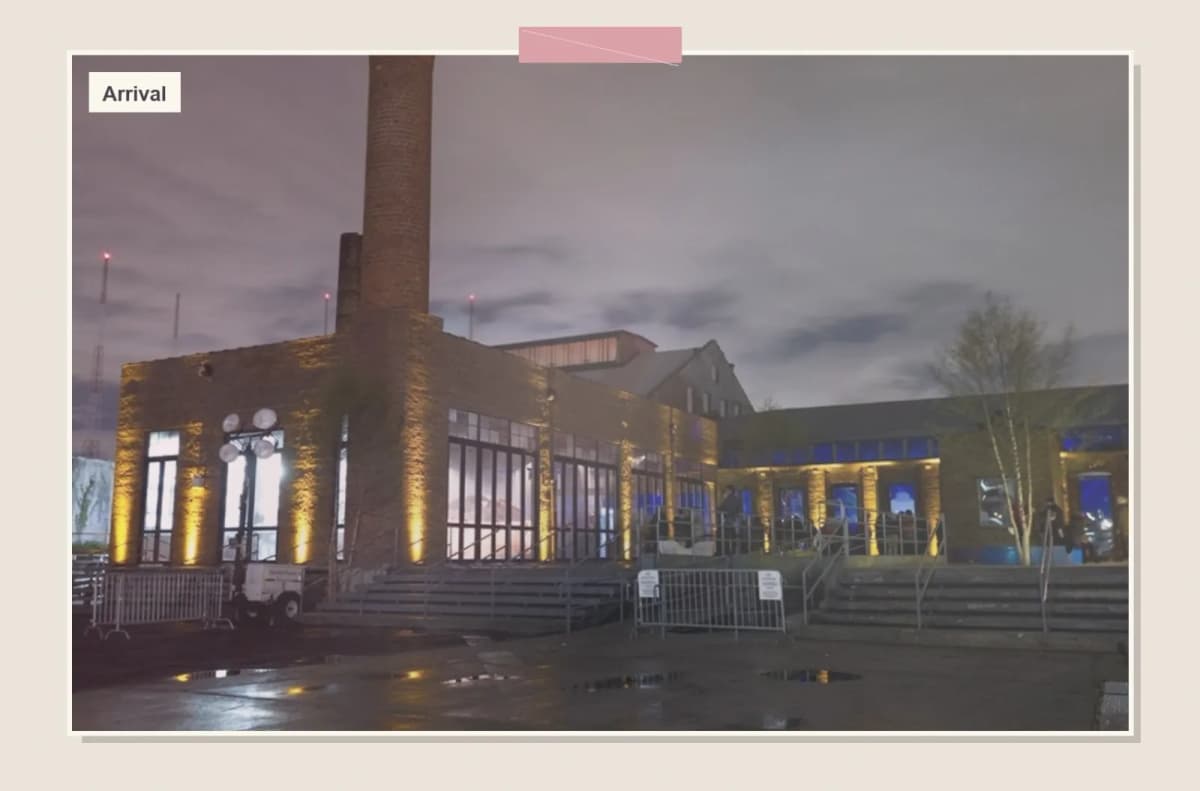
That is not weakness. That is information. The venue sits at 52-19 Flushing Avenue in Maspeth, where the city stops performing charm for you. The blocks are flat, industrial, and louder in your head than they are in real life. Truck yards, blank walls, loading docks, a sky with too much room in it. If you are coming alone at night, your body may make a case against the plan.
Listen to the body. Then check the facts.
Knockdown Center is not a random warehouse with speakers. It is a 50,000-square-foot former factory that has become one of New York's most flexible music and art buildings: main hall upstairs, exhibition gallery, backyard Ruins, and Basement underneath. The outside reads like a dare. The inside is usually the opposite: staffed, ticketed, watched, and built around people who came for a specific room.
That gap is the whole point. The walk is not the warning. The warning would be ignoring the walk.
The Call
Go if you want a serious room with real scale and you are willing to plan the arrival and exit like part of the night.
Skip it if you want a door-to-door, soft-landing venue. Knockdown Center rewards preparation. It does not reward drifting.
The Approach Is a Test, Not a Verdict
The venue is close to Bushwick by map logic and not close by late-night-feeling logic. From the Jefferson Street L stop, expect roughly a 15-minute walk along Flushing Avenue. It is a simple route, which matters: one road, few decisions, no cute detour to invent.
That simplicity is why I would rather do it with a plan than avoid it out of vague fear.
If you are arriving before the main rush, walk with intention. Keep your phone charged, the ticket ready, and the map open before you leave the train. If there is a cluster of people headed the same way, let the informal herd do what New York herds do best. If you are leaving after midnight, do not make a personality test out of it. Order the car from inside the fence and pin the front gate on Flushing Avenue.
Do not stack the night. This is not a wander-around-after venue. Come for the building. Leave from the building.
The Building Earned Its Size
Part of the reason Knockdown Center feels stranger than a normal club is that it was never designed to be one.
The building began life as the Gleason-Tiebout glass factory, later became the Manhattan Door Factory, and takes its current name from the knock-down door frame invented here in 1956 by Samuel Sklar. The frame could be taken apart, shipped in pieces, and installed into existing walls. That is an almost too-perfect origin story for a venue built around thresholds: who gets in, which room is open, what kind of night the door is asking you to enter.
After the factory era, the building did not become polished overnight. Tyler Myers first encountered the space through Frieze-related production work, then the venue had to survive the slow work of renovation, licensing friction, and neighborhood permission before it could become a destination. That matters. A building that has had to prove itself to neighbors usually develops an operating spine. You can feel that in the way the campus is used: not tidy, but intentional.
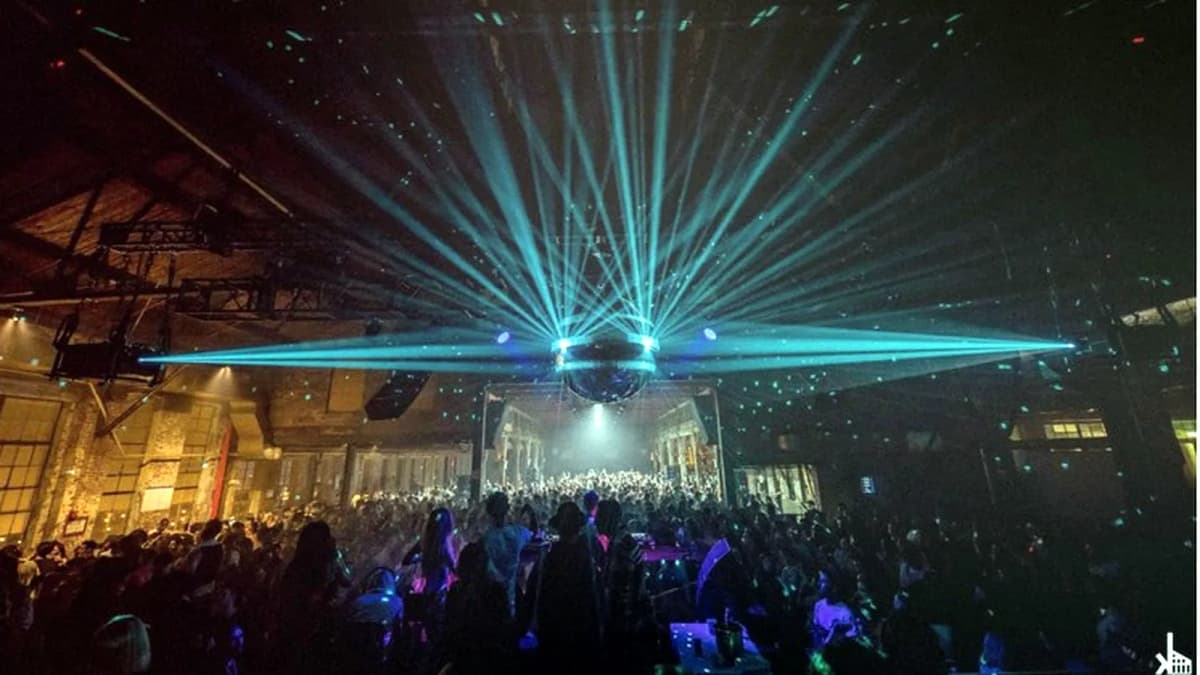
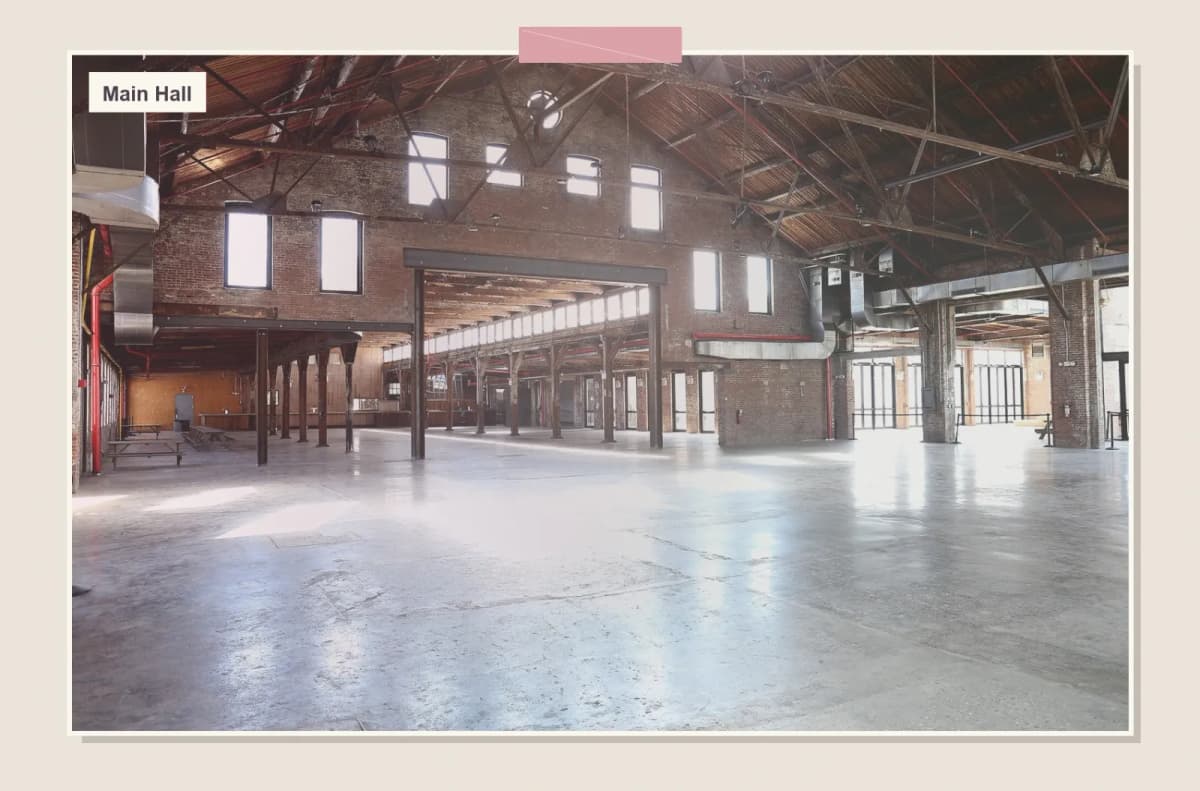
The main room is the obvious anchor: about 20,000 square feet, brick, timber, and enough ceiling to make a large crowd feel less trapped than it would elsewhere. Gray Area lists capacity at up to 3,100 for the Main Space. Shore Fire reported that in 2023 the venue drew more than 370,000 attendees across more than 215 events. Those numbers are not just bragging rights. They explain why the room can host a broad concert one night, a festival-scale party another, and still not feel like a standard black-box rental.
The scale is the safety feature people forget to name. Space gives you choices.
Choose the Room Before You Choose the Outfit
Knockdown Center is not one night out. It is several, sharing an address.
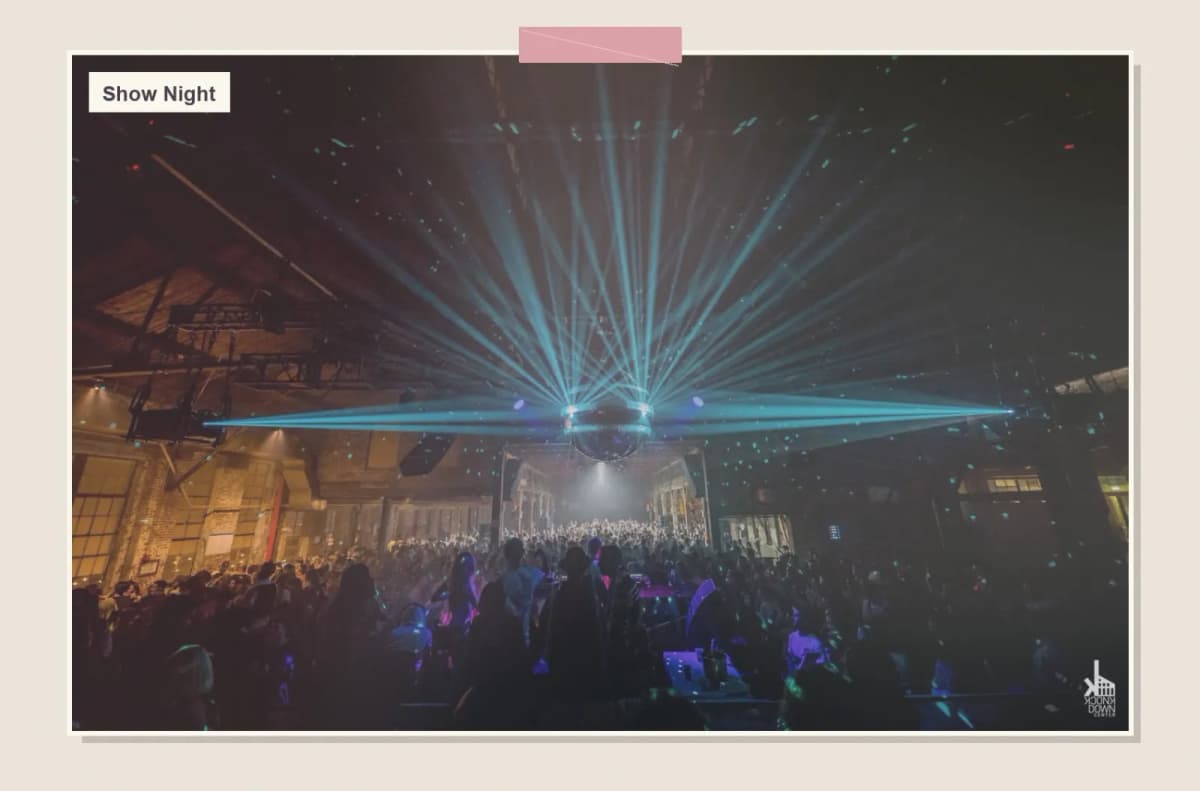
The Main Space is the big-room version: concerts, large parties, residencies, the kind of event where the crowd can be huge and still have air around it. This is the easiest first version if you are going alone and want the building to make sense quickly.
The Gallery is the daytime version. If you are nervous about the address, this is the clean first read: see the architecture, learn the geography, leave before the night variables start.
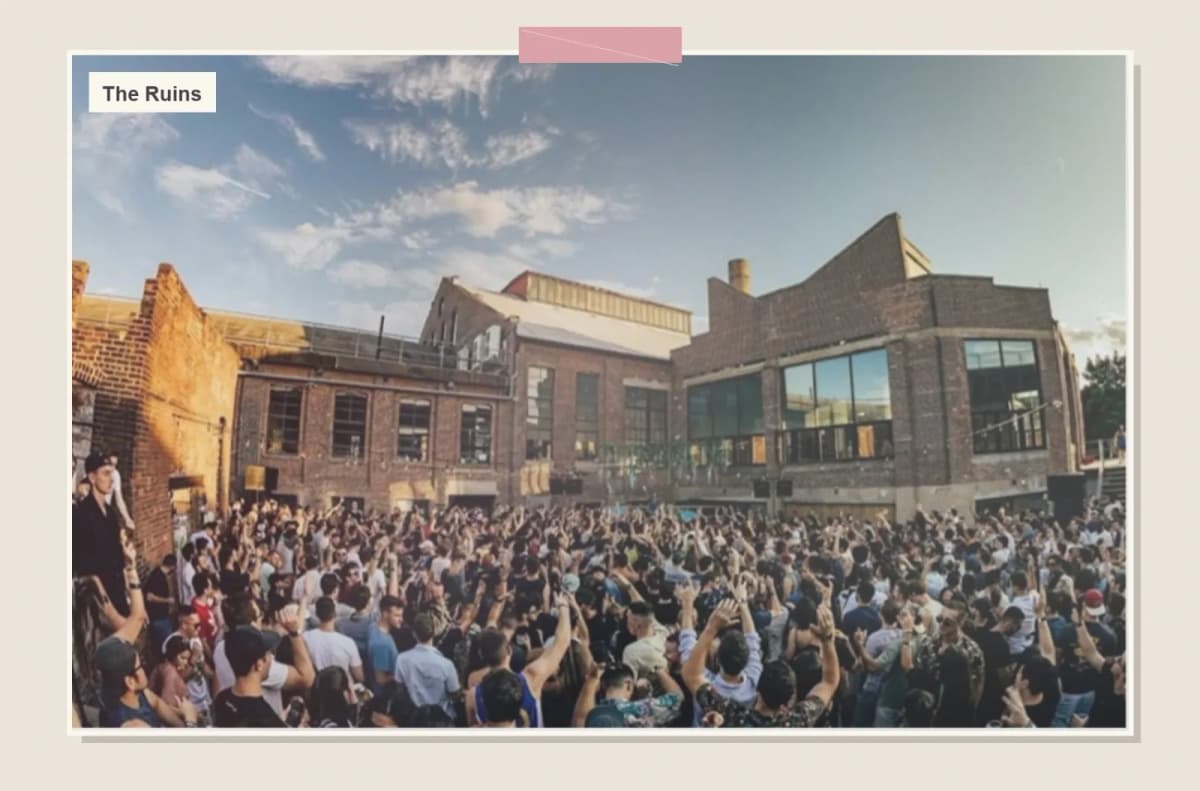
The Ruins is the outdoor version: a 19,000-square-foot backyard zone of old brick, open air, and summer bodies. It can feel more social, more exposed, and more weather-dependent. Good for groups. Good for daylight-to-night parties. Less good if your whole comfort plan depends on a quiet corner.
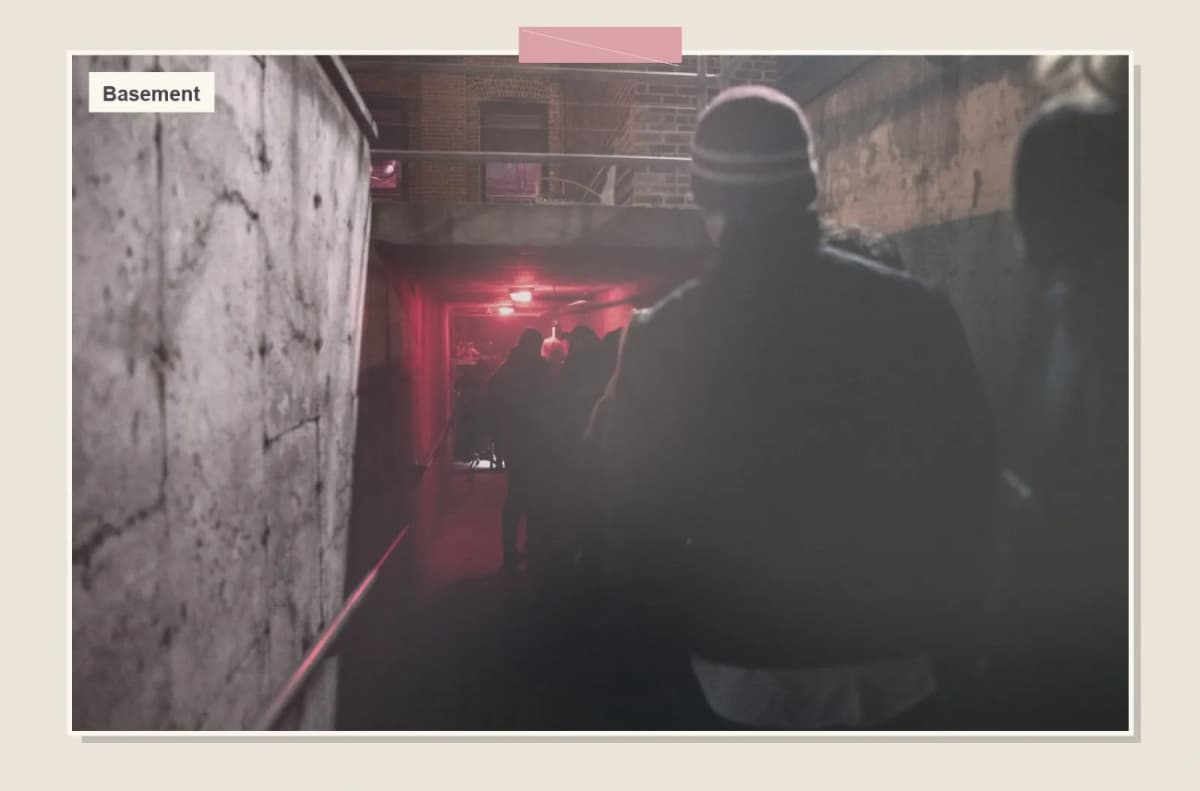
Basement is the separate contract. It opened in 2019 below the main building and has its own logic: techno, low light, curated entry, no-photo culture, and a crowd that understands the room is not a backdrop for content. Studio, the neighboring room built around the factory's old furnace, gives that underground world a second temperature.
Do not buy a ticket to "Knockdown" without knowing which of these rooms is actually running the night. The address is the least specific part of the plan.
The Door Is Not Your Enemy
Basement's door gets treated like gossip because people love to turn selectivity into mythology. The useful question is simpler: does the door make the room safer and clearer, or does it just perform power?
At Basement, the best version of the door has a job. The no-photo policy matters. Phone cameras are covered so the dance floor can be a dance floor, not a surveillance room. Security screening matters. A door team that is paying attention matters. A crowd that came for the specific sound and the specific night matters.
None of that means you are guaranteed entry. None of it means every door decision will feel good from the sidewalk. But as a woman arriving alone, I would rather enter a room that has declared its rules than a room pretending rules kill the vibe. Vague rooms are where people test boundaries. Clear rooms tell you what game you are in.
The practical code is not complicated: read the event page, dress like you came to move, arrive sober enough to speak for yourself, have ID and ticket ready, and treat staff like people doing a real job. If the night has a stricter dress or community code, take that seriously or choose another night.
Alone is a skill, not a sentence. A well-run threshold helps.
What Went Wrong
The mistake this venue punishes is assuming the building is always available.
It is not a bar. It is not a casual walk-in room. It is a campus of ticketed events, exhibitions, load-ins, doors, private rentals, and separately run spaces. The worst version of a Knockdown Center night is not the walk. It is arriving on the wrong day, too early, or for the wrong door, then having to reverse the same industrial route with your confidence leaking out of you.
So the rule is simple: the building exists for you only when the calendar says it does. Screenshot the listing. Screenshot the ticket. Check which room, which entrance, and which door time. If you are choosing Basement, check whether that night's policy asks for a specific dress code or party context. If you are choosing the Gallery, check hours before you build a whole afternoon around it.
The address does not owe you a night. The event does.
The Solo Playbook
Before you leave: Charge your phone. Buy the ticket. Screenshot everything. Tell one person the room you are entering and the rough time you expect to leave.
Arrival: If you are walking from the L, treat the 15 minutes as transit, not wandering. No headphones that seal you off. No last-minute outfit adjustments on the sidewalk. Move like you know where the door is, because you do.
Inside: Locate the bar, bathrooms, exits, and outdoor air before you need any of them. If coat check is open and you are dancing, use it. A free body makes better decisions than a body managing a tote bag.
Basement: Accept the no-photo rule as a gift. If your night depends on documenting yourself, pick another room. If your night depends on not being documented, you have found the point.
The Ruins: Weather is part of the ticket. So is crowd density. If you need a low-stimulation night, choose a gallery program or a main-hall show with seats or edges before you choose the outdoor party.
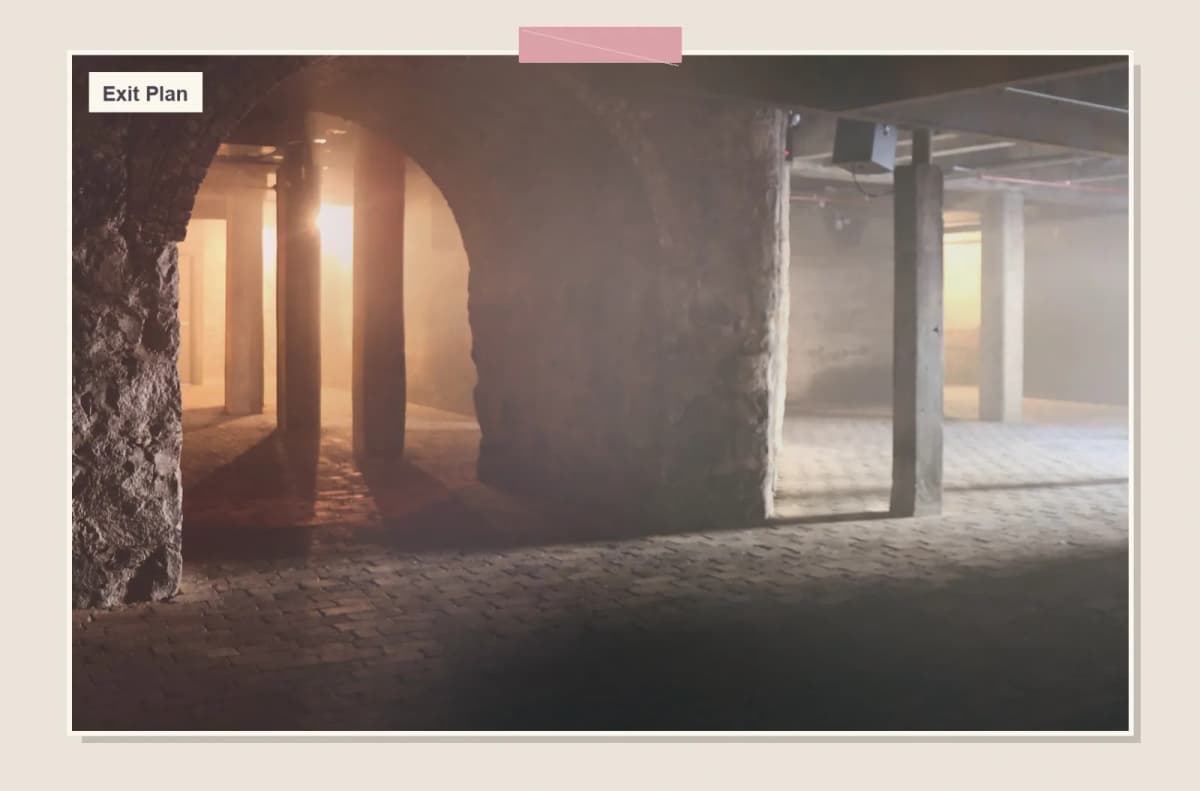
Leaving: Set the exit before the room sets it for you. After midnight, order the car before you step out of the fence. If you decide to walk back, do it with other people leaving, not as a private bravery exercise.
The Verdict
Knockdown Center is friendlier than the walk makes it feel, but that is not the same as saying the walk is irrelevant.
The walk is data. The door is data. The room you choose is data. When those pieces are read properly, the venue becomes one of the rare large New York spaces where a solo night can feel both big and controlled. You get brick, volume, sound, air, and a clear threshold. You also get a commute that asks you to respect it.
Would I go alone? Yes.
Would I freestyle it? No.
That difference is the whole review.
Knockdown Center, 52-19 Flushing Ave, Maspeth, NY 11378