Networking / Venue
In LIC, the Skyline Is the Third Person at the Table
 Jonah Brooks
The first thirty seconds of a rooftop decide more than the cocktail list does.
You step out of the elevator, look for the host stand, feel the air change, and count the things already competing for your attention: wind, glass, speakers, skyline, phones, the bar line, the table everyone wants, the table nobody should take. Long Island City rooftops make that moment louder because Manhattan is right there. Not distant. Not theoretical. Across the water, doing half the room's flirting.
That is the rooftop height tax. The view gives the night an opening line. It also steals some of the room's listening capacity.
I do not mean rooftops are bad for conversation. I mean they are not neutral. A rail seat, a corner banquette, a table under a retractable roof, a bar-height stool beside a speaker: each one produces a different night. Every seat is a different date.
So read the roof before you order.
The Quick Read
Use a Long Island City rooftop when the view needs to do a job: visitors in town, loose friends, first drink before dinner, someone who just moved here, a birthday that wants a photo without turning into a club.
Use a lower room when the conversation is the job: apology, serious catch-up, early dating when you actually need to hear tone, a friend who gets quiet in loud rooms, a dinner where the table matters more than the skyline.
The compromise is one drink upstairs, then a descent before the room starts charging interest. The skyline is a good opener. It is a poor listener.
Lost in Paradise: The Roof With Two Moods
Lost in Paradise sits at 11-01 43rd Avenue, close enough to the LIC waterfront idea that the view arrives before the room does. The address matters. This is not a rooftop you wander into from a quiet brownstone block; it is an elevator plan, a reservation plan, a "which table did they give us" plan.
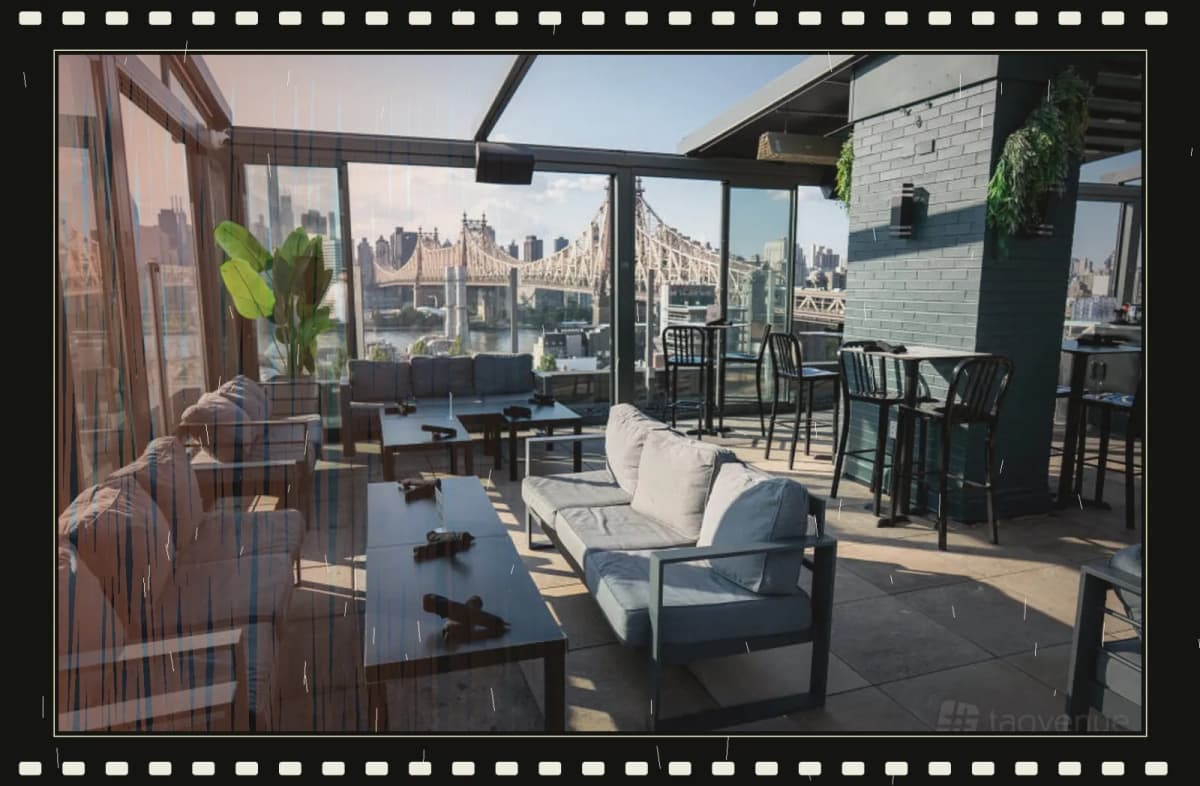
The room's trick is weather control. Lost in Paradise presents itself as an all-season, heated and enclosed rooftop, and the photos tell the useful part: glass walls, roof structure, cushioned seating, high tables, a Manhattan line across the water. That means the roof can behave like two different rooms. Open roof, it becomes a view machine. Enclosed, it becomes a glass dining room with the skyline pressed against the walls.
The best seat is not automatically against the rail. The rail gives the picture. The deeper sofa or side table gives the person across from you. If you are there with visitors, give them the rail first. If you are there with someone you are trying to know, take the table that lets both faces stay in the same frame.
The worst seat is the one in the traffic path between bar, server route, and photo stop. A rooftop with a skyline always creates unofficial aisles. People stand up to shoot the bridge. Chairs move. Bags hang from the backs of stools. The room becomes a stage whether or not you asked for one.
Go here when the view is the icebreaker. Be careful when the view becomes the third person.
What The View Costs
A rooftop makes arrival easy. Nobody asks why you picked it. The river answers. The skyline answers. The first drink photo answers.
Then the room asks for payment in smaller currencies.
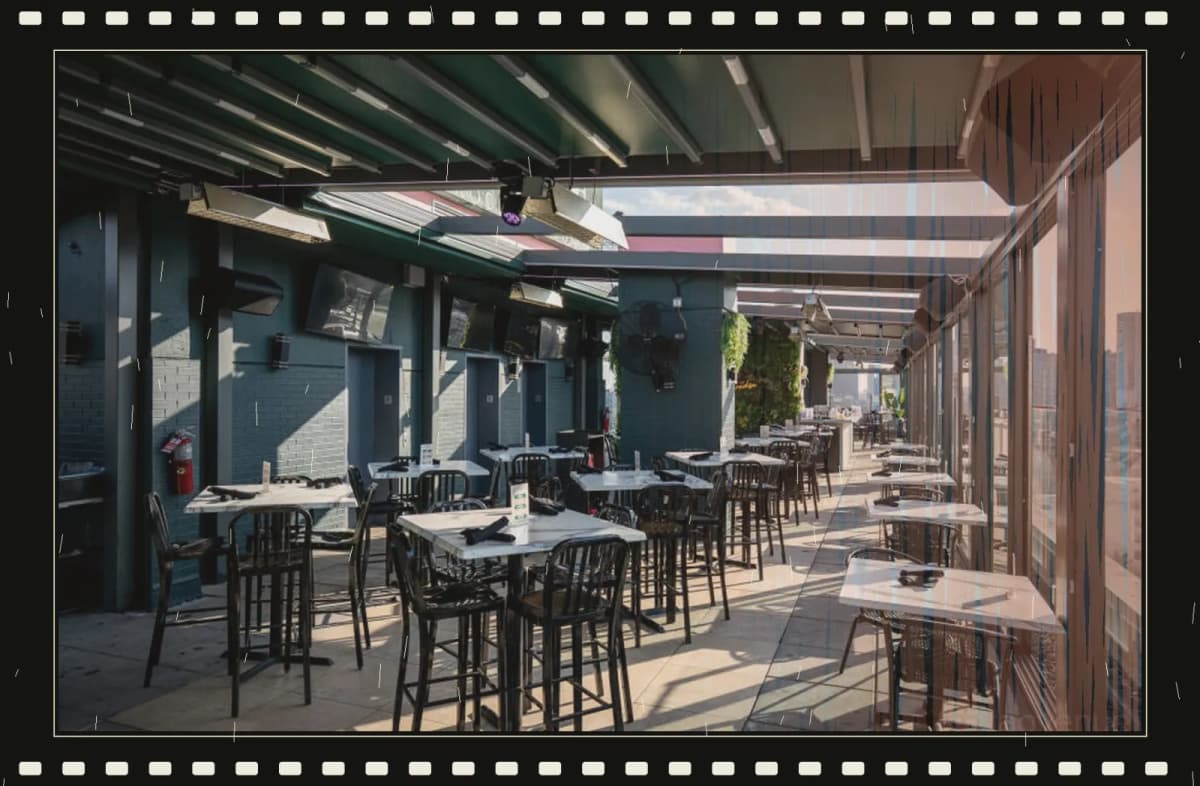
Wind changes posture. People lean forward or give up. Glass makes the room look clean but pushes sound sideways. Music is not just volume; it is placement. A speaker over a shoulder can turn a good table into an endurance test. Lighting can make everyone look better while making the menu and the bill harder to read. A table aimed outward gives Manhattan the best sightline and your conversation the leftovers.
This is why I do not review rooftops by view alone. A view is not hospitality. A view is weather, angle, glare, furniture, traffic, and a hundred small decisions about where the human voice is allowed to land.
The Table Test
Before you settle in, do the table test.
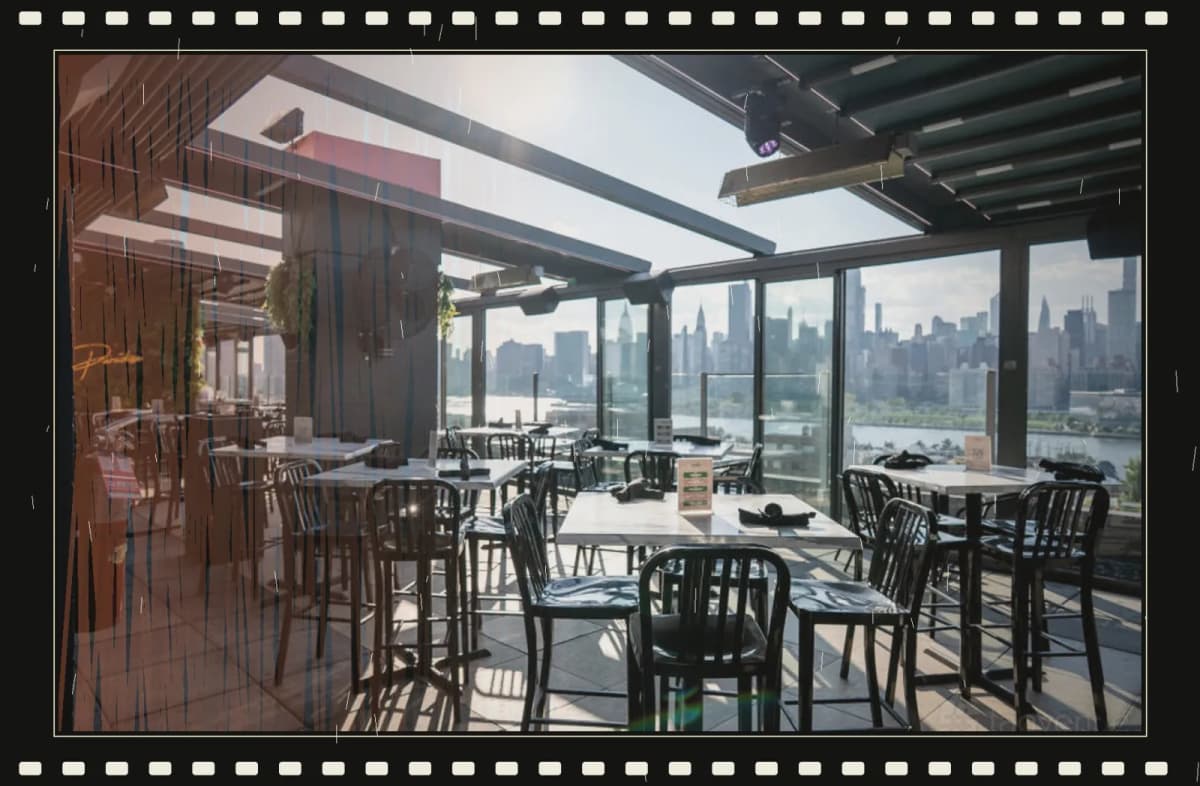
Can both people sit without one person staring past the other all night? Is the speaker above you, behind you, or across the room? Does the server path cut through your knees? Is the rail close enough to pull people into your space for photos? If someone needs to go to the bathroom, will everyone at the table have to stand?
The best rooftop table gives you a view when you turn your head, not when you try to listen. The worst one gives you the skyline and then makes you shout across it.
For a loose group, high-tops can work. For two people, they often make the night feel temporary. For a birthday, the central table reads social. For a quiet dinner, the central table reads exposed.
The room decides before the menu does.
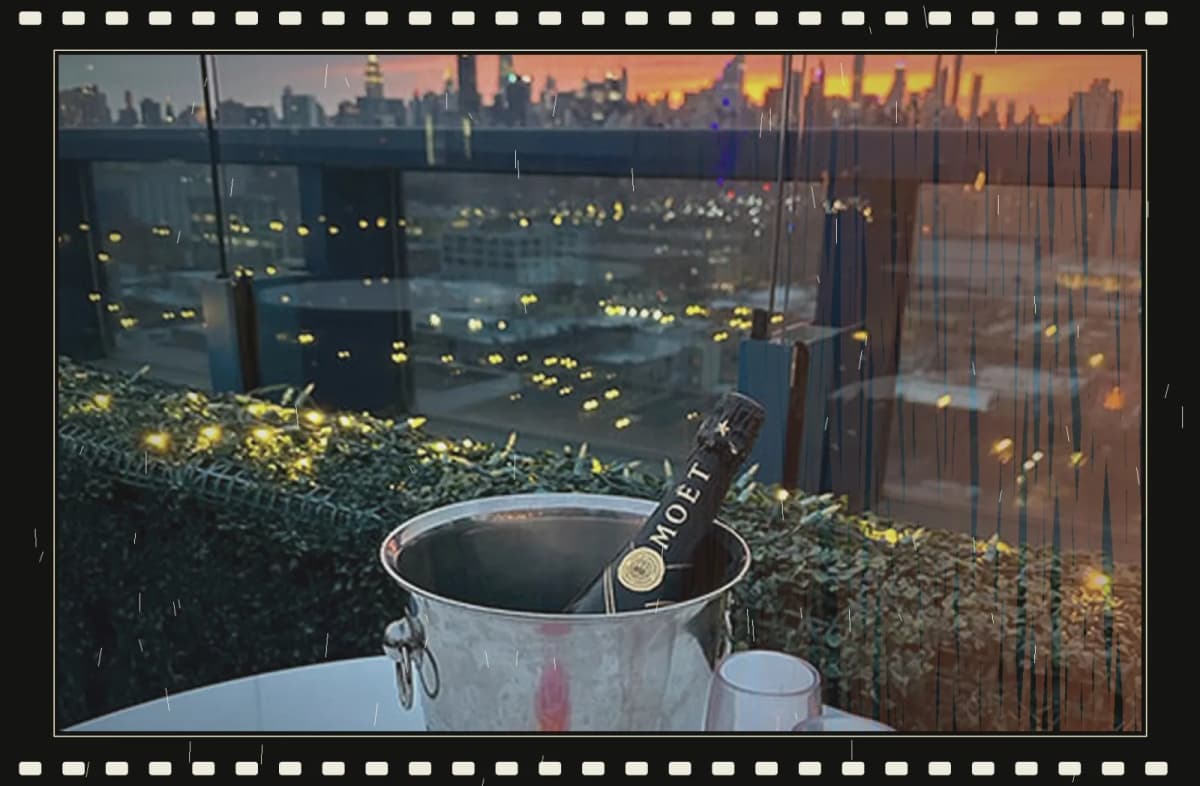
Vista Sky Lounge: Good For Momentum, Bad For Fragile Sentences
Vista Sky Lounge, at 27-05 39th Avenue, has a different job. Manhattan and the Queensboro Bridge sit in the room's sightline, and the space wants movement: dinner, then drinks, then a louder second hour. It is not a whisper room.
That does not make it worse. It makes it specific.
The best seat here is the one that lets the skyline stay peripheral while the table keeps its own center. The glass-edge instinct is understandable, especially around sunset. But a glass-edge seat can turn into a posture problem: body toward skyline, voice toward table, phone in hand, chair half-rotated. Good for a group that wants momentum. Less good for a sentence that needs a soft landing.
The worst seat is near the speaker or the bottle-service traffic, if the night is running that way. Jonah rule: if the bathroom line blocks the bar, that is the review. On rooftops, the parallel rule is simple: if the photo line blocks your chair, that is also the review.
Vista makes the most sense for post-dinner cocktails, a visiting friend who wants the bridge, or a group that is already loud enough to survive the room. Do not bring a first-date confession here and expect the room to lower its voice.
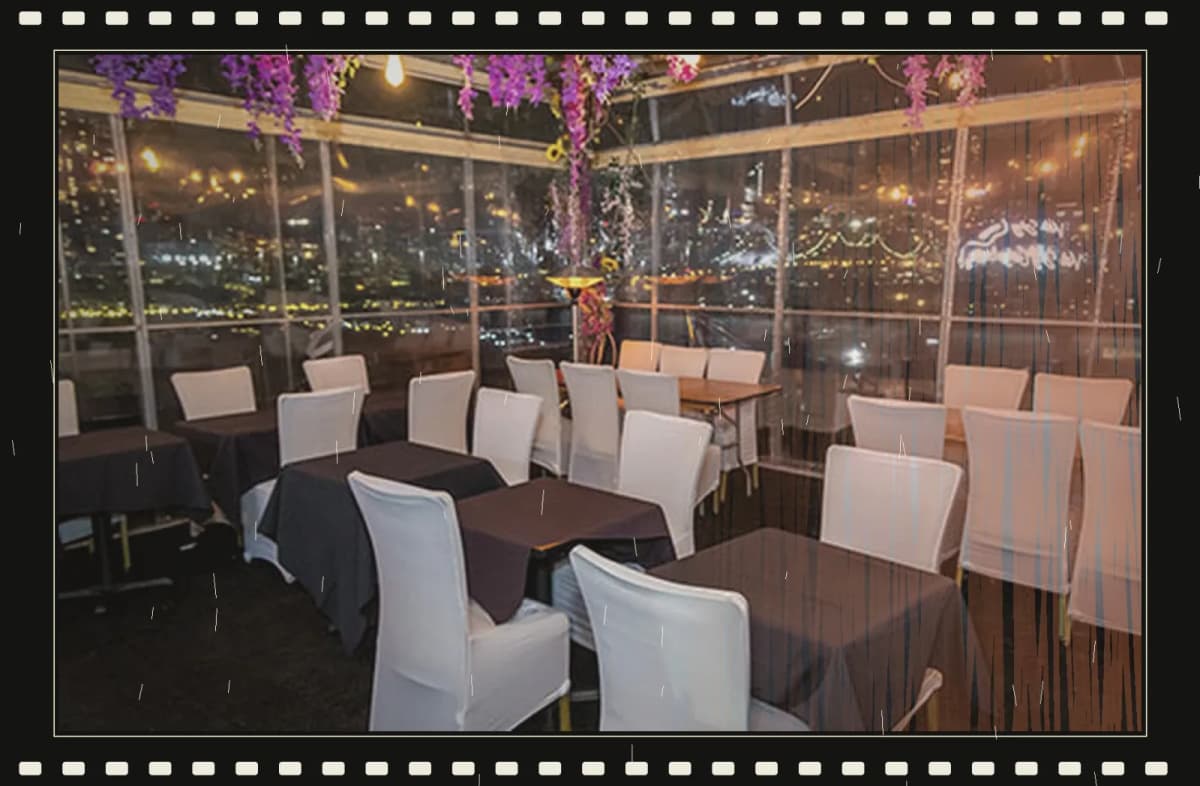
Lighthouse Rooftop: Lower Skyline, Better Dinner Logic
Lighthouse Rooftop is at 45-15 37th Street, and its emphasis lands where the room does: dinner, brunch, reservations, a Mexican-Japanese menu, and a LIC address that is not trying to pretend it is Manhattan. The view is more Queens-and-room than postcard-Manhattan, which is the useful distinction.
Not every rooftop needs to be aimed west like a camera.
Lighthouse is the better argument for a lower-view night. The room still has height, glass, and city light, but the food and table have more work to do. That changes the social contract. You are not only there to point at a building across the river. You are there to sit, order, watch the window, and let the room carry dinner instead of just the photograph.
The best seat is by a window but not inside the busiest visual corridor. A corner or side table lets the room stay legible: plates, glasses, faces, skyline. The worst seat is any table that turns dinner into a backdrop shoot for the tables around you.
Lighthouse currently lists dinner service through the week and Sunday brunch. That matters because brunch and late dinner are not the same room. Brunch gives you window light and slower edges. Late dinner gives you reflection, music, and more bodies between you and the exit.
Go for dinner when food needs to share the lead. Go for brunch when you want the room to tell the truth.
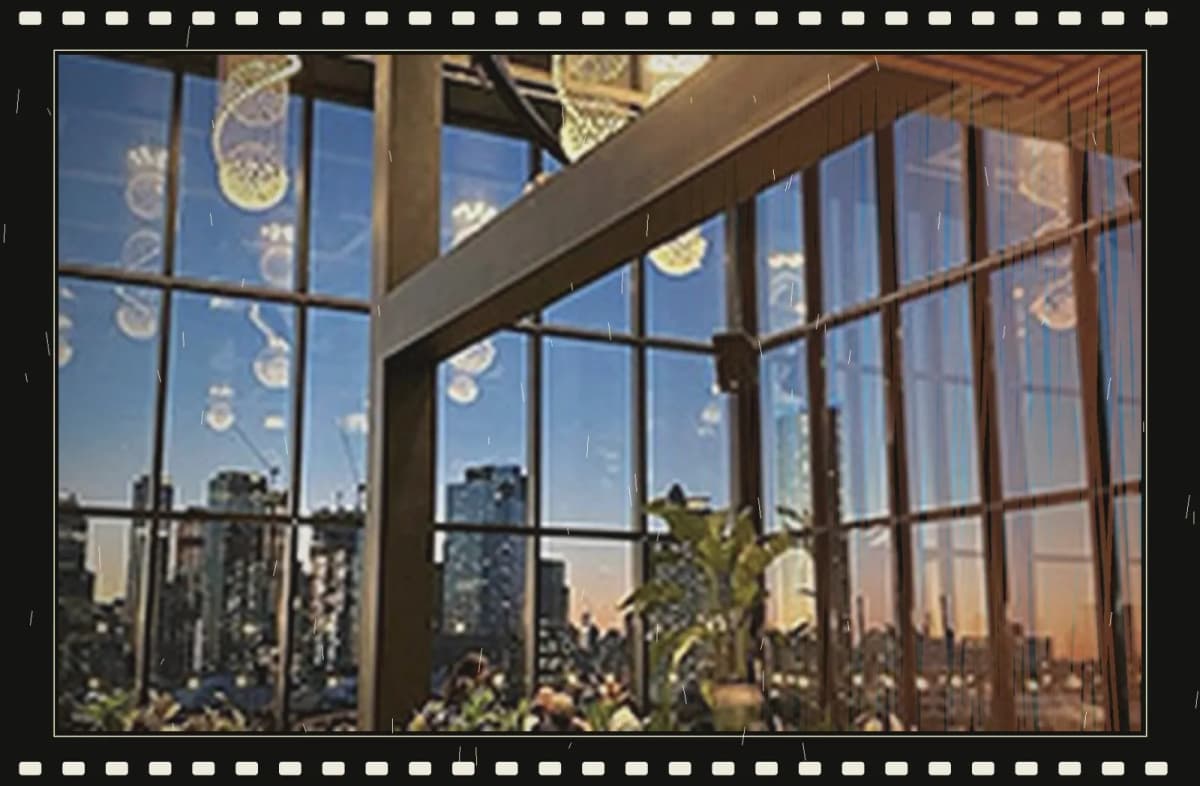
When To Go High
Go high when the night needs release.
Visitors, casual birthdays, first warm week, the friend who has been working too much, the date where nobody is ready for a heavy table yet. A skyline gives people something to say before they have language for the night. That is useful. I am not immune to it.
But use the first drink as the instrument, not the whole score. If the room is starting to make everyone louder, descend. If the wind is doing the flirting for you, descend. If the view has already done its work, leave before the roof starts charging you in throat strain.
When To Stay Low
Stay low when the person across from you is the point.
Serious conversations need backrests, predictable light, short bathroom routes, and a table that does not turn everyone outward. They need a room where the server can reach you without interrupting a sentence and where the speaker is not winning every argument.
LIC has enough sky. You do not need to spend the whole night proving you can see it.
The Jonah Read
The best LIC rooftop seat is rarely the one nearest Manhattan. It is the seat that lets Manhattan appear when invited.
Lost in Paradise works when the skyline is an opener and the room is not too crowded with photo traffic. Vista works when the night wants speed, brightness, and a group pulse. Lighthouse works when dinner needs a table first and a view second.
Go high for spectacle. Go lower for listening. And if you want both, do the only sensible thing: one drink upstairs, then find a room that knows how to hold a conversation.
4 places