Music / Venue
Go Alone Once. That Is the Real Review.
 Sam Porter
Going to jazz alone is not a personality test. It is a logistics test.
Smalls works because the room already has a job for you. The stage pulls everyone forward. The sets have edges. The basement is too narrow for anyone to perform casual superiority for very long. If you arrive early, choose your seat honestly, and give the first tune your full attention, being alone stops being the point.
The call: go by yourself once. Not because solitude is brave. Because a good listening room gives you something better to do than prove you belong.
The Room You Are Entering
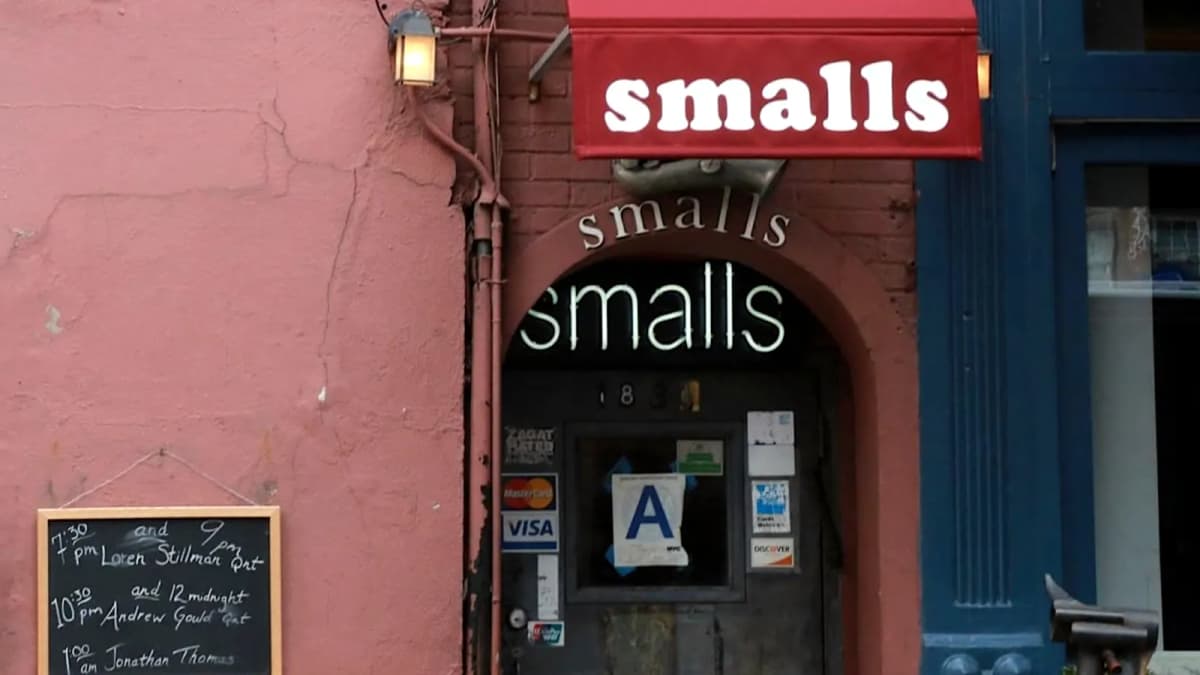
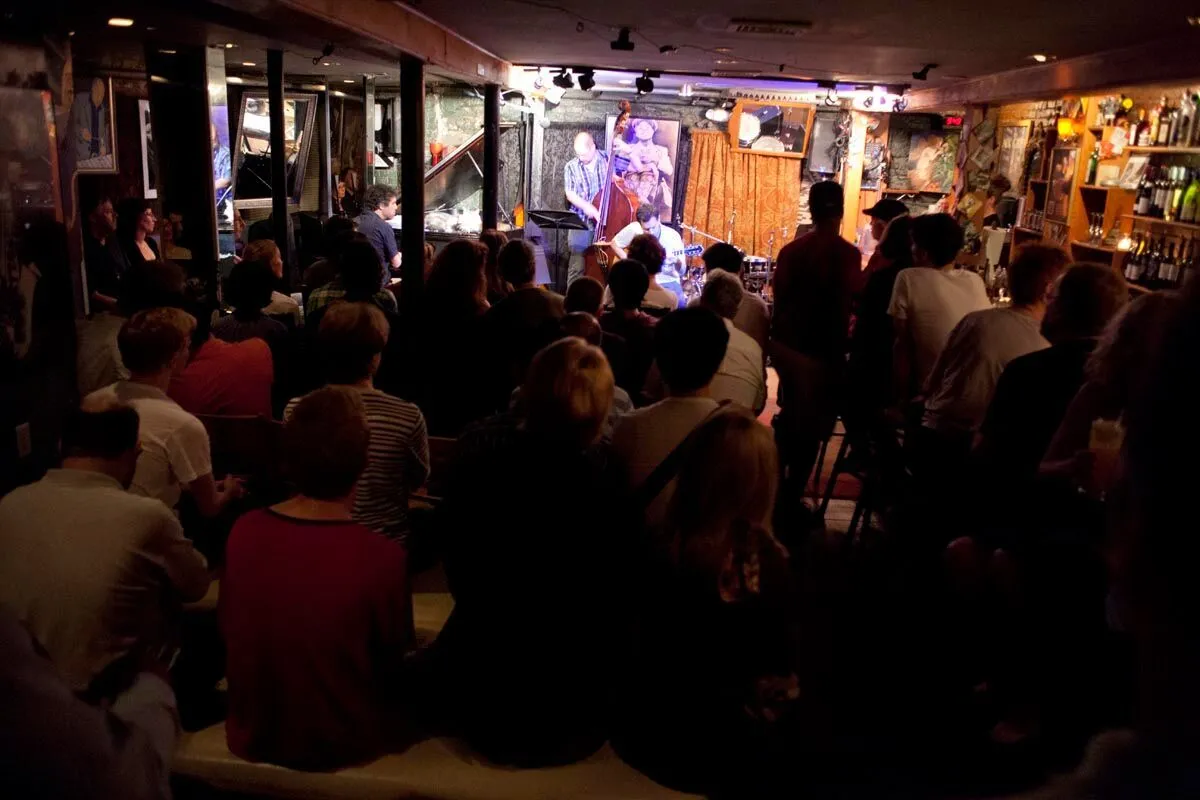
Smalls is not a soft landing. It is a basement at 183 West 10th Street, with the entrance doing exactly what the name promises. You go down, not in. The room is compact, the music is close, and the best seats reward people who arrive before the clock starts making decisions for them.
That intimacy is the reason to go. It is also the reason to behave.
The club opened in 1994 under Mitchell Borden, first as a raw basement where musicians and listeners could stay late, bring their own beer, and treat the night less like a transaction than a scene. It has closed, reopened, streamed, archived, survived, and become one of the rare New York jazz rooms where the mythology still has practical consequences. People come for the names on the calendar. Musicians come because the room has memory.
For a solo listener, that memory helps. You are not walking into a room built around tables of six. You are entering a listening system.
Before You Go
Your first decision is not what to wear. It is which set you are actually going to hear.
Smalls lists shows by set time, and the early and late parts of the night can feel different. Early sets are the cleanest first attempt: you can arrive before the room fills, get seated without turning your entrance into a small event, and leave with the city still functioning outside. Late sets and jam sessions can be looser, better for regulars, musicians, and people who like a room after it has stopped caring about tomorrow morning.
Check the event page the same day you go. At publication, a July 15, 2026 Smalls listing showed advance tickets at USD 35 and walk-in at USD 25, with a one-drink minimum per person, per set. That number is not the point. The point is that Smalls tells you the system before you arrive: ticket holders line up, seating starts about 30 minutes before the set, and seats are first come, first served.
Do not make the first 15 minutes harder by arriving hungry, rushed, or surprised by the rules. Eat before if you need a real meal. Bring enough patience for the stairs, the line, and the fact that a small room cannot solve late planning gracefully.
Belonging has a floor plan. Read it before you walk in.
The First 15 Minutes Alone
Here is the script.
Arrive 30 minutes before the set. Join the line without narrating that you are alone. When you reach the door, give your name or ticket confirmation, then let the staff seat you or point you toward what is open. If you have a choice, pick a seat with a clear sightline and a modest social burden.
The best solo seat is not always the closest one. Too close, and you feel like part of the drum kit. Too far back, and you start auditing everyone else's tables. The sweet spot is usually side-forward: near enough to see hands and faces, not so centered that every bathroom trip feels like a speech.
Put your coat and bag away cleanly. Order simply. Water and one drink is enough of a structure. You are not there to look occupied; you are there to get settled before the first note gives the room its rules.
If someone sits beside you, the opening line is not a networking move. Try this:
"Have you heard this band before?"
That is enough. If they answer briefly, let it end. If they open the door, you can walk through. Jazz rooms are unusually kind to short conversations because the music rescues everyone from having to keep talking.
During The Set
Once the music starts, your job gets easier. The room becomes directional.
Pick one thing to follow. The bass for one tune. The drummer's left hand for another. The pianist's comping behind a solo. The way the horn player steps back when someone else starts to build. You are not trying to become the most informed person in the basement. You are giving your attention somewhere to stand.
Clap after solos when the room does. Laugh if the band earns it. Keep your phone down. A small screen in a small jazz room is not neutral; it becomes furniture with bad manners.
Talking is for before the set, the break, and after the music. During the set, the room is doing something more delicate than background entertainment. The musicians are listening to each other at high speed. Random table noise is not casual. It enters the music without permission.
Intermission Is The Test
The awkward part is not entering alone. It is the moment the lights come up and everybody remembers they have hands.
Plan the break before it happens.
You can step outside. You can stretch your legs. You can read the next set listing. You can send one precise text to one friend: "The drummer just changed the room." You can also do nothing and let the room reset around you.
What you should not do is panic-scroll like you have been caught. The phone becomes most dangerous when it is used as camouflage. If you need it, use it. If you are using it to prove you have a life elsewhere, put it away.
This is also the only natural time to talk. If someone near you seemed open earlier, ask one small question about the set. Not a speech. Not a display of taste. One question.
"Was that last tune a standard?"
If they know, you learn something. If they do not, you have both admitted the correct amount of ignorance.
Late Arrival, Early Exit
Sometimes the train wins. Sometimes work runs over. Sometimes the person who said they might join you vanishes into the soft crime of "maybe."
If you arrive after the set starts, make yourself smaller, not apologetic. Wait for staff direction. Move between tunes when possible. Do not wave, whisper loudly, or make the room pay for your timing.
Leaving early follows the same rule. The clean exit is after applause, not during a reset, solo, or quiet passage. A jazz club is one of the few public rooms where leaving badly is more noticeable than arriving alone.
Once the set begins, unclaimed ticket-holder seats can go back into the room. That is not harsh; it is the physics of a small room. Empty seats in a sold-out basement are not neutral space. They are someone else's night waiting at the door.
Photos And Proof
Take one photo before the music if the room allows it. Maybe one after. Do not build a small documentary while people are working.
The point of going alone is not to produce evidence that you went alone. The point is to hear the room without negotiating anyone else's appetite, fatigue, or need to leave early. Proof is the wrong currency here. Attention is the only one that spends well.
If you need a memory, buy a musician's record, save the set listing, or write down one thing you heard that you could not have predicted. That kind of souvenir ages better than a shaky zoomed video.
A Typical Solo Night At Smalls
You arrive early enough that the door does not punish you. The awning is smaller than expected. The stairs do the usual basement work: they remove the street one step at a time.
At the bottom, you become practical. Ticket name. Seat. Bag. Drink. Sightline. You are aware of being alone for maybe six minutes. Then the band starts moving equipment, someone checks a cymbal, the bar makes a low sound behind you, and your attention is no longer unemployed.
The first tune is where the room introduces itself. You notice the distance between the front row and the players is not symbolic. It is literal. The drummer can see who is listening. The bass does not ask permission from the floor. The horn does not need a balcony to feel large.
By the second tune, the fear has lost its schedule.
At the break, you step outside because the basement air has done enough. West 10th Street gives you a few minutes of ordinary city life: a door, a sidewalk, people with plans that have nothing to do with yours. You check the second set time. You decide whether the night needs more music or a clean ending.
If you stay, the second set feels less like a test. If you leave, you leave after applause. Either way, you did the part that matters: you entered without outsourcing the night to someone else's comfort.
Awkwardness Rating
First five minutes: 6/10. The entrance is small, the room is close, and your body may briefly forget what hands are for.
Once seated: 3/10. The room gives you tasks: order, read the stage, check the set time, settle.
During music: 1/10. Everyone is facing forward. This is the great kindness of live jazz.
Intermission: 5/10. Manage the phone, the hallway, and the urge to look busier than you are.
Exit: 2/10 if timed well, 7/10 if you make it during a quiet passage. Applause is infrastructure. Use it.
Who Should Go
Go if you want a New York night that asks for attention instead of performance.
Go if you like being near the mechanics of music: fingers, breath, eye contact, the quick negotiations between players.
Go if you are trying to practice doing cultural things alone without turning every outing into self-improvement homework.
Skip it if you want a chatty bar with music in the background. Skip it if your group needs to sit together and talk through the set. Skip it if you cannot handle a room where the etiquette is quiet but real.
The win is not that you conquer loneliness. That is too dramatic and not useful. The win is smaller: you find a room where being alone is absorbed into the floor plan.
Go alone once. That is the real review.
Smalls Jazz Club, 183 W 10th St, New York, NY 10014