Community / Event
How to Find a Book Club in Your Own Language at Queens Public Library
The borough's real literary scene doesn't run on lattes and limited-edition tote bags. It runs on library cards — 66 branches, collections in more than 30 languages, and reading circles that cost exactly nothing. A guide to finding your chair.
 Sally Abrams
Here is my thesis, stated up front the way I like it: if you want to read with other people in Queens — in Spanish, in Chinese, in Bengali, in English shaped by all three — the address you're looking for is not a boutique bookstore. It's a public library branch, and there are sixty-six of them.
I say this as someone who spent her first year in New York assuming that literary life happened wherever the candles were nicest. (Reader, I paid twelve dollars for a sparkling water to sit near a shelf.) The bookstores are lovely, and some of them do real community work. But the infrastructure that actually holds this borough's reading culture — the one that greets you in your own language, hands you the book for free, and doesn't check what's in your wallet or on your visa — was built by Queens Public Library, and it has been holding that line for decades.
So this is a guide, in the practical sense. Which branches to know first. How the events calendar actually works. How to find a reading session in your language, or confirm one exists before you cross the borough for it. And what it means to take a seat at a table that was set for everyone.
The Borough That Reads in Translation
Start with the scale, because the scale is the argument. Queens Public Library serves 2.3 million people across its 66 locations — one of the largest public library systems in the country, planted in what is routinely described as the most linguistically diverse place on earth. The system's own collections run to books, magazines, newspapers, music, and films in more than 30 languages. This is not an accommodation bolted onto an English-language institution. It is the institution.
The engine behind much of it is the New Americans Program, a division of the library that has spent more than four decades doing something quietly radical: producing programming in people's languages rather than merely about them. Workshops on tenants' rights and career planning delivered in the major immigrant languages of the borough. Cultural arts events — music, poetry, storytelling — presented bilingually, in English and in the language of the community being celebrated. Collections built deliberately for readers who arrived with their literacy already fluent, just not in English.
"No matter who you are, where you're from, or where you want to go, at Queens Public Library, we speak your language."
That's the library's own promise, printed on its branch pages, and I've come to read it as a small manifesto. Most institutions ask newcomers to translate themselves at the door. This one did the translating first. (Whether the rest of the city's cultural life has caught up is a longer essay; the short version is: not yet.)
Four Branches to Know First
You can walk into any of the 66 and be fine. But if multilingual reading life is what you're after, four buildings carry particular weight, and each tells you something about how this borough actually works.
Flushing — 41-17 Main Street
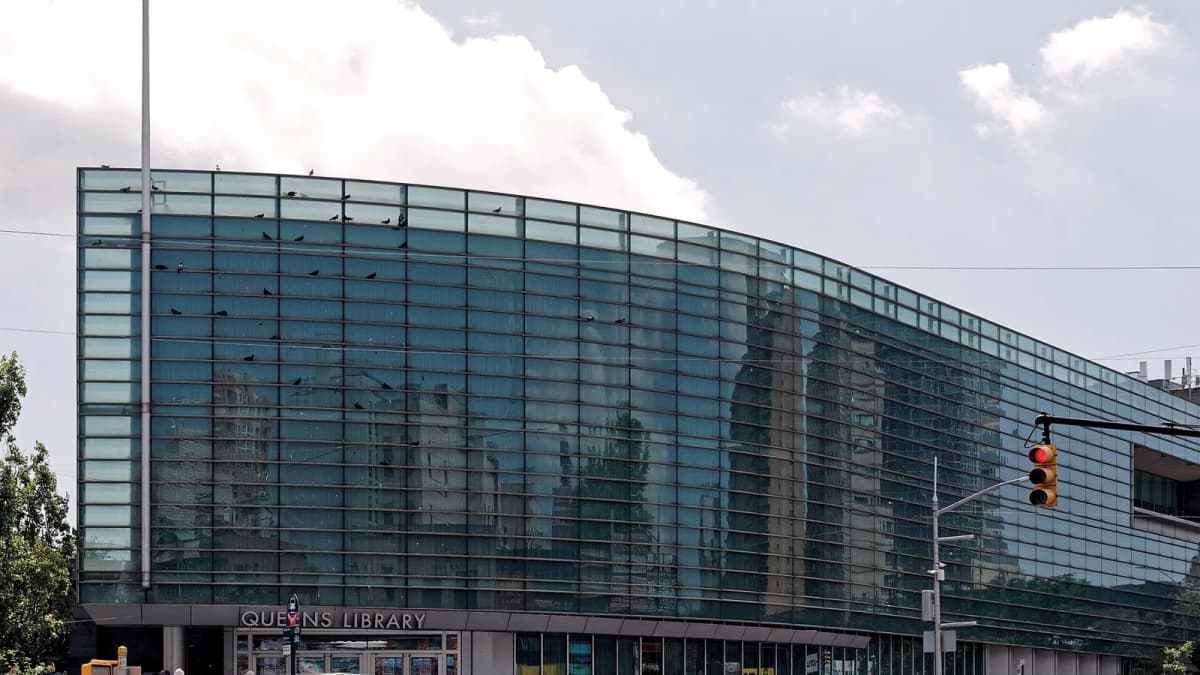
The Flushing branch sits at one of the busiest pedestrian corners in New York, a curved wall of glass reflecting Main Street back at itself, and it hums like a transit hub for the written word. This is where the system's international ambitions are most visible: deep world-language collections, an Adult Learning Center for English learners, and seven-day hours that respect the schedules of people who work six of them. Go once just to watch the room. Every table is a small United Nations with better manners.
Elmhurst — 86-07 Broadway
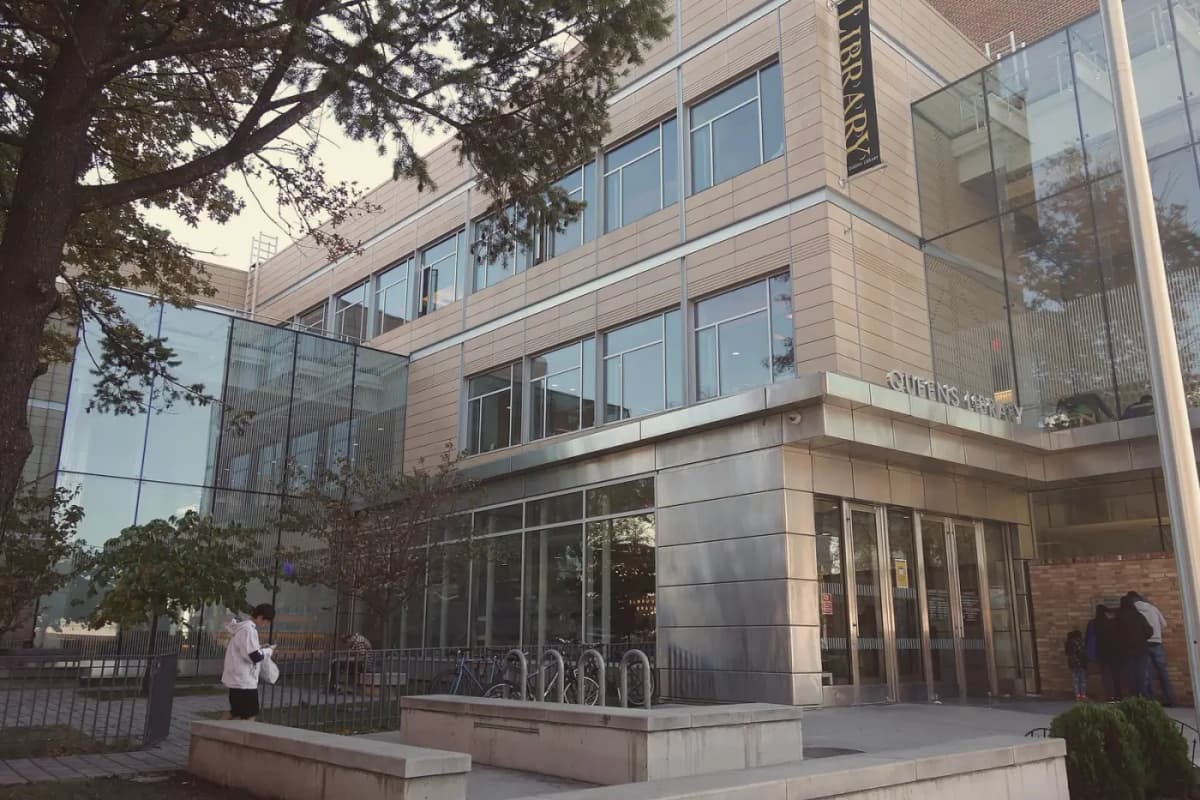
Elmhurst is one of the most foreign-born neighborhoods in the United States, and its branch — a bright, glass-cornered building on Broadway — reads like the neighborhood's shared study. Its book discussion programming has run steadily in recent seasons, and the building itself makes a point: this community got the new architecture, not the hand-me-down. Bring your library card and your patience at the after-school hour; the room is beloved and it shows.
Langston Hughes Community Library and Cultural Center — 100-01 Northern Boulevard, Corona
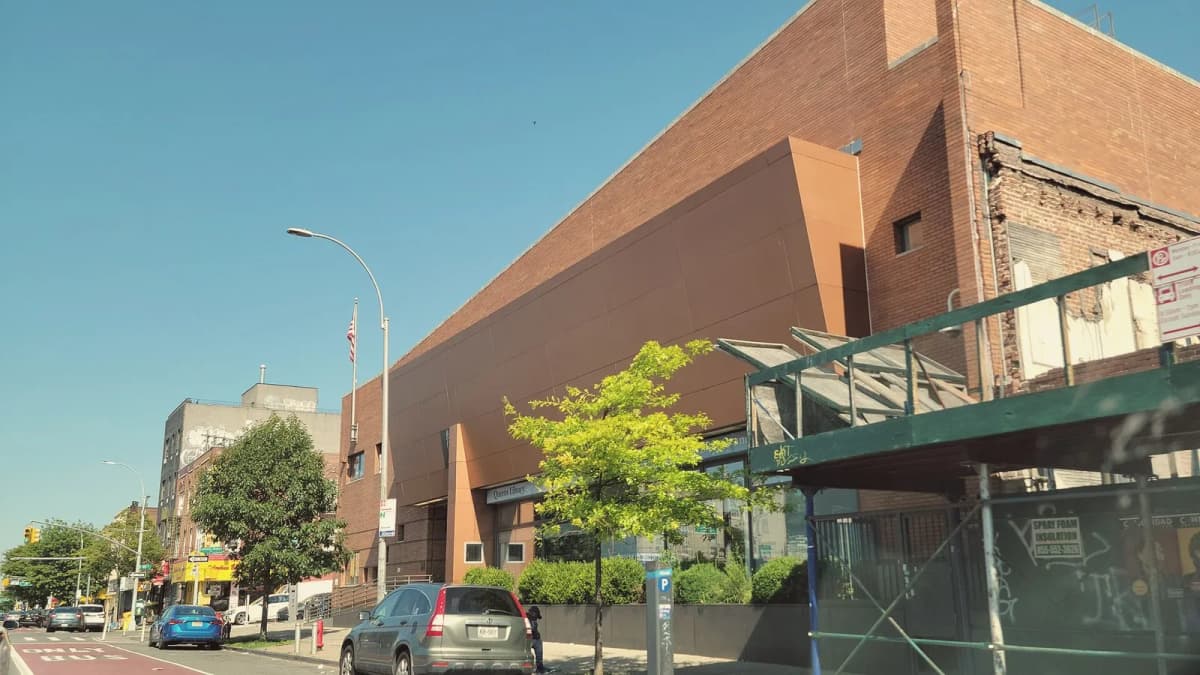
The Corona branch that carries Langston Hughes' name is more than a lending library. It houses the Black Heritage Reference Center of Queens County and operates as a genuine cultural center — performances, classes, community gatherings — in a neighborhood whose Spanish-speaking reading life is among the borough's richest. If your idea of a book club includes the possibility that the discussion ends in music, start here.
Central Library — 89-11 Merrick Boulevard, Jamaica
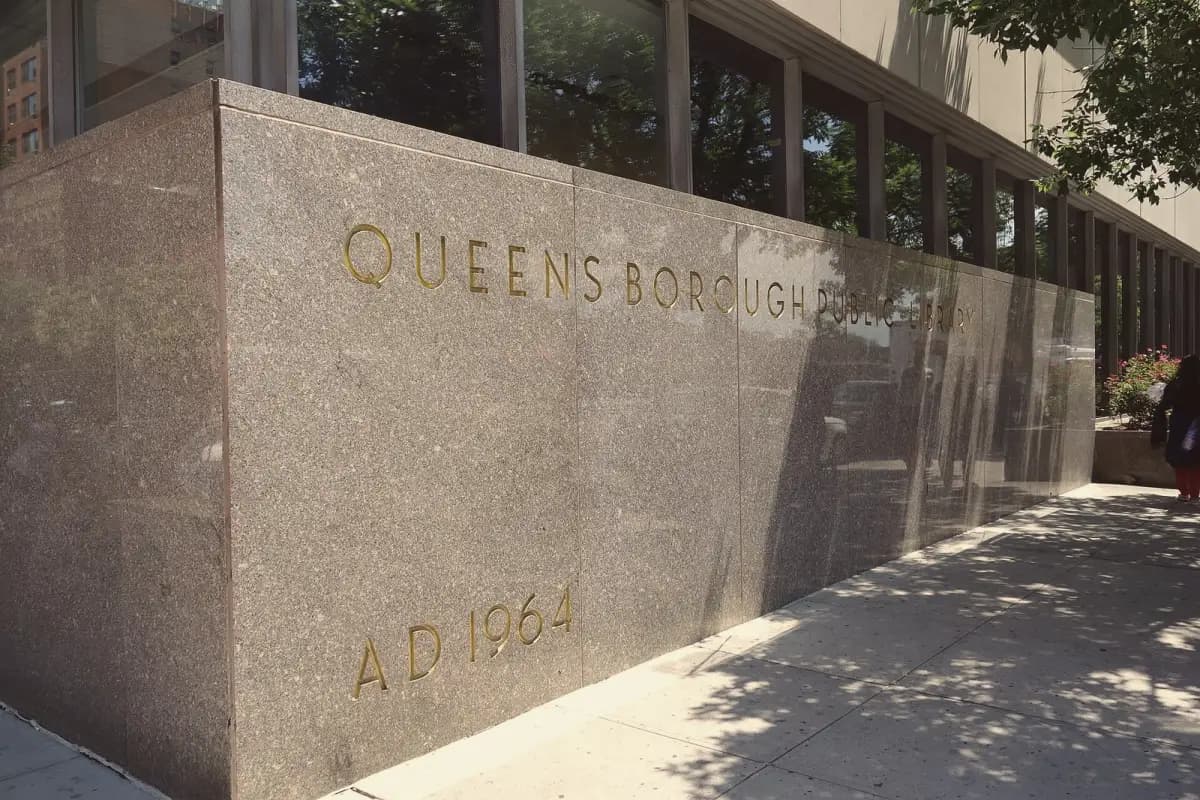
Central is the system's anchor and the New Americans Program's home address. The building has been doing this work since the cornerstone went in — literally; the granite out front is dated in gilt letters — and it remains the place to go when your question is bigger than one branch: which locations hold sessions in your language, how to request books in it, where the citizenship and English-conversation programming lives.
How to Find a Session in Your Language
Now the practical heart of it. Multilingual reading sessions are real, but they move — by season, by branch, by which librarian is championing what. The system rewards people who know how to look. Here is how to look.
Start with the events calendar
The calendar at queenslibrary.org/calendar is the master schedule for every branch, and it filters the way you'd hope: by date range (today, next 7 days, next 30 days, or custom), by location, by audience, by program category, and by how to attend — in person or virtual. Set the location to your branch and scan a month at a time. Book clubs tend to run as monthly or biweekly series, so a single week's view can miss them.
Search like you speak
The calendar's search field takes keywords, and this is where language becomes strategy. Try "book discussion" and "book club," yes — but also try the name of your language, and terms in it. A Spanish-language literary series at the Corona branch, for instance, has run under the name Tardes Literarias y Artísticas — a search for "book club" in English would sail right past it. Programs made for a language community are often titled in that language, which is exactly as it should be.
Ask at the desk — in your language
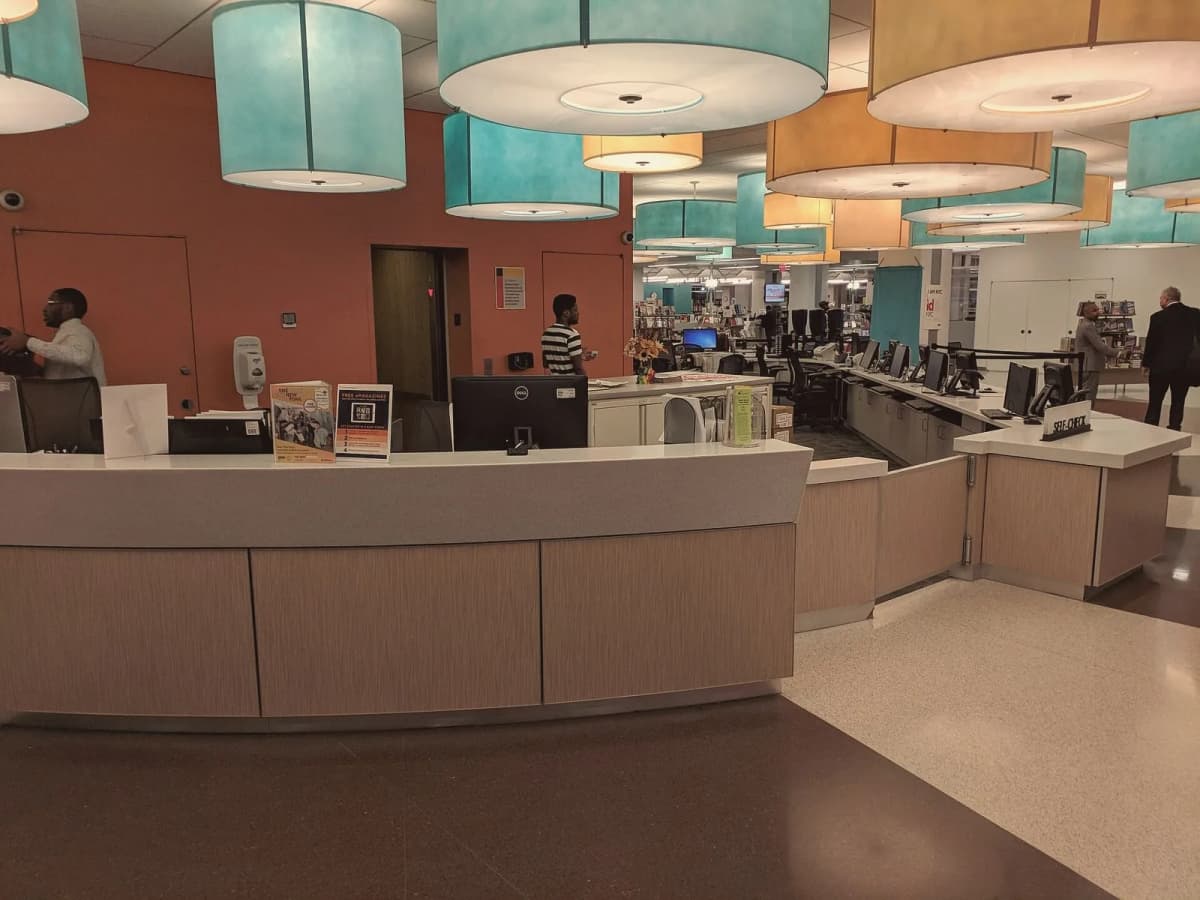
This is the step people skip, and it's the best one. Branch staff know which groups are running, which are about to start, and which existed last spring and will return in the fall. Many branches have multilingual staff or access to interpretation, and asking in your own language is not an inconvenience to them — it is, per the promise above, the entire operating model. I have watched a librarian switch languages twice in one transaction without breaking sentence rhythm. Be the third switch.
Call the New Americans Program directly
For questions that cross branches — where the Bengali-language programming is concentrated this season, whether a Chinese-language discussion group meets near you — the New Americans Program keeps a direct line: 718-990-0894, or napref@queenslibrary.org. This is the team that builds the native-language workshops and cultural programs, and they are the shortest path between "does this exist?" and a date on your calendar.
Get the card
The library card is free, and you do not need to be a U.S. citizen to have one. Bring photo identification and something with your address on it — a lease, a bill, a letter. That's the whole ritual. No fee, no interview, no explaining yourself. (For anyone keeping score of how rare that combination is in this city: very.)
What a Week of Reading Together Looks Like
If this all sounds theoretical, here is a sample from the system's own July calendar — one ordinary mid-month week, no festivals, nothing special. A Mystery Book Club at Whitestone on a Monday afternoon. A Romance Book Club at Lefferts on Tuesday. A discussion of Jhumpa Lahiri's The Namesake — that great novel of a Bengali family remaking itself in America — at East Flushing on Wednesday at noon. A virtual Classics club meeting biweekly on Tuesday evenings for anyone whose branch is far or whose evenings are spoken for. And beneath the adult programming, a running current of bilingual storytimes in Bengali, Chinese, Hebrew, Japanese, Spanish, and more — which is to say, the next generation of these book clubs, already convening on the carpet.
A book club is a border you get to cross on purpose — and at the library, nobody stamps anything on the way in.
One honest caveat, because I'd rather you trust me than find out the hard way: sessions in specific languages surface unevenly. A Spanish circle may run monthly at one branch while the Chinese-language discussion nearest you took a summer pause. Don't treat any single listing — including the examples above — as permanent. Treat the system as permanent, and use the four search moves to catch the schedule where it currently stands. The infrastructure is reliable; the timetable breathes.
And a note on belonging, since this column is honest about such things. You do not need to be an immigrant, or a heritage speaker, or anyone's idea of the "right" reader to join a session in a language you're still learning. You also don't get to treat someone's Tuesday-night reading circle as an immersive experience staged for your growth. The difference is simple: come as a member, not an audience. Read the book. Bring something to say. Let the room be about the room.
Before You Go: A Reader's Checklist
• Pick your branch — Flushing (41-17 Main Street), Elmhurst (86-07 Broadway), Langston Hughes in Corona (100-01 Northern Boulevard), or Central in Jamaica (89-11 Merrick Boulevard) are the four I'd start with.
• Open queenslibrary.org/calendar, filter by your branch and the next 30 days, and search both "book discussion" and terms in your language.
• Ask at the desk, in whichever language is yours. Confirm dates before you travel; series shift month to month.
• For cross-branch language questions, contact the New Americans Program: 718-990-0894 or napref@queenslibrary.org.
• Get the card: photo ID plus proof of address, citizenship not required, cost zero.
• Read the book. Show up. Take up space — the shelf was built with you in mind, even if nobody told you.
The borough's best literary venue has been hiding in plain sight on Main Street, on Broadway, on Northern and Merrick Boulevards, open seven days in some locations and free in all of them. The book club was never behind the twelve-dollar sparkling water. It was at the borrowing desk the whole time, waiting for you to ask in your own words.
2 places