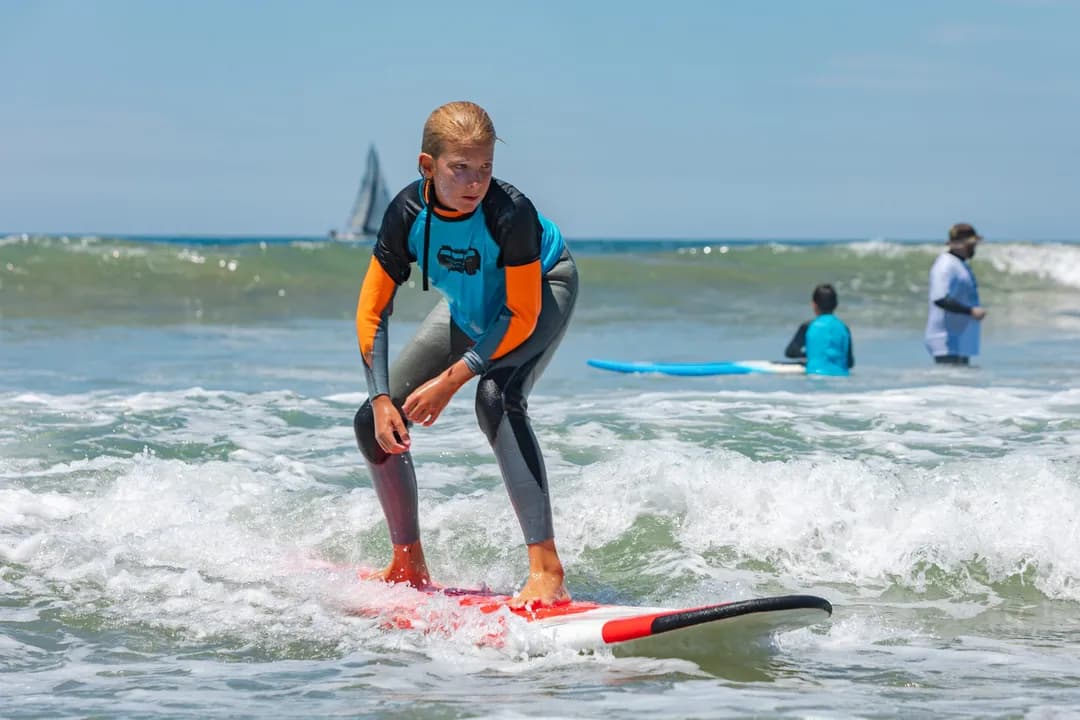

From the Blue VW Bus to Your First Wave
Standing up is the easy part, this school argues; knowing where to sit is the hard one. So the first half hour of a two-hour lesson happens on dry sand, and the remaining ninety minutes are yours to spend in the water.
The Pacific off Ocean Park is a sand-bottom beach break. Nothing underneath it is sharp, the waves reform close to shore, and the sandbars run along open coast and never stack on one fixed peak, so a beginner can usually find a workable corner somewhere between Bay Street and the lifeguard towers at 26 and 28. That geography is why this stretch of Santa Monica gets used as a classroom.
A lesson here is private, which means the only people in your group are the ones you booked with. Badass Surf School says it holds permits to teach on these beaches from the City of Santa Monica and the LA County Department of Beaches and Harbors, and that it pays the city a percentage of every lesson under that permit.
Instructors carry CPR and First Aid certification, and the school's founder writes plainly that no surf-instructor certification exists in California, so the standard on the sand is the one he sets in-house.
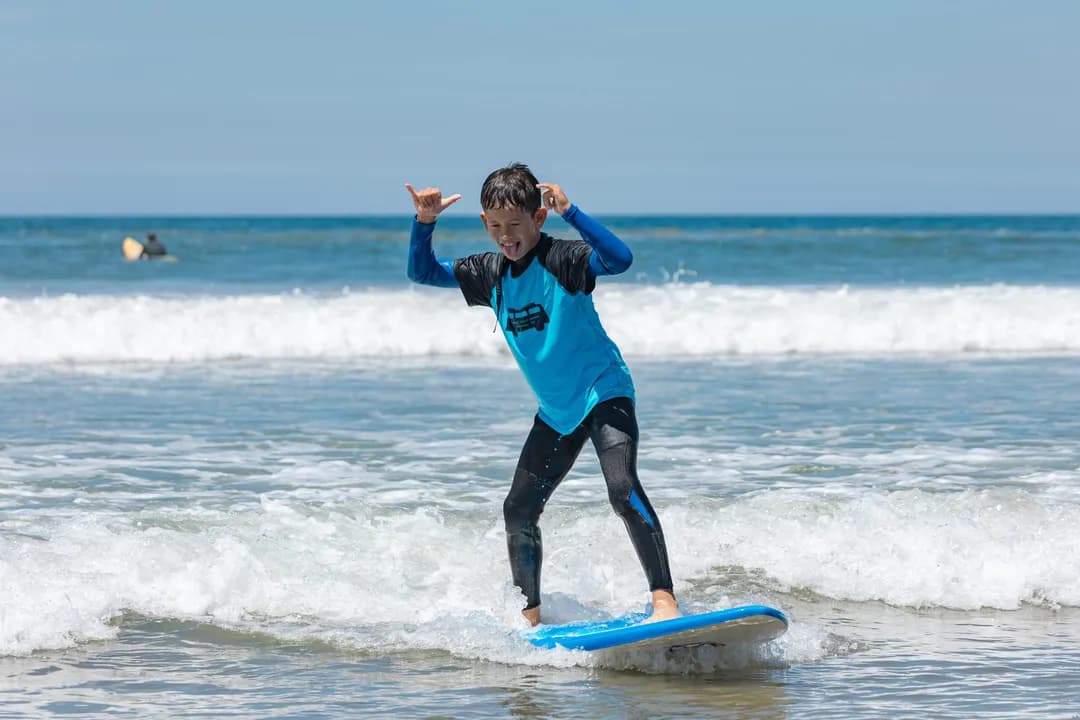
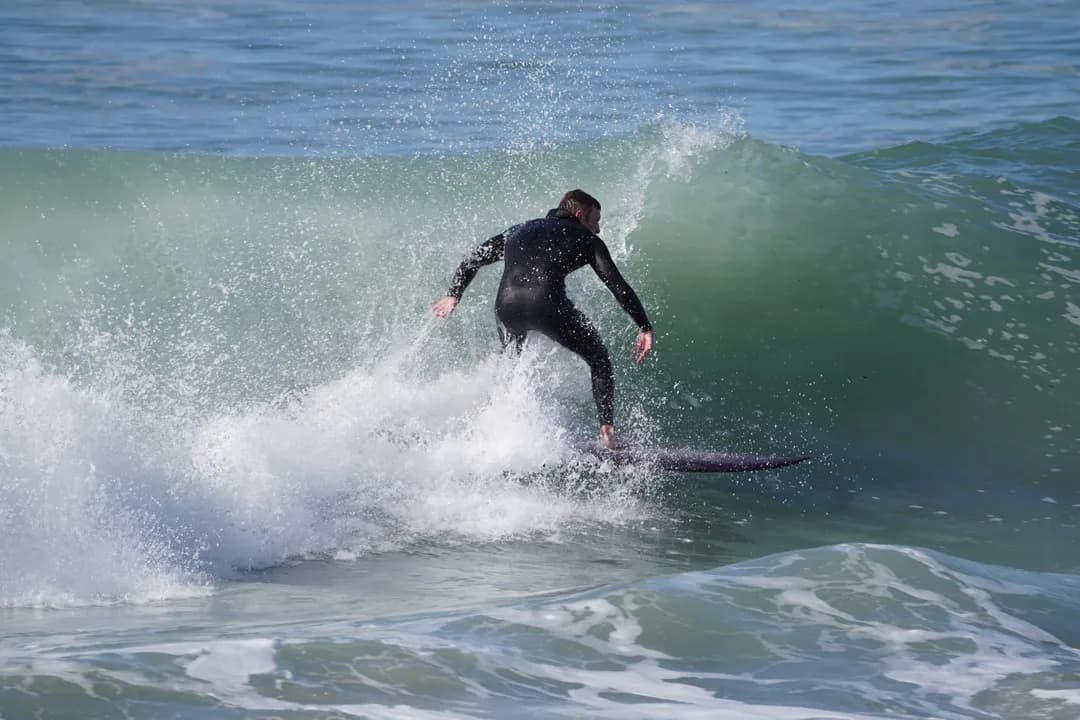
Lessons run any time there is daylight. The school's own advice is to go earlier, when the onshore wind is at its tamest, though it adds that conditions matter far less to a true beginner than to anyone further along.
 2h of Private Surf Lesson for Beginners in Santa MonicaA private two-hour beginner lesson at Ocean Park in Santa Monica. About thirty minutes on the sand, then the rest in the water. Board, wetsuit and leash are provided. One booking holds up to fifteen travelers.www.viator.com
The First Thirty Minutes Never Get Wet
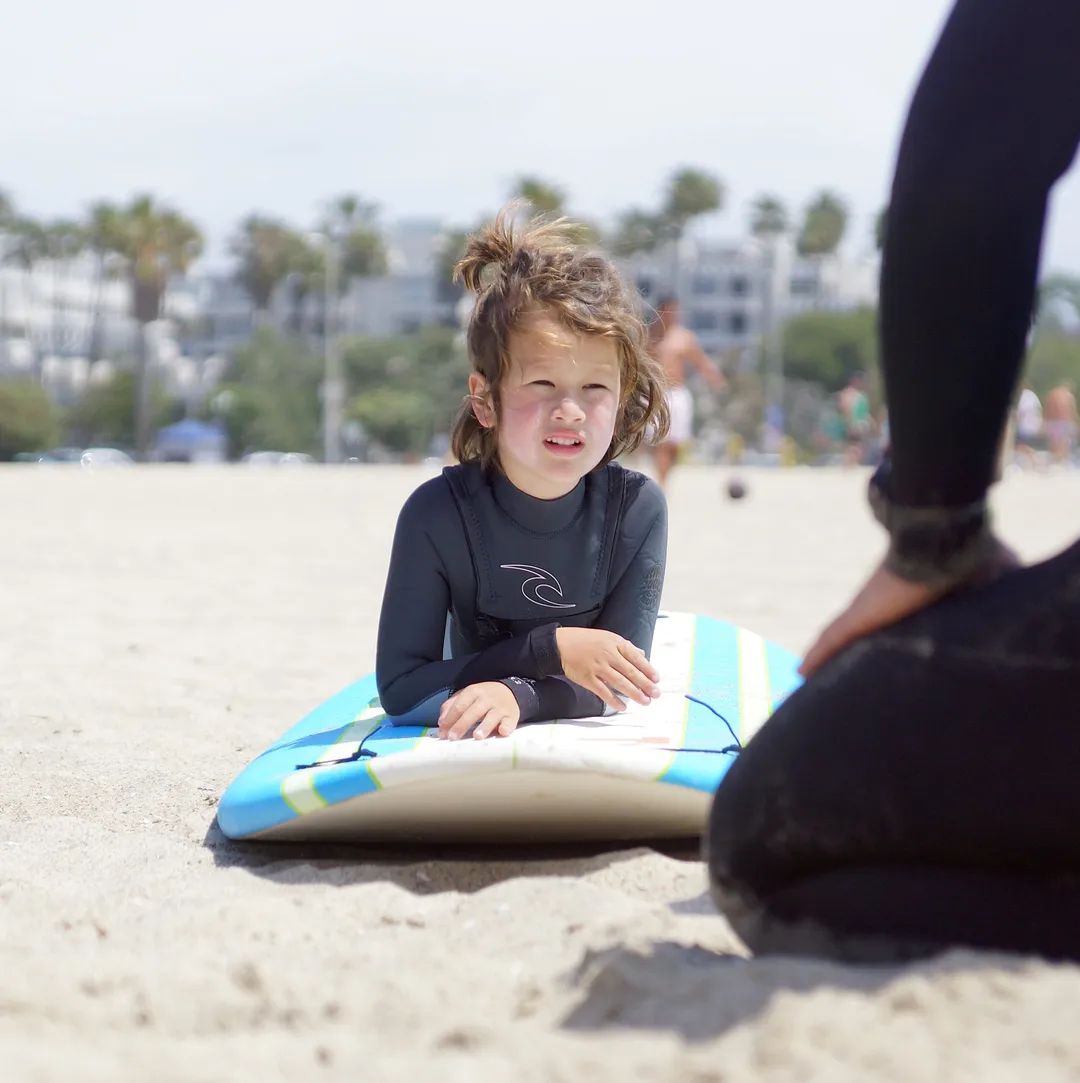
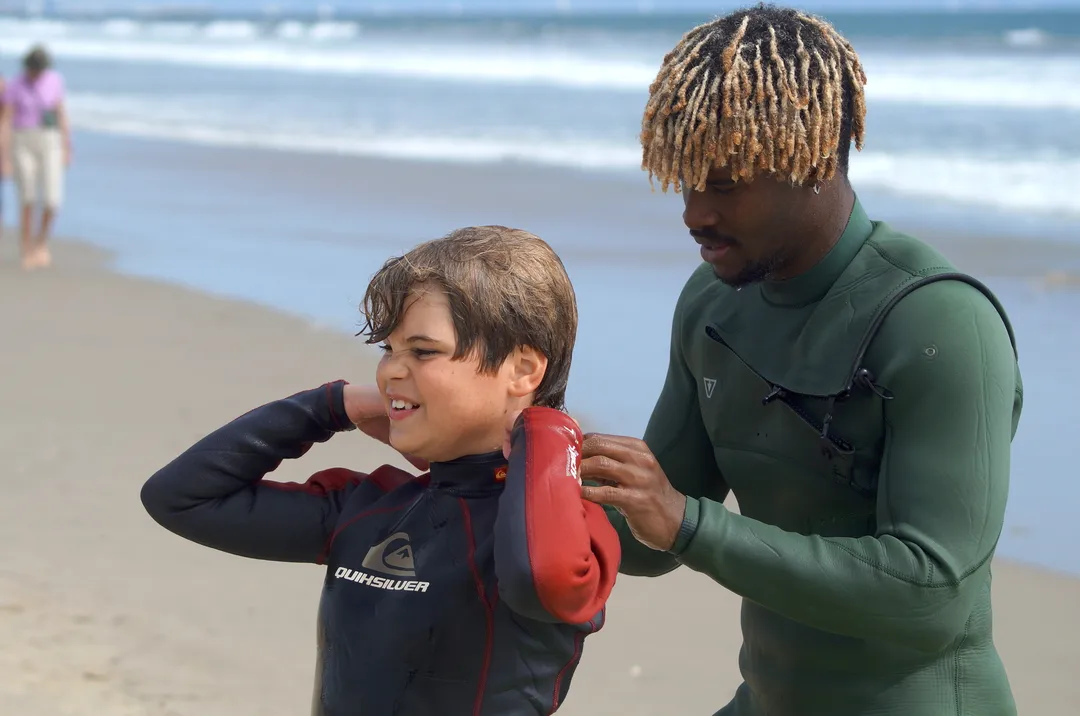
The beach half of the lesson follows a fixed sequence, and the school publishes it. Your instructor reads the day's conditions out loud first, including where you will sit and what kind of waves you will be going for. Then comes wave reading: which part of a wave to take, and how to be in the right place before it arrives. Then the paddle-out, taught as a five-step routine covering board position, weight distribution and the push-up through whitewater. Then the pop-up, drilled on sand until your feet stop having to think about it. Safety closes it out, including how to come off a board without hurting yourself.
Positioning is the part the school says beginners underestimate. Its phrasing is that surfing is a game of knowing where to be and getting there consistently.
It sounds like a lot of theory for a first morning. It is the half that decides whether the other half works.
Then Ninety Minutes of Actually Trying
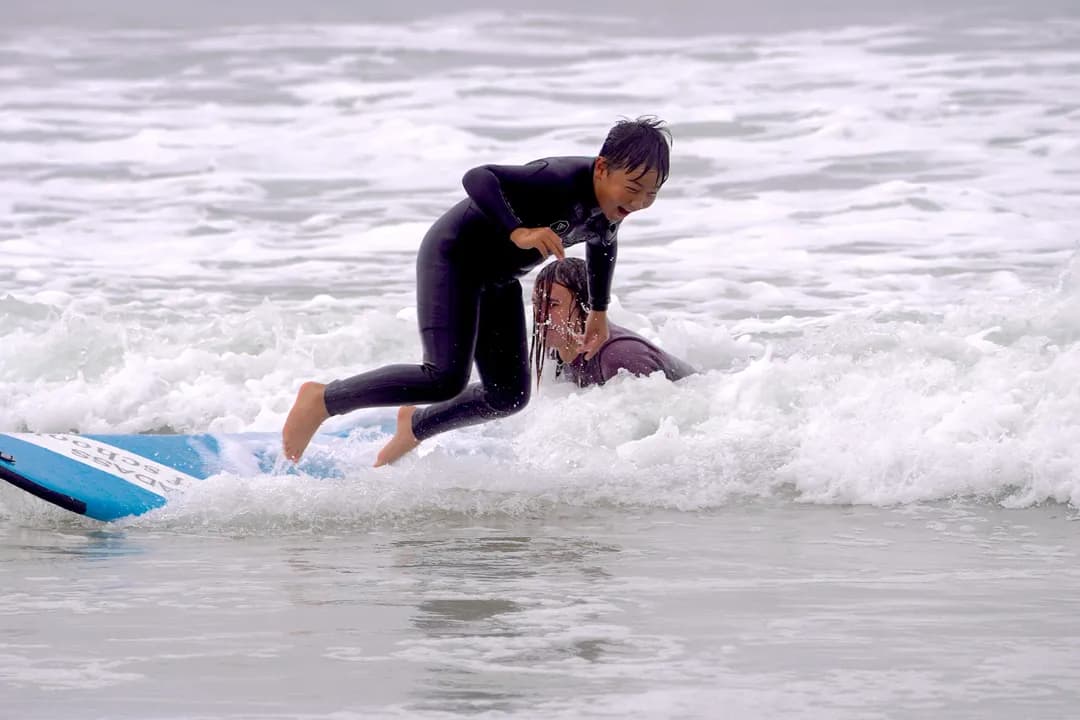
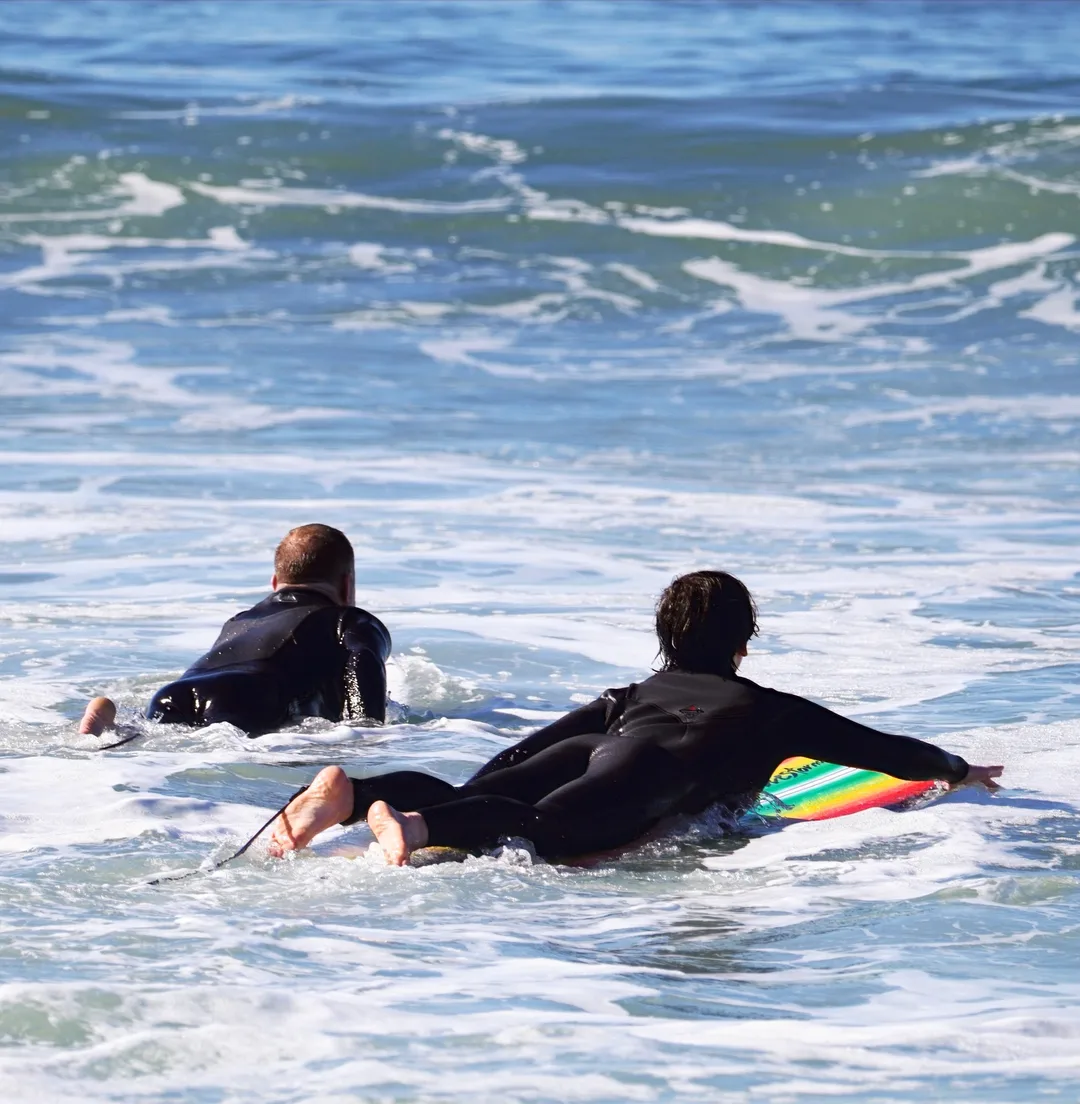
After the demo you paddle out and spend the rest of the session catching waves. Your instructor is usually in the water alongside you and usually without a board of their own, which is what makes it possible to push you into a wave and correct you between them.
The school guarantees that everyone stands up in a first lesson, and gives a free second lesson to anyone who does not.
Boards get matched to the person. The school shapes its own beginner boards in California and keeps more standard foam boards and hard-tops alongside them. Instruction is listed as available in English, Spanish, French and Portuguese.
What This Sandbar Does, and When
Ocean Park sits just south of the Santa Monica Pier, beside the beach cafes. The school is specific about the break: the stretch from Bay Street down to towers 26 and 28 is a sand bottom that favors west-southwest swell, northeast wind and a low incoming tide. It calls the beach beginner-friendly on both counts, the waves and the crowd.
The same crew teaches at other spots, in Venice near the breakwater and fishing pier, at El Porto in north Manhattan Beach, and on select days at a Malibu point. Which one you get depends on the day and on the permit rules they work under.
The exact address is sent by text and email when you book, so the confirmation is the thing to read before you drive over.
What Comes With It, and What You Bring
Every lesson comes with a board, a wetsuit and a leash. The school says suits are soaked, rinsed, sanitized and dehumidified after each use and kept out of direct sun, on the grounds that sunlight degrades neoprene. Spare towels and reef-safe zinc sunblock ride in the bus, and so does a portable pressurized shower for rinsing off afterwards.
Worth packing:
- a towel
- something tight to wear under the wetsuit, such as compression shorts or a skin-tight swimsuit
- sunscreen
- water for before and after
Booking is open to ages three through seventeen and eighteen through ninety, up to eight travelers in each band and fifteen on a single booking. Swimming is preferred and not required, and life jackets are on hand for anyone too young or too uneasy in the water. The listing also flags the activity as wheelchair accessible and open to service animals.
The school does not run a car park and suggests a rideshare if parking worries you. The city's beach lots along this stretch charge one flat price per entry, with no hourly rate and a cheaper short-term lot beside the main one; Santa Monica restructured its public parking prices in January 2026, so the posted sign at the gate is the figure to work from. On warm days and at weekends both lots fill early.
Aim to be there ten to fifteen minutes before your slot, earlier on a weekend or a bright day. A lesson that starts late still finishes on time, and arriving more than thirty minutes late without calling counts as a no-show that is not refunded. Cancelling at least twenty-four hours ahead returns the full fare.
After that it is two hours on a sand-bottom beach a few blocks south of the pier, and a blue VW bus with a shower in the back for when you come in.