
From a 1906 Shinto Shrine to Honolulu's Chinatown Markets
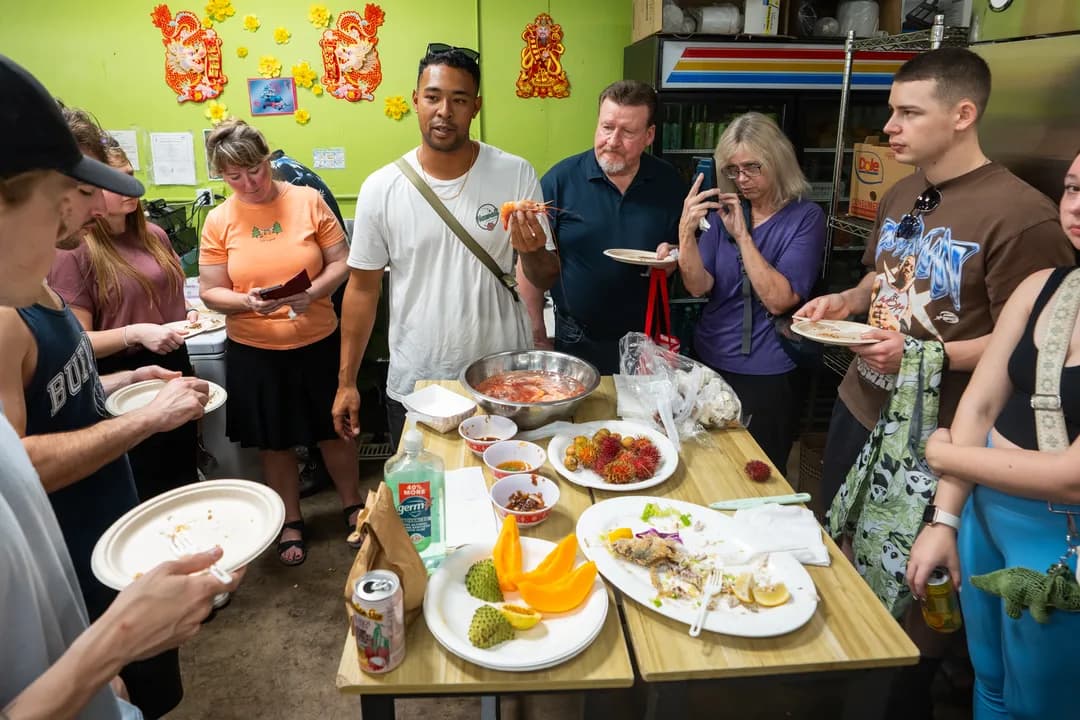
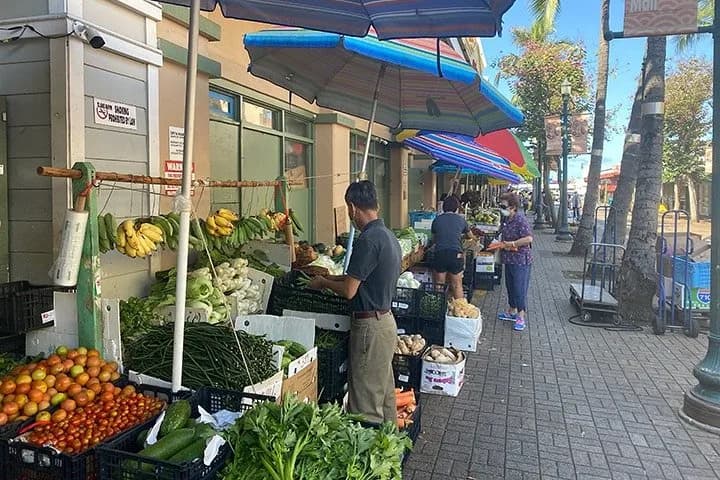
The whole route runs less than half a mile, and that is the point. Everything this walk wants to show you sits inside a few Chinatown blocks: a Shinto shrine that has served Honolulu since 1906, a market counter stacked with big-eye tuna, and fruit stalls where the rambutan still has leaves on it. Three hours, six to eight stops, thirteen to sixteen tastings.
Hawaii Free Tours starts this walk at Royal Kitchen on North Kukui Street and finishes in the same doorway three hours later. In between, the route barely moves. The booking page puts the whole walking distance at under half a mile, and the tasting count at thirteen to sixteen across six to eight stops. The operator's own site runs the count higher, fourteen to sixteen, so thirteen is the floor and not the expectation.
That density is the design. Ten separate tastings and visits are scheduled across six locations, and seven of them get fifteen minutes each. You stay in one part of Honolulu long enough to eat your way through it.
The first stop is not food at all. It is the Izumo Taishakyo Mission, the Shinto shrine two doors up at 215 North Kukui Street, beside Nuuanu Stream.
The mission has served Honolulu since 1906. It is a branch of the Izumo Taisha grand shrine in Shimane Prefecture, and by its own description it is one of Hawaii's major Japanese American landmarks. Shrine hours run eight to five.
Fifteen minutes there, then the eating starts.
 Honolulu: Off The Beaten Path Food TourHawaii Free Tours · 3 hours · 13 to 16 tastings · Hotel pickup on requestwww.viator.com
What Actually Lands on the Plate
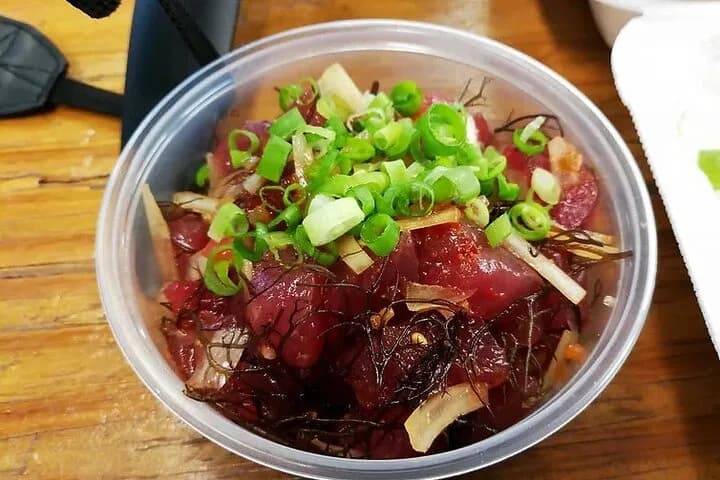
The list is long and specific, which is a good sign. Chutoro sashimi, cut from the fatty belly of a local big-eye tuna and served raw. Ama ebi, the Kauai deep-water prawns, handed over whole so you peel them yourself. Hawaiian ahi limu poke, cubed and seasoned. Japanese madako octopus in a Korean dressing.
Then the cooked half. Manapua, the steamed sweet buns with savory pork inside. Chicken adobo. Roast duck and pork belly with the skin left crisp. Honey barbecue charsiu.
Dessert runs Filipino and Vietnamese. Turon is banana, rolled and fried until the sugar goes dark. Beside it, a green pandan cake. Drinks are local juice, lilikoi or lychee or guava or pineapple, or bottled water.
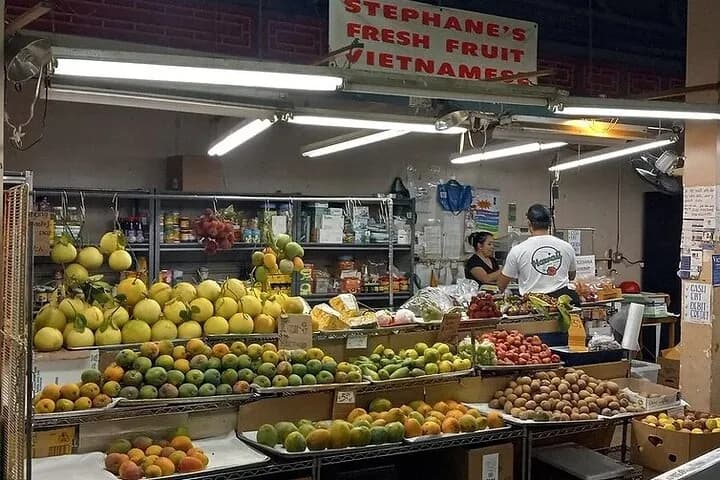
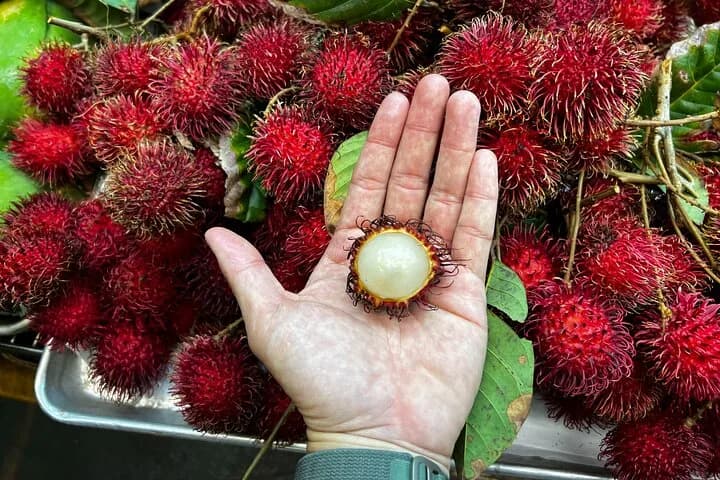
Fruit is its own category. The operator counts five or more tastings of locally grown fruit, and says outright that what appears depends on the season and on what looked good that morning. Rambutan, soursop, papaya, longan, lychee and dragon fruit all turn up in the operator's own photographs of that stall. Some of it you will not be able to name.
A Fish Counter, a Fruit Stall, and a Shrine Next Door
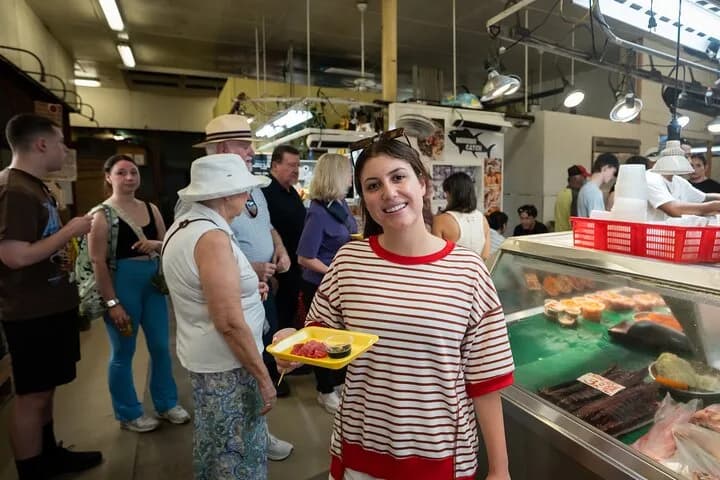
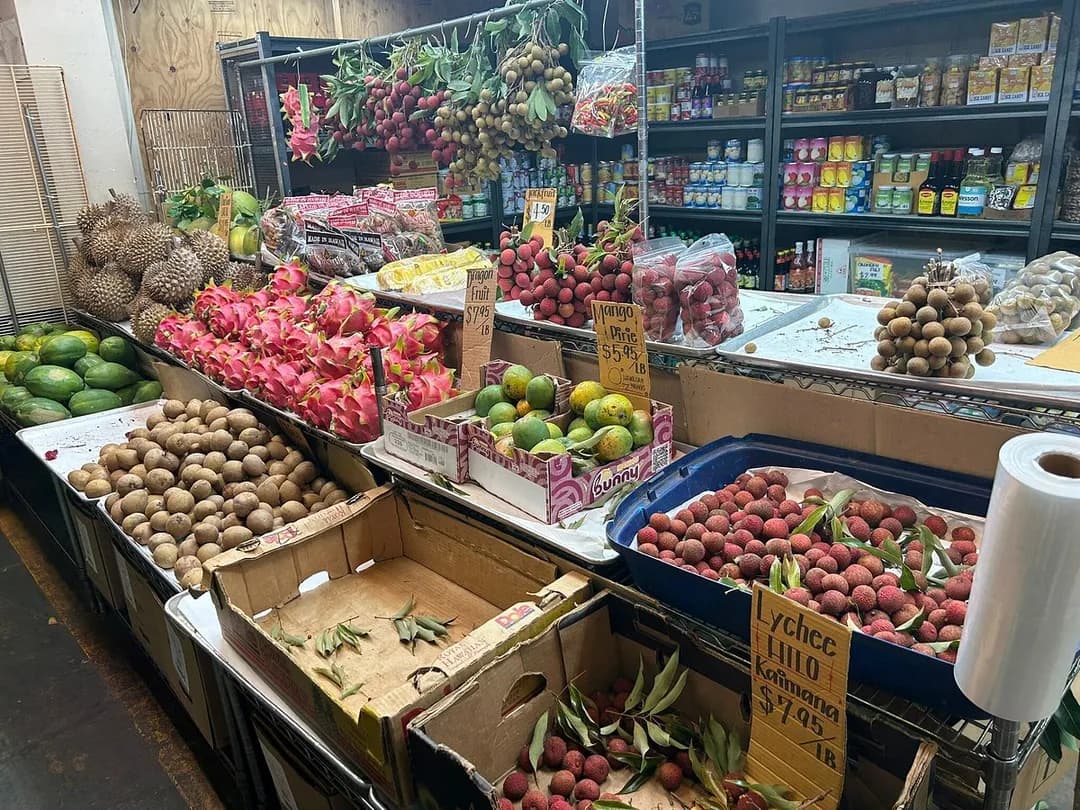
Two of the six stops are markets, and they are the reason the walk stays short. The seafood stop is a working fish market. Whole tuna on the cutting bench, trays of cut loin behind glass, and the sashimi handed to you on a foam tray a step from where it was sliced. The itinerary flags that the seafood depends on availability.
The fruit stop is a produce stall under fluorescent tubes. Crates of green mango and avocado on the floor, rambutan in open trays. Twenty minutes is allotted there, which ties it with the fish market for the longest stop on the route.
The rest is the neighbourhood itself. The operator's own copy points at Chinatown's architecture and historical landmarks between bites, and the walking route is short enough that you see the same block from three directions.
Who This Morning Suits
A few things are worth settling before you book, and the operator states all of them:
- You will be standing for most of the three hours. Seating is arranged where possible, but it is not the default. Guests rarely raise it as a problem. They describe a short, slow walk, and several single out the guides for matching the pace of older parents and slower walkers.
- Not recommended for travelers with poor cardiovascular health. Otherwise the operator rates it suitable for all fitness levels.
- No tasting on the route uses peanut. Gluten turns up in three of them, including the soy sauce the sashimi is dipped in.
- Vegetarian, vegan and gluten-free needs are accommodated where the operator can manage it, so flag them in the booking form. For a serious allergy the operator asks you to make contact before you book.
- A good share of the tastings arrive raw. The chutoro sashimi, the whole sweet shrimp, the ahi poke and the octopus all come uncooked. Most guests count that as the best part. One who rated the morning four stars out of five gave a single reason: too much raw fish for their taste.
- Do not eat first. Thirteen to sixteen tastings sounds like small bites, and guests describe small meals. The most repeated advice in the reviews is to arrive hungry.
- Gratuities are the only thing not included. Everything else on the tasting list, and the transport between stops, is in the price.
On numbers: one booking takes up to ten travelers, and the single fare band runs from age two to ninety-nine with a two-traveler minimum. A toddler books at the same rate as an adult, and a solo traveler cannot book this alone.
Two Ways to Start, and Where Pickup Stops
There are two ways to start, and you choose one when you book. Ask for hotel pickup, or make your own way to Royal Kitchen. Pickup adds nothing to the price and runs both directions. The operator collects from the lobby of every Waikiki and Honolulu hotel, plus Airbnb residences, between 9:00 and 9:30 in the morning, traffic depending, and returns you to the same door at the end.
If you are staying on the east side at Kailua or Kaneohe, or out west at Ko Olina, Aulani or the Four Seasons, there is no pickup. You meet the group at the first stop. That is the operator's own line, and it is the single most useful sentence on the booking page.
Two practical notes. Put your hotel name or Airbnb in the booking form; if you leave it blank you have to contact the operator at least twenty-four hours ahead. And the day before your tour, mid to late afternoon, they text you a fifteen-minute pickup window. Watch for it. Guests consistently describe the pickup as on time, the day-before message as clear, and the van as a twelve-seater with good air conditioning.
Cancellation is a full refund up to twenty-four hours before departure, which gives you a day either way. Tours run rain or shine, and Honolulu rain tends to be brief. If a serious storm does force the operator to call it off, the refund is the full amount.
The walking ends where it began, on North Kukui Street, some time around lunch. You will not want lunch. Guests say the guides hand out containers for whatever you cannot finish, so bring something to carry them in. Then go back to that fruit stall on your own and buy whatever you could not name.