Forest Hills Feels Like a Small Town in One Mile
Forest Hills Gardens went up from 1909 as America's first planned garden suburb: curving streets, Tudor fronts, a brick station square. This loop leaves the E and F at 71st Avenue, walks the Gardens, and comes back along Austin Street.
The Walk, Mapped
Start Where the Bricks Begin
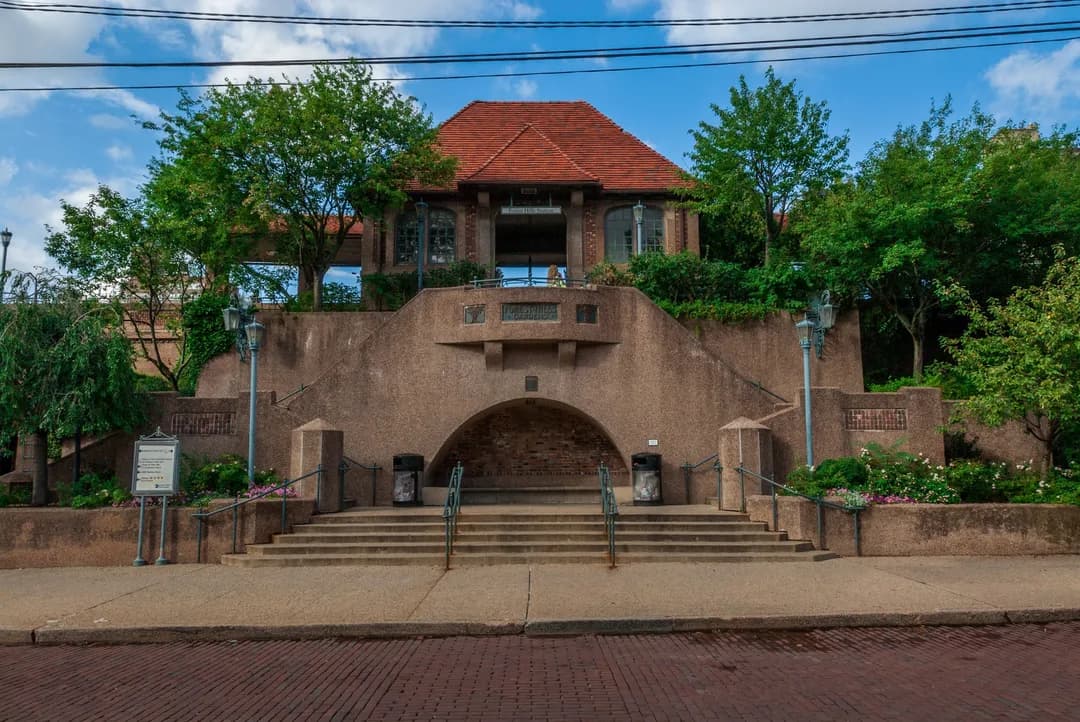
The E and F stop at Forest Hills–71st Avenue, and 71st Avenue runs south under the Long Island Rail Road to Station Square. The square is the neighborhood's front porch, with a brick roadway, a clock tower, and arches framing every way out. Grosvenor Atterbury and Frederick Law Olmsted Jr. designed the community from 1909, and the architectural historian Robert A.M. Stern called it one of the finest public spaces in America. Stand in the middle and pick a direction.
Streets That Do Not Look Like Queens
Margaret Olivia Sage's foundation bought the land in 1909 and asked for a garden suburb rather than another grid: Tudor and Georgian houses in masonry and concrete, red tile or slate above, and streets that bend so through-traffic cannot run straight through. Atterbury built many of the houses from precast concrete panels. The roads, sidewalks and greens belong to the Gardens Corporation, so this is a walk through a lived-in private neighborhood, not a park: keep to the pavement, skip the lawns, porches and driveways, and leave the greens to members and their guests.


A Slice Under the Station
Forest Hills Pizzeria holds 9 Station Square, on the brick plaza where the walk starts. The kitchen runs pizzas, house-made pastas, crisp salads, and hearty sandwiches, with fresh-brewed coffee, espresso, and beer and wine to go. It is open daily from 7 AM to 10:30 PM, with orders available for pickup and online, so eat on the square before you head in.


Austin Street in Two Blocks
Austin Street is the neighborhood's shopping street, and its kitchens sit close together. Wonder at 71-14 is a takeout food hall, one order covering several restaurants, which solves a group that cannot agree. SoBol at 71-48 stacks acai and cacao bowls with fruit and granola. Forest Hills Station House at 106-11 71st Avenue pours at the corner, Homemade Taqueria at 72-36 does birria tacos and tortas, and Oh K-Dog at 71-59 turns out Korean rice hot dogs. All five sit within three blocks of the station, so pick by appetite and keep walking.


Where Burns Street Meets the Tennis Club
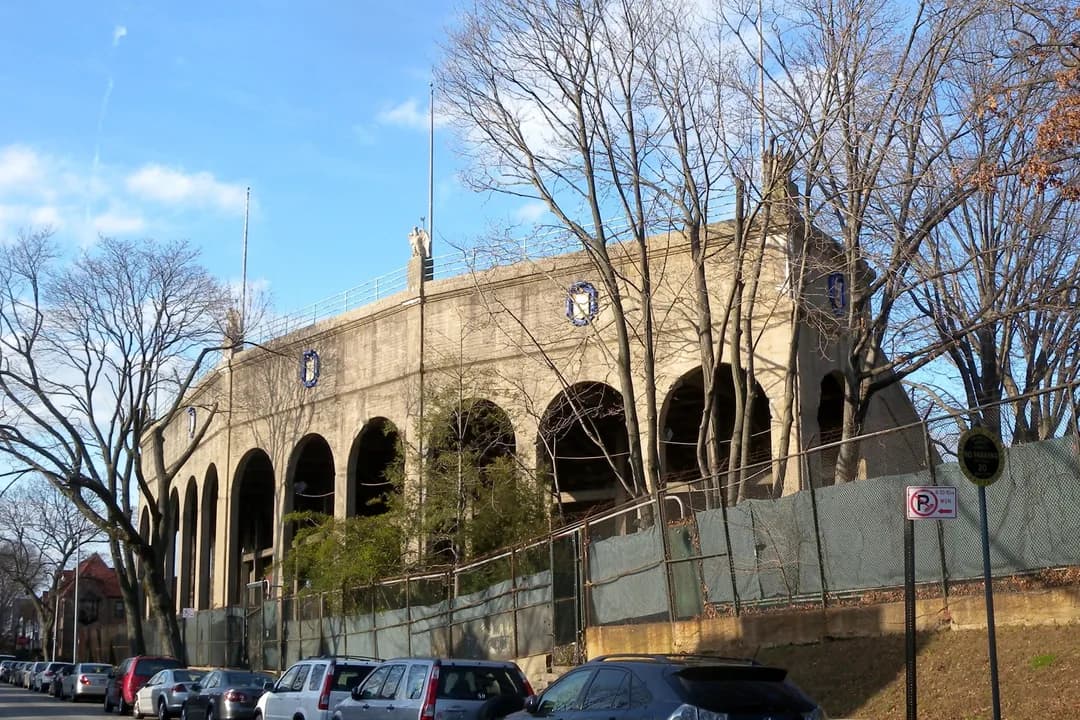
West of the square, Burns Street runs along the north side of the West Side Tennis Club, a private members' club that moved here in 1913 and built the Tudor clubhouse still standing at One Tennis Place. The club raised America's first tennis stadium in 1923 and hosted the U.S. National Championships, later the U.S. Open, from 1915 until 1977. The Beatles played two nights here in August 1964, and after a 2013 renovation the stadium went back to booking concerts. The courts, the pool and the clubhouse are for members, so the clubhouse and the stadium wall are what you see from the street outside; a ticket decides the rest.

How the Loop Fits Together
The full circuit runs station, square, Gardens streets, stadium and Austin Street, about 0.9 mile, and that is roughly 20 minutes of steady walking with no stops. Add photo stops and the same walk takes 45 to 60 minutes, an estimate that leaves out a meal or a stadium show. Walking it needs no ticket, and the sidewalks do the navigation. Check the stadium calendar before heading west, and the hours of whichever kitchen you want.