

Deadman's Bar to Moose, With Somebody Else at the Oars
A van carries the group ten miles upriver, then the Snake River brings everyone back down to the same parking lot. Nobody is handed a paddle.
The Snake River leaves Jackson Lake and runs south through a valley the glaciers flattened. Between Deadman's Bar and Moose it splits into braided side channels, stacks cottonwood logs against the gravel bars, and keeps the Teton Range square in the windshield for the whole ten miles.
A raft on that stretch is not an activity you perform. The guide rows and the current does the rest. The operator calls its own stretch class I to II and says plainly that this is no whitewater rafting trip, and that you should stay dry, feet included. A 2025 traveller confirmed it, down to never getting their shoes wet. The Park Service bans motors on the Snake River, so a pair of oars is the only thing moving anything downstream.
Seven companies appear under Float Trips on the park's own list of businesses authorized to run guided activities here, and this is one of them. Park records put its arrangement in the concession contract column, which is the category the park uses when a commercial use authorization is not enough.

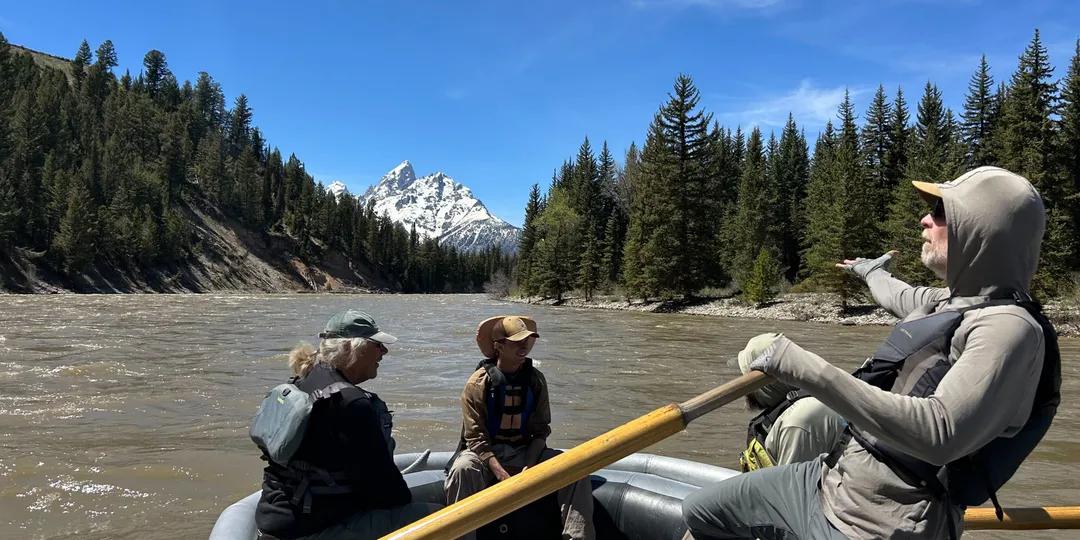
Departures leave from the designated float trip parking area in Moose, Wyoming, a short walk from Grand Teton National Park headquarters. The season runs mid-May to the end of September and the calendar goes dark for the winter; the next one on the booking system opens 15 May.
 Scenic Float Trip on the Snake River in Grand Teton National ParkTen miles of the Snake River entirely inside Grand Teton National Park. Van shuttle to the put-in at Deadman's Bar and a Coast Guard approved life jacket are included, up to twelve guests to a raft, about two and a half hours door to door.www.viator.com
The Van Goes Up, the River Comes Down

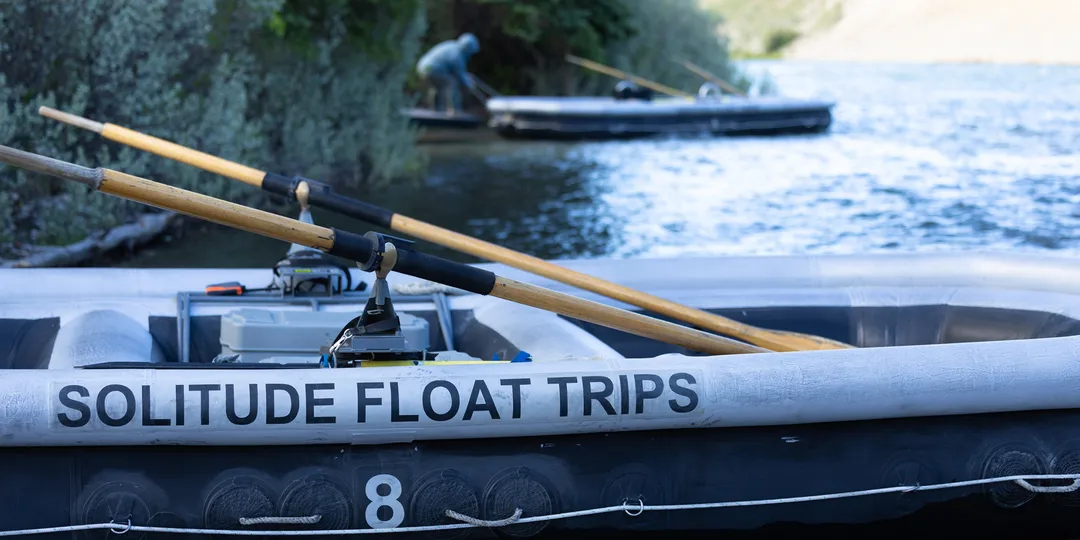
You park once. A fifteen-passenger van collects the group at the Moose lot and drives ten miles north to Deadman's Bar, which sits just below Snake River Overlook. The operator's own notes on the river call that the view Ansel Adams popularized. The ride takes fifteen to twenty minutes.
From the put-in the river carries you back down to Moose, and you walk up the bank to the car you left that morning. That is why there is no second shuttle at the end, and why the operator will not collect anyone from a hotel or meet anyone at Deadman's Bar.
On the water the operator puts the float at one hour forty-five to two hours, depending on the season and the flows. Door to door it quotes two and a half to three hours, and the booking listing sells a fixed two and a half. Plan around three. Once the raft is on the water there are no stops and no restroom breaks, so the one at the meeting point is the one that counts.
The park's own float guide lists this exact run, Deadmans Bar to Moose Landing, at ten miles, and files it under Advanced. Its words: the most challenging stretch of river in the park, many accidents occur here, with complex braiding that can obscure the main channel and strong currents that sweep boaters into side channels blocked by logjams. That page is written for people putting in their own boat. What it describes is the reason the oars belong to somebody who does this for a living.
Who Turns Up on the Bank
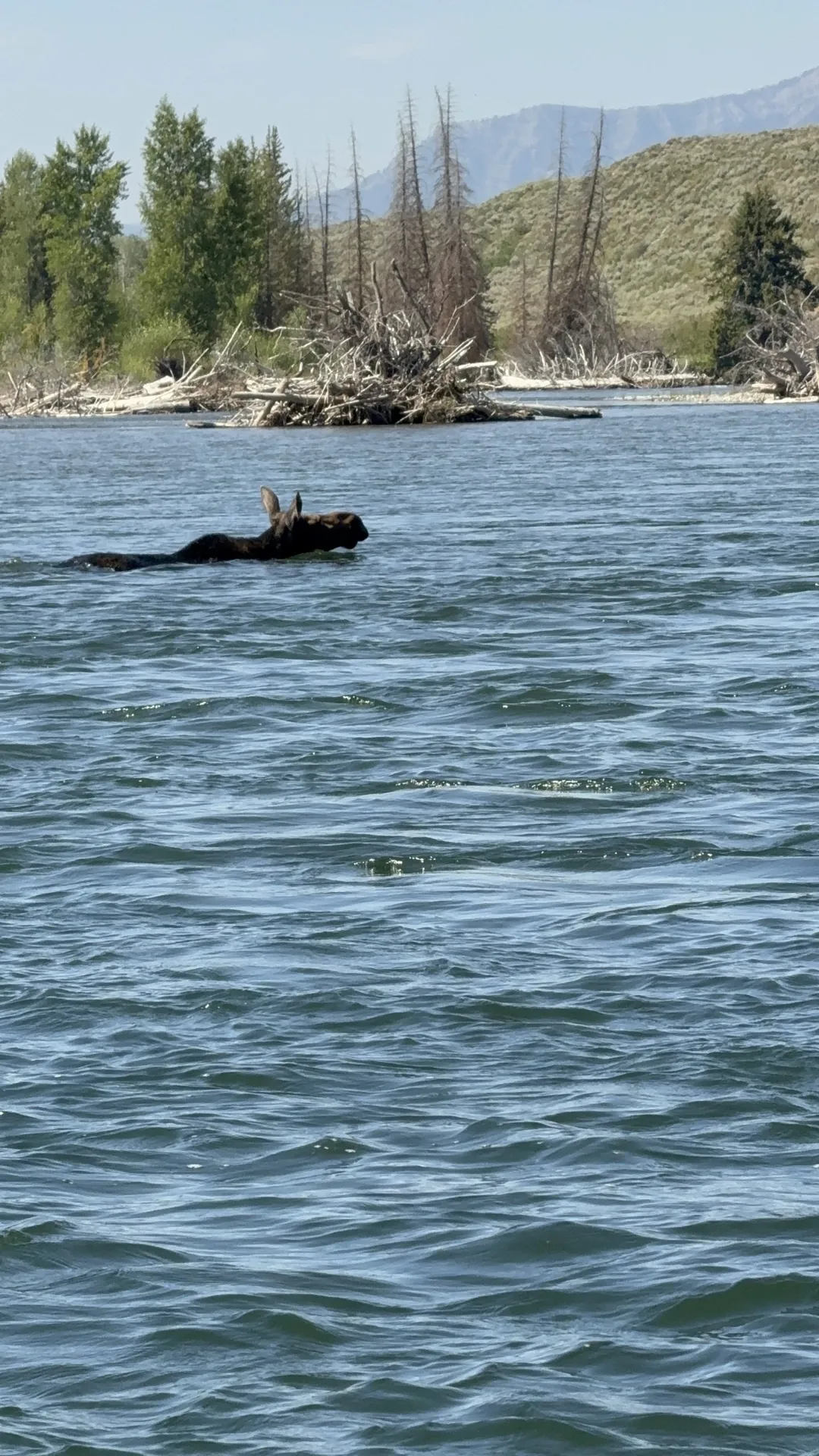
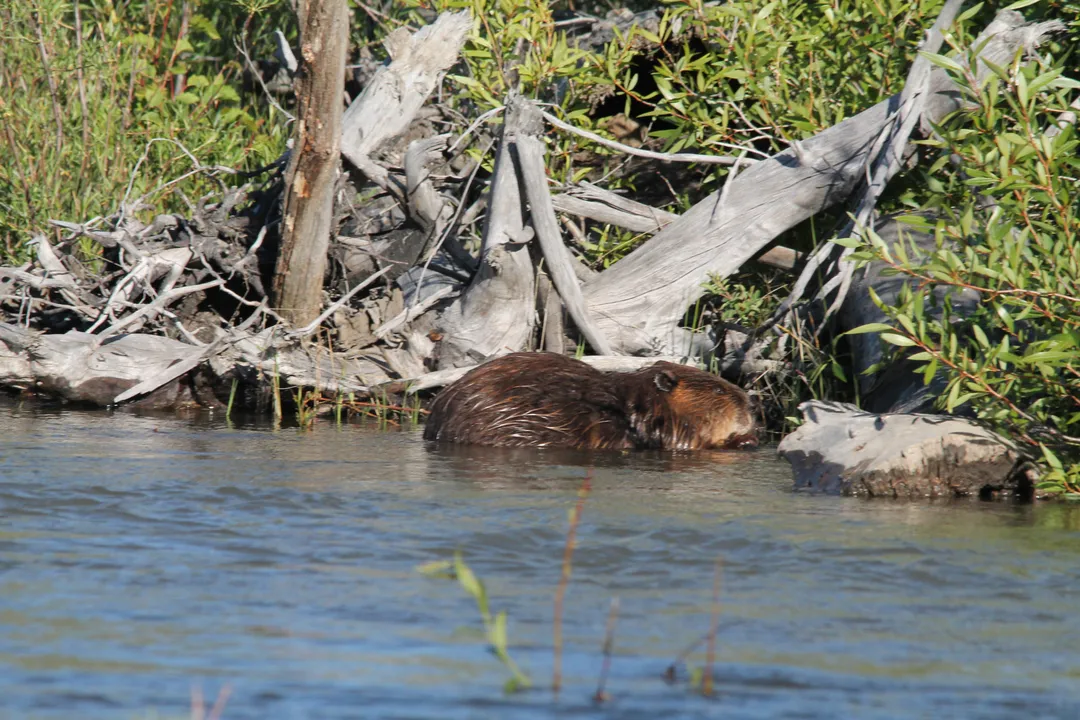
The operator's list runs to moose, bald eagles, osprey and other birdlife, beaver, elk, river otters, grizzly or black bear, deer and fish. It also says the thing an honest outfitter says: wildlife are wild and may not make a scheduled appearance.
The ten most recent traveller reviews of this trip, posted in August and September 2025, log something narrower. Bald eagles and osprey on a nine thirty departure at the end of August. Beaver, merganser ducks and bald eagles on another. Moose, elk and eagles on a third. One rider saw nothing but ducks and birds, and wrote that the website and the ads had left them expecting the animals to be much more prevalent; they would go again, with different expectations. Another missed the moose and counted the trip a good one anyway. None of the ten mentions a bear.
Conventional wisdom puts the animals out at dawn and dusk. The operator reports that its early afternoon trips have proven just as reliable, and tells people to pick a departure that fits the rest of their day, since no slot on the schedule promises anything.
Bring binoculars. The raft does not pull over, so whatever is standing on the gravel goes past at the speed of the current, and the cameras come out fast.
The Steps Between the Van and the Raft
The booking listing marks this suitable for all physical fitness levels. The operator's own FAQ is more specific, and the specifics are the part worth reading.
You step up into a fifteen-passenger van. At the put-in you climb three steps onto a trailer the crew uses as a dock, walk about sixteen feet along it, then step down eighteen to twenty inches into the raft. You sit on the tube. There is no back support and nothing overhead for shade. Getting out means five yards or so up an uneven bank to pavement, then roughly a hundred yards to the car. When the water is high, which the operator puts at May through July, the landing has little room to manoeuvre.
Children have to be five years old and weigh at least fifty pounds, a floor the booking listing does not mention anywhere. Adults need to fit an adult Coast Guard approved vest, which the operator describes as generally fifty to two hundred and sixty pounds with a chest no more than fifty-six inches. It also asks every passenger to be able to self-rescue if it ever came to that, and notes that advanced medical care could be two hours away from the raft.
Guiding is in English only. Soft soles, nothing cleated or hard that could damage the raft. And the park rule, not the operator's: pets are not allowed on the Snake River or aboard watercraft on it.
What the Ticket Price Leaves Out
The operator says its price is final, one rate for adults and one for children five to fifteen, no added taxes or fees. That holds for the trip. The park gate is a separate transaction and the booking listing says nothing about it at all.
Grand Teton charges USD 35 for a private vehicle, good for seven days, or USD 20 for each visitor sixteen and older arriving on foot or by bicycle. Children fifteen and under are charged neither that nor the surcharge below. The park has gone cashless.
Every non-US resident aged sixteen and older owes a USD 100 nonresident fee on top of the standard entrance fee, and the Park Service states this reaches people entering with a concessioner tour group. The one thing that waives it is an America the Beautiful Non-Resident Annual Pass, which runs USD 250 and carries the nonresident fees for three more adults in the holder's party. The park's own USD 70 annual pass is sold to US citizens and residents only.
Where you meet that gate is a second question, and the park states both halves of it. An entrance fee is required to access Grand Teton. There are also no fees to access the highway through the park, and coming from Moose Junction you pass the Craig Thomas Discovery and Visitor Center before you reach the Moose entrance station. The float lot sits on the near side of that booth and the shuttle runs north on the free highway. If you want it settled before you drive, the permits desk inside that visitor center sells passes, and it is across the street from where the vans park.
On tipping the two sources disagree. The listing puts the local norm for guided services at fifteen to twenty percent. The operator's FAQ says a tip is appreciated but not expected, and that cash or Venmo is easiest for the guide. The guides are the ones receiving it, so take the operator at its word.
Water refills are available for a bottle you bring; the bottle is not provided. Meals are not either. The operator says its contract with the Park Service does not let it serve food on the river, though snacks you carry up are fine. On this booking, cancel at least twenty-four hours before the departure time for a full refund; inside that window nothing comes back.
High season runs six departures a day, at seven, nine thirty, ten thirty, one thirty, two thirty and five. Early and late in the season the calendar thins to two. The operator notes that times move with river conditions and daylight, and online booking closes two hours before a departure. One booking opens a shared departure only from two people up; a single traveller can join one that is already running.
📍 The meeting point is the designated float trip parking area in Moose, Wyoming, across the street from the Craig Thomas Discovery and Visitor Center. It is a parking lot, so it has no street address of its own; the operator offers 1 Teton Park Road, Moose, Wyoming 83012 as the general area. Typing the company name into a navigation app sends you to its office, which is not where the guides meet anybody.
Be out of the car and ready five to ten minutes before your departure time; the operator says there is no reason to arrive earlier than that. It asks you to phone if you are running late. Trips go in the rain, ponchos and all, and the operator reckons a shower in this valley usually passes in about fifteen minutes.
Take the nine thirty if you want the river finished by noon and the afternoon still ahead of you. Take the five o'clock if you want the shadows long across the range and the light going gold while somebody else rows.