Music / Event
Lucille Kept The Door In Corona
Before a Manhattan tribute turns Armstrong into repertoire, start at the Queens house where the legend kept a refrigerator, a den, and a neighborhood name.
 Drew Palmer
Lucille Wilson Armstrong gets the first sentence because the house exists as public memory largely because she refused to let it become a private relic.
That is the whole angle. Not the trumpet first. Not the nickname first. Not the clean museum sentence about genius. First: Lucille, the fourth wife, the person who kept living on 107th Street after Louis died in 1971, and the person whose will sent the home and its contents toward the City of New York after her own death in 1983.
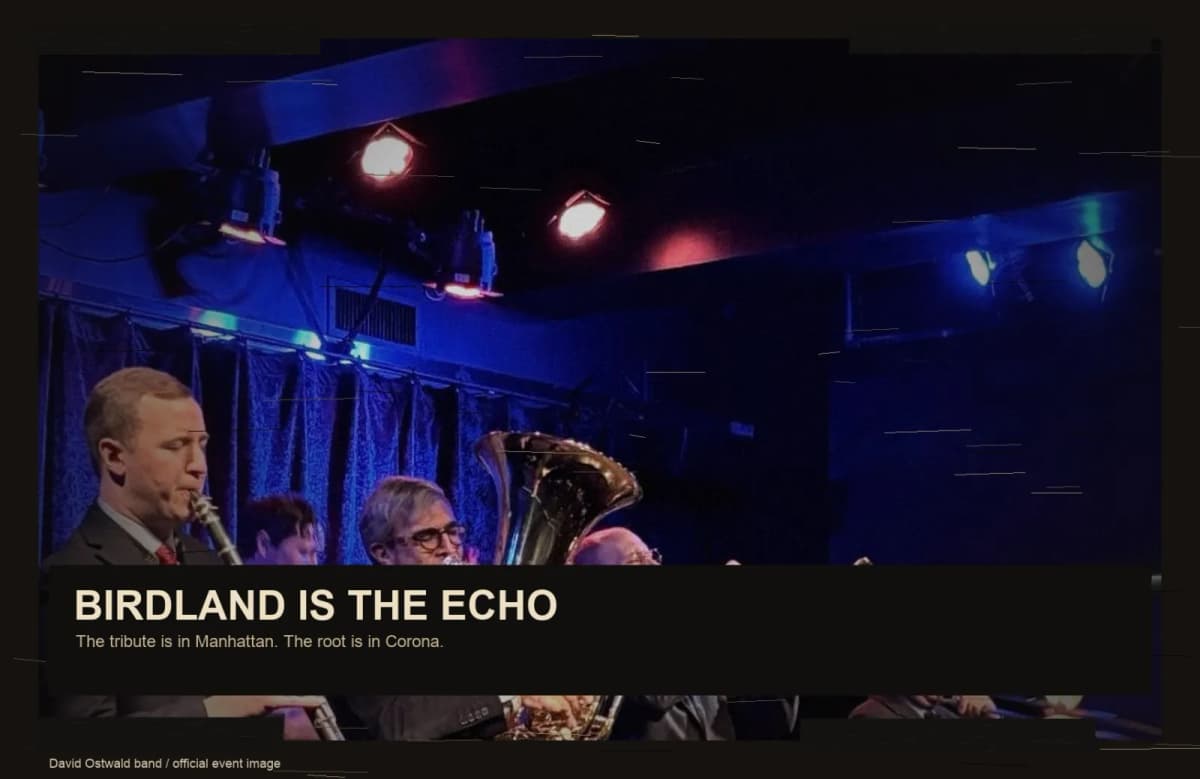
The Birdland tribute on July 22 is a good excuse to listen again. David Ostwald's Louis Armstrong Eternity Band is playing the Birdland Theater at 5:30 PM. Fine. Go hear the echo if that is your night.
But the stronger move is to spend one afternoon in Corona before you buy the tribute back in Manhattan. The show can give you repertoire. The house gives you scale.
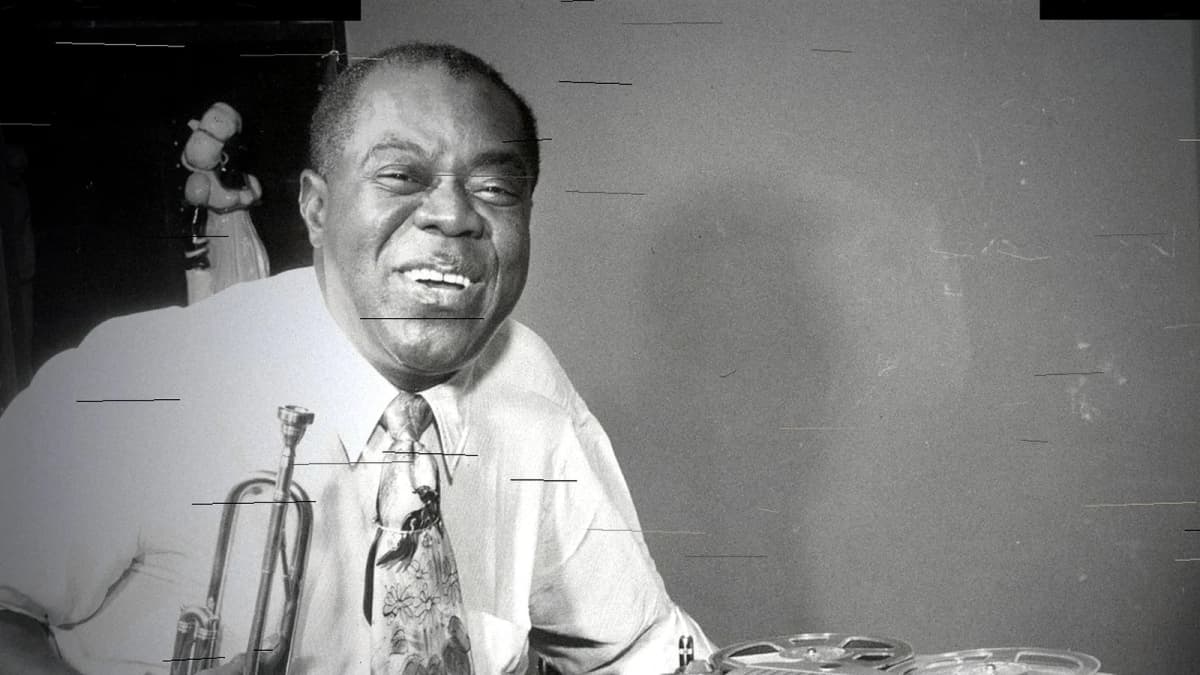
Louis and Lucille bought 34-56 107th Street in 1943. For nearly half his life, Armstrong lived in this ordinary Queens house, the kind of place that makes a famous person harder to turn into a bronze object. The rooms do not flatter him into distance. They pull him down to human size: kitchen, den, bedroom, bathroom, garden, tape machine, stairs.
That is why the house works. A museum can make a giant larger. This one makes him reachable.
The pressure point is simple: the Armstrong home is intimate because it is not trying to look important. The kitchen was turquoise. The den had a reel-to-reel machine. Even the bathroom had speakers, because music did not stop at the polite edge of a room.
This is the part of Armstrong that tribute bands usually cannot carry onstage. Not because they are doing anything wrong. A band plays sound. A house keeps habits.
In Corona, you get the habits.
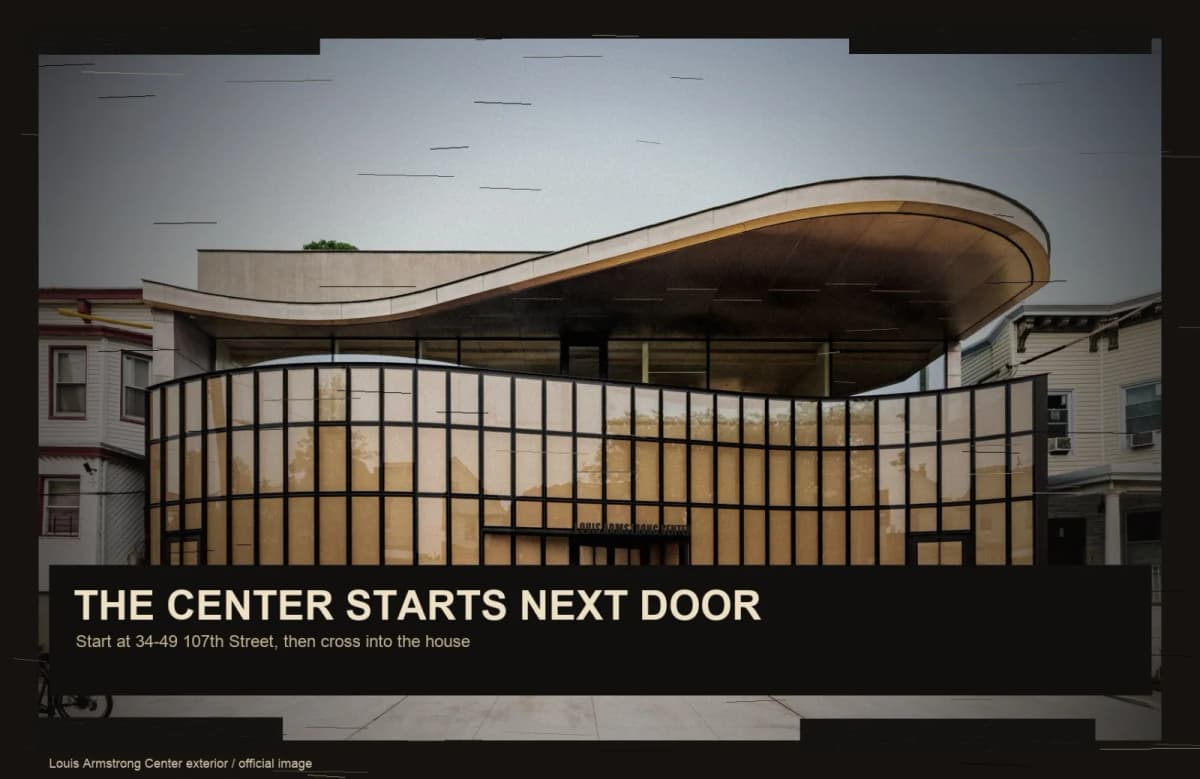
The visit now starts across the street at the Louis Armstrong Center, 34-49 107th Street. That matters. You do not walk straight into the shrine. You begin in a building that admits how much work it takes to keep a person legible after death.
The Center opened in 2023 and holds the 60,000-piece archive of Louis and Lucille Armstrong. It also has a 75-seat venue for performances, lectures, films, and education. That is not a side note. It changes the rhythm of the visit. The story is not trapped in 1971. It keeps being performed, argued with, catalogued, and played in the same neighborhood that kept Armstrong from floating away.
The architecture knows not to shout over the block. It sits among modest houses and tries to stay at neighborhood scale. Good. A building about Armstrong can be exuberant. It still has to behave on 107th Street.
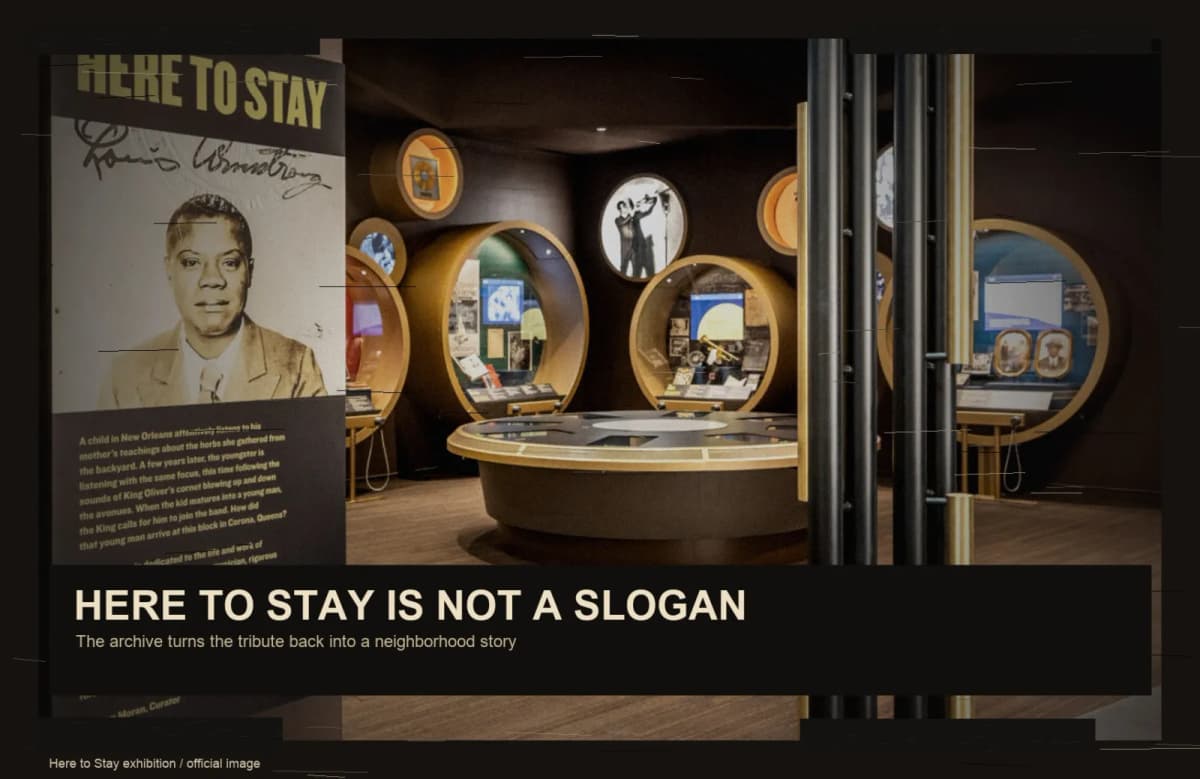
Inside, the permanent exhibition is called Here to Stay. That title could have been lazy if the museum had not earned it. Here, it has a job. Armstrong was not only an innovator with a horn and a voice. He was also a rigorous self-archivist: recordings, tapes, scrapbooks, photographs, letters, band parts, mouthpieces, trophies, decorated boxes. The collection numbers are almost comic in their abundance: 1,600 recordings, 650 home-recorded reel-to-reel tapes, 86 scrapbooks, 5,000 photographs, 270 sets of band parts, 12 linear feet of papers, five trumpets, 14 mouthpieces, and 120 awards and plaques.
This is not a man who merely passed through history. This is a man who saved the receipts.
There is a temptation to make Armstrong small in the wrong way: the friendly smile, the handkerchief, the easy soundtrack for brunch. Corona makes that version look thin.
The house tells you he wanted ordinary things without giving up extraordinary work. He toured the world, broke open jazz soloing, sang with a swing feel that made language loosen, and still came back to a middle-class block in Queens. He could have lived in a grander room. He chose this one.
Lucille is the reason that choice did not vanish into family memory. She worked to make the home a National and New York Historic Landmark. She wanted the house and archives to become a museum honoring Louis. After her death, Queens College shepherded the process; the historic house opened for public tours in 2003. The museum is now a three-building campus: the historic home, the Armstrong Center, and Selma's Place.
That is a long arc for a small house.
It also changes how you hear a tribute. The Manhattan set is not wrong. Birdland is a room built for music lovers who know where to clap and when to lean in. But if you start there, Armstrong can become a playlist of competence: hot trumpet, warm vocal, another polished bow toward a legend everybody already agrees to admire.
Start in Corona and the music has more friction. The horn belongs to a person who labeled, saved, decorated, wrote, recorded, and came home. The smile belongs to a neighbor. The archive belongs to Lucille too.
People are the destination. Sometimes the person is gone and the destination becomes a kitchen.
There is also a practical reason to do this in the right order. The museum is not an all-day drop-in. It is open Thursday through Saturday, 11 AM to 4 PM. Historic house tours run on the hour, with the first tour at 11 AM and the last house tour at 3 PM. Tour capacity is 10 visitors. The Center's last entry is 3 PM. The historic house tour requires two steep stair climbs and about 45 minutes standing; visitors who cannot take the stairs are offered a virtual tour instead.
House tour plus exhibition tickets are currently listed at 20 dollars for adults, with lower rates for seniors, students, military and veterans, visitors with disabilities, Corona residents, and children. Exhibition-only adult tickets are listed at 10 dollars. The important local detail: Corona and Elmhurst residents in ZIP codes 11368, 11369, and 11370 get a five-dollar rate with ID.
That price line is not trivia. It tells you who the museum still owes. A house like this cannot only be for jazz pilgrims arriving with a tidy cultural plan. It has to remain porous to the block.
So build the week this way.
If you are aiming at the July 22 Birdland Theater set, put Corona first. Take the 7 train to 103 St-Corona Plaza, walk north and east through the neighborhood, start at the Center, then cross into the house. Let the exhibition give you Armstrong as archivist and community builder. Let the stairs remind you that history has knees. Let the kitchen do the work a monument cannot.
Then, if you still want the tribute, go to Birdland on Wednesday.
The show is at 315 West 44th Street. The date is July 22, 2026. The listed time is 5:30 PM. That makes the pairing clean: Queens first, Manhattan after. Root before echo.
I would not sell this as a pilgrimage. Pilgrimages are too impressed with themselves. Call it a correction. Before the city asks you to applaud Armstrong again, let Corona introduce him as a man who came home, kept tapes, sat in rooms, trusted Lucille, and stayed regular enough for a small house to hold him.
Headlines draw borders. Handshakes erase them. In Queens, the handshake still starts at the front door.
Louis Armstrong House Museum, 34-56 107th St, Corona, NY 11368(Louis Armstrong Center 34-49 107th St, Corona, NY 11368)