Cocoa Beach Faces East; the Sunset Paddle Goes West
Cocoa Beach is a barrier island, so the ocean everyone photographs faces the sunrise. The sunset is on the back side, out in the Banana River, where 336 acres of mangrove islands sit immediately west of town. This is a two-hour guided paddle into that maze, leaving about two hours before whatever time the sun happens to set that day.
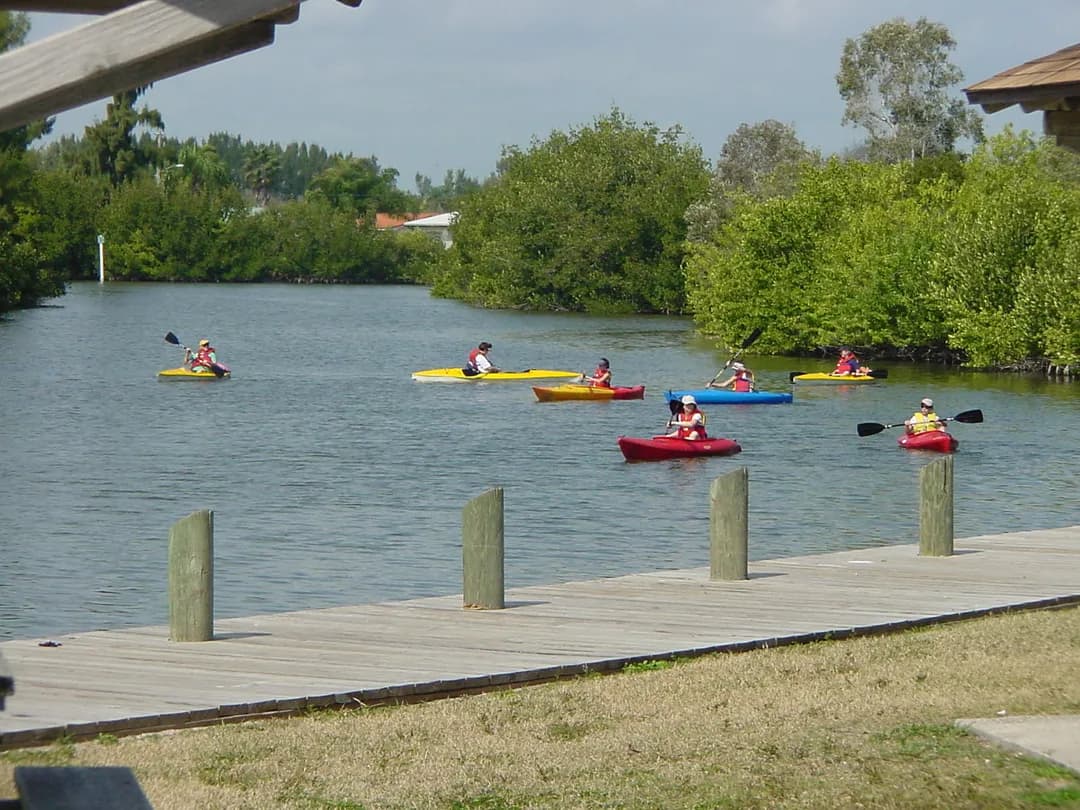
Drive over the causeway into Cocoa Beach and the water you notice is the Atlantic, flat and wide and facing east. The other water is behind the town. Brevard County's management plan for the Thousand Islands Conservation Area puts it plainly: the islands sit in the Banana River immediately west of the developed area of the city, an extensive area of mangrove islands and shallow open water vegetated by seagrass. The protected parcel runs 336 acres, roughly 66 of them dry ground and 270 wetland and submerged bottom.
Shallow is the operative word. The plan records almost all of these waters at less than three feet deep, and most of them under two. That is part of why a first-time paddler can do this. It is also why manatees and dolphins work these channels, and why the seagrass underneath you is the thing the county is actually protecting.
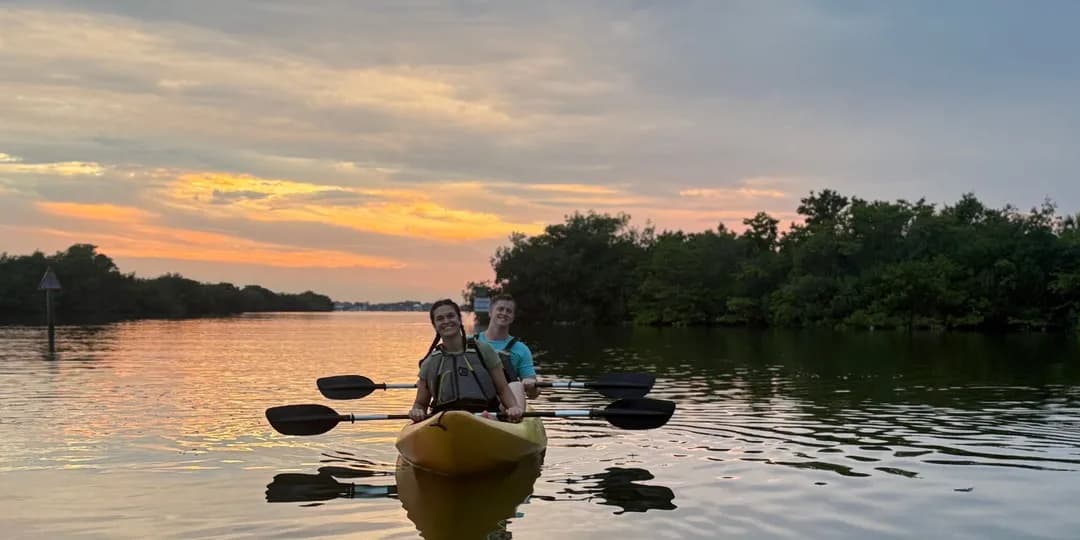
There is no fixed departure time to memorize. The operator runs this tour seven days a week, year-round, and sets the launch at approximately two hours before the current sunset, which means the slot slides across the calendar. The exact time appears on the booking page and again in your confirmation email. Plan to be there fifteen minutes before it.
The address needs a sentence of its own. The booking listing prints a launch address of 4700 Tom Warriner Blvd, tells you to keep left as you enter the parking lot, and carries a line dated 10/27/25 saying all tours launch from that location. The operator's own tour page prints no address at all, only that the Cocoa Beach meeting point is confirmed by email after booking. Its contact page lists a different address again, 599 Ramp Road. Go by the confirmation email. The county plan names both Ramp Road and the Cocoa Beach golf course as the public canoe and kayak launches for this water, so each address lands you at a real launch. Not necessarily yours.
 Sunset Tour: Mangrove, Dolphins, Manatee in Cocoa BeachTwo hours on the water with a guide the whole way, kayak, paddle and life jacket, free parking at the launch, and complimentary photos of your trip sent afterwards.www.viator.com
The Maze Was an Accident
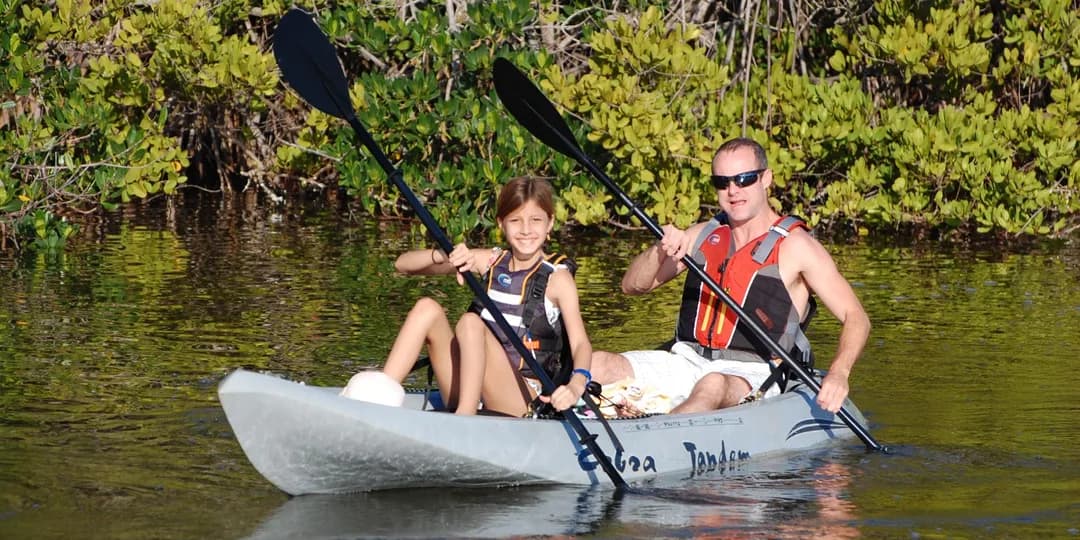
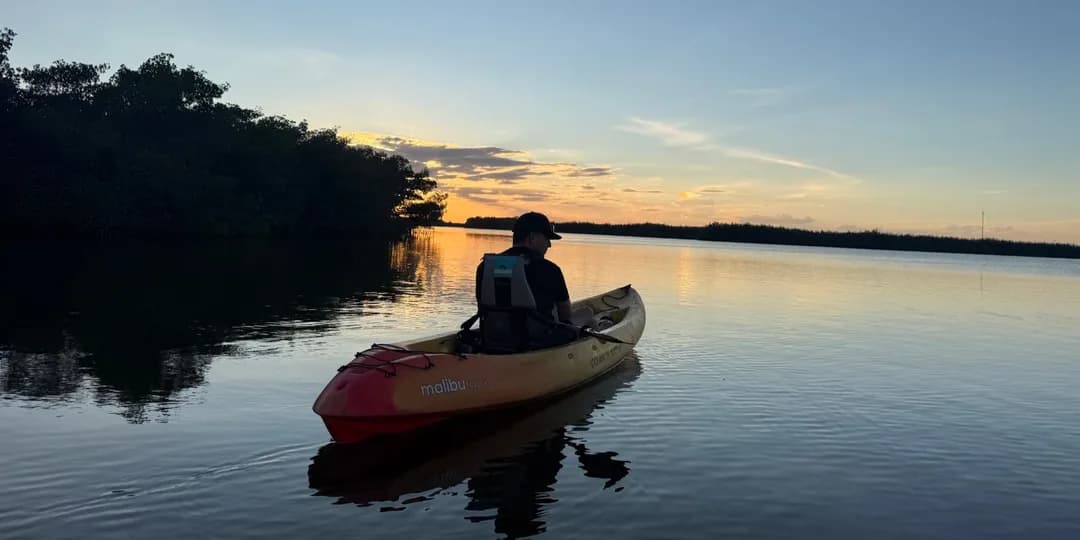
These islands are not untouched wilderness, and the county says so in writing. In the 1950s, 1960s and 1970s most of the wetlands here were ditched for mosquito control. The dry ground you paddle past, about 68 acres of it, is described in the management plan as primarily dredge spoil and maritime hammock.
Then the interesting part. The plan cites a 2001 survey finding that the change in elevations and soil conditions created by mosquito control activities and dredging gave a variety of species somewhere to move in, and that diversity went up on the spoil areas. A century of machinery cut a labyrinth, and the mangroves took it over.
Underneath that is something older. The plan calls the site geologically unique along the Banana River, because the islands are arranged in a pattern indicative of a relict flood tidal delta, a shape most of Florida's east coast has lost to development. Archaeologists have also documented Native American shell middens out here. Brevard County's Environmentally Endangered Lands program manages the area under an agreement with the City of Cocoa Beach.
What Shows Up, and What Nobody Promises
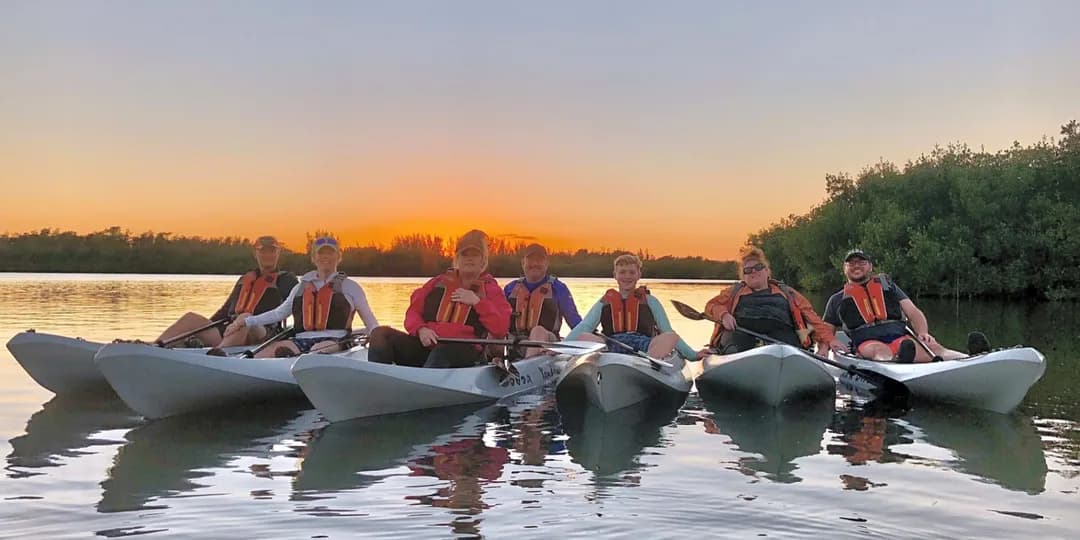
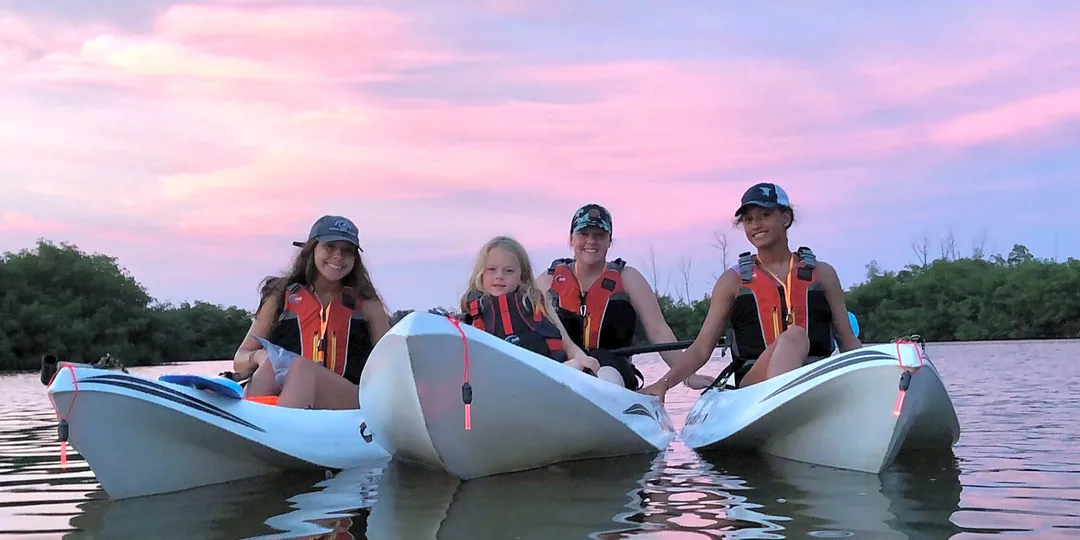
Dolphins and manatees are in the tour name, and the operator is careful about them. Sightings cannot be guaranteed, it says, and its guides are trained at finding them. Treat that as the honest version.
The odds are decent because of where you are. The St. Johns River Water Management District counts 685 fish species, 370 bird species, 2,100 plant species and 2,200 animal species in the Indian River Lagoon system. The county plan lists the manatee, eagle, wood stork, common snook and diamondback terrapin among the protected species using this particular water. Birds come back to roost in the mangroves as the light drops, which is the part you can count on.
One thing to get straight before you book. The listing copy mentions bioluminescence, because the operator also runs glow tours. This booking is the sunset paddle, and bioluminescence is a separate trip. The operator's own FAQ adds that the glow is brightest in the warmer months and that from roughly November through April it is generally not visible.
Who Fits in Which Boat
Kayak assignment is where the two sources disagree, so here is both.
On age, the operator is the stricter one and the operator is who meets you at the ramp. Its pages say ages 3 and up are permitted, that paddlers 12 and under should ride in a tandem or triple with an adult, and that single kayaks start at 13. The booking form will sell you a ticket from age 2. Use the operator's floor.
On weight, the operator publishes a 280 pound limit for a single and 425 pounds for a tandem or a triple, and describes the three-seater as suited to a family of three with a child under 75 pounds. The booking listing agrees on 280 for a single, then splits the tandem differently: 170 pounds front seat, 220 pounds rear. Those two tandem figures are not the same number. Plan against the seat limits, which are the tighter pair.
Boat type is assigned on the day. Both sources say selection depends on availability and that single kayaks are limited, so a request is not a guarantee. Group size has the same split: one booking takes up to 11 travellers, the listing text says the operator typically caps a tour at 11 guests, and the operator's own FAQ says groups are typically 12 to 16 and often fewer. There is no minimum, and the tour does not get cancelled for being undersubscribed.
Weather, Kit, and the Phone Call
The weather process is specific enough to be useful. The operator watches forecast, radar, lightning and wind right up to launch time, and may hold the group for thirty minutes or call the tour off. Your guide contacts you about 45 minutes before the scheduled launch with an update. If the operator cancels, it reschedules you or refunds in full.
What comes with the boat: paddles, safety gear, drinking water and insect repellent, per the operator's own list for this tour. Life jackets are provided and the operator says wearing one is mandatory for the whole trip. Photos are included here, taken by your guide and delivered as a downloadable album within 24 to 36 hours.
What you bring: clothes you do not mind getting damp, a hat, sunglasses, extra water. Closed-toe water shoes help and are not required. Put sunscreen on before you arrive, which the listing asks for directly. Gratuities sit outside the price on both sources.
On access, read the listing's tick boxes with suspicion. It marks the tour wheelchair accessible, stroller friendly and suitable for infants on laps, while the operator's own minimum age is 3, which the infant box contradicts. The operator publishes nothing at all about wheelchair access. What it does publish is that the paddling is leisurely, gentle through calm water and mangrove tunnels, and designed for comfort and enjoyment. The listing separately flags the tour as not recommended for travellers with poor cardiovascular health.
Cancelling is a clean line. Full refund if you cancel at least 24 hours before departure, nothing back inside that window.
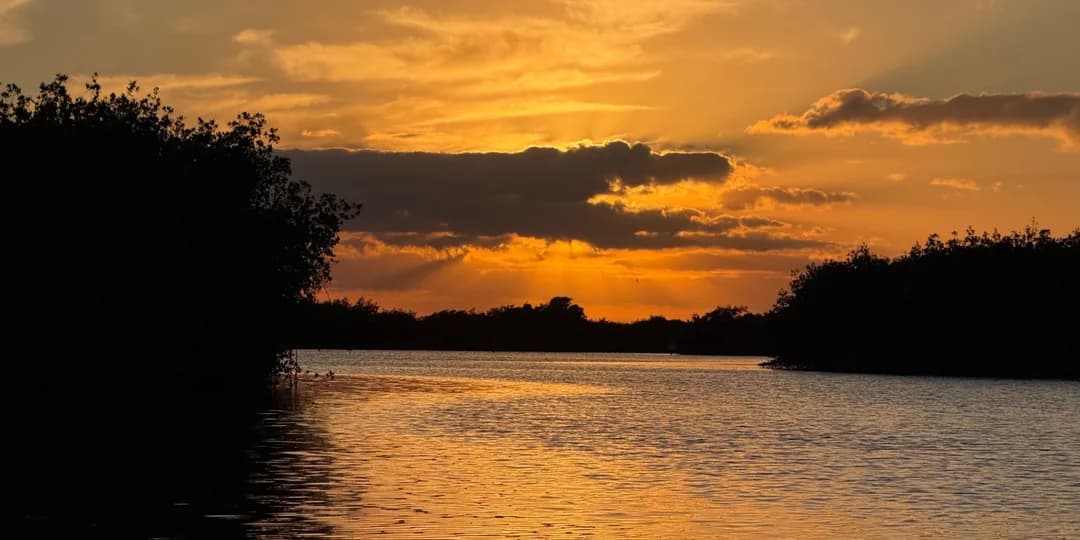
The route loops. You launch, work through the narrow channels while the light goes orange, and the last stretch runs back across open water with the sun settling over the lagoon behind the islands. Two hours later you are at your car with salt on your arms, and the photos land in your inbox a day or two after that.