Culture / Venue
At Nino Mier Tribeca, Start With the Pocket
A free weekday gallery stop where Amelia Cross turns tailoring into evidence, Evan Jorgensen turns photographs into objects, and twenty careful minutes can teach your eye more than a rushed museum floor.
 Kiera Lane
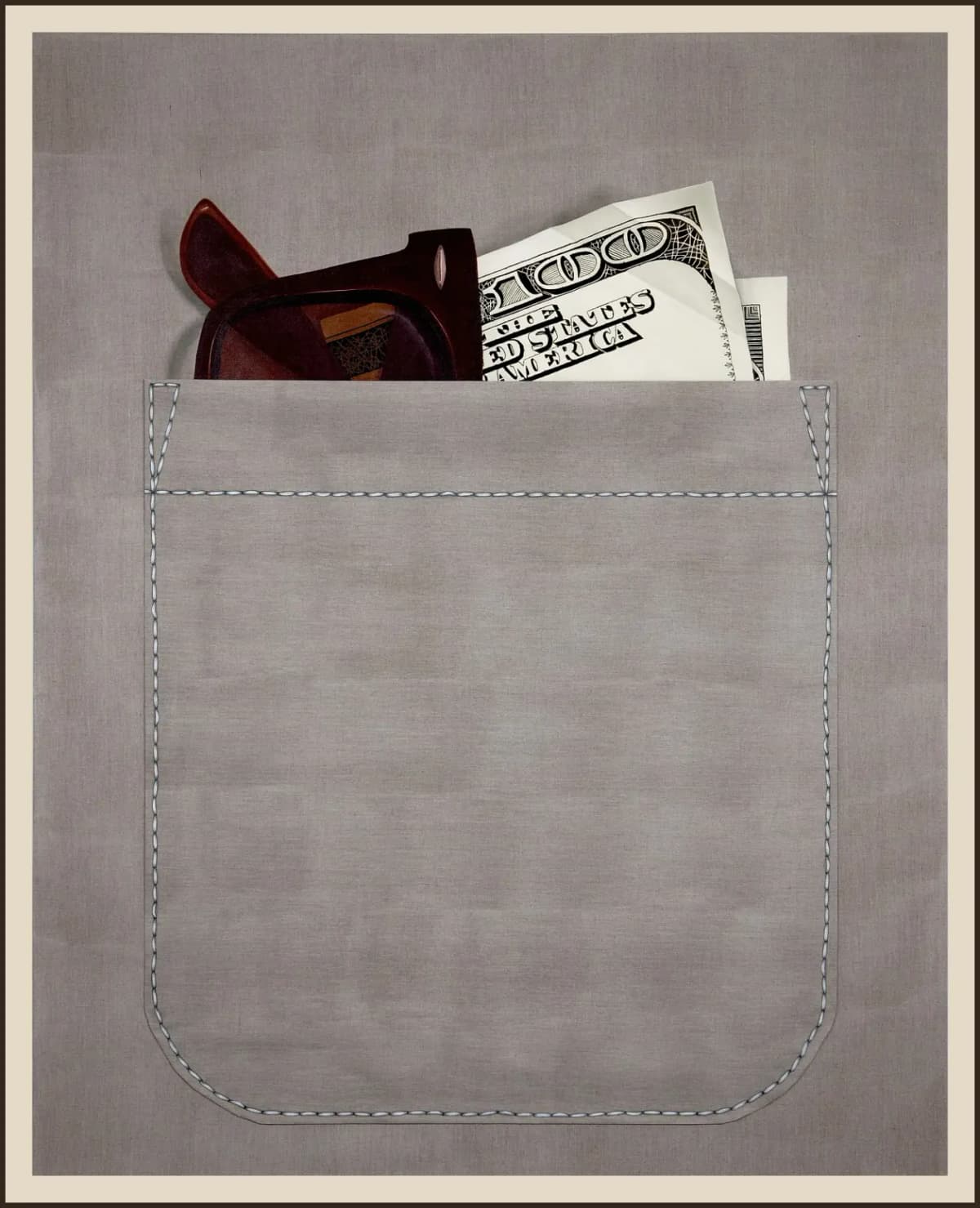
The first thing to do is get close enough to read the pocket.
Not because the gallery requires expertise. It does not. Not because you are supposed to decode a wall text before you are allowed to look. You are allowed to look first. That is the better order.
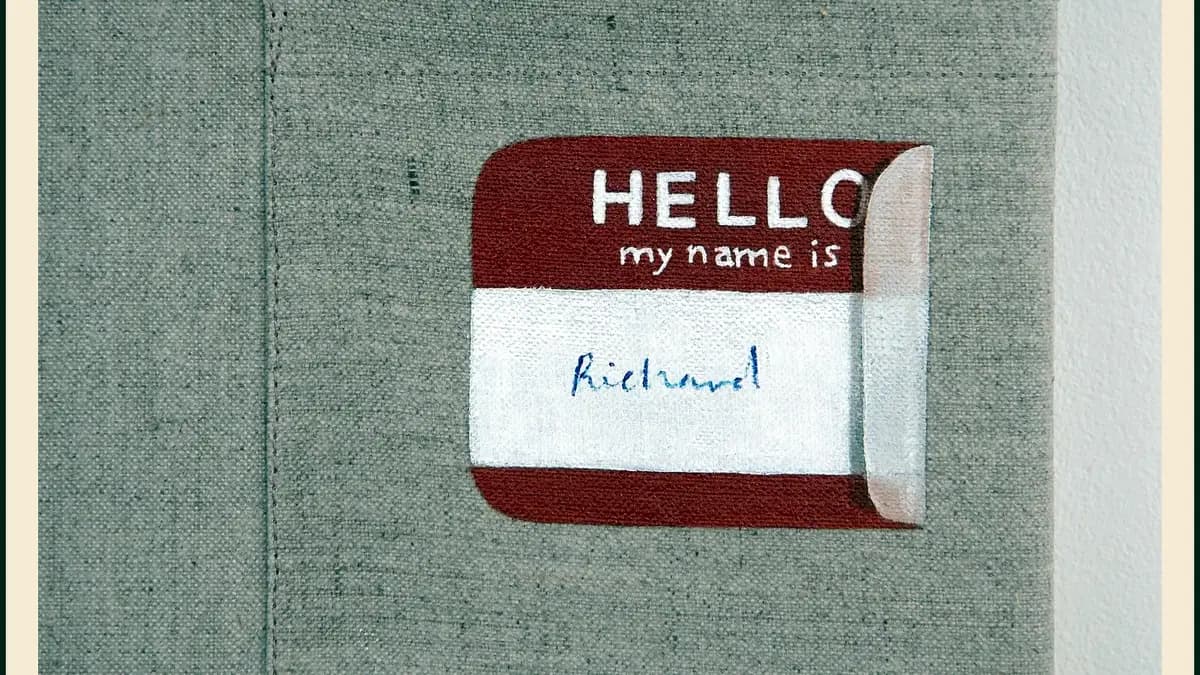
At Nino Mier Gallery's Tribeca space, Amelia Cross's Discipline and Display begins with clothes that have lost the body but kept the evidence. A collar holds its shape. A tie hangs too neatly. A name tag curls at the edge. A pen bleeds into a pocket as if someone stood there a minute ago and then slipped out of the frame.
This is a useful little exhibition because it makes the room feel exact. You do not need a full afternoon. You need twenty minutes, comfortable shoes, and the patience to notice that a uniform is never just fabric. It is permission, class, school, work, compliance, flirtation, discipline, privacy, and the tiny ways people try to bend a rule without leaving the room.
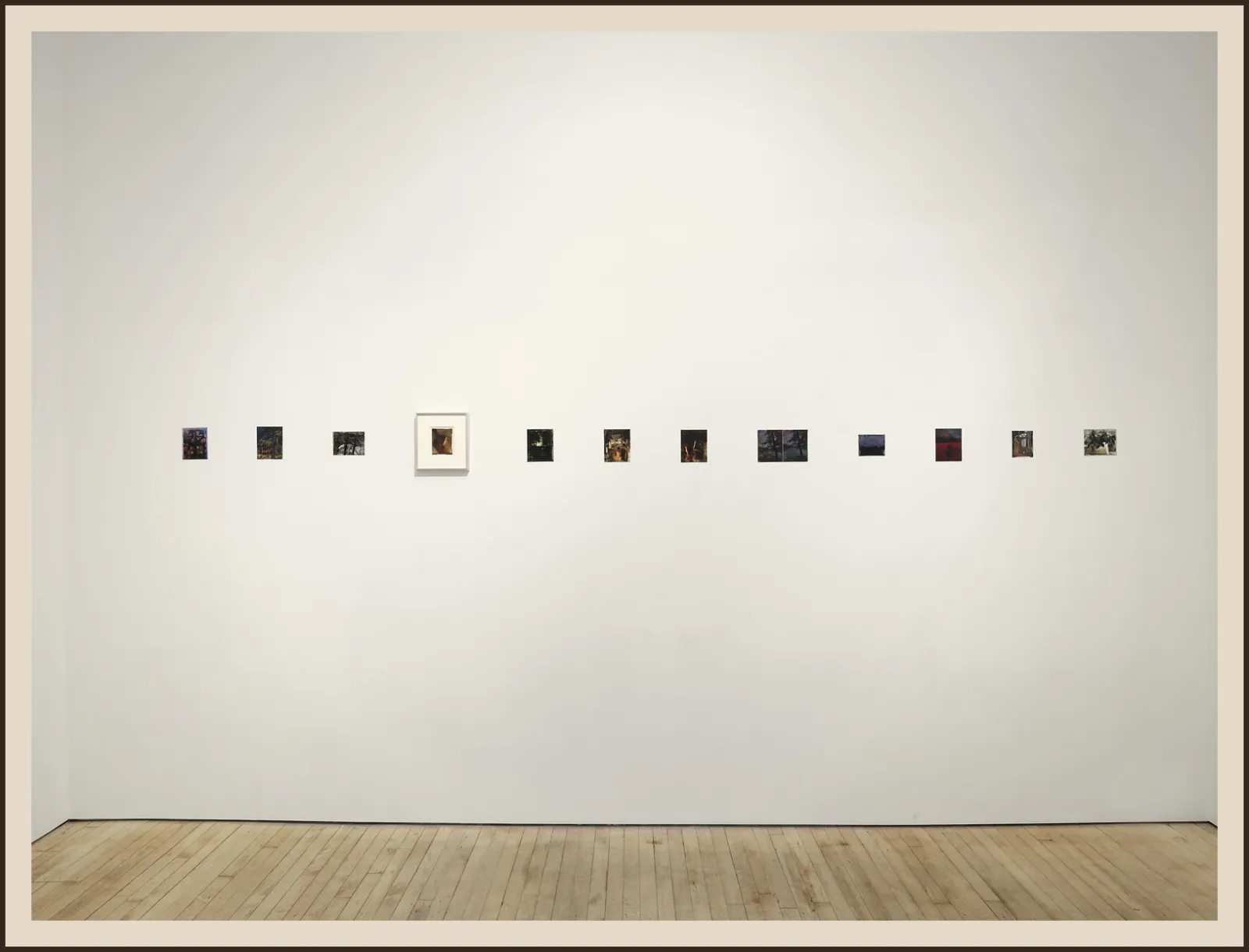
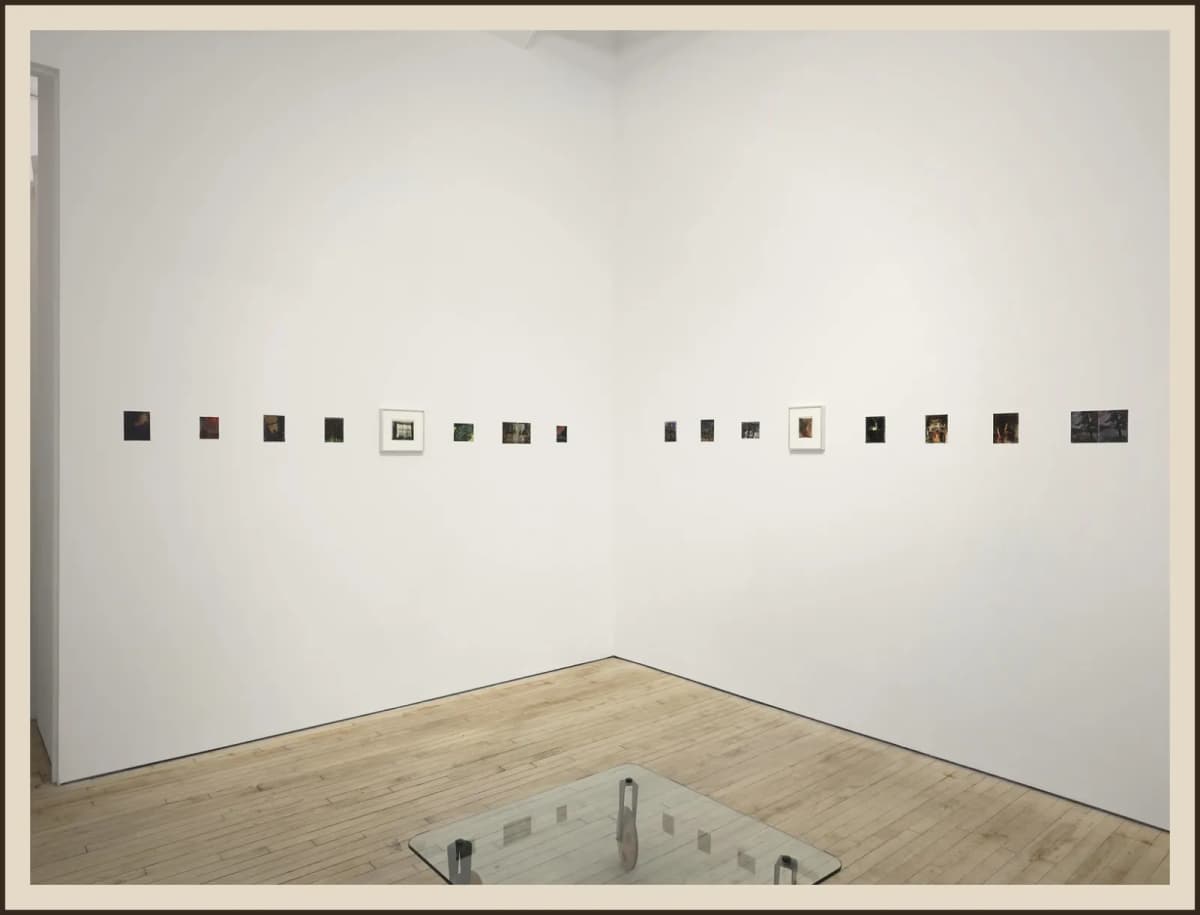
There is a second show here too: Evan Jorgensen's Impressions, a wall of small photographic works that have been printed, wet, brushed, wiped, smeared, and worked over until the image behaves less like proof and more like memory. Together, the two exhibitions make a good Tribeca stop for anyone who wants art without a museum-scale commitment.
The Call
Go if you have a weekday downtown and want a small room that rewards slow looking.
Skip it if you want spectacle, a group-friendly opening-night mood, or an exhibition that explains itself before you do any work. This is not that. The room is quiet, bright, and easy to enter, but the best parts are small: seams, labels, cropped shirts, faint shadows, ink noise, the scale of a thing you almost missed.
Helpful Tip: do the visit before coffee, not after. This is a detail show. Caffeine makes people photograph too fast.
What You Are Seeing
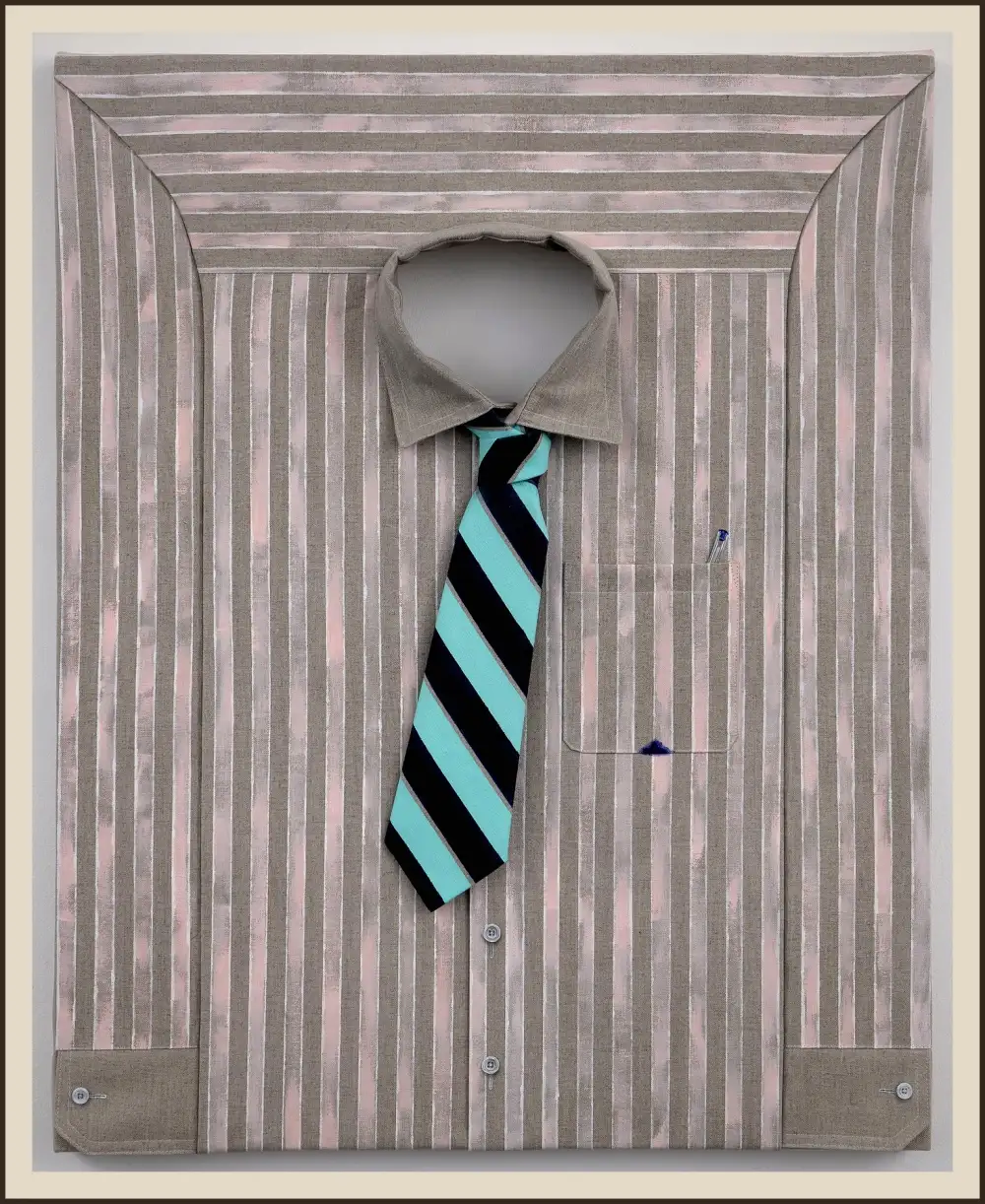
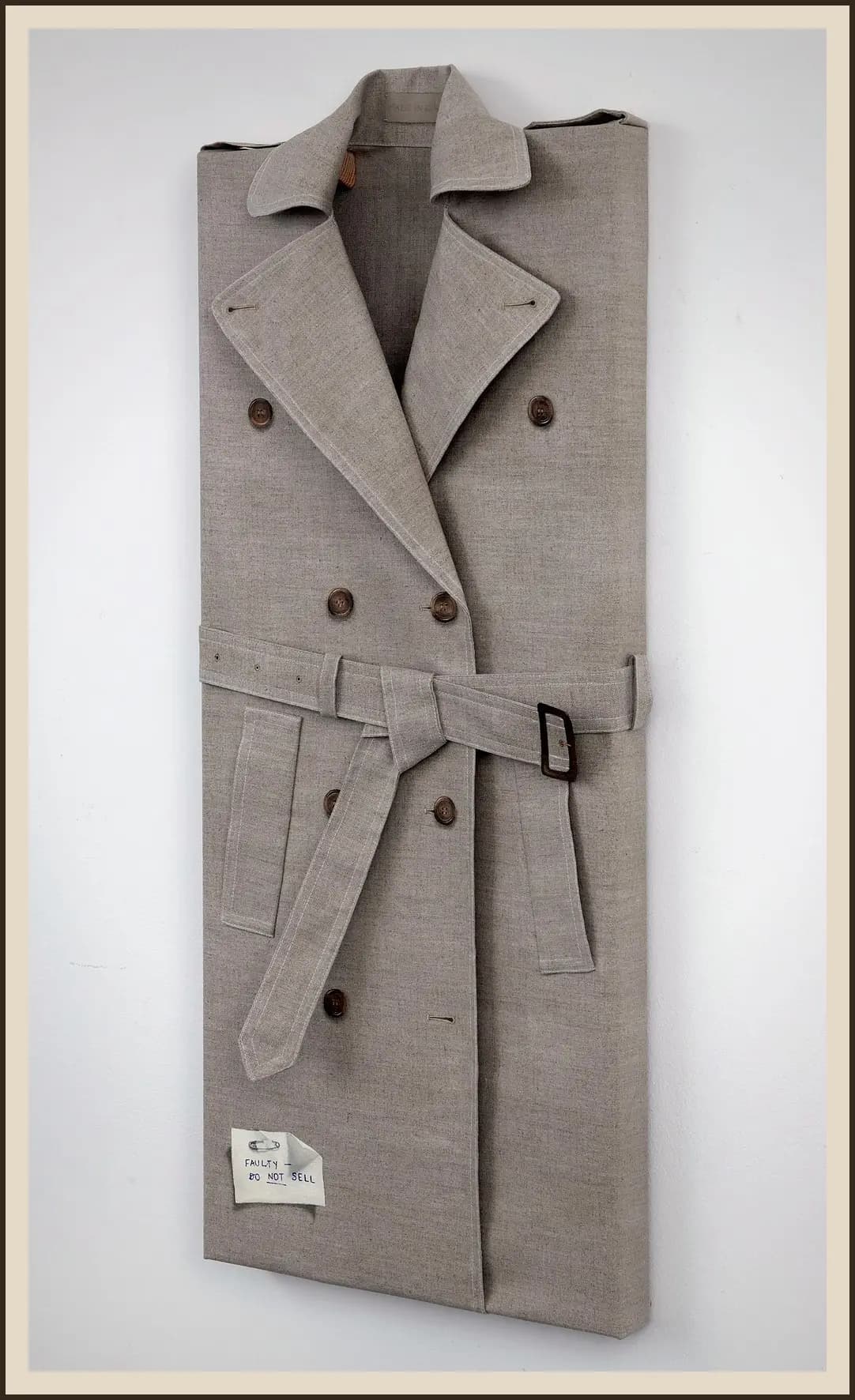
Cross trained in bespoke tailoring before moving deeper into painting. That matters because these are not paintings of clothing in the casual sense. They are constructed objects: linen cut, sewn, stretched, shaped, and then painted until the line between material and illusion becomes unstable.
These are sewn paintings. The phrase is accurate. A button may look painted until you move closer. A shadow may appear sewn until it gives itself away. A pocket can feel flat from across the room, then suddenly become architectural.
The figures are absent, but absence is not emptiness here. The missing person is everywhere in the residue: a name label, a neck hole, a strip of uniform, the way a tie tells you more about the institution than the person wearing it.
Kiera rule: start with one object, not the whole room. Choose the pocket, the tie, the collar, or the name tag. Let that be your first frame. The exhibition is stronger when you let one detail teach you how to read the rest.
Why The Clothes Matter
Discipline and Display is interested in uniforms: school dress codes, workplace attire, institutional clothing, and the little marks that show how people try to live inside rules.
That is what makes the exhibition feel sharper than a simple trompe-l'oeil exercise. Yes, the illusion is satisfying. Yes, the sewn surfaces are technically clean. But the emotional tension is in the rule-breaking that barely counts as rule-breaking: the loosened tie, the shifted collar, the pocket that hides a note, the badge that introduces someone while also flattening them.
The show understands something precise about style. People often describe clothing as self-expression. Cross is more interested in the opposite pressure: how clothing can identify, regulate, and sort a person before they speak.
That makes the work feel personal without becoming confessional. It is not asking you to know the wearer. It is asking whether you can see the system around the wearer.
The 20-Minute Route
Minute 1 to 4: stand back. Let the room register as a set of cropped bodies without bodies. Do not read labels yet. Notice scale first.
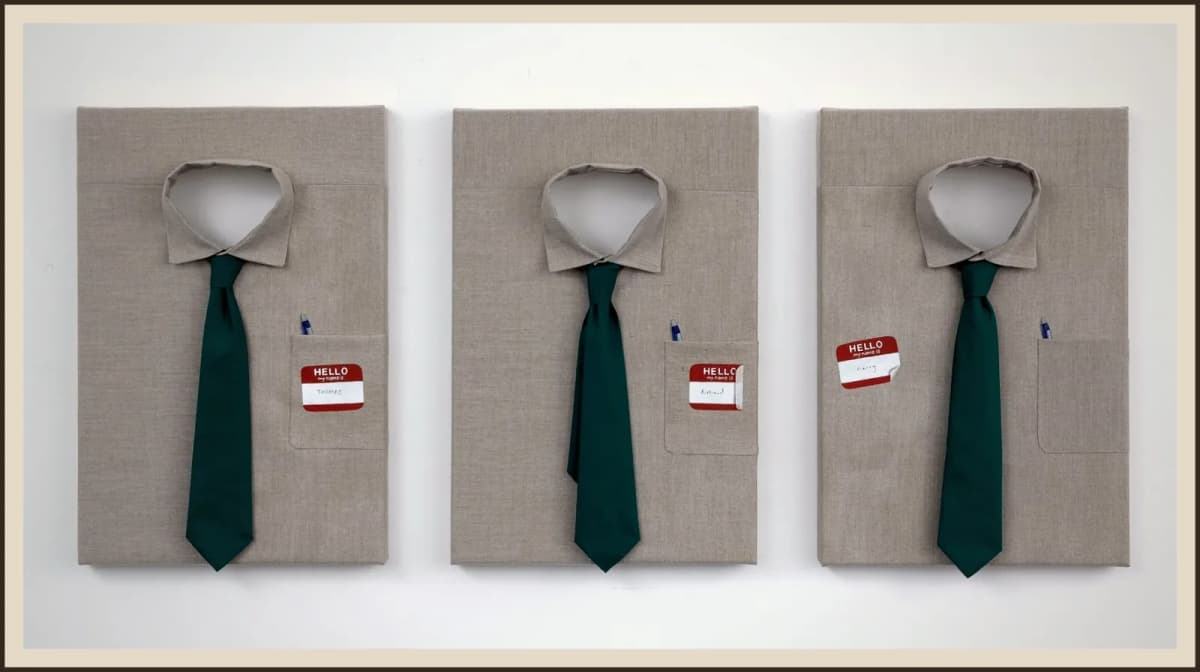
Minute 5 to 9: move toward The Ice Breaker. The repeated tie-and-name-tag rhythm is the cleanest way into Cross's logic. It is funny, severe, and slightly uncomfortable. The work makes social introduction look like a uniform system.
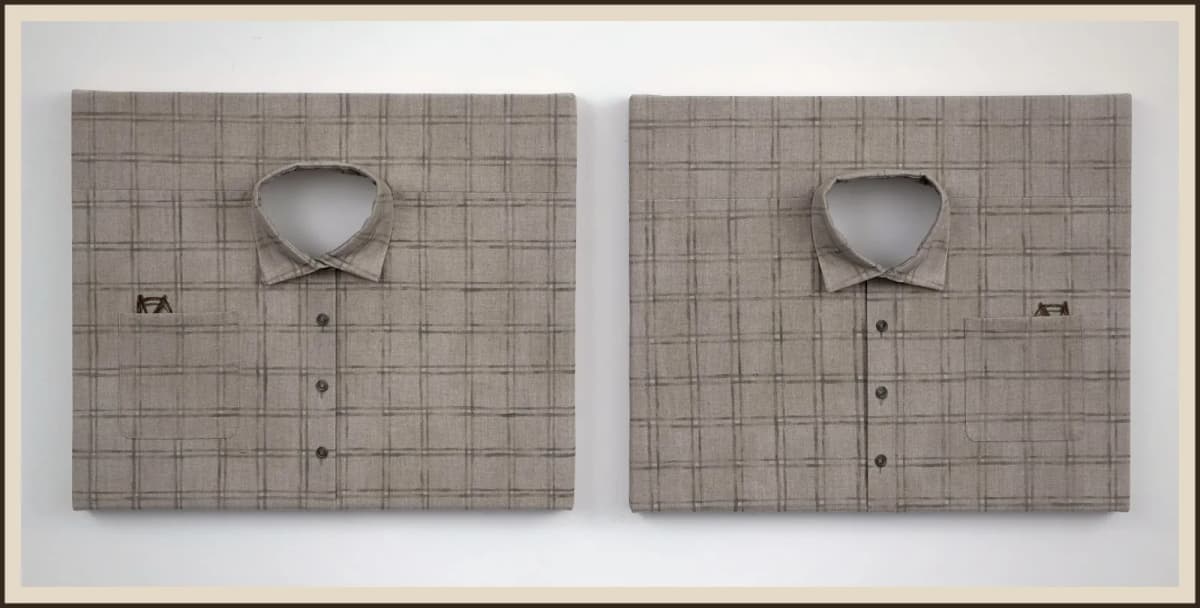
Minute 10 to 13: find The Pair. Let the two shirt forms sit next to each other long enough that the space between them starts to matter. Some artworks ask what is represented. This one also asks what is being withheld.
Minute 14 to 17: look for the smallest act of disobedience. A label. A mark. A pocket edge. Kiera's useful question is: where did the person try to keep one thing for themselves?
Minute 18 to 20: cross into Jorgensen's Impressions and let your eyes adjust to a different kind of evidence. Cross makes clothing behave like identity. Jorgensen makes image surfaces behave like time.
What To Wear
This is not a dress-up gallery in the intimidating sense, but Tribeca rewards looking intentional. Wear something quiet enough that you can stand in a white room without feeling like the loudest object in it.
Best formula: clean trousers, flat shoes, a shirt with structure, and a bag that does not swing into the walls when you turn. If you are coming from work, you already fit the show better than you think. A button-down, badge lanyard, blazer, or office shoe becomes part of the joke.
Do not overdo the outfit. The exhibition is already thinking about uniforms. You do not need to become one.
The Second Room
Evan Jorgensen's Impressions is a quiet counterweight.
Where Cross builds an object from tailoring logic, Jorgensen troubles the photographic image until it becomes physical. His process begins with inkjet printing, then moves through wet ink, brushing, wiping, smearing, and reprinting. The result is not a clean photograph trying to prove a scene. It is an image that has been handled into doubt.
The installation matters because the works are small. They do not shout across the room. They ask you to step in, then step back, then admit that the picture is not going to resolve itself simply because you want it to.
This is the part of the visit that changes the pace. Cross gives you sartorial evidence. Jorgensen gives you image residue. Both shows reward the same viewer: someone willing to spend more time with a small thing than the room seems to demand.
The Budget
The gallery visit itself is free.
That makes the math unusually clean for downtown culture. Your real budget is time, transit, and whether you turn the stop into coffee, lunch, or a second gallery.
A budget is part of the aesthetic. Free does not mean careless. It means you can afford to slow down.
Best Time To Go
Go on a weekday between 11am and 4pm.
Current New York hours are Monday to Friday, 10am to 6pm. I would not cut it close at either edge unless you have already checked directly. Commercial galleries have installation days, staff meetings, shipping realities, and private appointments that do not care about your perfect little downtown plan.
Midday gives you the cleanest room. Late afternoon gives you better post-gallery light if you want to walk the area after. Golden hour is a schedule, not a filter, but this particular stop is more about wall light than sunset.
Helpful Tip: if your plan depends on Saturday, email first. Do not trust a third-party listing over the gallery's own current hours.
The One Work To Spend Extra Time With
Give The Compromise your extra five minutes.
It has the neat conceptual pleasure of a pocket that is not only a pocket. One element is large, one is smaller, and the relationship starts to feel like a diagram of who gets storage, privacy, and leverage. The work also carries a hidden-note logic: an idea of a message moving under institutional supervision.
That is where the show gets less polite. Clothing can look obedient while holding something private. A gallery wall can look neutral while arranging power. A pocket can be decorative until you ask who gets to keep what inside it.
This is also the reason the show should not be rushed. If you only glance, you get clever fabric painting. If you stay, you get a small politics of surfaces.
How To Photograph It
Shoot fewer images than you want.
The works flatten quickly through a phone camera because the whole point is the unstable space between sewn object and painted illusion. If you photograph too early, you turn the show back into pictures of shirts. Wait until you have seen the edge, the seam, the false shadow.
Best shot: an angled detail where the object gives away its depth.
Worst shot: the straight-on trophy image before you have looked.
If you want a memory, photograph one detail and one installation view. That is enough. Shoot it once, live it twice.
Who Should Go
Go alone if you like fashion, painting, object-making, photography, or the social codes of clothes. This is a good solo stop because no one has to pretend to understand the room at the same pace.
Go with one friend if the friend likes to look closely and talk after, not during. This is not a six-person gallery hang. It is too small and too detail-dependent for group performance.
Bring someone who notices cuffs, shoes, labels, and small signs of control. Do not bring someone who only enjoys art when it is large, loud, or immediately legible.
The Practical Plan
Nino Mier Gallery's Tribeca space is at 380 Broadway, New York, NY 10013. The New York contact email is newyork@miergallery.com, and the Tribeca phone number is +1 212 268 9055.
Current exhibitions at the Tribeca location:
• Amelia Cross, Discipline and Display: June 24 to August 7, 2026.
• Evan Jorgensen, Impressions: June 24 to August 7, 2026.
Use the visit as a clean downtown insert: gallery first, coffee second, dinner later. The order matters. If you eat first, you will move slower but look less sharply. If you visit first, the room gets your better eye.
The Verdict
Nino Mier Tribeca is worth the stop right now because the room is holding two exhibitions that quietly agree with each other.
Cross asks how clothing records discipline. Jorgensen asks how images record time. Neither show needs a grand itinerary. The point is the small adjustment: you enter for a free gallery visit and leave reading collars, pockets, ink, and wall spacing with more suspicion.
Go for twenty minutes. Start with the pocket. Let the room make you more precise.
Practical Notes
• Venue: Nino Mier Gallery, Tribeca.
• Address: 380 Broadway, New York, NY 10013.
• Current New York gallery hours: Monday to Friday, 10am to 6pm.
• Contact: newyork@miergallery.com; +1 212 268 9055.
• Admission: free.
• Current shows: Amelia Cross, Discipline and Display, and Evan Jorgensen, Impressions.
• Exhibition dates: June 24 to August 7, 2026.
• Best visit length: 20 to 35 minutes.
• Best use: a precise weekday culture stop before coffee, lunch, or a second downtown gallery.
Tags
#Culture #Gallery #Tribeca #NinoMierGallery #AmeliaCross #EvanJorgensen #ContemporaryArt #FreeNYC #KieraLane #DowntownNYC
Nino Mier Gallery, Tribeca, 380 Broadway, New York, NY 10013