Music / Event
Alex Lahey Solo at Night Club 101 Is the Close-Range Version, Not the Full-Band Blowout
If you want the loudest possible version of an Alex Lahey night, this is the wrong ticket. If you want the songs, the shape of the room, and a better read on what the B-Grade University era sounds like without extra muscle, this is the useful one.
 Marcus Hale
Alex Lahey works well at festival scale because the songs travel. She also works well in a room this size because the scaffolding shows.
The public listings for Thursday, July 23, 2026 put this as an Alex Lahey solo show at Night Club 101, the East Village room at 101 Avenue A, with a 7:00 PM start on the current New York stop of her U.S. run. The word that matters is not New York. It is not Thursday. It is not even Alex. It is solo.
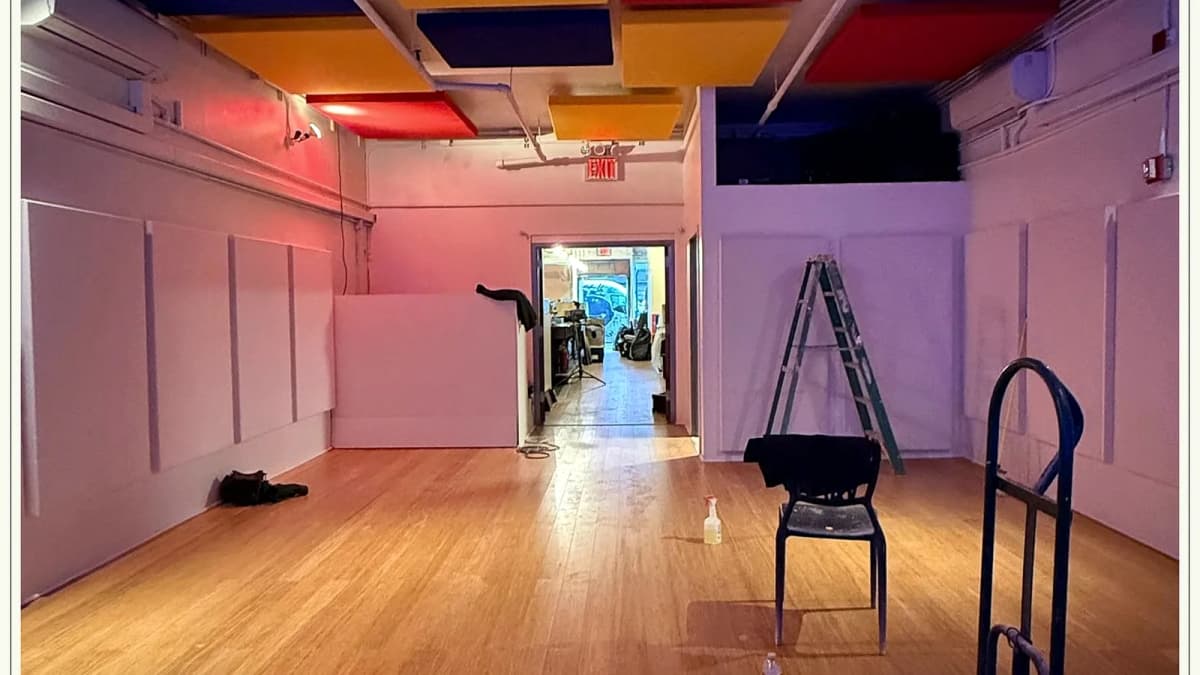
That one word changes the whole buying decision. A solo ticket is not a smaller version of a full-band night. It is a different bargain: less force, less noise cover, more lyric detail, more room for dead air to either become intimacy or expose a distracted crowd. Small rooms tell the truth quickly.
What this show is in one sentence
This is the version you choose if you want to hear how the songs stand up without the band doing the convincing for them.
Alex Lahey's official site is still pushing the current B-Grade University cycle and the U.S. tour poster, and the venue listing has this date framed as a stand-alone solo room rather than a broad package bill. That matters because the payoff changes. You are not going for lift-off. You are going for phrasing, pacing, and whether a compact room on Avenue A can hold attention for the quieter parts.
Marcus rule: before you buy the ticket, decide whether you want density or definition. Full-band Lahey gives you density. A solo room gives you definition.
The 90-minute version
If you are trying to use this night well, keep it simple.
Get there on time. Night Club 101 is not a venue that rewards a dramatic late entrance. Rooms this small reset their hierarchy fast: the first twenty minutes establish where people stand, how talkative the bar edge will be, and whether the crowd is there for the set or merely renting the set as background. If you arrive early, you get to choose your angle instead of inheriting someone else's.
Stand center-left or center-right rather than dead middle if you want a clean read on the room. Straight center in a compact club can flatten the night into one sightline and one conversation problem. A slight angle gives you the stage and the audience at once, which is the real review.
Do not crowd the very front unless you already know you want total immersion. Solo sets live or die on focus. The first rows can feel generous if the room is locked in and claustrophobic if half the audience is still ordering drinks.
What solo changes
The expectation problem is the real problem.
If you walk in wanting a release-valve indie-rock set, you will spend half the night judging the show for what it did not try to be. Better to read the format honestly. Solo Lahey means the hooks have to survive with less camouflage. The funny turns in the writing land harder. The hesitation between lines matters more. Any softness in the room becomes part of the arrangement, whether you like it or not.
That is why this ticket is better for three kinds of people:
• listeners who already like the songs and want the close read;
• people who prefer a room with some concentration rather than a crush;
• anyone curious about the difference between a tour stop and a performance style.
It is worse for people who equate "good live show" with "maximum volume."
Save the best part for last
Marcus line, always: save the best room for last. Here the "room" is not architectural. It is emotional.
Do not spend the opening stretch deciding whether you miss the band. Give the set enough time to narrow. Most good solo shows improve once the audience stops asking for scale and starts listening for shape. The best stretch is usually the point where the room has accepted its assignment.
That is the moment to pay attention to. Not the first applause spike. Not the loudest sing-along. The late-set section where the room goes from social to attentive without anyone announcing it.
If that shift never comes, you have your answer. Small rooms are efficient that way.
Ticket and timing truth
The practical facts are straightforward even if the format isn't.
• The currently visible public listings place the show on Thursday, July 23, 2026 in New York.
• The venue is Night Club 101, 101 Avenue A, New York, NY 10009.
• The public event pages surface a 7:00 PM start time.
• Because this is a strong-timeliness music row, same-day recheck still matters: start time, support bill, door timing, and age policy can drift late.
What you should not do is overbuild the night. This is not the ticket to wrap in a six-stop East Village crawl unless your actual goal is the crawl. Solo shows ask for a cleaner runway. Eat first, arrive settled, and keep the room as the point.
Who this is for
Go if you like watching songs survive without extra decoration. Go if you value a room where the performer can actually change the temperature by getting quieter. Go if you want the New York date on the run but do not need the biggest possible version of it.
Skip if you were hoping for a cathartic indie-rock wash. Skip if a talkative small club ruins your night. Skip if you know, in advance, that you only really love this material when the band is pushing air behind it.
Karpo verdict: worth it because it is solo, not in spite of it. Just buy the ticket for the right reason. This is a format check, not a victory lap.
Night Club 101, 101 Avenue A, New York, NY 10009