A Hardware Store Curb, Then the Manchac Swamp by Kayak
A guided paddle through the Manchac swamp, met by shuttle on the edge of the French Quarter. Slow water and stable kayaks keep the skill bar low. Stamina is the part to plan for.
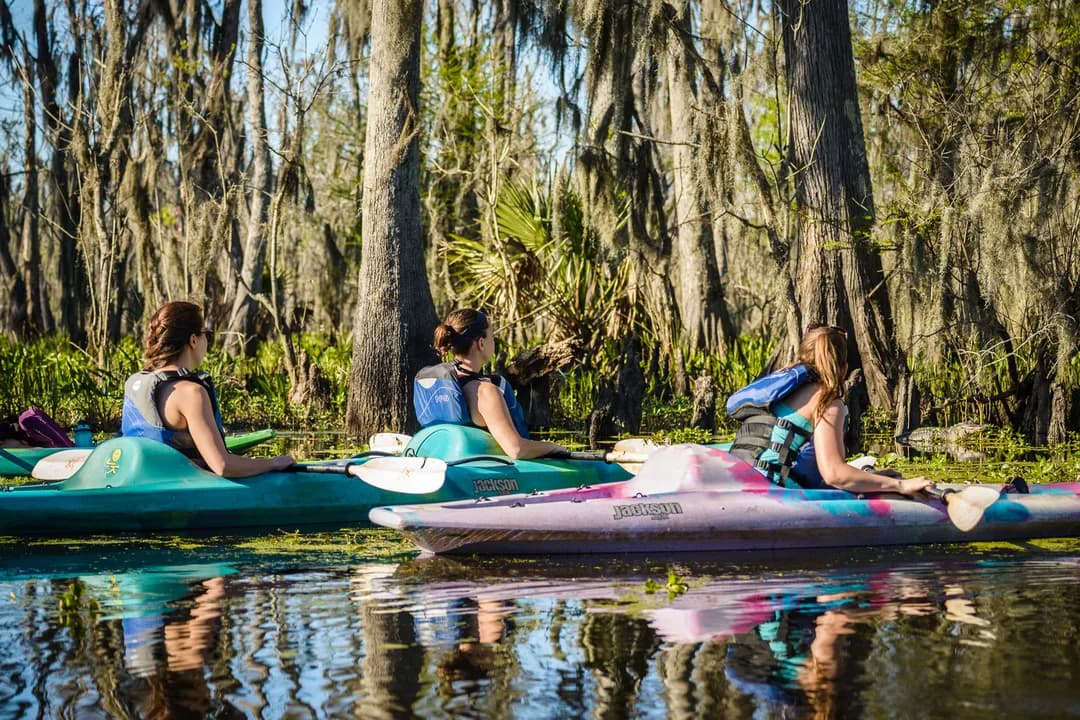
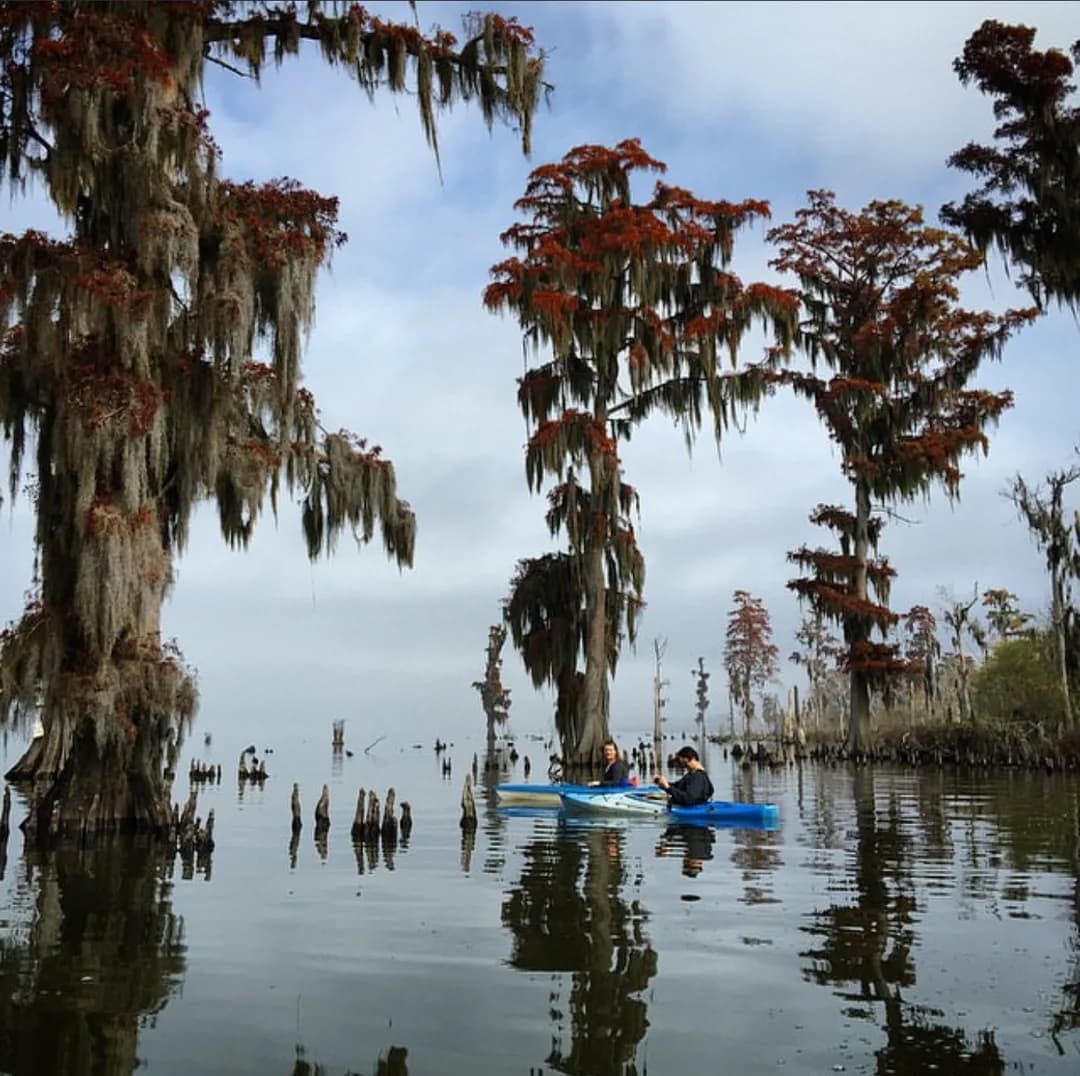
The Manchac swamp lies thirty to forty minutes from downtown New Orleans, a shallow basin where bald cypress stand in still brown water and Spanish moss hangs low enough to brush a paddle. The current barely moves. That is the whole reason a first-timer can handle it.
A kayak sits you at water level, which changes what the swamp gives you. Sound arrives before sight. A heron shifts somewhere in the canopy, duckweed parts, and a ridged back slides past a few boat lengths off, unhurried.
The fare covers the shuttle as well as the paddle. A van collects you on the edge of the French Quarter an hour before your launch time, runs you out to the operator's launch near Laplace, and brings you back to the same corner afterwards.
 Small-Group Manchac Swamp Kayak Tour with Local GuideA two to three hour guided kayak paddle through the Manchac swamp with a Louisiana naturalist, including round-trip shuttle from 732 N Rampart St in New Orleans. One booking takes up to fourteen travelers.www.viator.com
Whether You See a Gator Is a Temperature Question
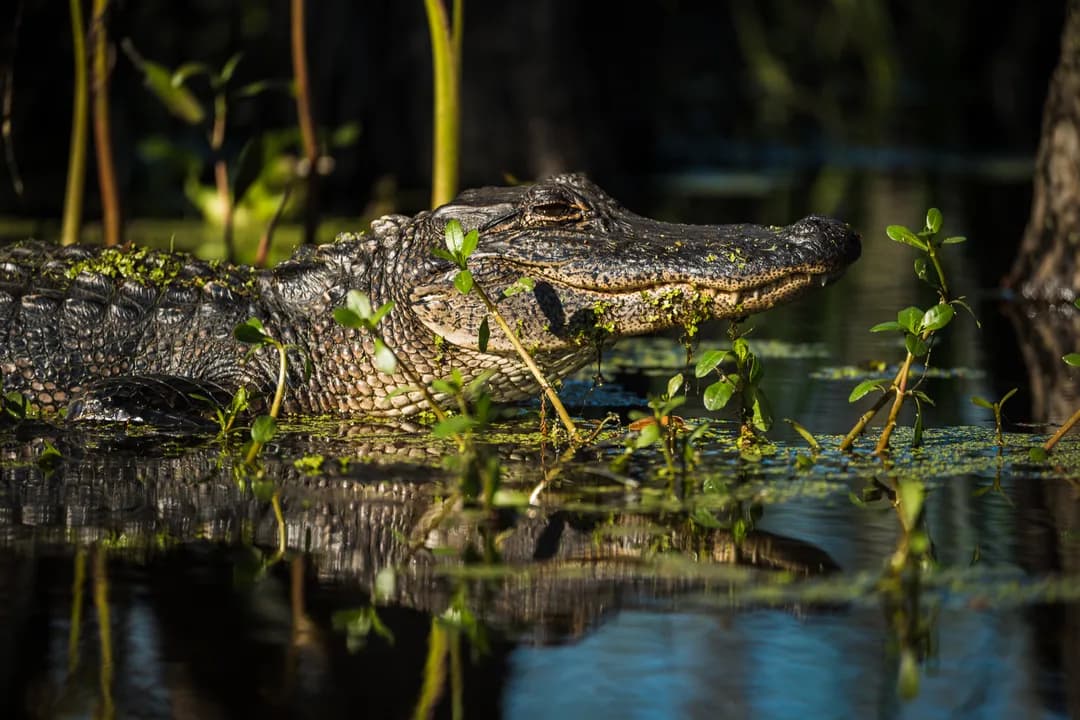
Wild Louisiana Tours says it is illegal to feed alligators in the preserve it paddles, and the company draws a straight line from that rule to what you should expect. In its own words, the alligators you see on its trips will not approach your kayak and have no interest in you at all. That is the operator's account of its own water rather than a promise about a wild animal. Either way you watch them from a few boat lengths off.
Whether you see any at all is a question of temperature. The operator's own explanation is that alligators are cold blooded and spend the day either cooling off in the water or sunning on the bank, so a cold snap can empty the banks. A traveler who paddled in November 2022 came back with birds instead: "Too cold for alligators, but we saw a variety of birds and even a nutria!"
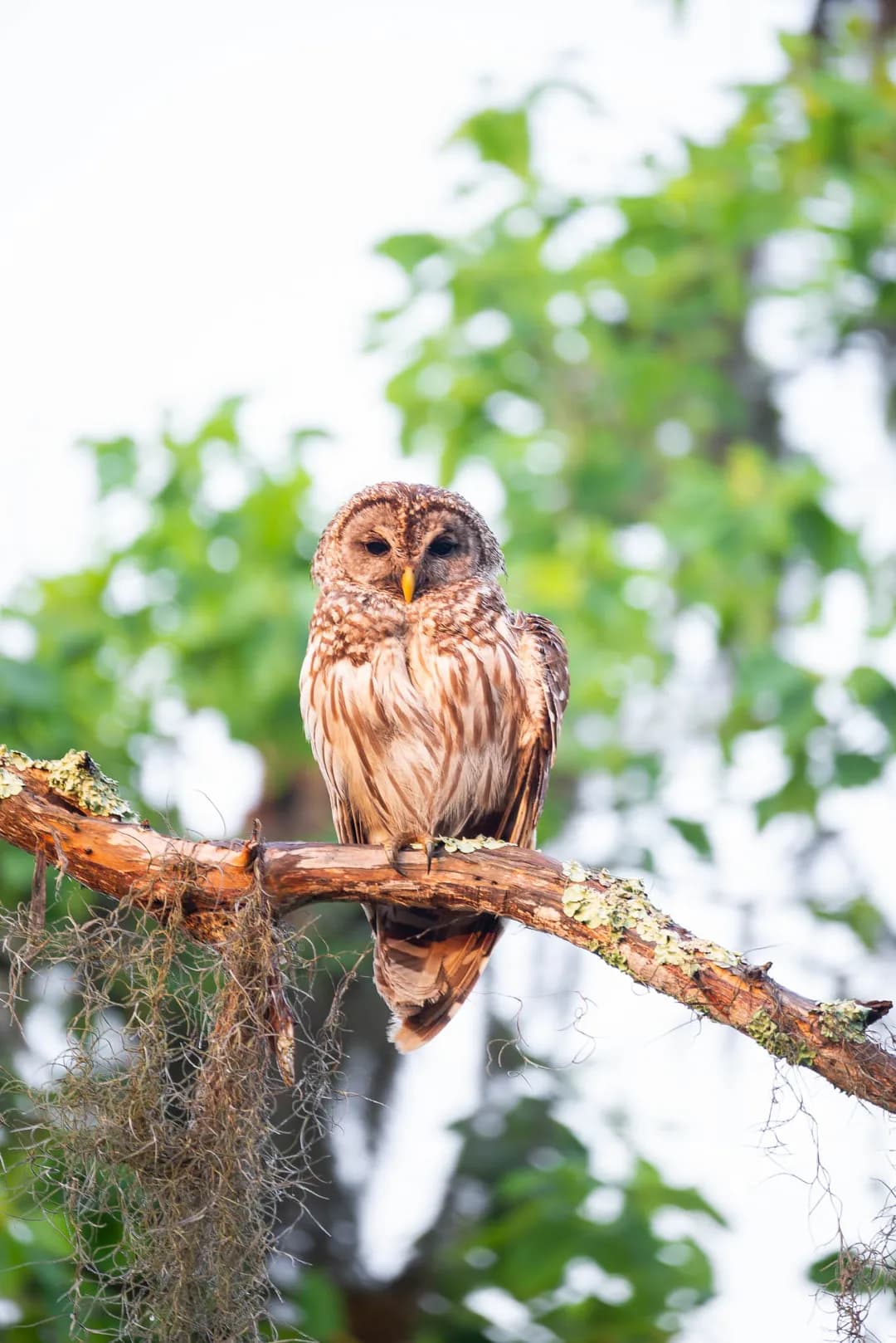
Barred owls, herons and egrets work the same water through the year, and the stillness that keeps the gators uninterested is what lets you drift close to them.
The operator notes that mosquitoes and flies are usually mild out on the open water. Carry repellent anyway if bites find you easily.
Mornings Most of the Year, Midday in Winter
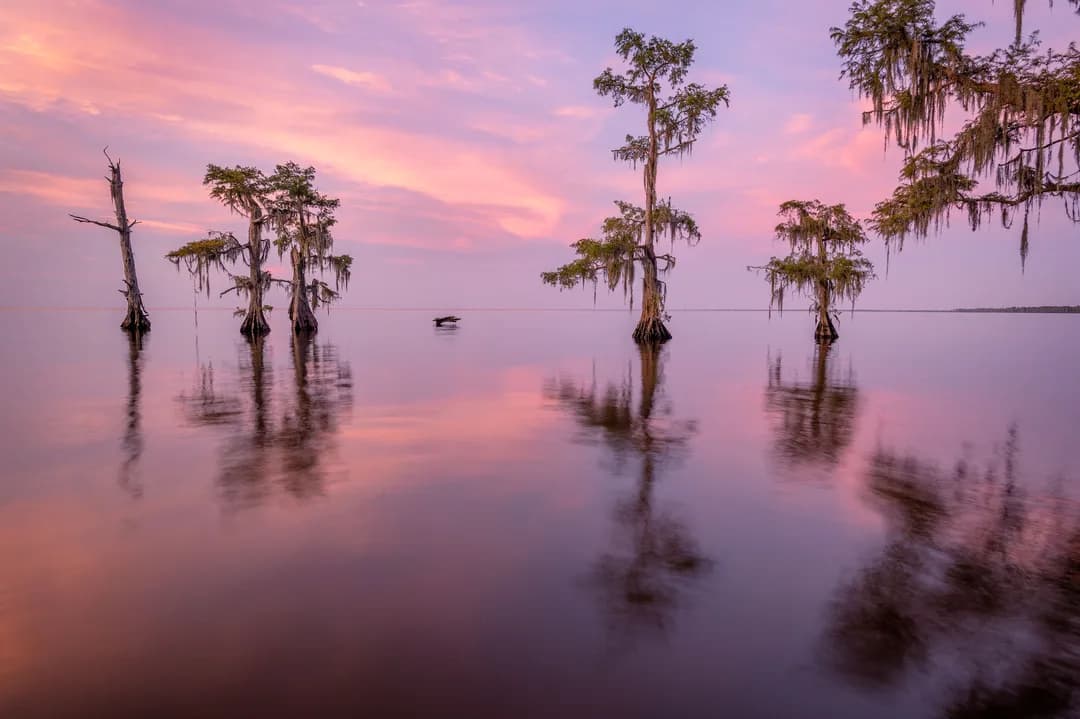

The company published its own answer to which departure is best. Wild Louisiana Tours writes that mornings win most of the year because wildlife is most active then, and because an early group is often the first human contact the animals have that day. As more trips enter the swamp, the company says, animals retreat from the good viewing areas.
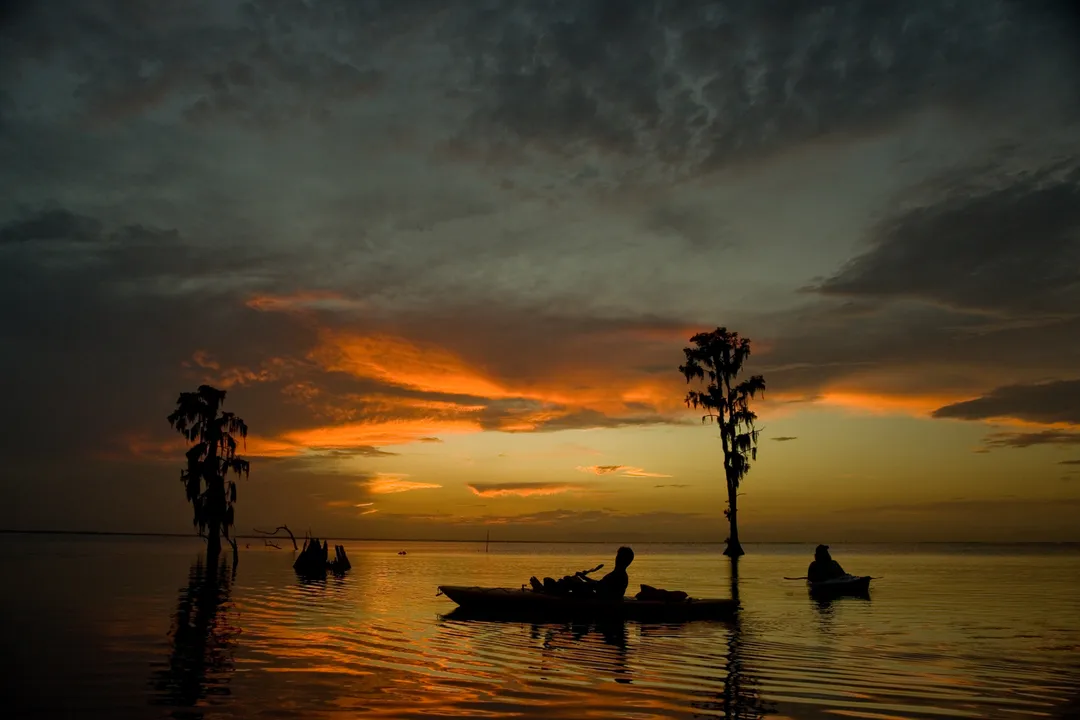
The operator qualifies that by season. In a Louisiana winter a cold front can keep wildlife still until the sun warms things up, so midday becomes the better bet between December and February. Through summer the company points to the edges of the day to dodge the heat. In spring and fall it says almost any departure works, and tells visitors to schedule around the rest of their trip.
The Paddle Is the Short Half of the Day
The paddle itself takes two to three hours. The operator puts the full round trip, pickup to drop-off, at four to five hours. The difference is the shuttle, the drive each way and the briefing before anyone gets in a boat.
Wild Louisiana Tours asks guests to leave at least an hour between the end of the tour and whatever comes next, and singles out Fridays and Saturdays as the worst traffic days on that road. Start and finish times shift a little with how fast the group paddles.
Treat this as a half-day plan. It will not slot neatly between lunch and a dinner reservation.
Who Can Book, and What to Wear
This listing sells adult seats only: the booking form accepts travelers aged fifteen and up, and carries no child fare at all. The operator runs the tour for all ages when you book direct. The age floor is a limit of this listing. Families with younger children should raise it with the operator before planning around it.
Gear comes with the tour. The company paddles Jackson kayaks, which it says it chose for stability and comfort, hands out low-profile NRS life vests and Werner paddles, and says very little experience is needed on water this slow. Even so, the way back is the same distance as the way out, and one traveler who got no rest stops on the return called that leg a bit difficult and told readers to be fit.
What the operator asks you to bring:
- Clothes you do not mind getting wet, ideally quick-drying
- A full change of clothes for the ride home, even in dry weather
- Hat, sunglasses and sunscreen
- Snacks and something to drink
- A raincoat if rain is forecast
Guides work for tips. The company names twenty percent as the industry baseline. One more rule worth knowing before a New Orleans morning: for insurance reasons the guides will not start a tour with anyone who turns up drunk.
Rain does not cancel this tour. The operator paddles through it, and keeps cancellation for weather it treats as hazardous, naming lightning storms, unsafe water and wildfire among its examples. Your own cancellation is a separate matter: this listing refunds in full if you cancel at least twenty-four hours before departure, and nothing at all inside that window.
📍 The van leaves from 732 N Rampart St, on the Treme edge of the French Quarter, one hour before your launch time. Your confirmed time comes through on the ticket.
Most groups are back in the city by mid-afternoon, damp, with a phone full of cypress trees. Lunch is a few blocks from where the van sets you down.