
A Candlelit Savannah Ghost Walk the City Caps at Thirty
A lantern-lit loop through the historic district, working from Savannah's own record of war, disease and executions.
Savannah has never needed to invent its ghosts. War, executions, disease and hurricanes are all in the city's own record, and this walk works from that material directly. Savannah History & Haunts covers ninety minutes of it after dark, guided by candlelight through the moss-draped oaks, historic squares and cobblestone streets of an old colonial city. The candle is a lantern carried by a guide in period dress — travelers were describing that costume and lantern in 2018, and still noting the outfit in 2024. The route ends at Colonial Park Cemetery, outside a gate the city has already locked for the night.
Tours run year-round on a calendar the operator posts and revises, with four departures a night on it as things stand, and reservations are required. Online booking closes an hour before the start time. The ticket covers a professional guide and the stories, legends and history told along the way; gratuities stay at your discretion.
 Savannah History and Haunts Candlelit Ghost Walking TourNinety minutes on foot after dark, by candlelight, through the squares and cobblestone streets of Savannah's historic district, ending outside the gates of Colonial Park Cemetery.www.viator.com
The sidewalk you are actually looking for
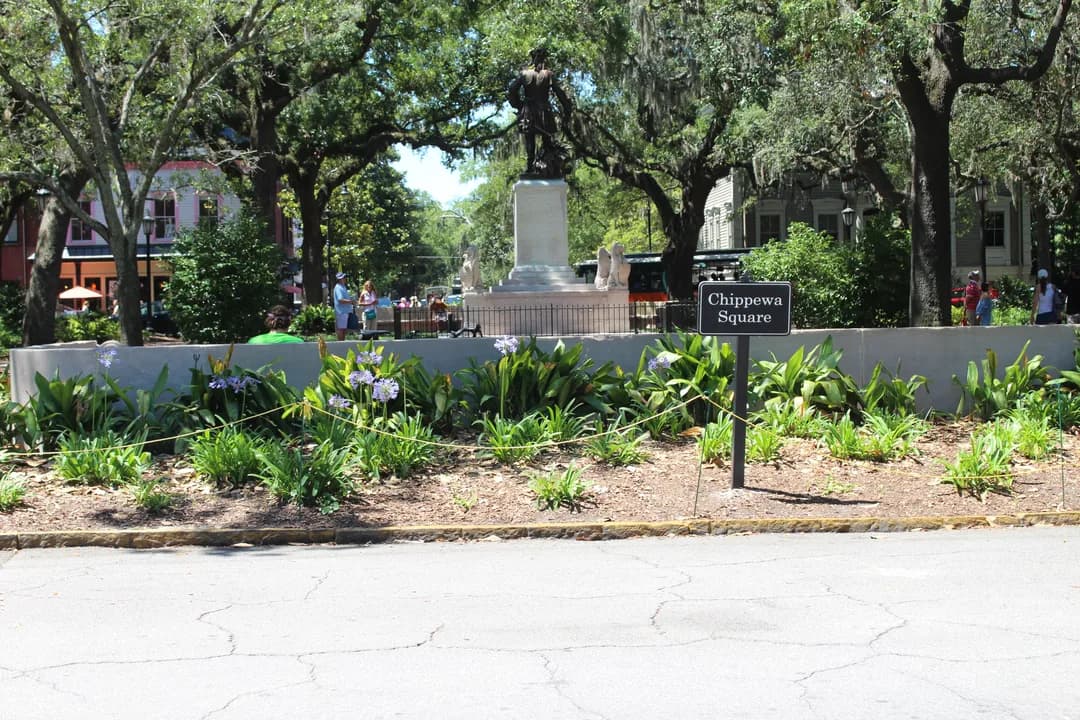

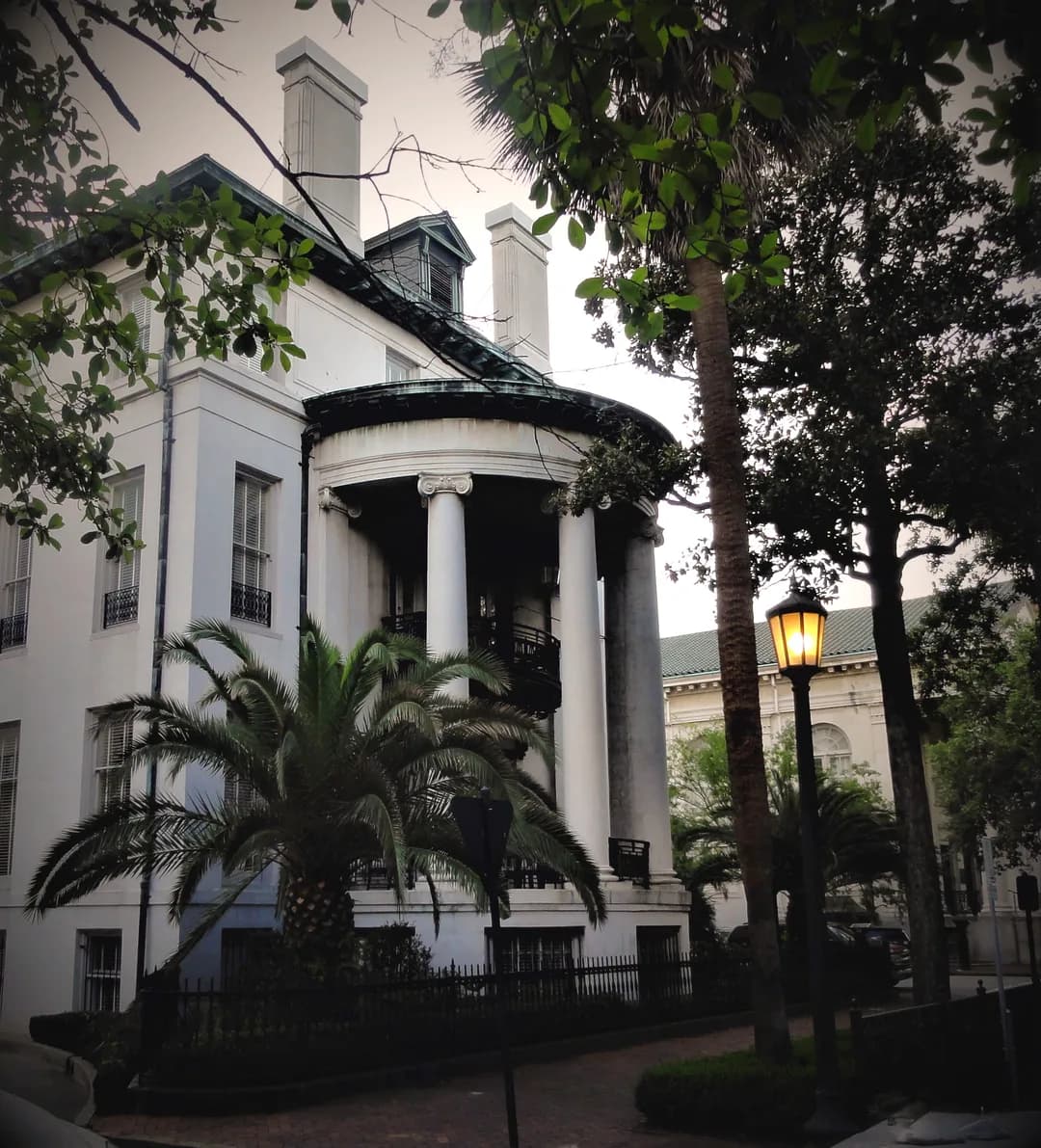
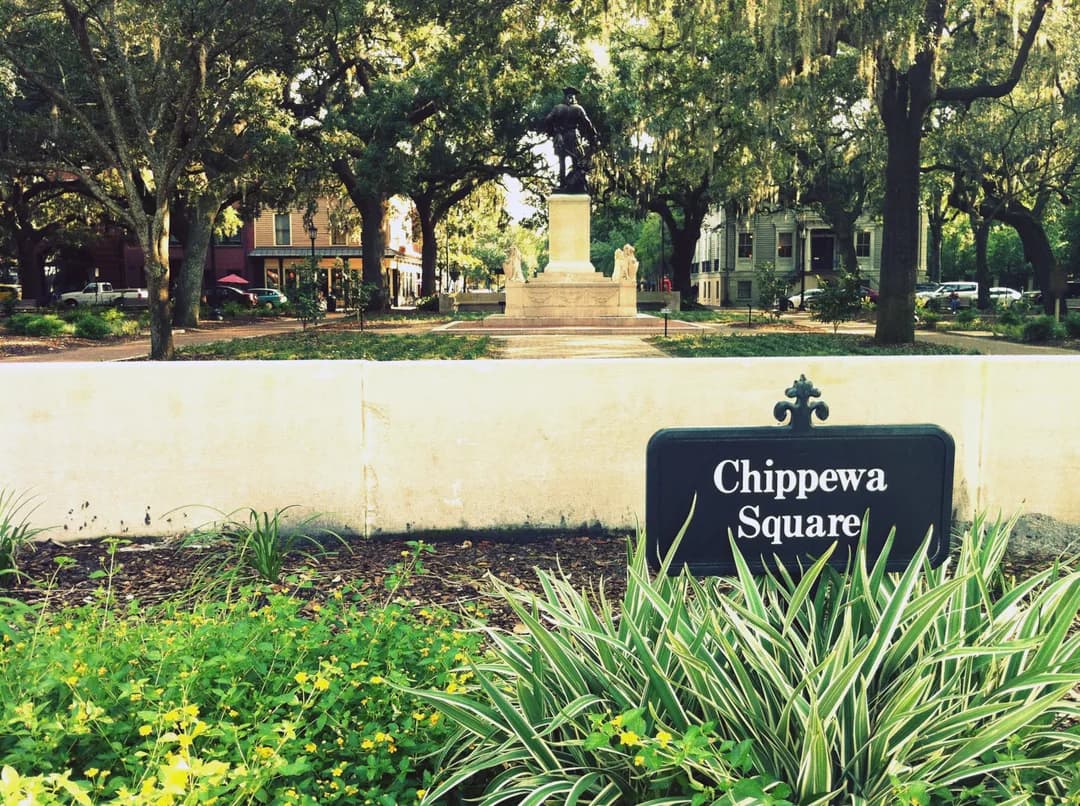
The meeting point is a stretch of pavement, and it rewards a little homework. Groups gather at 17 West McDonough Street on Chippewa Square, in front of the white Greek Revival house that Savannah knew for generations as the Philbrick-Eastman House and that Ralston College now runs as its offices, with the college's sign out front. It was built in 1844 for a silversmith named Moses Eastman, and it turns a Doric portico toward McDonough Street from behind an iron fence dating to 1857. It stands on the same side of the square as the First Baptist Church, and everyone forms up on the sidewalk facing the square, opposite the theatre. Parking around it is metered street parking. Check-in opens fifteen minutes before the departure time, and the walk leaves promptly at the hour printed on the ticket. Whoever turns up to lead it will be wearing a city-issued photo badge: Savannah gives one to every registered guide and requires it to stay visible to the public for the length of the tour, carrying the guide's name and the company's.
A route that finishes in a burial ground
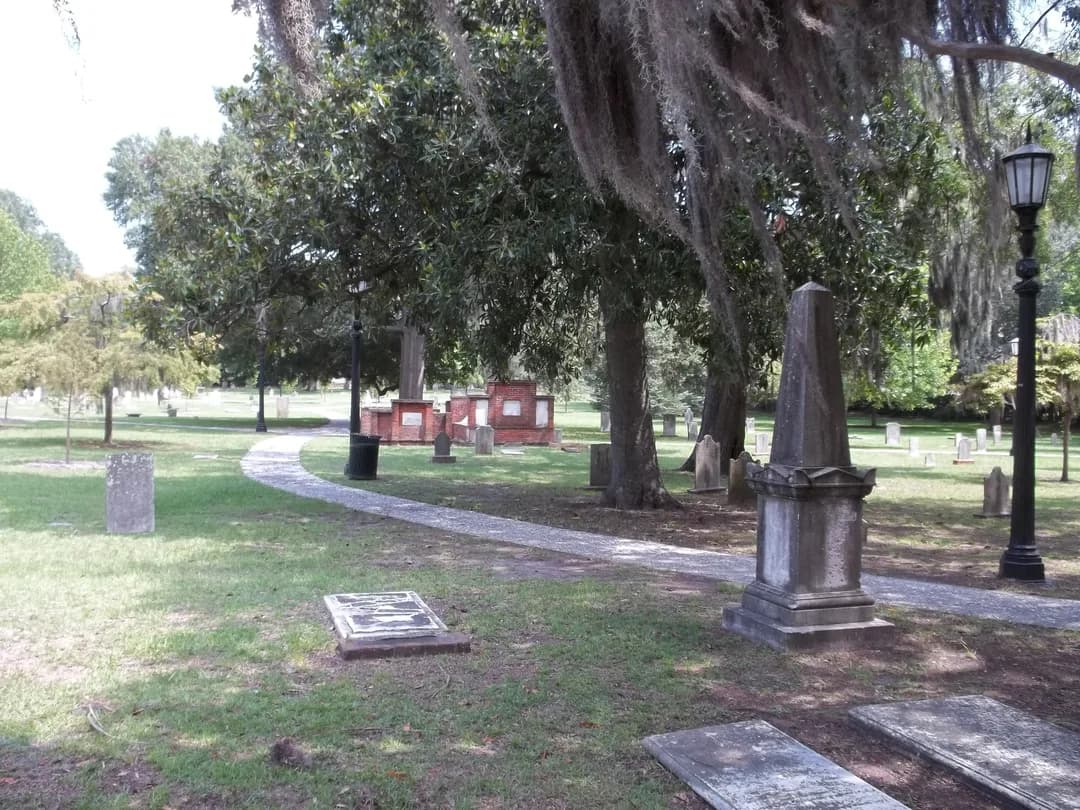
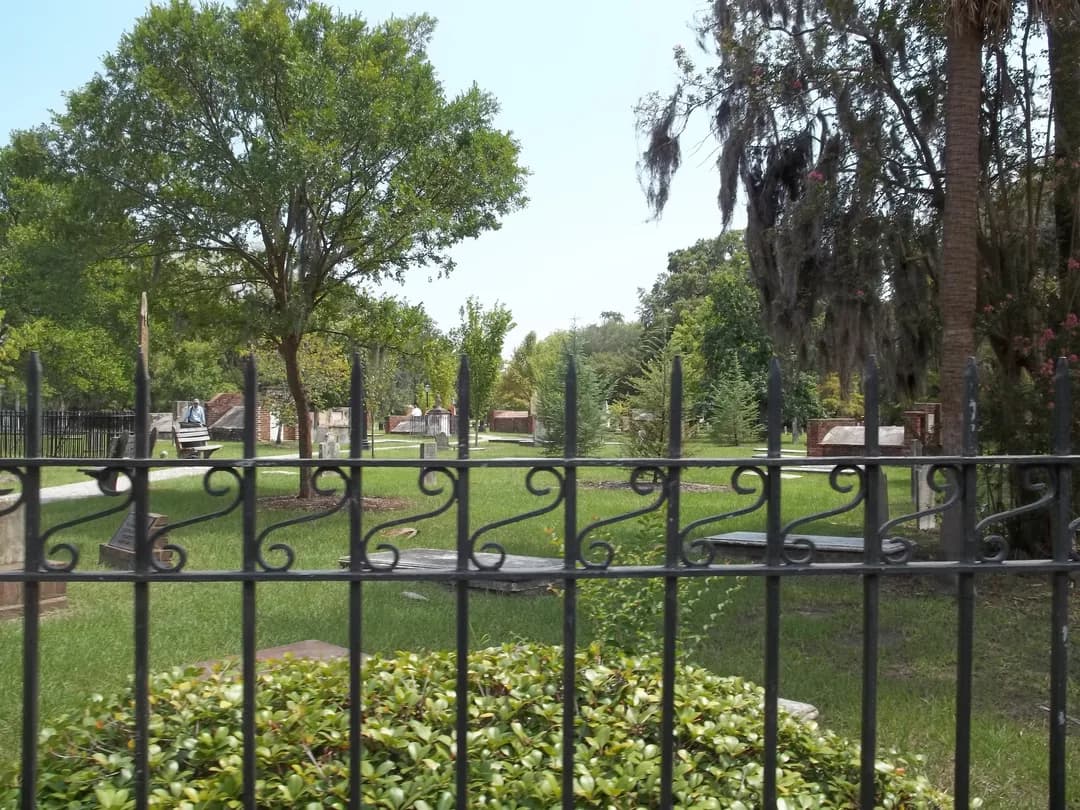
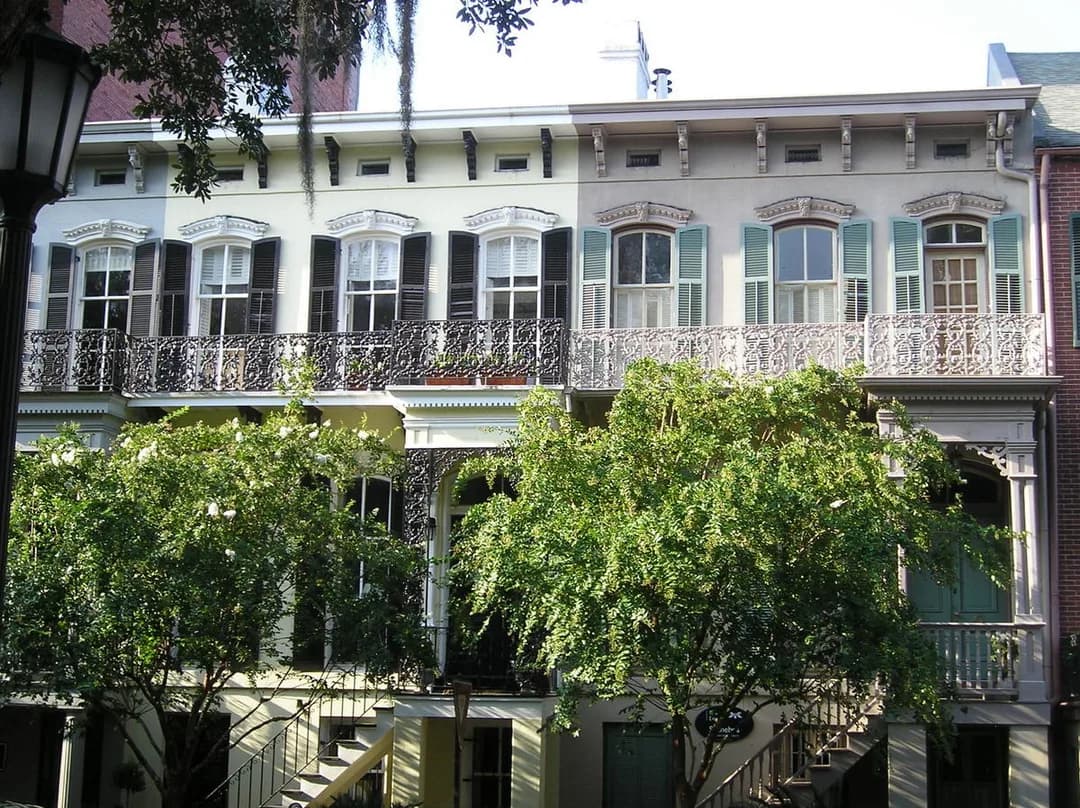
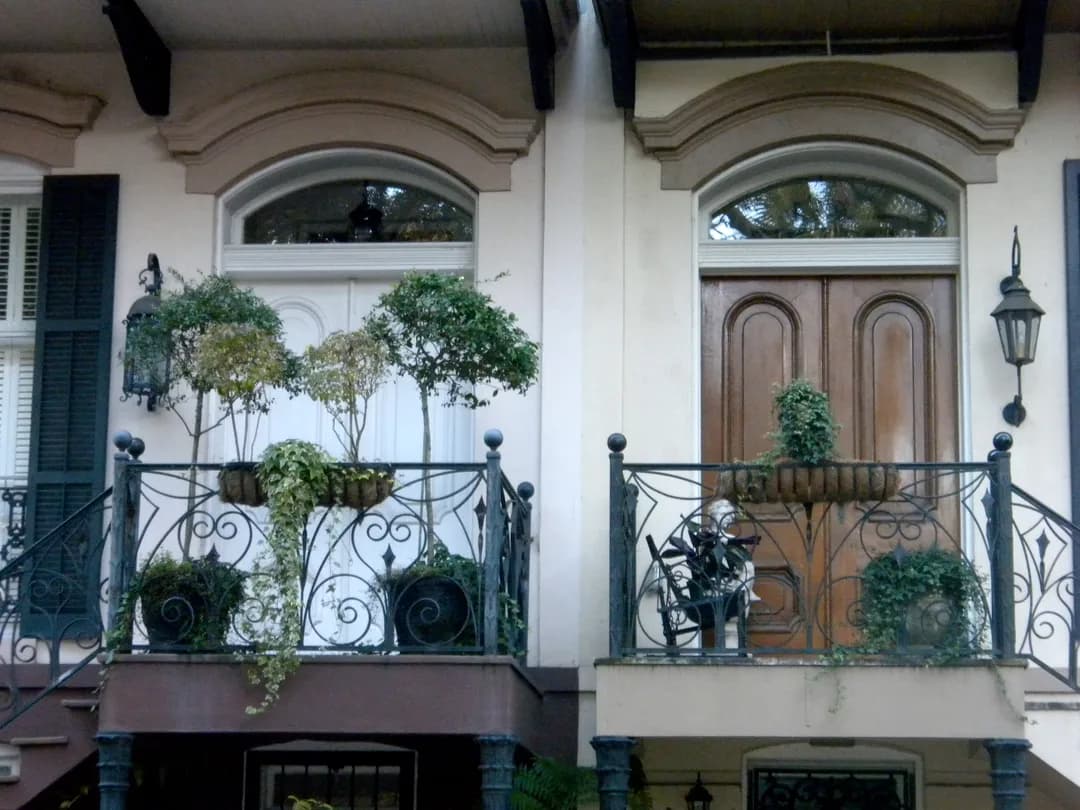
Ninety minutes of walking ends at Colonial Park Cemetery, whose gates stand at Abercorn Street and East Oglethorpe Avenue. The city closes the burial ground to pedestrians at 5:00 PM from November to March and 8:00 PM from March to November, so every departure on this schedule finishes outside the fence rather than inside it. The ending still earns its place on a tour built from epidemics and executions: the stories stop being atmosphere once a group is standing at the gates of six acres that hold more than nine thousand graves and have taken no new burials since 1853. Everything before it is the part of Savannah that gets photographed in daylight — squares under moss-draped oaks, ironwork balconies, brick and cobblestone — read back at night by lantern. The register is history rather than horror: travelers describe stories that are real but not macabre, and the ones who arrived hoping to be frightened are the ones who report the walk is not that scary.
Thirty people, and never fewer than two
Group size here is set by law. Savannah ordinance holds every tour to no more than thirty people, and the operator states that limit twice on its own site. Once a departure sells out online, nobody is added, and no single booking can hold more than fifteen travelers; larger parties, private tours and daytime departures go through the phone line instead. The floor matters just as much: a tour needs a minimum of two attendees to operate, and a lone booking on a quiet night can be called off instead of walked. Both ends of that range turn up in traveler accounts: one pair had a 7:00 PM departure to themselves, while on fuller walks hearing the guide outdoors is a recurring theme — one traveler's worry about it was settled by a guide who worked the whole group, another missed parts of the telling. The ordinance that caps the group also forbids voice amplification outright and holds participants to a conversational volume, so an unaided voice in open air is the entire sound system. Departures leave at 7:00 PM, 7:30 PM, 9:00 PM and 9:30 PM. The operator flags the later two as better suited to adults, given that some of the stories carry adult content.
Access, arranged in advance
The operator says every tour has a wheelchair-friendly route available. That route has to be requested ahead by phone or through the contact form for the guide to take it that night. It also warns that the city roads and crosswalks involved can be bumpy or uneven, and that it keeps no loaner wheelchairs. Sign language interpreters need roughly three weeks' notice; a friend or family member brought along to interpret is given a complimentary ticket, again with advance word so the space exists. The listing rates the walk for travelers with at least a moderate level of physical fitness. Three further boxes on the booking page — strollers, service animals, public transport nearby — have no matching line anywhere on the operator's own site, and read as the platform's wording.
Ninety minutes outdoors with no restroom stops is the shape of the evening, which puts water and broken-in shoes to work, plus an umbrella when the forecast asks for one. Walks go ahead rain or shine unless the weather turns severe, and a cancelled tour brings a phone call within the hour, with tickets usable on a later date or refunded. Reservations move or cancel by phone up to twenty-four hours before departure, the same cut-off that returns a full refund on the booking. One line of the fine print is worth reading before dinner runs long: the operator reserves the right to refuse service to anyone intoxicated or showing signs of it, and a walk cancelled for that reason is not refunded. Children are welcome on the earlier departures with an adult along, and families do take that up: travelers mention a ten-year-old who would not stop talking about it afterwards, and a twelve- and sixteen-year-old who stayed with the guide's storytelling.