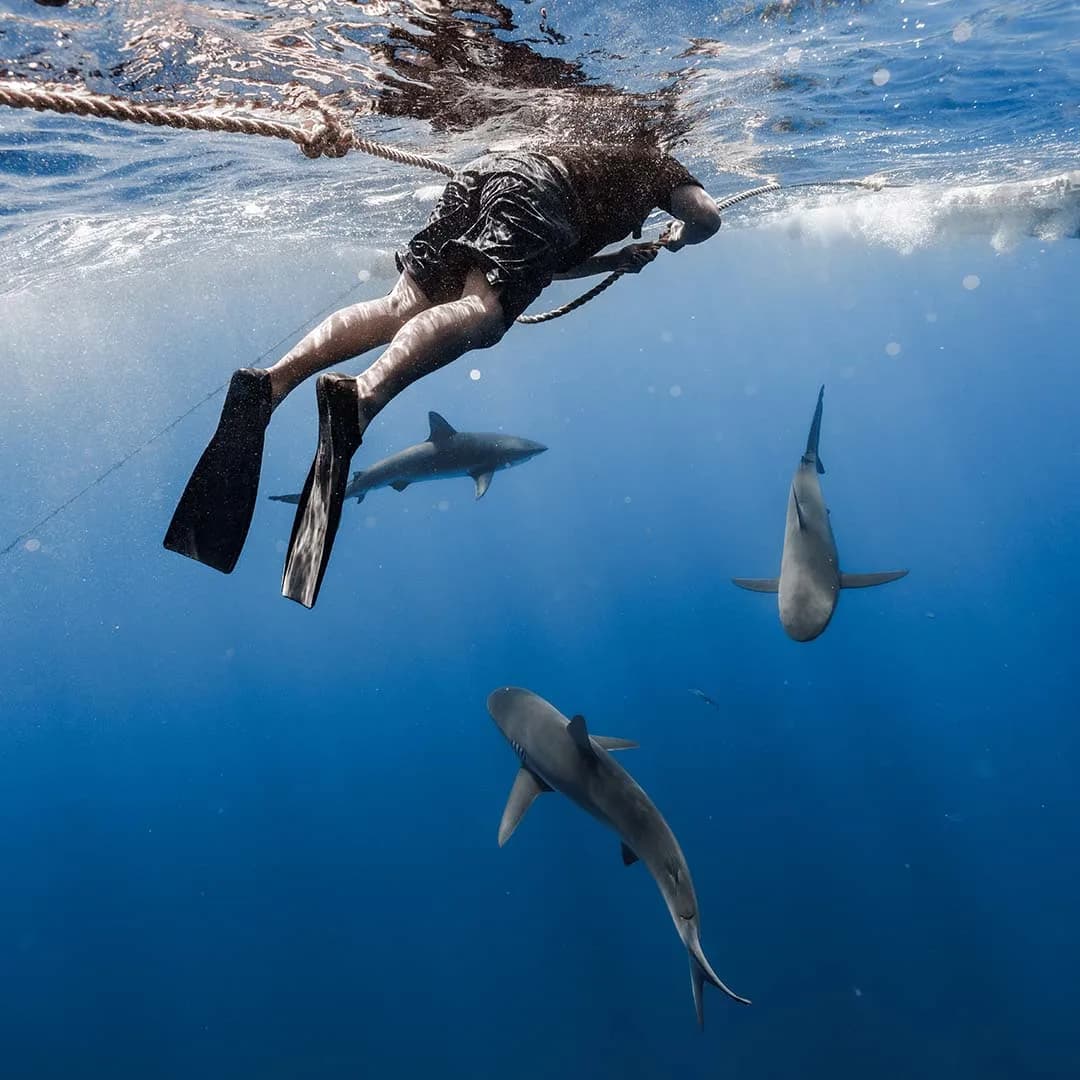

A Cage-Free Shark Dive Off Haleiwa, No Scuba Tank Needed
Three miles off Oahu's North Shore, you get in the water with no cage and no scuba tank. The boat leaves Haleiwa with at most six guests, the captain runs a safety briefing on the way out, and a safety diver goes in first to read the site before anyone else follows.
There is no cage on this boat, and no scuba tank either.
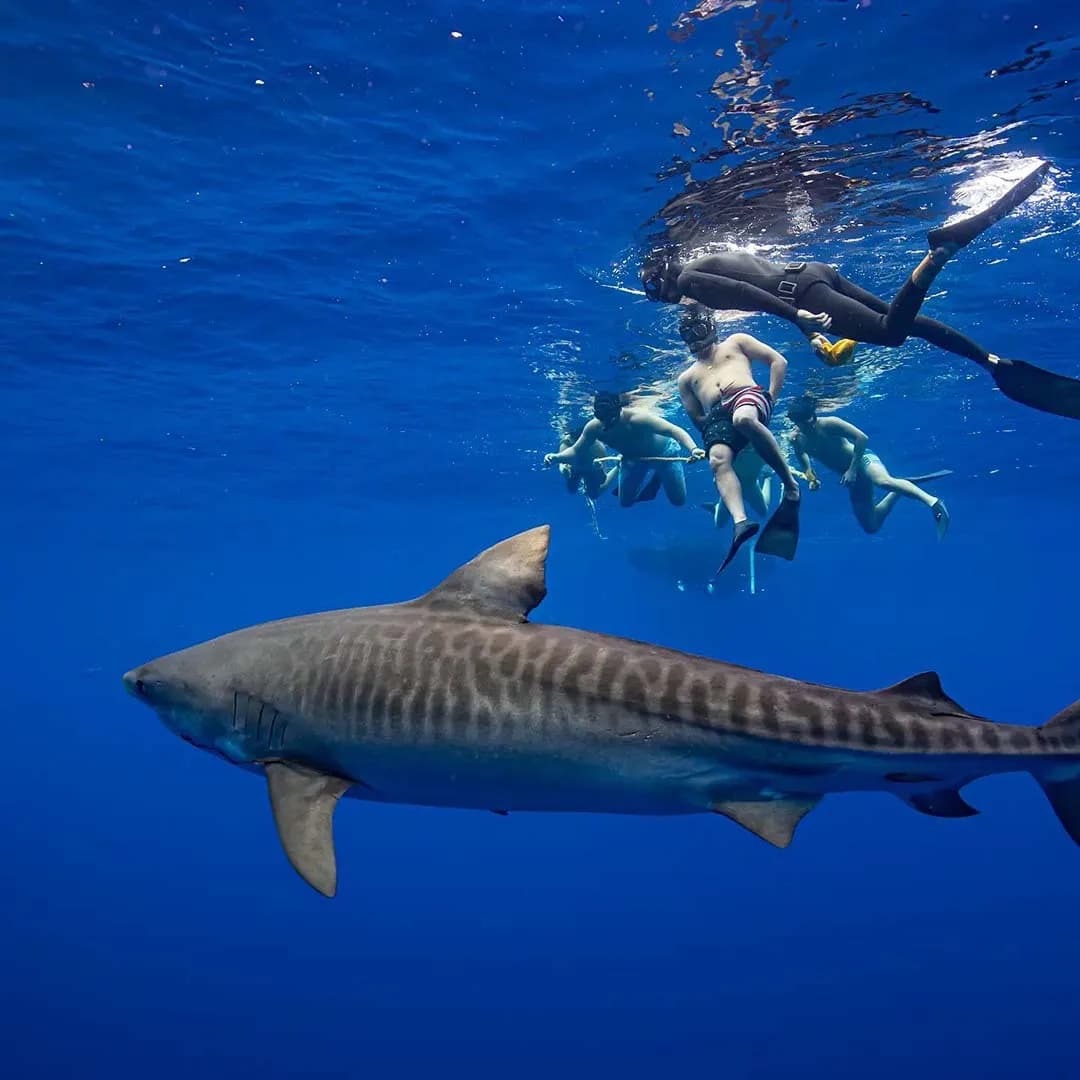
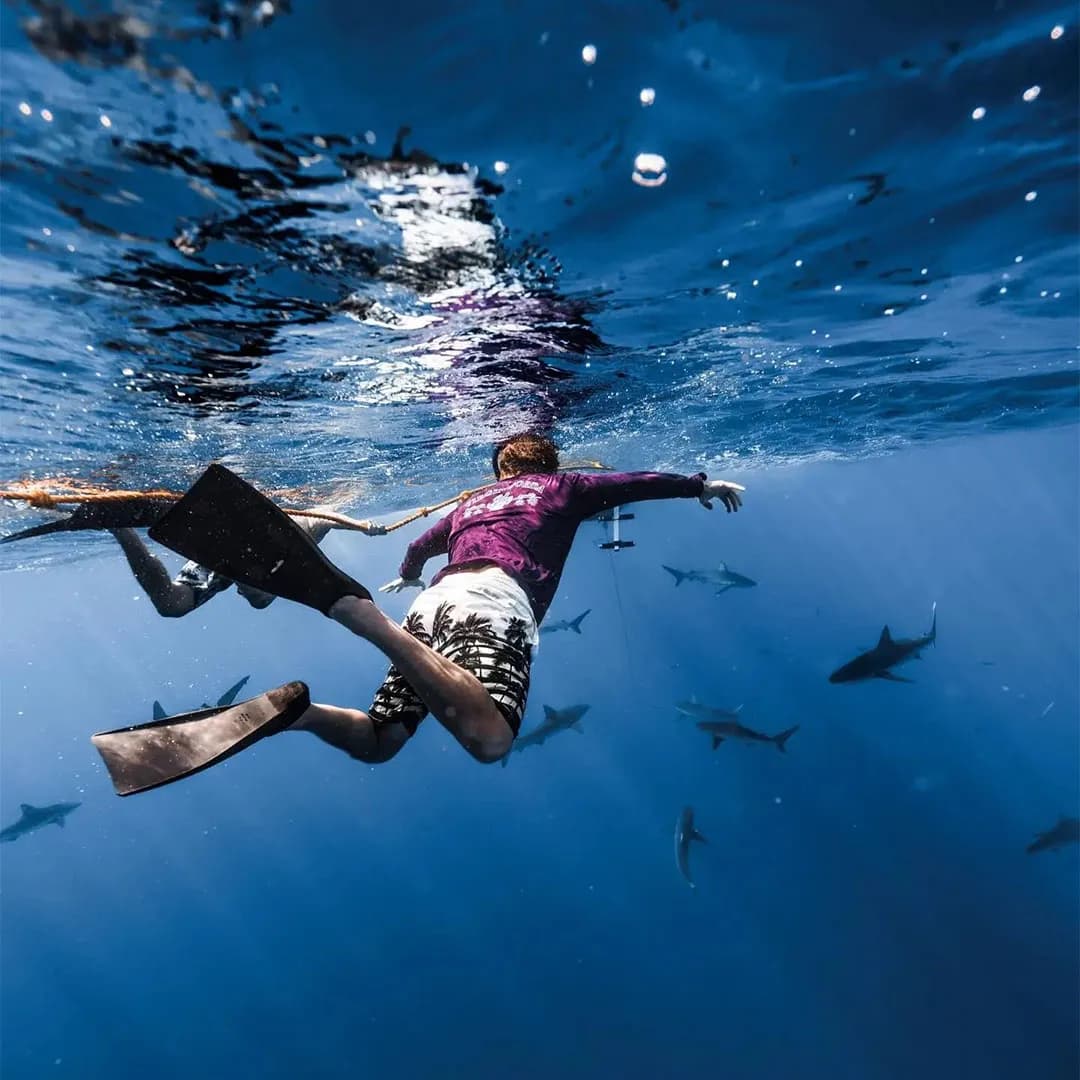
You ride about three miles out from Haleiwa, get a briefing on the way, then slide in wearing a mask, snorkel, and fins. A safety diver goes in first and reads the site before calling anyone else down. Most of what follows happens at the surface with one hand on a rope, while whatever is working that patch of ocean moves below you.
The operator caps every trip at six guests, and a safety diver stays in the water with you throughout.
Two hours covers the run out, the time in the water, and the run back. The boat leaves from Hale‘iwa Boat Harbor on Oahu's North Shore. There is no hotel pickup, so getting yourself up to Haleiwa is part of the plan.
Four start times are bookable here: 7:00 AM, 9:00 AM, 11:00 AM, and 1:00 PM, seven days a week. The operator's own schedule lists a fifth departure at 3:00 PM that this booking does not carry.
 Open Water Shark DiveTwo hours out of Hale‘iwa Boat Harbor with Hawaii Adventure Diving. Six guests per trip, snorkel gear provided.www.viator.com
A Safety Diver Goes In First, Then You Follow
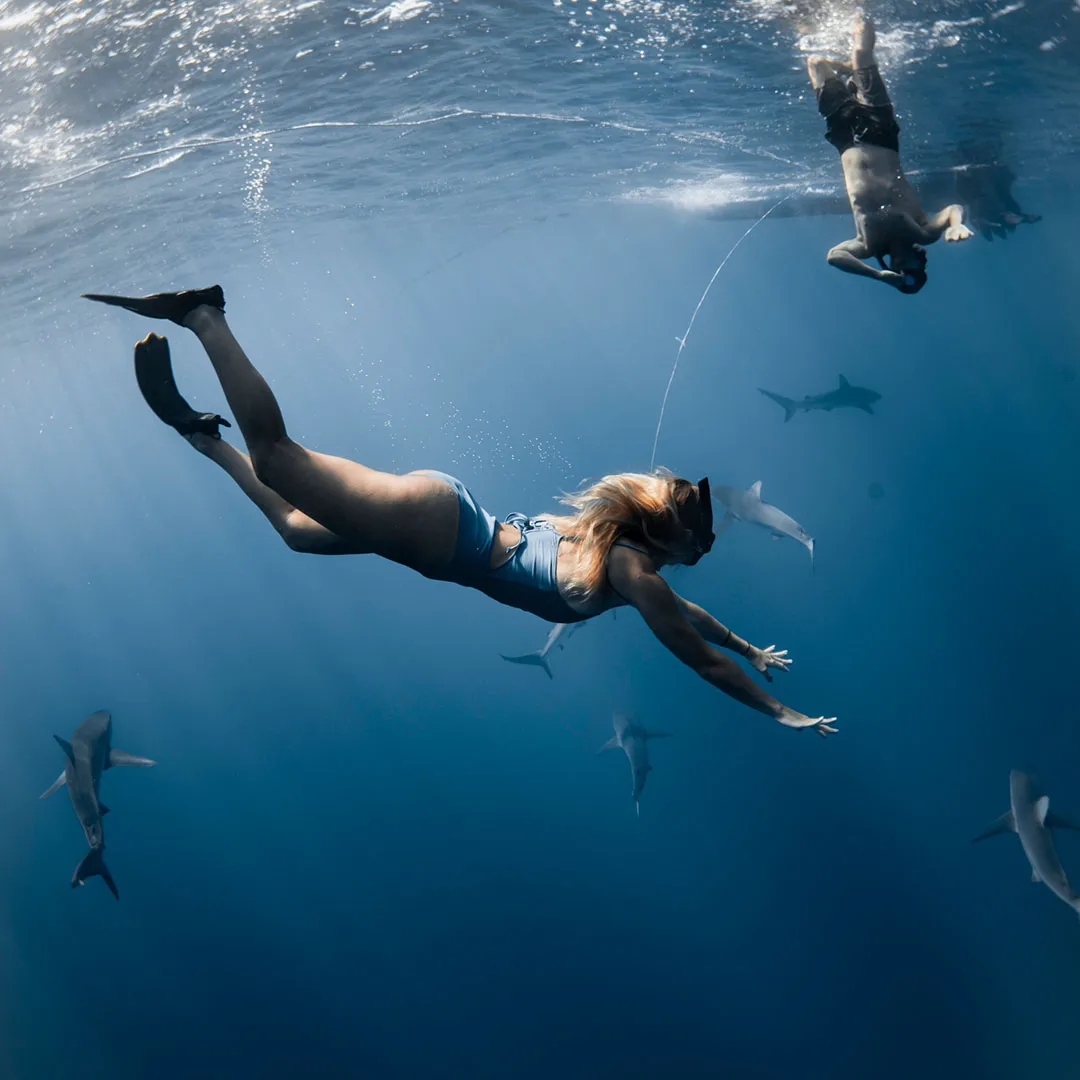
The briefing starts at the dock and keeps going on the way out. The captain covers safety first. The divemaster then demonstrates the gear and walks through what lives out there and how to tell one animal from another, using photos and visual aids on the boat.
Once the boat is on the site, the divemaster enters alone, looks the situation over, and only then calls the group in. That order is the whole point. Nobody gets in before someone has read the water.
Snorkel gear comes with the trip at no extra charge, and you are welcome to bring your own. This is not a scuba trip, so there is no certification to produce and no tank to carry. If shark behavior allows it on the day, the crew lets guests duck under and swim down. If you would rather stay flat on the surface the whole time, that is a normal way to do this trip, and the safety divers work around it.
Nobody Promises You a Tiger Shark
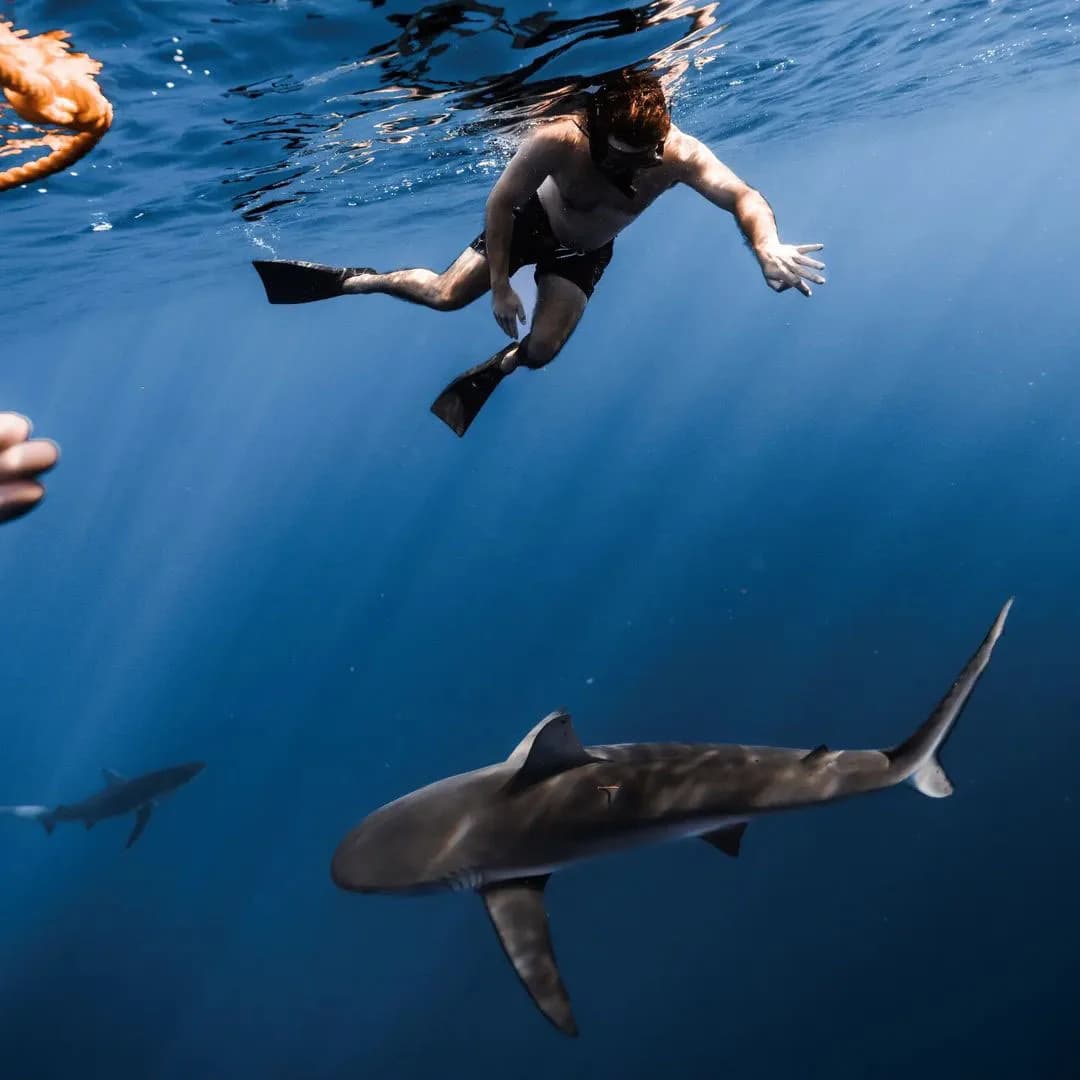
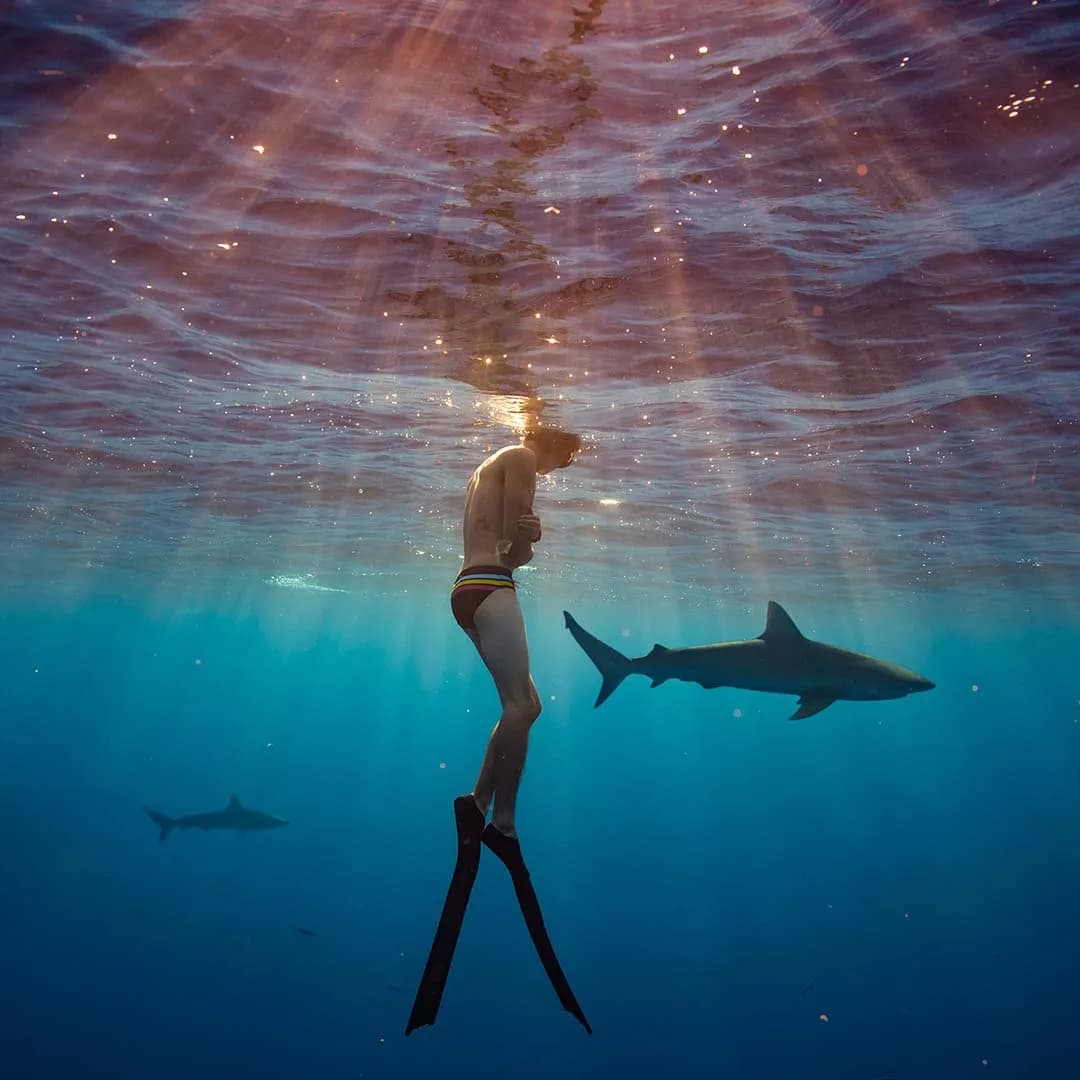
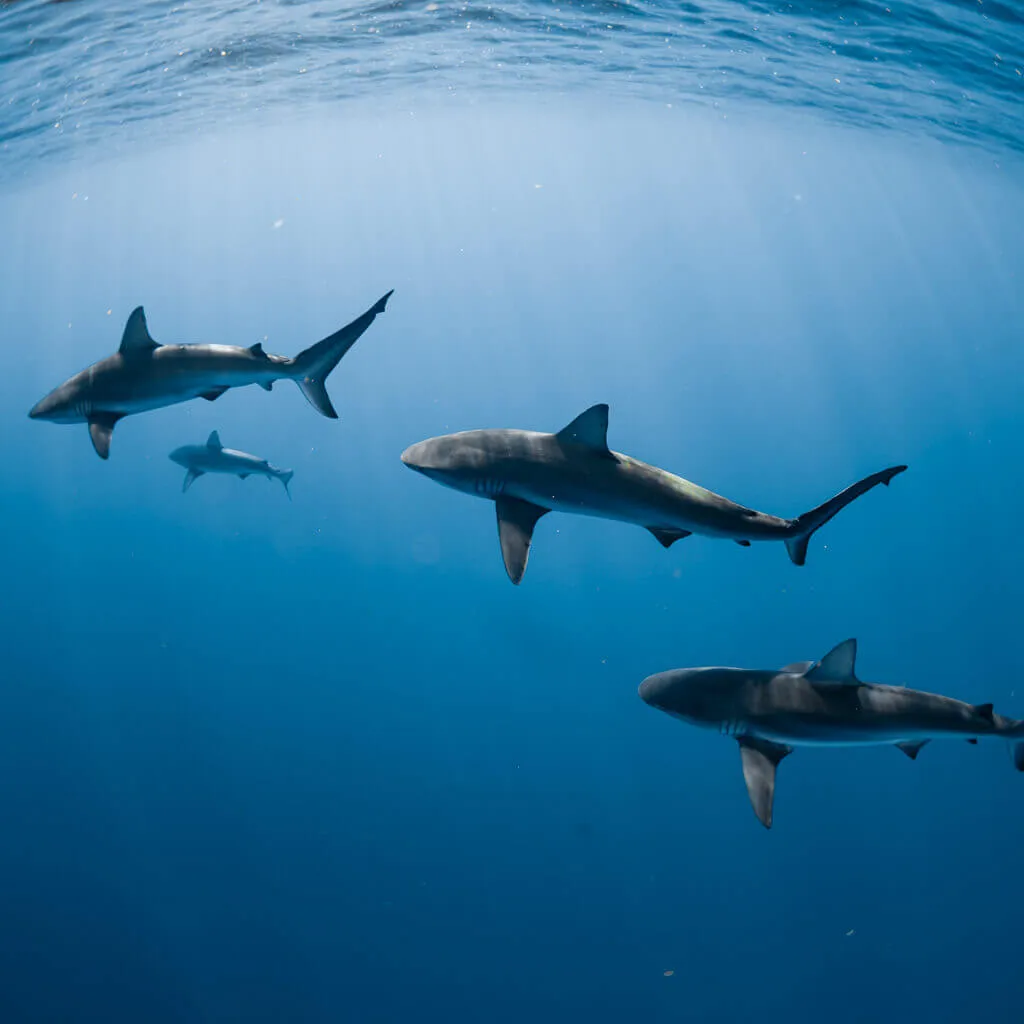
The operator names Galapagos and tiger sharks on both of its own pages. One page adds hammerheads, another adds whitetips. It calls these the species commonly seen, which is not the same as a promise, and open water does not make promises.
In Hawaiian tradition sharks are ʻaumākua, family guardians. The operator uses that framing on its own site, and the crew's job in the water is partly to keep the encounter calm: how to hold position, how much room to leave, when to come back to the rope.
Keeping your distance is an option the whole time. Guests who want to stay at arm's length are not doing the trip wrong.
Minimum Age Five, and You Should Be Able to Swim
Minimum age is five, with an adult on the booking. Fitness level is listed as suitable for all.
The swimming question is where the operator's own pages part company. One says you do not need to be a good swimmer, and that the only requirement is to float and move through the water with minimal effort. The other says basic swimming skills are needed. The booking listing takes the firmer line and says the trip is not recommended for people who cannot swim. Plan around basic swimming ability, since that is the strictest of the three statements and the one you would rather have been ready for.
The listing also flags the trip as not recommended for travelers who are pregnant, who have spinal injuries, or who have poor cardiovascular health. The operator asks anyone with a serious health condition to talk to a physician before booking.
Seasickness is worth taking seriously on a boat this size. The operator's advice is an over-the-counter remedy such as Dramamine or Bonine the night before, then a second dose about an hour before you board.
Getting to the Harbor, and the One Thing That Costs Extra
Arrive at least 30 minutes before your departure. The harbor is small and the directions are specific. Coming in, veer right, follow the road around into the center of the harbor, and look for the vessel to the left of the two-story harbor master building that sits in the middle.
What to bring:
- A valid photo ID
- Reef-safe sunscreen, a towel, and a change of clothes if you would rather be dry on the ride back
- A light jacket, sunglasses, and a hat, because it can be sunny and windy at the same time out there
- A GoPro or similar waterproof camera, if you want your own footage
- Snorkel gear is already covered, and valuables are better left at home
One thing costs extra. The operator runs an optional photography package at USD 75 per guest, paid at the harbor by card, cash, or Venmo. A photographer is not aboard every departure, so guaranteeing one means arranging it by phone with the operator's office before the day. Tipping is described as entirely optional and never expected.
Cancelling this booking is free up to 24 hours before departure. Inside 24 hours there is no refund. The trip can also be called off for weather, or for too few travelers.
The North Shore does this to people. You drive out past the surf breaks, park at a working harbor where the boats are small and the crews know each other, and two hours later you are back on the same dock with salt drying in your hair.
Pick a start time, get there half an hour early, and let the crew read the water first.