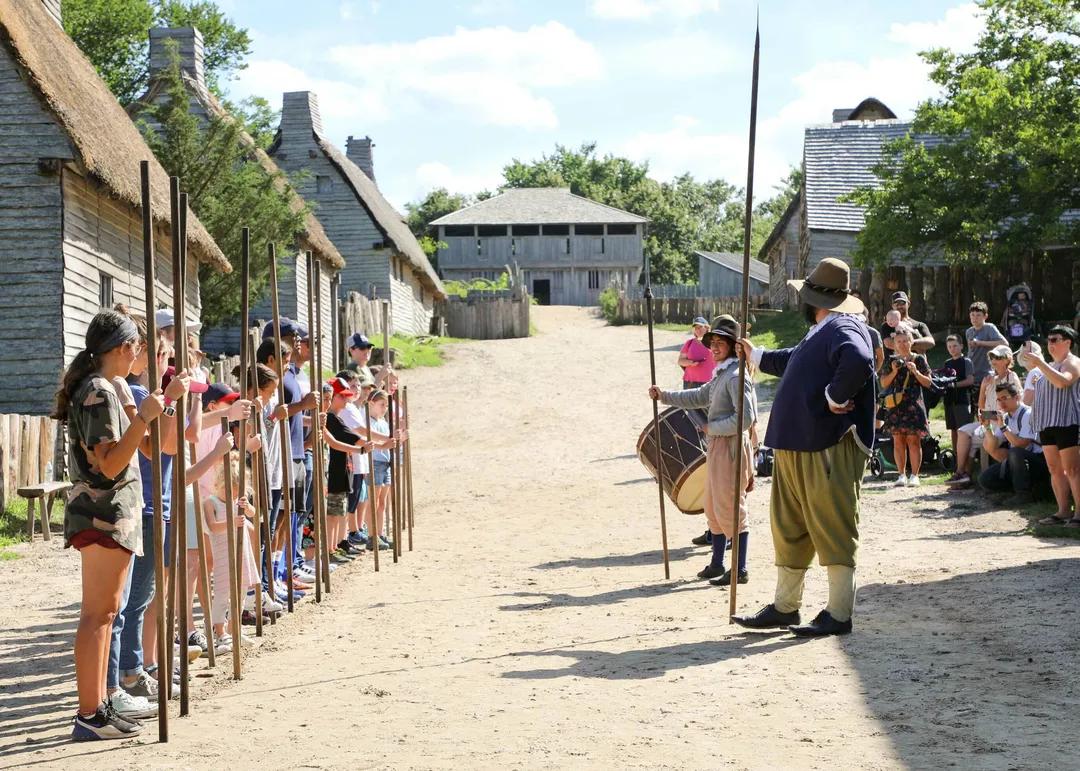

A 1627 Village You Can Question, Beside a Wampanoag Homesite
Walk into a recreated 1627 Plymouth Colony, then cross the same campus to a Wampanoag homesite staffed by modern interpreters.
Plimoth Patuxet Museums spreads over 40 acres, and the way through it is conversation. You walk into timber-framed houses and start talking to whoever is inside. The museum tells visitors to ask questions, and tells its own interpreters to say hello first and break the ice with anyone who looks unsure.
Three of its sites share the main campus on Warren Avenue: the 17th-Century English Village, the Historic Patuxet Homesite, and the Craft Center. Two more sit about three miles away in downtown Plymouth, Mayflower II at the state pier and the Plimoth Grist Mill on Town Brook.
The museum puts the walking at roughly half a mile over uneven terrain. There are benches at every site.
Which ticket you buy decides how much of that you see. The entry-level option covers the main campus only. The others add Mayflower II, the Grist Mill, or both, and those multi-site tickets stay valid for two days.
A second day is worth having. The downtown sites are a ten-minute drive from the village, and the museum advises against walking between them. That second visit can fall on another day in the same season.
 Plimoth Patuxet Admission with Mayflower II & Plimoth Grist MillAdmission to the 17th-Century English Village and Historic Patuxet Homesite, with ticket options that add Mayflower II and the Plimoth Grist Mill.www.viator.com
The Role Players Are Living in 1627
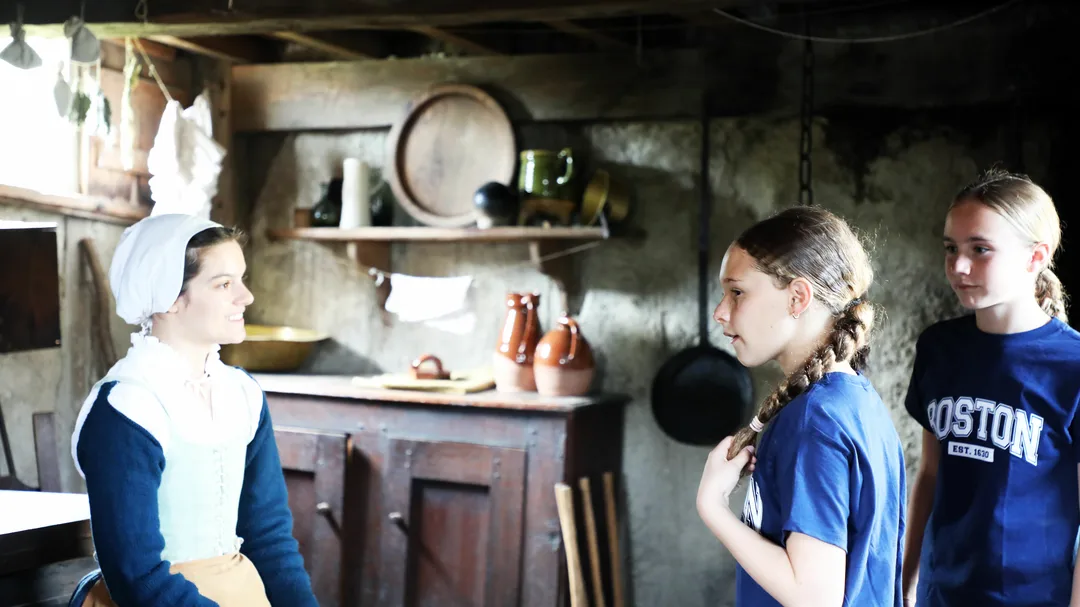
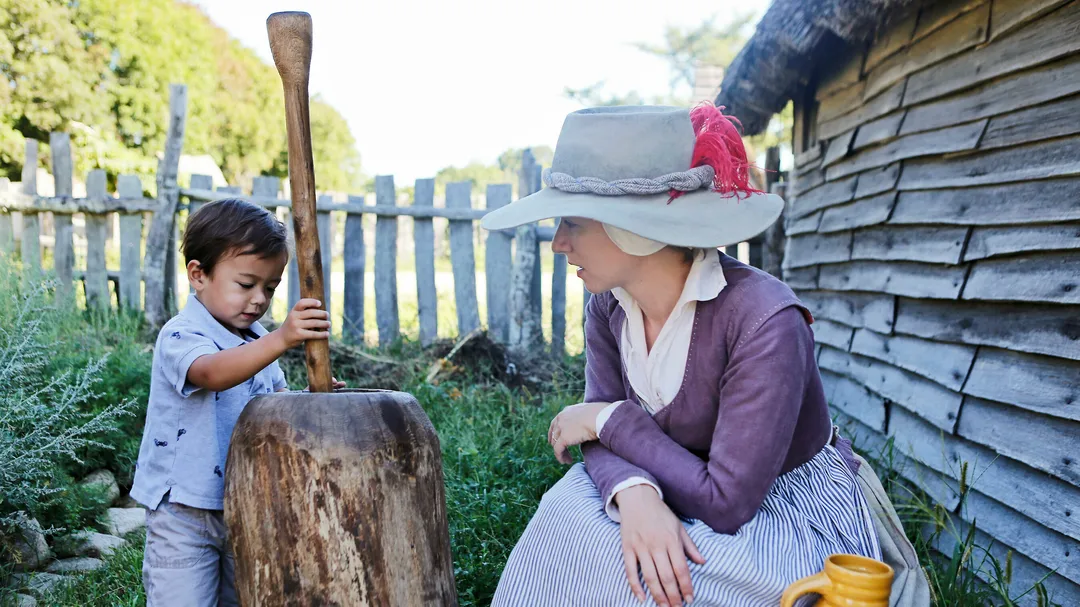
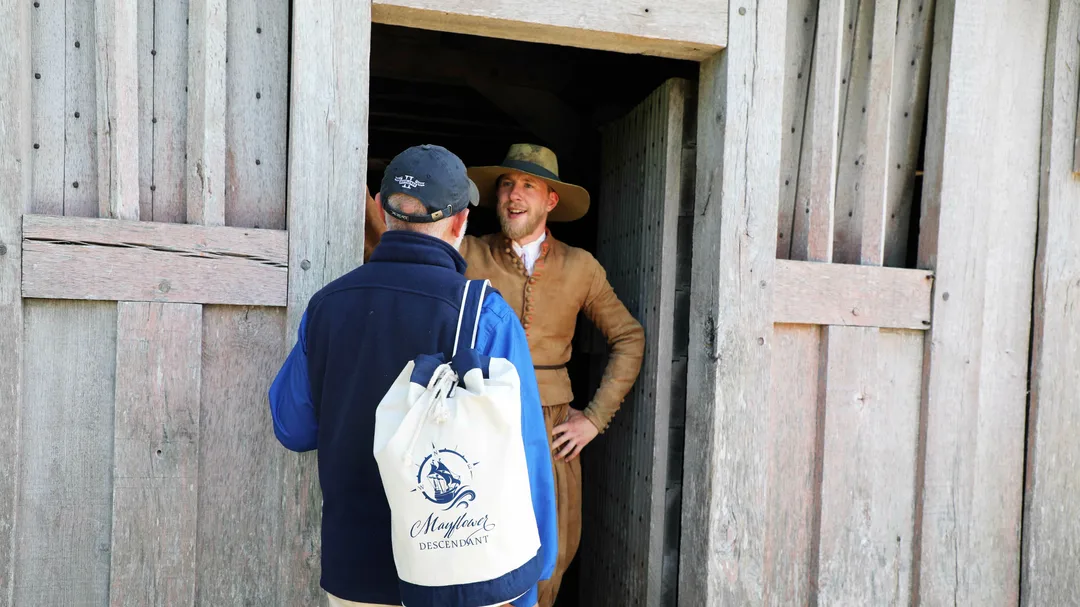
Step past the fence line and the rules change. The people in historical clothing are playing actual inhabitants of Plymouth Colony, and they are living in the year 1627 with no knowledge of anything after it. Ask about anything later than that and you will not get an answer. Ask what ship she came on, what work an eight-year-old girl does, why she left England, and the conversation opens up.
Modern-day guides work the same streets in ordinary clothes. They are the ones to ask about the 1600s from the outside.
The village runs to about a dozen re-created buildings you can walk into, and the museum expects most visitors to spend at least two hours there. Not every house is staffed. Much of a farming community's work happened outdoors, and you will find people in the fields and gardens as often as indoors. An empty house is yours to explore.
The sites stay open through almost all weather. On wet days the role players move inside to their houses and sheltered workplaces, and guests tell the museum those days have their own charm. On the hottest days everyone thins out into the shade, the same way the colonists kept hard work to the cooler morning and evening hours.
At the Homesite, Nobody Is Playing a Role
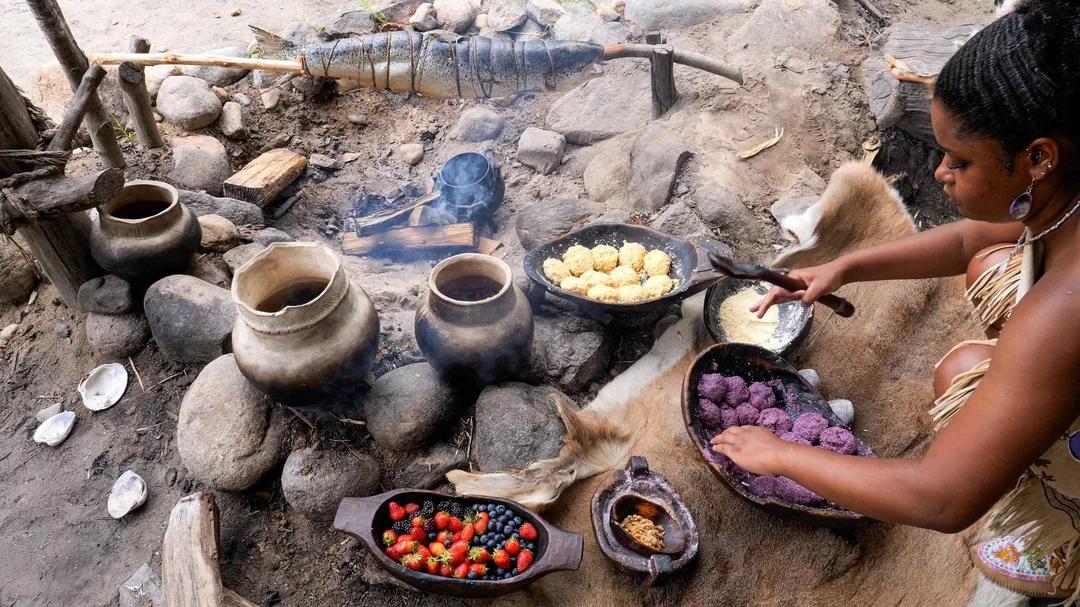
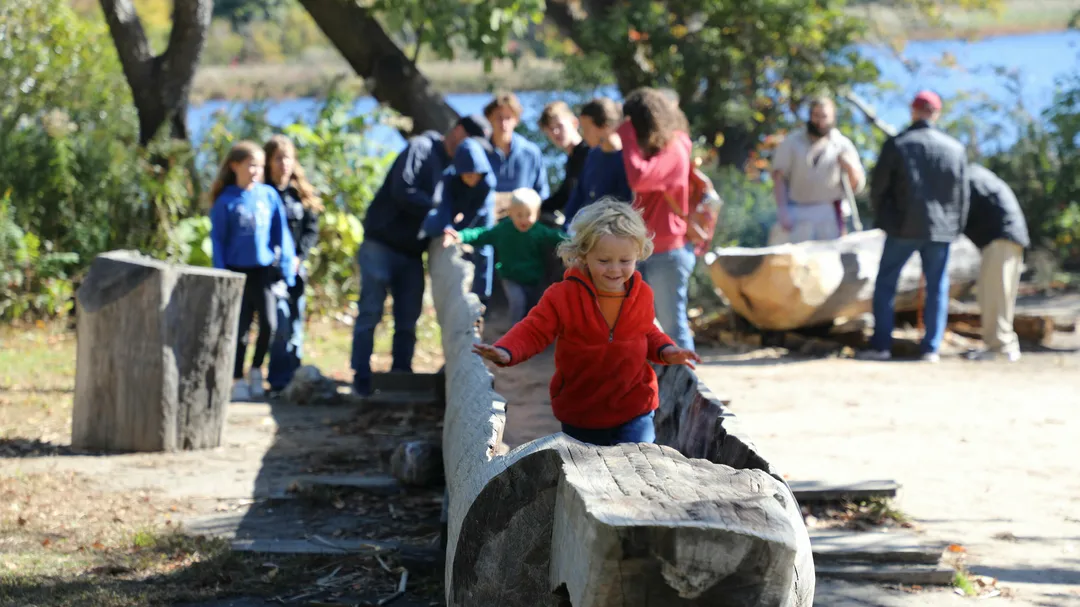
A few minutes across the campus, the ground rules invert. The staff at the Historic Patuxet Homesite are modern Native People speaking modern English, and the museum states plainly that they are not playing a role. Some are Wampanoag. Some are from other Native Nations. They talk about seventeenth-century lifeways as part of a culture that is still here.
The museum's own name changed to match. In 2020, four hundred years after the landing, it announced it would stop calling itself Plimoth Plantation: its educational mission took in Indigenous history as well as European colonial history, and the old name, it wrote, underscored only half of the story.
The name caught up late. The museum began working directly with local Native people in 1973, and the Wampanoag Indigenous Program marked its fiftieth anniversary in 2023.
The site sits on the Eel River. You can step inside a wetu and take a seat on the fur-lined benches, watch a mishoon being shaped out of a single log with fire, and be handed a shell to help scrape it out. At the cooking area there may be meat over the fire, or soup and tea working over the coals. In the garden it is corn, squash and beans.
Most visitors give the Homesite an hour or less, which makes it the easiest site on the campus to underestimate.
One rule to read before you come: the museum asks guests not to arrive in costume of any kind. Regalia carries status, heritage and cultural identity for the people it belongs to, and the museum is direct that a non-Indigenous person wearing it is appropriation.
The Ship and the Mill Are Downtown
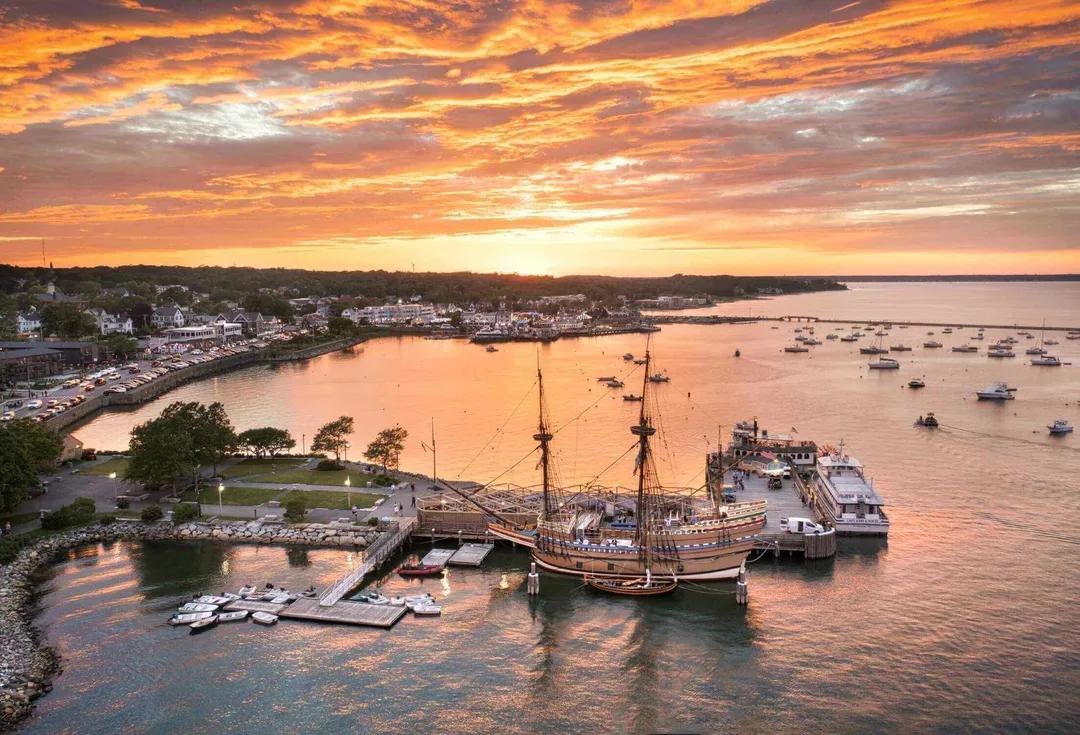
Mayflower II lies at the state pier in Plymouth Harbor. She is a full-scale reproduction that sailed from Plymouth, England in April 1957 and arrived here on June 13 that year, about 106 feet long and 25 feet wide. She came back from a stem-to-stern restoration at Mystic Seaport in 2020, 11.2 million dollars of work that replanked the hull with 20,000 board feet of Danish white oak. The keel is original. Nearly seventy percent of her timbers, planking, frames and beams are not. Nathaniel Philbrick, writing for the museum, said he was struck by how small she seemed, and asked how 102 people survived more than ten weeks in a space that size. Going below deck is the fastest way to feel the question.
The Plimoth Grist Mill is a reproduction of the colonists' 1636 mill, built on Town Brook where the original stood. A fourteen-foot waterwheel drives fifty-four-inch stones. Most Saturday afternoons are grinding days; on other days the millers are sifting and dressing the stones for the next run. Downstairs you meet the gears that turn the wheel's vertical push into the horizontal turn of the runner stone.
The millers fill real orders, and restaurants in town cook with what comes off the stones. The mill and the ship are walkable to each other: a path along Town Brook through Brewster Gardens runs down to the waterfront.
Go in the Afternoon
The museum publishes its own crowd pattern, and it is worth planning around. Visitation peaks Monday to Friday from 9:00 AM until 1:00 PM during the school year, and the sites are quieter in the afternoon. Summer days stay busy throughout. November is the busiest month of the year.
Allow at least two and a half hours for the main campus. A full day covers everything the museum runs, which is what the two-day tickets are for.
The 2026 season runs through the Sunday following Thanksgiving Day. Spring tends to be the thinnest of the open months.
Mayflower II is not wheelchair accessible. The ramps move with the rise and fall of the tide, and there are several flights of stairs on board. From the dock you can still see her close up, visit the dockside exhibit area and talk to the modern crew.
Parking at the main campus is free. At Mayflower II you are on metered spaces along the waterfront.
- The campus covers 40 acres and most paths between sites are unpaved dirt or sand, some with steep grades. Some are not passable by wheelchair. Staff at the Visitor Center will talk through your particular needs.
- A free golf cart carries up to five guests between the campus sites from 9:30 AM to 4:30 PM. There is one cart, and busy days mean waiting.
- Service animals are welcome. Other animals are not, for the sake of the heritage breeds loose in the village.
- Trains run on the MBTA Kingston Line to Kingston Station, then rideshare or the GATRA bus. The Plymouth and Brockton bus goes to the Plymouth Park and Ride.
- Cancellation is free up to 24 hours before the booked time.
Wear shoes you can cross a field in. The hour that stays with you is usually the one where you stop walking, sit down on a bench in the village, and let someone from 1627 come and find you.